
12 Best Corner Pantry Organization Ideas to Maximize Every Inch
Looking for the best corner pantry organization ideas? The right combination of turntables, labeled bins, shelf risers, pull-out storage, and vertical organizers can transform awkward corner shelves into easy-to-reach storage without remodeling your pantry. At Stash Savvy, we cover dozens of pantry setups and pulled together the most practical corner pantry organization ideas so you can stop digging, start cooking, and enjoy a calmer space.
How We Ranked These Ideas
Corner pantries are tricky because every shape hides different dead zones. To keep this list honest and useful, we weighed each idea against a few plain criteria before it earned a spot. If an approach only looks good in a staged photo, it didn’t make the cut. You want something that still works next Tuesday when you’re rushing to make dinner, which is the same lens we use for our deep-shelf pantry organization ideas.
- Usable space recovered. Ideas that reach floor-to-ceiling and wall-to-wall rank higher than pretty accessories that only fix one shelf.
- Accessibility. You should see and grab items without moving three other things first.
- Cost-to-impact ratio. Solutions that work without a renovation beat custom installs.
- Versatility. Ideas that adapt to L-shaped, triangular, and walk-in corners score better.
- Sustainability. The system has to hold up for months, not collapse two weeks after setup.
The takeaway: the strongest corner pantry fixes are boring in the best way. They’re simple, reachable, and easy to maintain, which is exactly the vibe we push in our small kitchen storage guides.
Quick Summary: Best Corner Pantry Organization Ideas
Here’s the short list, ranked. Each idea earns its place because it solves a specific corner pantry pain point, and most of them stack together for even better results. If you’re pairing this with a broader kitchen refresh, our kitchen counter organization ideas work hand in hand with the picks below.
- Lazy Susans and turntables, Best Overall for deep corner shelves.
- Zone system with labeled bins, Best for households that share the kitchen.
- Pull-out drawers and slide-out shelves, Best for heavy items and busy pantries.
- Labeled bins and baskets, Best Budget starting point.
- Tiered shelf risers, Best for spice and sauce visibility.
- Vertical shelving and door-mounted racks, Best for capturing wasted air space.
At a Glance: Corner Pantry Organization Comparison
Different corners call for different fixes. This table lines up the six ideas against cost, best use, and installation effort so you can spot the right starting point without scrolling for twenty minutes. For a wider look at storage that works in tight footprints, our hidden storage for small apartments piece pairs nicely with these picks.
| Idea | Typical Cost | Best For | Install Effort |
|---|---|---|---|
| Lazy Susans | $10-$30 each | Cans, spices, condiments | None |
| Pull-out drawers | $50-$200+ | Heavy items, high traffic | Moderate to high |
| Bins and baskets | $5-$25 each | Any pantry shape | None |
| Tiered risers | $10-$25 | Short items, spice jars | None |
| Door-mounted racks | $20-$60 | Narrow items, foil, snacks | Low |
| Vertical shelving | $40-$150 | Bulk and seldom-used items | Low to moderate |
Takeaway: start with turntables and bins, add risers, then commit to pull-outs or door racks only after you know your zones. For budget-friendly ways to stock those zones, our Dollar Tree organization hacks are worth a look.
Lazy Susans and Turntables: The Corner Pantry Classic
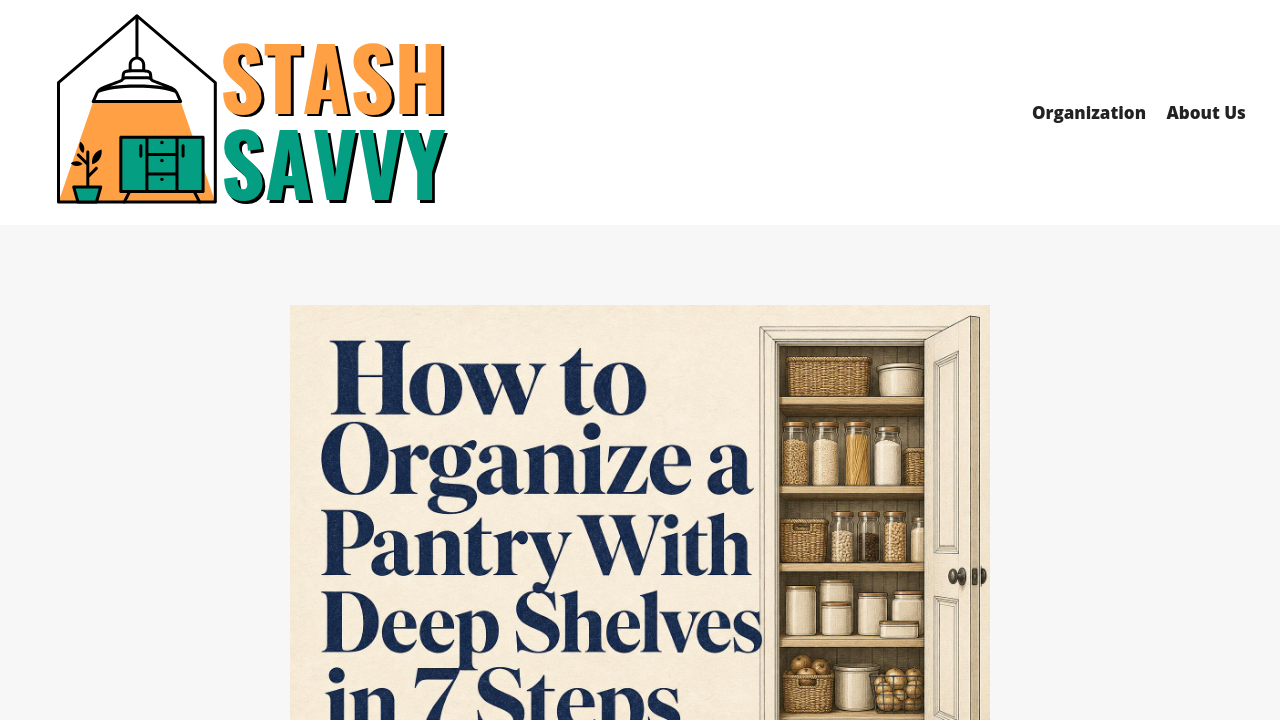
If you only try one thing, try a Lazy Susan. It fits snugly into corner shelf space and rotates a full 360 degrees, so nothing gets stranded at the back. A two-tier turntable doubles capacity on a single shelf without any drilling, screws, or brackets. It’s the same reason turntables show up in every organizer’s toolkit, right alongside the tricks in our deep pantry shelf guide.
Choosing the Right Size Turntable
Measure before you buy. Most corner pantry shelves run 16 to 24 inches deep, and a 12-inch diameter turntable is a common starting point that clears the shelf edge and still rotates freely. Go bigger only if your shelf can handle it without blocking neighboring items. Our multi-use kitchen storage tools roundup covers the sizing logic in more detail.
What to Store on a Lazy Susan
Spices, oils, vinegars, condiments, and short cans are ideal. They’re easy to knock over, easy to lose behind other items, and easy to forget when they’re stranded at the back. Professional organizers often recommend one turntable per shelf level for your heaviest-use categories. If you’re organizing on a shoestring, our Dollar Tree organization ideas list a few turntable dupes that hold up fine.
Takeaway: buy the size that fits your shelf, not the size that looks best online.
Zones, Bins, and Labels: The System That Sticks
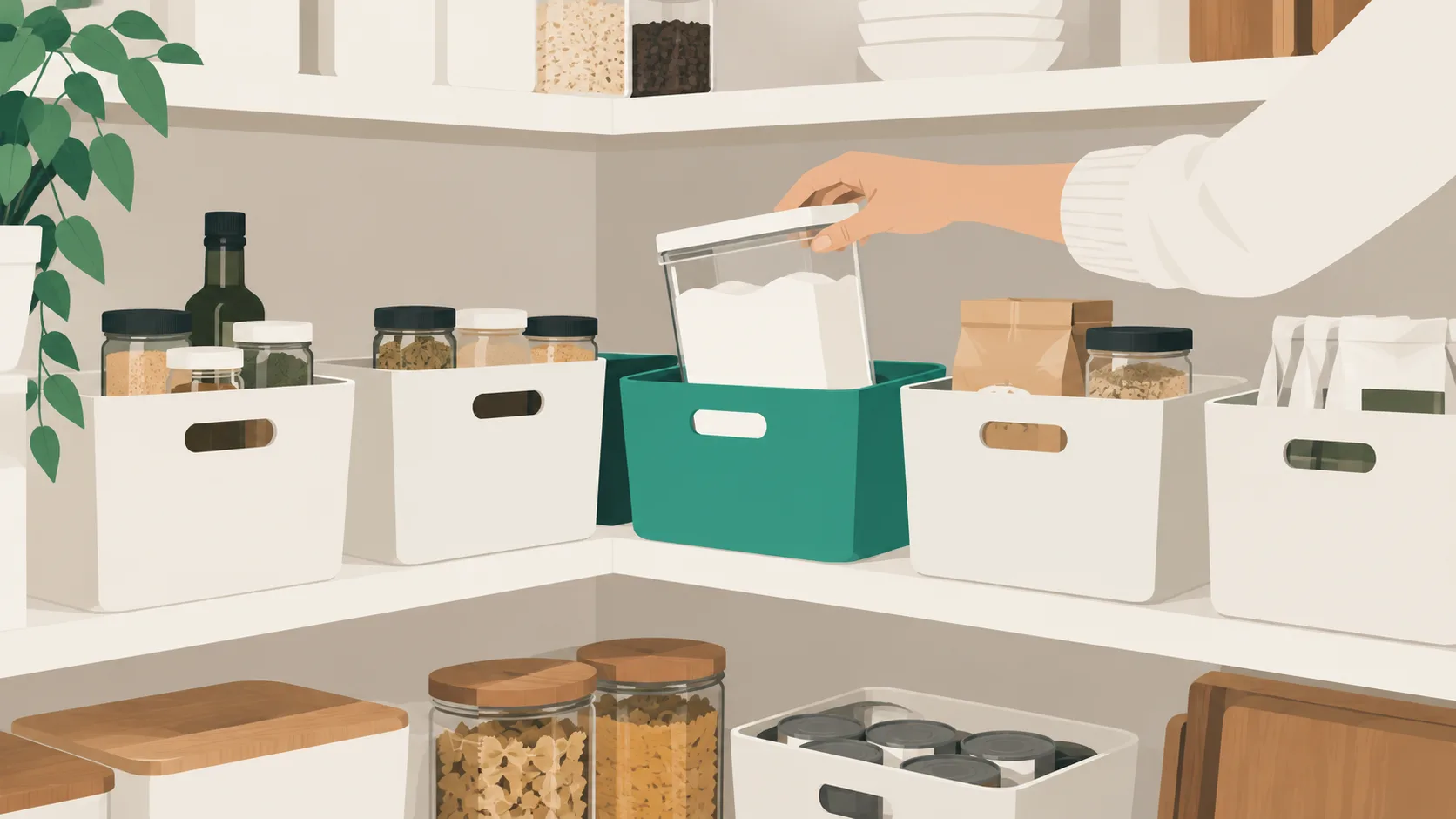
A pretty pantry falls apart in a week without a system underneath it. Zones are that system. Grouping like items together, then giving each zone a visible home, is what turns a one-time cleanout into a habit the whole household can follow. It’s the same logic we use in our budget closet organization ideas: systems beat products.
How to Set Up Pantry Zones
Group by how you actually cook. Common zones include baking supplies, snacks, canned goods, breakfast items, and oils or condiments. Put the most-used zones at eye level, everyday grab-and-go items at arm’s reach, and bulk or seldom-used stock up top or on the bottom. Our small home organizing guide walks through the same eye-level rule for other rooms.
Labeling for the Whole Household
Labels are the difference between a pantry that stays organized and one that quietly drifts back to chaos. When every bin has a clear label, everyone in the house knows where to grab and where to return items. Chalkboard tags, printed labels, or a simple label maker all work. For more label-friendly storage patterns, browse our laundry room storage ideas for parallel inspiration.
Using Bins and Baskets Effectively
Bins corral the loose stuff, chip bags, sauce packets, granola bars, and stop them from spilling across a shelf. Clear bins let you see contents at a glance; opaque baskets hide visual noise for snack zones. Adopt a simple habit: shop your pantry before every grocery run to catch duplicates and expiring goods, a trick we also recommend in our make a cluttered room look clean piece.
Takeaway: zones plus labels plus bins is the trio that keeps a corner pantry organized long after the initial reset.
Pull-Out Shelves, Risers, and Vertical Storage
Once turntables and bins are handling the day-to-day, you can attack the leftover dead space. This is where a corner pantry really opens up, and where a small hardware investment pays off. The same vertical thinking shows up in our small bedroom storage ideas, because unused air is unused air in any room.
Pull-Out Drawers for Deep Corners
Pull-out shelves and slide-out drawers convert the dead zone at the back of a deep corner into fully accessible storage. Custom closet companies recommend them for high-traffic pantries because you get the entire shelf face out in front of you. L-shaped or wraparound corner shelving also fills the corner completely, which is ideal for bulk items. For more pull-out patterns, see our deep-shelf pantry guide.
Shelf Risers for Visibility
Tiered risers lift shorter items like spice jars and small sauce bottles so you can read labels behind taller bottles without moving anything. A two- or three-step riser turns a single flat shelf into three visible rows. Our organize a pantry with deep shelves walkthrough goes deeper on how risers pair with turntables.
Going Vertical With Wall Space
The air above your top shelf is usually wasted. Add a tall shelving unit, an extra fixed shelf, or a top-mounted basket to capture that dead space for seldom-used or bulk items. Pantry-door racks add a surprisingly deep extra layer for spices, foil rolls, plastic wrap, and small snacks without stealing floor space. Our garage storage on a budget piece uses the same vertical playbook.
Takeaway: pull-outs solve depth, risers solve visibility, and vertical shelving plus door racks solve the space no one sees.
How to Choose the Right Corner Pantry Organization System
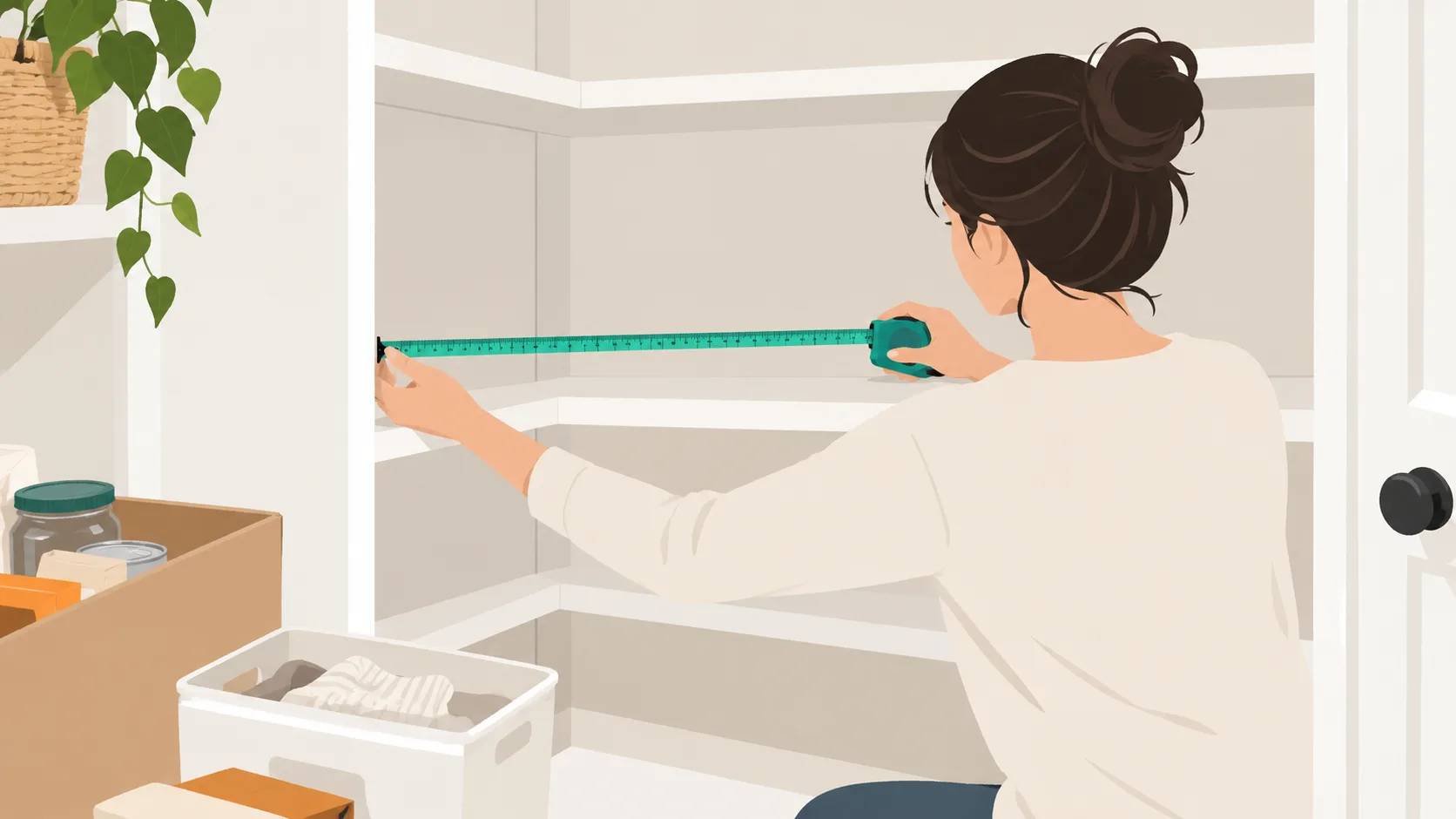
Start with a full declutter. Buying bins for clutter just moves the problem into prettier containers. Pull everything out, toss expired items, donate unopened extras, and only then measure your shelves and pick your solutions. Our budget-friendly under-bed storage guide uses the same declutter-first order and it’s the single biggest predictor of whether a system sticks.
Match the solution to the shape. Triangular corner pantries benefit most from rotating units and soft bins that can wedge into odd angles. L-shaped walk-in corners handle pull-out drawers, full shelving systems, and door racks with room to spare. Budget-wise, bins and risers solve most problems for under $50 total, while pull-out drawers and custom shelving can run $200 or more. For a small-space version of this same decision tree, see our small closet organization ideas.
Then revisit. Every few months, check for expired items, category drift, and zones that need a refresh. Ten minutes of pantry maintenance saves hours later, and it’s the same rhythm we recommend for the bathroom-with-no-cabinets setup.
Takeaway: declutter, match shape to solution, and put a recurring 10-minute check on the calendar.
7. Use Stackable Clear Bins for Categories
Stackable clear bins make better use of vertical space while keeping snacks, baking supplies, packets, and small pantry staples together. Choose bins that fit the depth of your corner shelves and group similar items so you can see what needs restocking without digging through the pantry.
8. Add a Tiered Can Organizer
Cans easily disappear behind one another on deep corner shelves. A tiered can organizer raises the back rows so labels stay visible and makes it easier to rotate older items forward. Keep frequently used canned goods at eye level and heavier extras on lower shelves.
9. Capture Extra Space With Under-Shelf Baskets
If there is unused space beneath a shelf, an under-shelf basket can create an extra storage layer without remodeling. These work especially well for lightweight items such as wraps, snack bags, bread products, and small packets that otherwise get lost in larger bins.
10. Make Adjustable Shelving Work Harder
Large gaps between pantry shelves waste valuable vertical space. If your shelving is adjustable, reposition shelves around the actual height of your food and containers. Shorter spacing works well for cans and jars, while taller zones can hold cereal, appliances, and bulk containers.
11. Use Floor Space for Bulk and Heavy Items
The pantry floor can become useful storage when it is organized intentionally. Reserve this area for heavier or oversized items such as bottled drinks, bulk paper goods, large food packages, or sturdy baskets. Avoid loose piles so the walkway and corners remain easy to clean and access.
12. Create a Small Corner Pantry Zone System
In a small corner pantry, every shelf needs a clear job. Assign compact zones such as breakfast, snacks, baking, canned goods, and dinner staples. Combine narrow bins with turntables and shelf risers, keeping everyday items between waist and eye level and less-used supplies higher or lower.
FAQ: Frequently Asked Questions
What is the best way to organize a corner pantry?
Start by decluttering, then set up zones for like items, add turntables to deep shelves, and use labeled bins to keep categories in place. Zones plus labels create a simple foundation that makes pantry categories easier to see, use, and maintain.
How do I make the most of a deep corner pantry shelf?
Add a Lazy Susan for small items and a pull-out drawer or basket for bigger ones. Both bring the back of the shelf to you, which is the whole battle. Tiered risers help shorter jars stay visible behind taller ones.
What should I store in a corner pantry?
Only kitchen items you actually use. Group them by zone: baking, snacks, canned goods, breakfast, and oils or condiments. Keep daily-use items at eye level, bulk stock on top, and heavy items low. Skip household clutter that doesn’t belong.
Are lazy susans worth it for pantry organization?
Yes, especially in corner pantries. A basic turntable costs $10 to $30, requires no installation, and instantly makes back-of-shelf items reachable. Two-tier versions double capacity. For many corner pantries, they are one of the simplest low-cost upgrades for improving access to deep shelves.
How do I organize a triangular or oddly shaped corner pantry?
Lean on rotating units, soft-sided bins that wedge into corners, and vertical door-mounted racks. Skip rigid pull-out drawers unless a corner is truly square. Group items into bins first so odd angles hold fewer loose objects.
What bins and baskets work best for corner pantry shelves?
Clear bins for items you want to see at a glance, opaque woven baskets for snacks and visual quiet, and narrow rectangular bins for canned goods. Measure shelf depth first so bins slide fully in without blocking neighbors.
How do I keep my corner pantry organized long-term?
Label every bin, shop your pantry before grocery runs, and do a 10-minute reset every few months to purge expired items and reset zones. Systems that require willpower fail; systems that require labels last.
How do I add more storage to a corner pantry without renovating?
Stack tiered risers, add turntables, mount a door rack, and place a tall freestanding unit against unused vertical space. These four upgrades together often double usable pantry storage for under $100 and require zero permanent installation.
Start Small and Build From There
A corner pantry doesn’t need a renovation to work. It needs a turntable or two, a handful of labeled bins, a clear set of zones, and a 10-minute reset every few months. Pick one shelf this weekend, and let the momentum carry the rest. For more room-by-room guides and product picks, visit the Stash Savvy home page and start with whichever corner is bugging you most.