
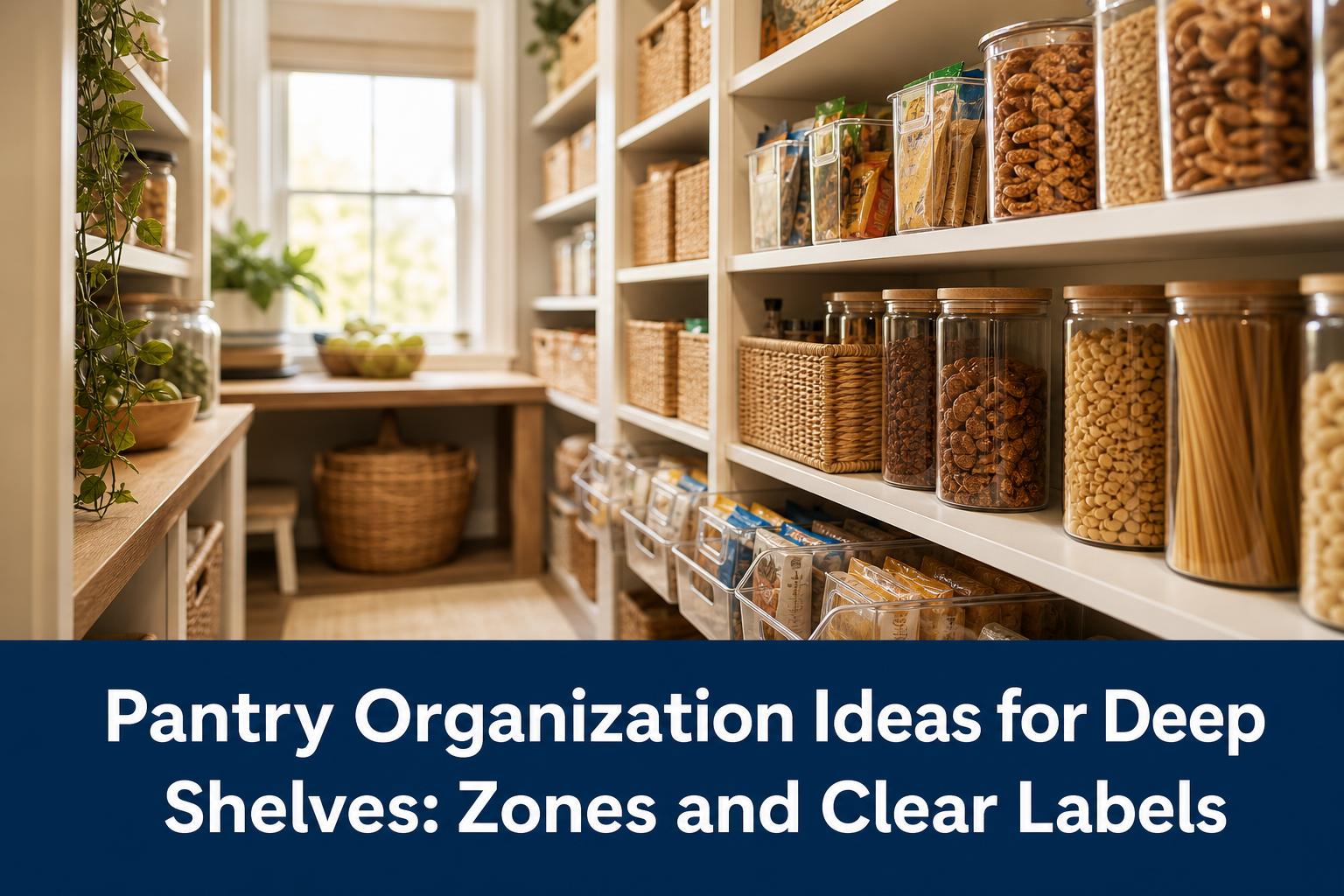
Pantry Organization Ideas for Deep Shelves: Zones and Clear Labels
Deep pantry shelves work best when you split each shelf into functional zones (Breakfast, Snacks, Baking, Cans, Backstock, Use Soon) and label those zones rather than every item. Use pull-forward bins as removable drawers so you can reach the back without unstacking the front, add a turntable for deep corners, and place a shelf riser behind cans so rear labels stay visible. Keep everyday foods in front-facing bins at eye or waist level and reserve the rear for unopened backstock. A basic setup costs about $44.
Key takeaways
- Divide each deep shelf into zones by category, then label the zones, not individual items.
- Pull-forward bins act like drawers, so nothing gets lost more than 22 inches back.
- A first-in, first-out system (older items front, new stock behind) cuts spoilage and duplicate purchases.
- Selective decanting beats decanting everything: airtight containers for frequent staples, original packaging inside labeled bins for the rest.
- A starter deep-shelf kit runs about $44; a label-maker version about $97.
- Better pantry visibility is a budget tool, not just a tidiness one, and household food waste already fell nearly 4% in 2024, per ReFED.
How do you organize deep pantry shelves so nothing gets lost in the back?
Divide each deep shelf into front and back sections, then assign each section a zone. Put frequently used categories in pull-forward bins up front and unopened backstock behind them. Pull-forward bins slide out like drawers, so you reach the rear without moving anything. Add a turntable in corners and a riser behind canned goods.
The core problem with a deep pantry shelf is that the back can become a dead zone. Items migrate there, get forgotten, and may expire. The practical fix is to make the back reachable and visible instead of simply stacking more items in front. For a visual example of these fixes in action, see this deep pantry transformation.
Three tools solve most of it:
- Pull-forward bins hold one category each and slide out fully, so a can in the back row is one motion away.
- Turntables spin oils, sauces, and condiments into reach and are the single most-recommended deep-shelf fix on X.
- Shelf risers step up rear cans and jars so their labels stay readable over the front row.
Some people on X arrange items in a U shape, leaving the shelf center open as a sight line to the back wall. It works, but a labeled pull-forward bin is easier to maintain because it forces the category to travel as a unit.
What zones should a pantry have?
A workable deep-shelf pantry uses six or seven zones: Breakfast, Snacks, Baking, Cans and Jars, Backstock, Use Soon, and optionally Occasional Use. Each zone gets its own bin or shelf section. This groups related items so meal planning and grocery lists come from one glance, not a full excavation.
Two zones do the heavy lifting on waste:
Use Soon holds opened packages and anything near its best-by date. Keeping these in one front-facing bin makes them the first thing you see when planning meals. ReFED lists forgotten food, date-label confusion, and poor household inventory visibility as top drivers of home food waste, and a Use Soon bin attacks all three.
Backstock holds unopened duplicates at the rear. When the front bin runs low, pull one forward. Use a first-in, first-out rotation: keep older items toward the front and place newer purchases behind them. This simple routine makes duplicates easier to track and helps prevent forgotten food from sitting at the back of a deep shelf.
Tip: Zone by category, not by container. Labeling six zones stays maintainable for years. Labeling 60 jars means re-labeling every time you switch brands, which is why most people abandon it.
If you have small children, split zones by height: adult-planning items at eye level, kid snacks in a low bin they can reach or a high one they can't, depending on your rules. Community members on r/organizing raise this trade-off often.
Should you decant everything into matching containers?
No. Decant selectively. Use airtight clear containers for dry staples you refill often (flour, sugar, rice, pasta, oats) and keep everything else in original packaging inside labeled bins. Recent guidance has moved away from the "decant everything" trend because it adds cleaning, refilling, and relabeling work that most households quit within months.
Original packaging earns its place when it carries information you need: allergen warnings, cooking instructions, and expiration dates. A boxed cake mix in a Baking bin keeps its instructions. A bag of specialty flour keeps its best-by date. Dumping those into unlabeled jars deletes the data that prevents waste.
For the staples worth decanting, size the container correctly. Consumer Reports recommends a container roughly twice the size of the package, so a 32-ounce container for a 16-ounce pasta bag. That leaves room to pour a fresh refill in without a half-empty leftover on the counter.
Warning: Measure shelf width, depth, and vertical clearance before buying any organizer. Bins that are too tall block the shelf above; too deep and they jam against the door. A quarter-inch of slack per bin saves a return trip.

What does a deep-shelf pantry setup actually cost?
A functional deep-shelf setup starts around $44 and scales to about $103.50 for a pre-labeled clear-container set. You do not need matching containers to fix a deep pantry. You need bins that pull forward, a turntable for corners, and clear labels.
Here is a budget ladder using current retail listings:
| Setup | Contents | Approx. cost before tax |
|---|---|---|
| Starter | 4 Brightroom bins ($7 each) + 1 turntable ($16), Target | ~$44 |
| Label-focused | Brother PT-D210BP label bundle ($69.99) + 4 Brightroom bins ($7 each) | ~$97 |
| Pre-labeled containers | 12-piece Numhew clear organizer set with labels, Home Depot | $103.50 |
The starter kit handles zones and corner access, the two things deep shelves most need. The Brother label bundle adds durable printed zone labels you can reprint when a category changes. The Numhew set suits anyone who wants uniform clear containers from day one.
Spend on bins and a turntable first. Matching containers are the last upgrade, not the first, because they solve appearance more than access.
How does organizing deep shelves save money on groceries?
Visibility prevents the two costliest pantry mistakes: buying a duplicate of something you already own, and letting food expire unused. When every category sits in one labeled bin you can pull forward, you see your real inventory before you shop, so your list reflects what you actually need.
The scale of the waste problem is measurable. U.S. household food waste dropped by roughly 950,000 tons in 2024, an almost 4% decrease from 2023, according to ReFED's 2026 Food Operating System report. Better inventory habits are part of that shift, and a pantry you can see is inventory you can manage.
This is where pantry organization crosses into personal finance. Treating your pantry like a small inventory system, checking the Use Soon bin before meal planning and the Backstock zone before shopping, is the same discipline behind any working budget. At Stashsavvy we teach practical budgeting habits, and a pantry reset before grocery day is one of the fastest to adopt. For a broader system in a tight kitchen, see our guide to organizing a small house with no storage and pullout kitchen storage ideas that maximize every inch.
Pantry cabinets are common enough to be worth optimizing. In the 2026 U.S. Houzz Kitchen Trends Study of nearly 1,800 respondents, 76% of homeowners who renovated added a specialty built-in feature, and 47% of those included pantry cabinets, more than the 16% who added a walk-in pantry. Most people are organizing standard deep shelves, not a dedicated room.
Worked example: a 24-inch shelf reset
A reader with a single 24-inch-deep, 30-inch-wide cabinet shelf holding random cans, three open cereal boxes, and a forgotten bag of rice runs the reset.
They measure first: 30 inches wide, 24 deep, 14 of vertical clearance. Four 7-inch-wide Brightroom bins fit across the front with a finger of slack. Total spend: four bins at $7 plus one $16 turntable, about $44 before tax.
They empty the shelf, toss two expired cans, and sort. Front row, left to right: a Breakfast bin (the two good cereal boxes, oatmeal), a Snacks bin, a Use Soon bin (the open rice and a jar with a near best-by date), and a Baking bin. The turntable goes in the back-right corner with oils and sauces. Remaining unopened cans line up as Backstock behind the front bins, oldest facing out.
Result: nothing sits more than one pull-forward motion from reach. Before the next grocery trip, they check the Use Soon bin, see the rice, and plan a meal around it instead of buying more. Two expired cans this month, zero duplicates. The habit, not the bins, is what saved the money.
Pantry reset routine
Run this every four to six weeks and once before a big grocery shop:
- Remove expired and stale items.
- Group everything by category on the counter.
- Load front bins with frequent categories; put heavy cans and jars on lower shelves.
- Place older products forward, new stock behind (first in, first out).
- Move opened or soon-to-expire items into the Use Soon bin.
- Update zone labels only if a category changed.
- Photograph the shelf or note the Backstock count before you shop.
Keep everyday foods at eye or waist level, occasional-use items higher, and the heaviest jars low. Community feedback on X stresses that shelf dimensions and reach matter as much as the accessories: a bin cannot fix a shelf that is too deep to see into, but zoning and a turntable get you most of the way there.
Bottom line
Deep pantry shelves become usable the moment you stop stacking and start zoning. Divide each shelf front-to-back, put daily categories in pull-forward bins, drop a turntable in the corner, and label the zones instead of every item. Decant only the staples you refill often, and let original packaging carry expiration and allergen data inside labeled bins. A $44 kit does the structural work; the reset routine and the Use Soon bin do the money-saving. Given that U.S. households already cut food waste by about 950,000 tons in 2024, a pantry you can actually see is one of the cheapest budget upgrades available.
Frequently asked questions
What's the best way to organize a pantry with really deep shelves?
Split each shelf into a front zone and a back zone. Put daily-use categories in pull-forward bins up front and unopened backstock behind them, add a turntable for the corner, and use a riser so rear can labels stay visible. Pull-forward bins are the key piece because they slide out like drawers, so items more than 22 inches back are one motion from reach instead of buried.
Should I put everything in matching clear containers?
No. Decant selectively. Use airtight clear containers for dry staples you refill often, like flour, rice, and pasta, and keep everything else in its original packaging inside labeled bins. Original boxes and bags carry allergen warnings, cooking instructions, and expiration dates you lose when you decant. Most people who try to container everything abandon the system within months because of the refilling and relabeling work.
What size container should I use for decanting?
Consumer Reports recommends a container roughly twice the size of the package you're storing, such as a 32-ounce container for a 16-ounce pasta bag. The extra room lets you pour in a full fresh refill without leaving a half-used package on the counter, which is what keeps the system running instead of stalling.
How much does it cost to organize deep pantry shelves?
A functional starter setup runs about $44 before tax: four $7 Brightroom bins plus one $16 turntable from Target. Adding a Brother PT-D210BP label maker brings it to roughly $97, and a 12-piece Numhew clear organizer set with labels was listed at $103.50 at Home Depot. Spend on pull-forward bins and a turntable first; matching containers are the last upgrade.
How does pantry organization save money?
It prevents duplicate purchases and food spoilage. When each category sits in one labeled, pull-forward bin, you can see your real inventory before shopping, so you stop rebuying things you already own and stop letting food expire in the back. U.S. household food waste fell nearly 4% in 2024 per ReFED, and better household inventory visibility is part of that.
What is a Use Soon bin?
A Use Soon bin holds opened packages and foods approaching their best-by dates in one front-facing container. It makes at-risk items the first thing you see when planning meals, so you cook them before they expire. Paired with a Backstock zone at the rear and a first-in, first-out rotation, it directly targets forgotten food, one of the top drivers of household food waste.
Related Reading
- How to Organize a Pantry With Deep Shelves Without Wasting Space
- Pantry Organization Ideas That Cut Food Waste and Save Bills
- Kitchen Counter Organization Ideas to Reduce Clutter and Save Time
- 7 Minimalist Small Closet Organization Ideas to Maximize Every Inch
- Kitchen Storage Ideas for Small Spaces: Budget-Friendly Solutions
- Dollar Tree Organization Hacks That Look High-End for Low Cost
- Closet Organization Ideas on a Budget That Actually Work
- Small Apartment Storage Ideas That Make Studio Living Practical
- 16 Best RV Storage Ideas for Small Campers and Travel Trailers
- 15 Best Junk Room Storage Ideas for Small Homes