
How to Organize a Small Home Without Making It Feel Crowded
Small homes can feel crowded quickly, but the answer is not always a bigger storage unit or another set of bins. The most effective approach is to make every item earn its space, move storage upward, and create simple habits that keep clutter from returning.
This guide combines practical small-space organization principles with rental-friendly ideas you can use without drilling into walls. You will learn how to declutter without creating donation purgatory, turn overlooked areas into useful zones, and finish with a reset routine that takes minutes instead of an entire weekend.
Start with a clear-out, not a container
Buying organizers before deciding what you actually use is a common way to make a small home feel even fuller. Begin with one contained area—a single drawer, shelf, or corner—and sort everything into four groups: keep, relocate, donate or sell, and recycle or discard.
Be especially careful with the “someday” category. If an item is inexpensive, easy to replace, and has not been used in the last year, it may be taking up valuable real estate for an imaginary future. For items you are unsure about, use a 30-day trial box: seal it, write the date on top, and let it go if you never need to open it.
Use a simple decision system for outgoing items
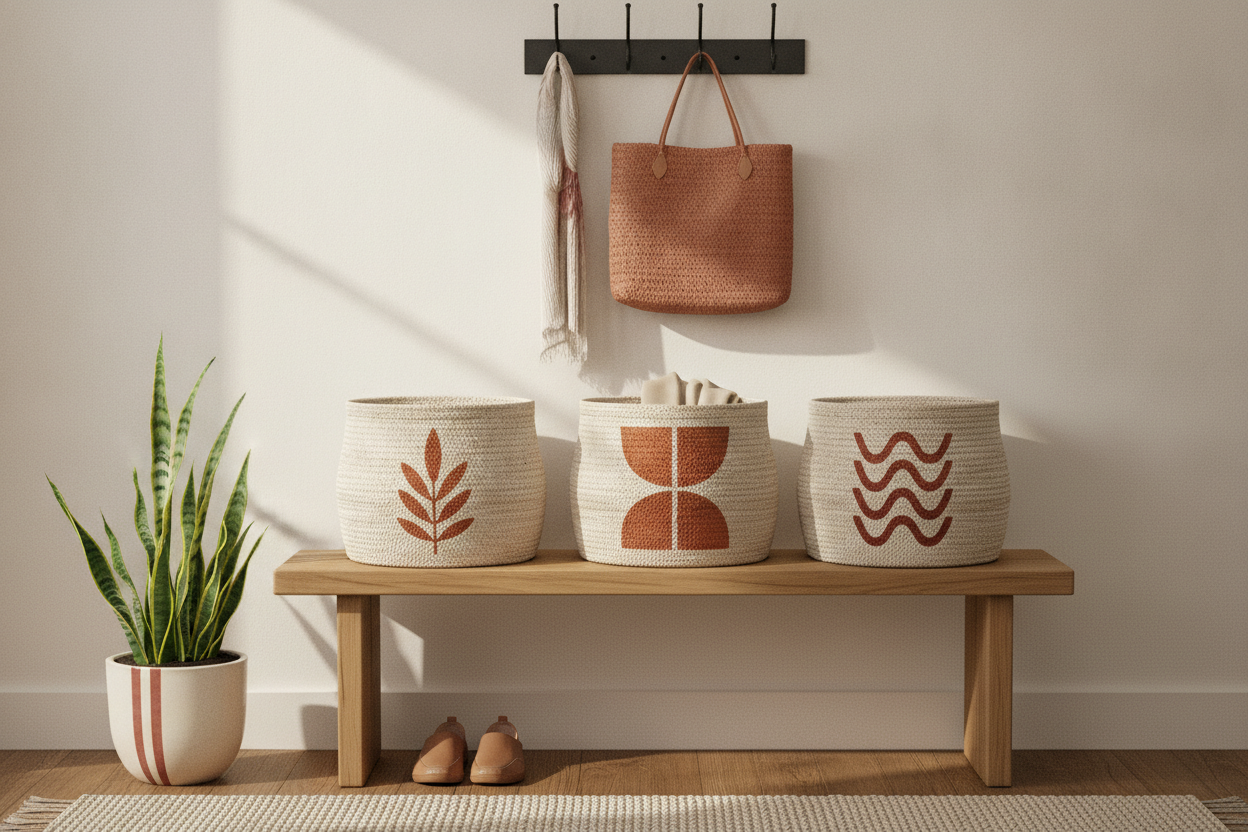
Decluttering only creates space when items actually leave the home. Set one small basket near the entry for donations and one bag for recycling. Schedule a weekly exit—such as Saturday morning—and avoid letting the donation basket overflow. Items you plan to sell should have a listing date and a one-week deadline; after that, donate them if the effort is no longer worth the space they occupy.
- Keep: items you use, love, or genuinely need.
- Relocate: items that belong in another room or zone.
- Release: duplicates, damaged items, and “maybe someday” purchases.
- Digitize: manuals, receipts, and paperwork you need to reference but rarely handle.
Think vertically before adding more furniture
When floor space is limited, the walls, doors, and cabinet interiors become your best allies. In a rental, choose removable or freestanding solutions: over-the-door pockets, adhesive hooks rated for the item’s weight, tension rods, slim rolling carts, and tall bookcases that do not spread across the room. In sleeping areas, these small bedroom organization ideas show how to apply the same approach to closets, walls, furniture, and under-bed space.
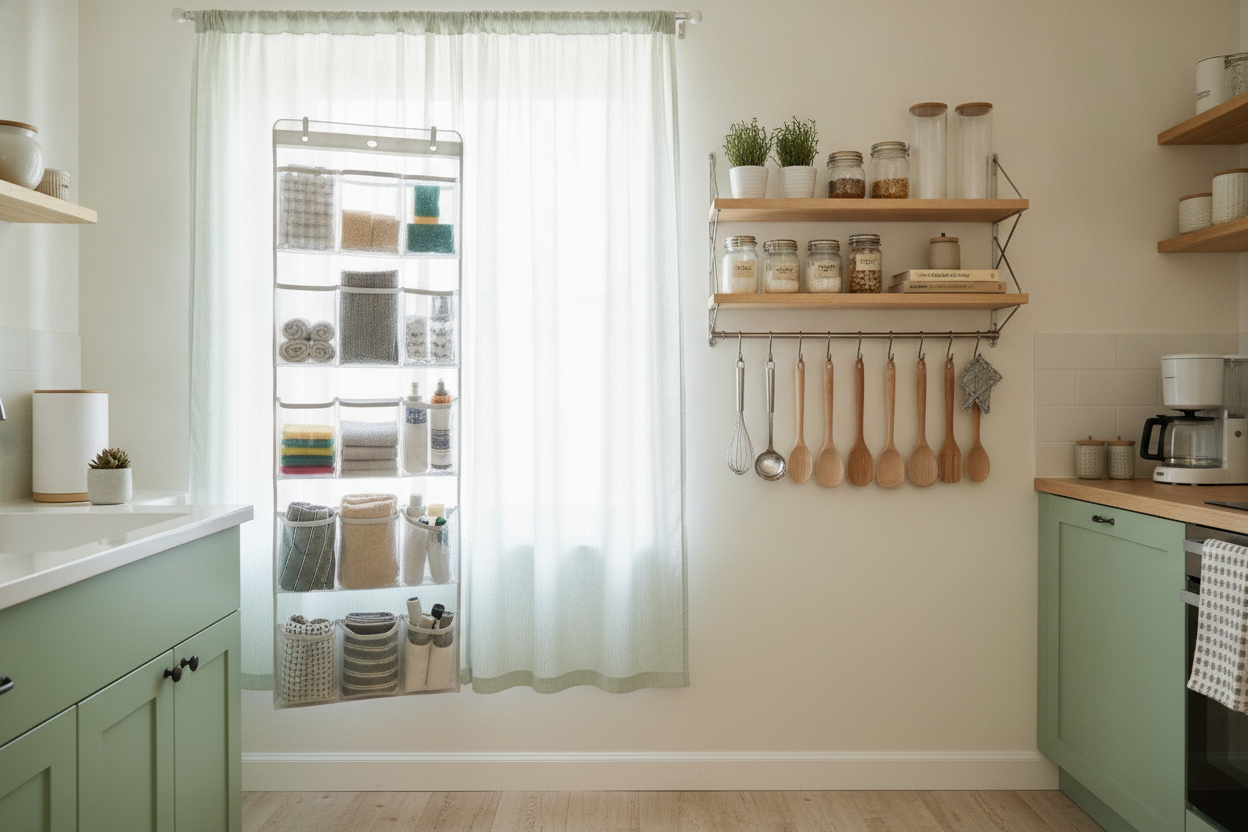
Use the inside of a door for light, flexible categories such as cleaning supplies, hair tools, pantry packets, or accessories. A tension rod under a sink can hold spray bottles by their handles, while a narrow cart can turn the gap beside a refrigerator or washer into useful storage. Keep heavy items low and reserve high shelves for things you use occasionally.
Give every room a job—and every zone a boundary
A small room may need to serve as an office, dining area, and living room. Instead of trying to hide all signs of those activities, define each zone with one visual boundary: a rug, lamp, narrow shelf, tray, or matching pair of baskets. Boundaries make it easier to put things away because each category has a natural home.
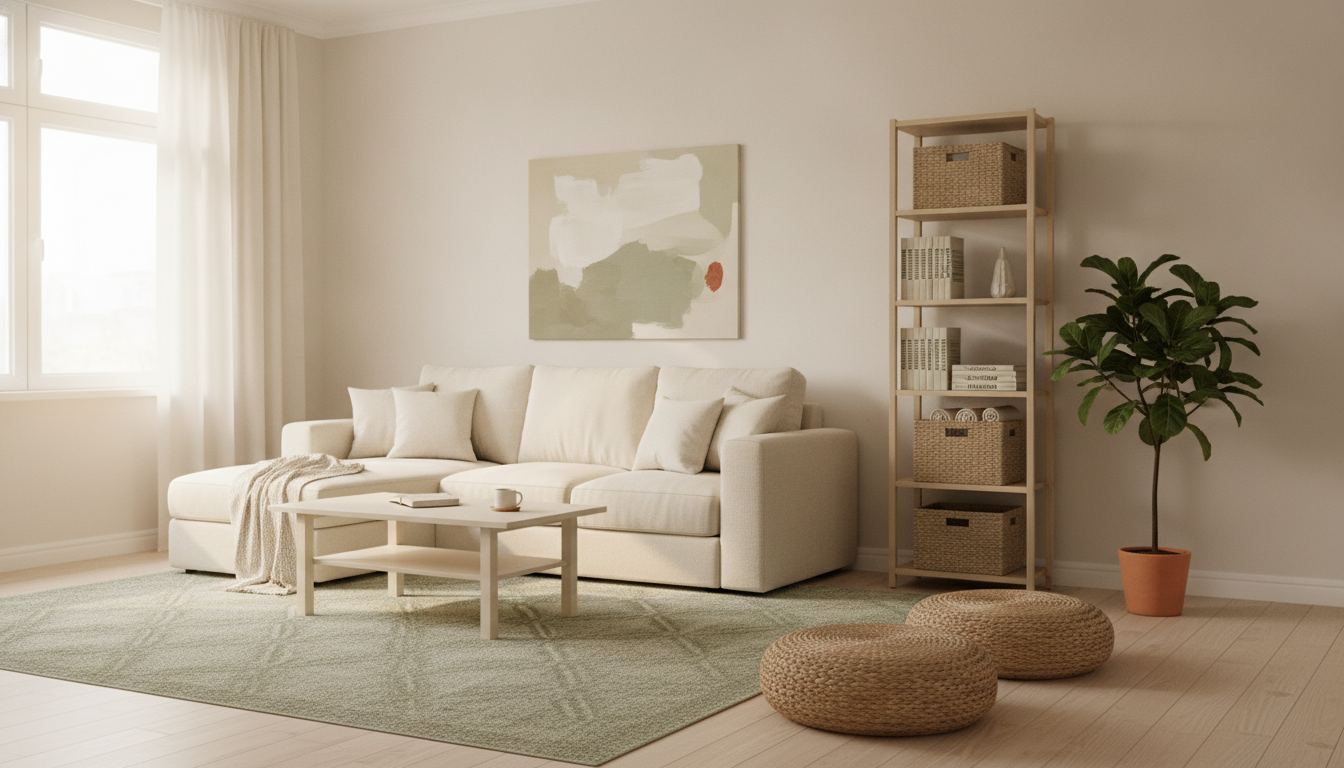
Keep the visual language consistent across zones. Repeating one or two materials—such as woven baskets and light wood—helps a multipurpose room look intentional rather than crowded. Store the least attractive supplies behind doors or inside opaque bins, and leave a little breathing room around display items. A container should make access easier, not become a second job.
Organize by the way you live
Traditional room labels are not rules. If your entry closet is mostly empty while your kitchen lacks a pantry, create a pantry zone with a freestanding shelf and labeled bins. If you work at the dining table, keep office supplies in one portable caddy so the table can return to dining mode in less than a minute.
Group items by the task they support rather than by their shape. Put coffee filters, mugs, and beans together if that makes mornings smoother. Keep batteries, a small screwdriver, and measuring tape in one “quick fixes” box. The best system is the one that reduces decisions during a busy day.
Control paper and digital clutter
Paper creep is especially noticeable in a small home. Create one inbox for mail and paperwork, then process it on a set day. Recycle envelopes and advertisements immediately, scan documents you need for reference, and keep only originals that matter for legal, financial, medical, or sentimental reasons. Use a simple folder structure for digital copies so digitizing does not merely move the mess to your desktop.
For receipts and warranties, try a one-year review. Save proof of purchase while an item is under warranty, then remove it when the coverage ends. This small habit can free an entire file box over time.
Build a five-minute reset that actually lasts
Large organizing sessions are useful occasionally, but small homes benefit most from a repeatable daily reset. Set a timer for five minutes and work in the same order each time:
- Return misplaced items to their zones.
- Clear the main surfaces, especially the kitchen counter and entry.
- Put laundry in its hamper and shoes in one designated spot.
- Remove rubbish and take outgoing items to the door.
- Choose one tiny task for tomorrow, such as one drawer or one shelf. For extremely compact spaces, explore these tiny home storage ideas for more space-saving approaches.
Once a week, do a ten-minute “clutter sweep” through high-traffic areas. Once a month, review one category that tends to multiply—water bottles, toiletries, cables, or reusable bags. This rhythm keeps maintenance small enough to repeat and prevents a busy month from turning into a full-home crisis.
The Stash Savvy rule: make the next action obvious
Organization is not about making a home look empty. It is about making the next action obvious: the donation basket is by the door, the documents have one inbox, the cleaning supplies are grouped together, and the reset takes five minutes. Start with one visible pain point today, remove what no longer earns its space, and add storage only after you know what remains.
Research note: This article was informed by current search results and practical guidance from Abby Organizes’ small-home organization guide and Good Housekeeping’s decluttering strategies. The recommendations and examples here are original to Stash Savvy.
What is the first small space you are ready to reclaim?
SEO title: How to Organize a Small Home Without Making It Feel Crowded
Meta description: Organize a small home with decluttering rules, rental-friendly vertical storage, flexible zones, paper control, and a five-minute reset routine.
Suggested slug: organize-small-home-without-feeling-crowded