
10 Butler’s Pantry Organization Ideas for a Tidy Kitchen
A butler’s pantry is one of the most useful spaces in a home, yet it’s often the first to become cluttered. At Stash Savvy, we cover the storage systems that actually stick, and the butler’s pantry is where a lot of kitchen calm is won or lost. Below are ten ideas we track for turning that overlooked corridor or nook into a tidy, functional space that keeps your main counters clear.
How to Organize a Butler’s Pantry: Quick Start
Start by clearing the pantry and grouping everything into four practical zones: everyday food, small appliances, serving pieces, and drinks or entertaining supplies. Keep frequently used items between waist and eye level, move heavy appliances to lower shelves or pull-outs, and reserve upper storage for lightweight or seasonal pieces. Measure shelf depth and width before buying bins so every organizer earns its space.
- Keep counters clear: give appliances and serving pieces a defined home.
- Use visibility: choose clear containers, labels, or open-front bins for items you restock often.
- Use vertical space: add shelf risers, tall cabinets, hooks, or wall storage where floor space is limited.
- Build around your routine: place coffee, bar, baking, or entertaining supplies together so the pantry supports how you actually use it.
Once the zones are mapped, choose the storage ideas below based on your pantry size, budget, and whether you rent or own.
How We Ranked These Butler’s Pantry Organization Ideas
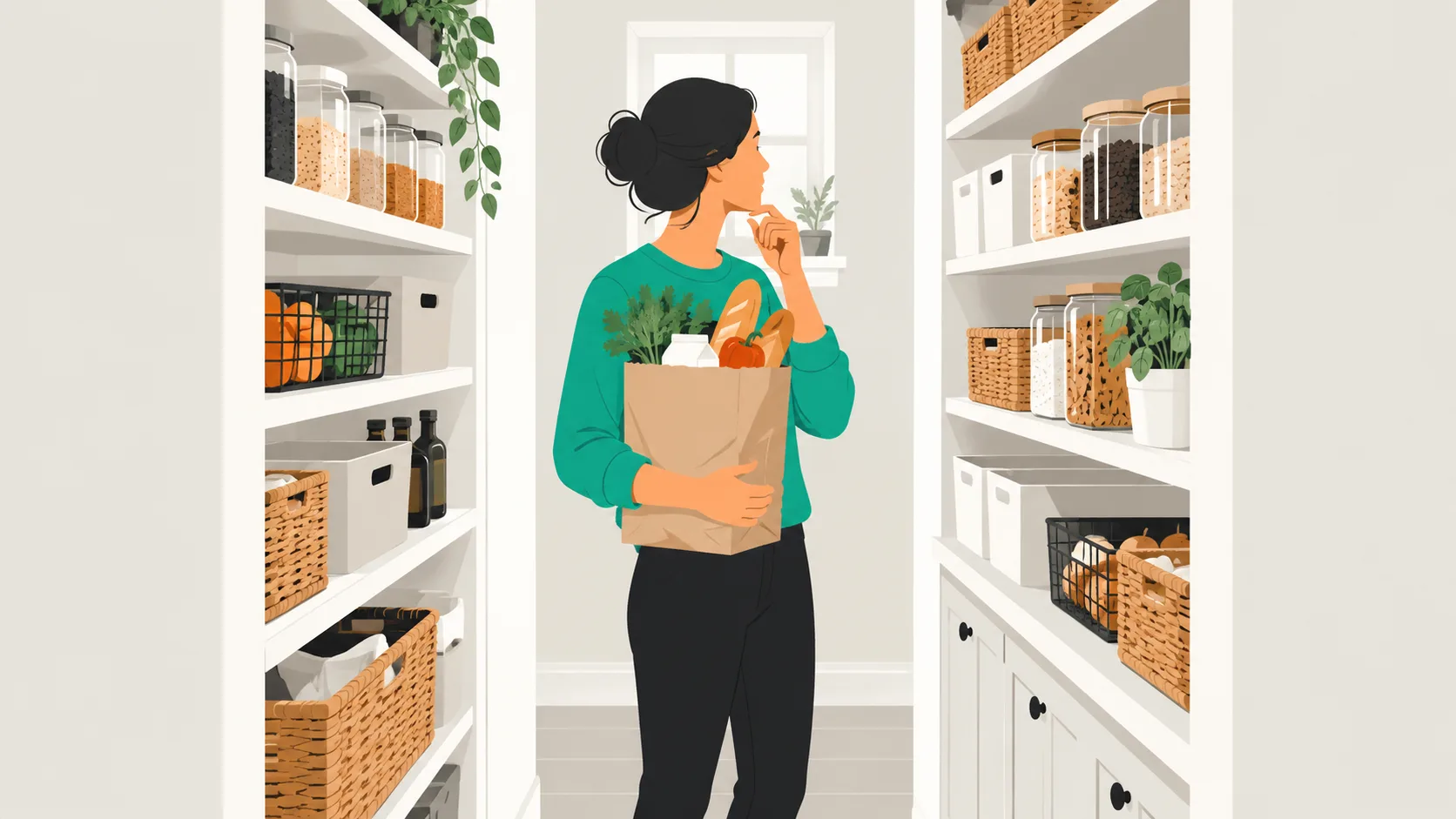
We weighed each idea against the things that actually matter when you’re standing in a narrow pantry with a bag of groceries. Practical impact came first: how much visual clutter it clears and how much easier it makes weeknight cooking. A shelf that hides a stand mixer beats a pretty jar that holds three almonds. For more on this baseline, our walk-in pantry organization ideas guide shows how the same instinct applies across utility spaces.
Accessibility was next. The best systems work without a full renovation, using off-the-shelf bins, baskets, and shelf risers you can order this week. Sustainability of the system also counts; ideas that survive a busy month score higher than elaborate setups that fall apart by Friday. If your household leans small-space, the same rules from our organize a small home guide apply here too.
Space efficiency is weighted heavily since most butler’s pantries are narrow corridors or compact nooks, not full rooms. Versatility rounds it out: our top picks adapt to both dedicated butler’s pantry rooms and smaller bar-area or pass-through configurations. If your pantry runs deep instead of wide, cross-reference our deep-shelf pantry organization tips before you commit to a layout.
Takeaway: the best butler’s pantry ideas are low-lift, adaptable, and calm to maintain, not photo-shoot-perfect.
Quick Summary: Butler’s Pantry Organization Ideas at a Glance
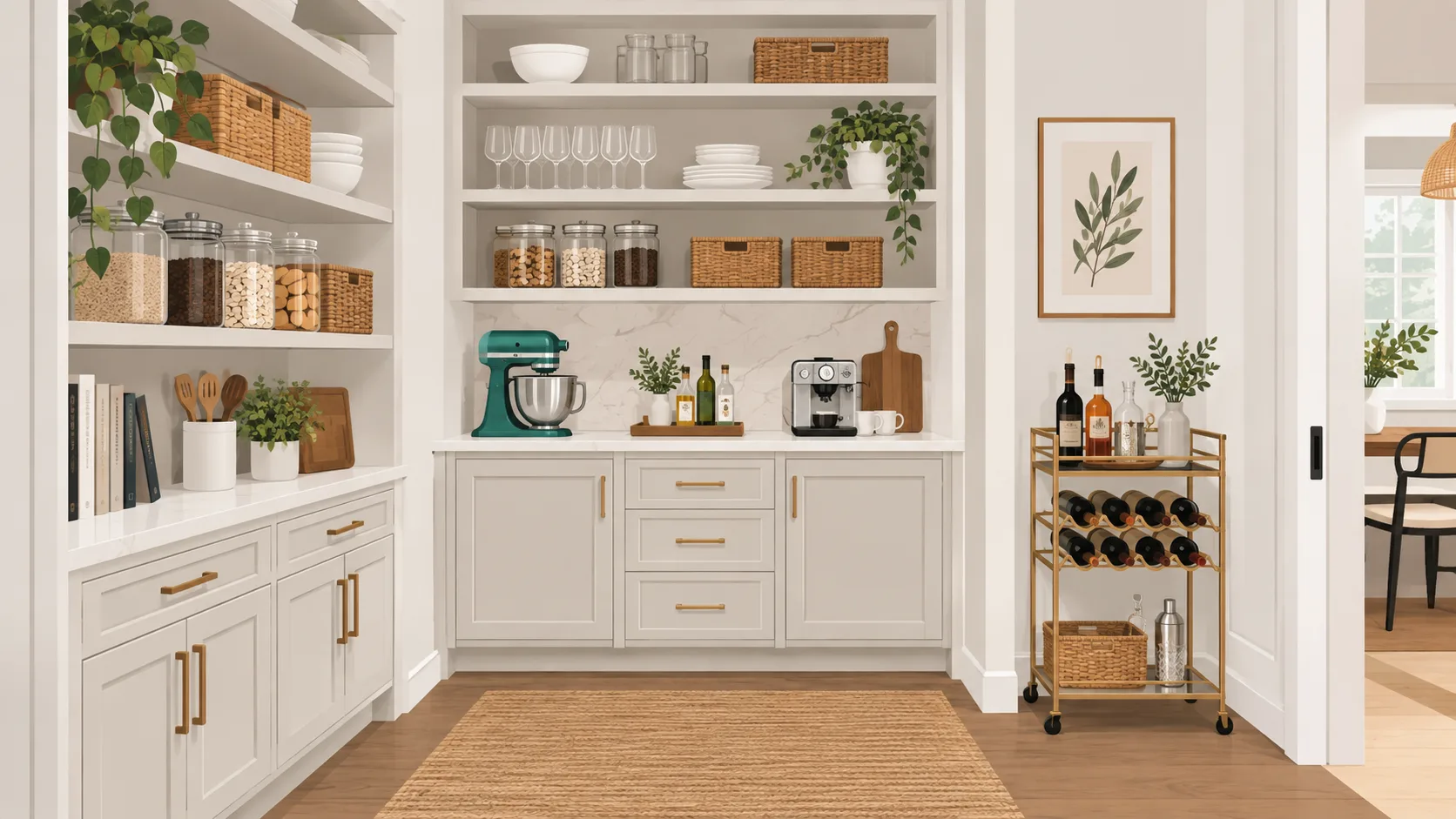
Here’s the ranked shortlist. Each pick has a tag for the household it suits best, from renters to full remodelers. Our top-ranked ideas need zero permanent changes, so they work whether you own or rent. For renters especially, the same low-commitment thinking shapes our small kitchen pantry organization ideas guide.
- Open Shelving With Labeled Glass Jars, Best Overall
- Woven Baskets and Bins for Bulky Items, Best for Families
- Hidden Appliance Garage, Best for Minimalists
- Built-In Cabinetry With Cabinet-Style Doors, Best for New Builds
- Wine and Bar Cart Zone, Best for Entertainers
- Pull-Out Drawer Inserts and Dividers, Best for Small Pantries
- Wall-Mounted Pegboard or Slat Wall, Best for Renters
- Under-Counter Beverage Fridge, Best for Wet Bar Setups
- Tall Pantry Cabinets for Vertical Storage, Best for Narrow Corridors
- Dedicated Zones by Category, Best for Large Collections
At a Glance: Butler’s Pantry Organization Ideas Compared
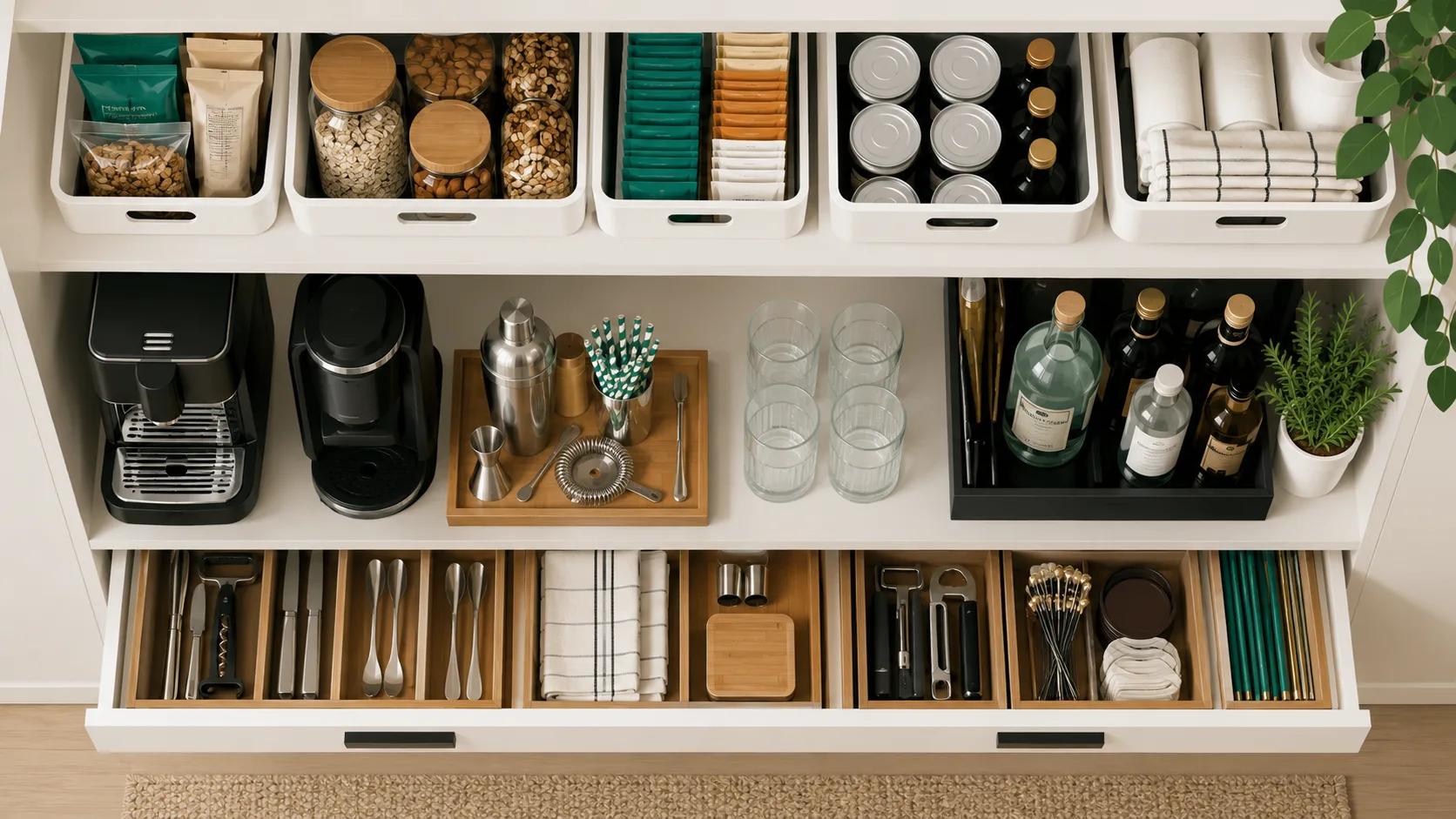
The table below stacks all ten ideas across cost, skill level, best pantry type, and standout benefit. Low-cost picks like labeled bins and drawer dividers can be pulled together for under $50; structural picks like built-ins push into contractor territory but pay back at resale. For a broader look at what budget organizing can do, see our Dollar Tree pantry organization hacks piece, which uses the same cost logic.
| Idea | Cost | Skill Level | Best Pantry Type | Standout Benefit |
|---|---|---|---|---|
| Glass jars + open shelving | $50-$150 | Easy | Open nook | Instant inventory |
| Woven baskets | $30-$120 | Easy | Any | Hides bulky items |
| Appliance garage | $300-$1,500 | Contractor | Cabinet run | Clear sightlines |
| Built-in cabinetry | $2,000+ | Contractor | New build | Resale value |
| Wine and bar cart | $80-$400 | Easy | Corridor | Entertaining zone |
| Pull-out drawer inserts | $20-$80 | DIY | Small | Uses dead space |
| Pegboard or slat wall | Under $40 | DIY | Renter-friendly | Fully removable |
| Beverage fridge | $400-$1,200 | Light install | Wet bar | No plumbing needed |
| Tall pantry cabinet | $200-$900 | DIY | Narrow | Vertical gains |
| Category zones | $0-$50 | Easy | Any | Faster restocking |
The ideas above range from a free zone-mapping exercise to a full contractor build, so there’s an entry point for every household. Our garage storage ideas on a budget roundup uses the same cost-tiered thinking if you want a template for prioritizing upgrades.
Takeaway: open shelving with glass jars wins for calm; hidden appliance storage wins for minimalist sightlines.
Top 10 Butler’s Pantry Organization Ideas
1. Open Shelving With Labeled Glass Jars (Best Overall)
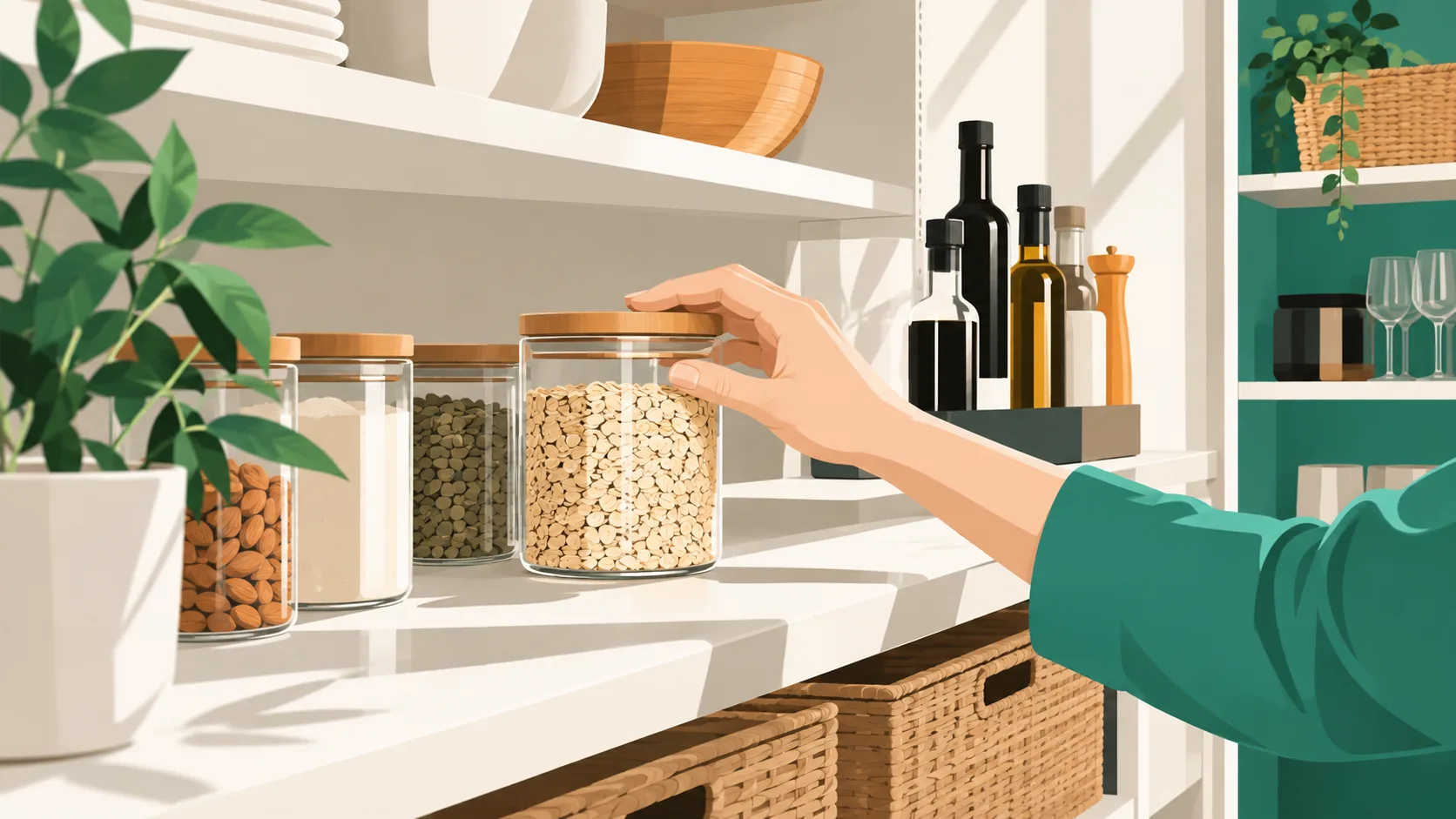
Uniform jars on an open shelf turn a jumbled pantry into a quiet grid. You see flour levels at a glance, so you stop buying a third bag “just in case.” Stick with two or three jar sizes to keep the visual noise down, and add chalk or vinyl labels so anyone in the household can put things back correctly. Our deep-shelf pantry guide covers jar sizing for narrow shelves specifically. Weakness: decanting takes an afternoon up front, and refills are a small ongoing chore.
2. Woven Baskets and Bins for Bulky Items (Best for Families)
Family-sized chip bags, paper towels, and jumbo water bottles refuse to sit neatly on a shelf. Woven baskets corral them and give the pantry a soft, warm look instead of a warehouse vibe. Label the front of each basket so the “snacks” one doesn’t slowly turn into a junk drawer. This same corral-the-bulky-stuff approach powers our glass pantry organization ideas. Weakness: baskets hide contents, so anything that goes in must come out for inventory.
3. Hidden Appliance Garage (Best for Minimalists)

An appliance garage is a cabinet section with a tambour or lift-up door that hides the toaster, blender, and coffee grinder while keeping them plugged in and ready. It’s the single biggest win for a minimalist sightline from the main kitchen. Install an outlet strip inside so you never need to unplug. Pair it with the counter-clearing habits in our cluttered room reset guide. Weakness: it’s a cabinetry-level project, so plan for a contractor.
4. Built-In Cabinetry With Cabinet-Style Doors (Best for New Builds)
Cabinet-style pantry doors are thinner than standard interior doors and swing on cabinet hinges, which solves the classic door-swing collision in narrow butler’s pantry corridors. From the kitchen side they read as furniture; open them and you get full pantry access. This is worth speccing during a new build or full remodel. For a small-space rethink on cabinetry choices, our corner pantry organization ideas is a good companion read. Weakness: cost and lead time.
5. Wine and Bar Cart Zone (Best for Entertainers)
Dedicate one section, or a rolling cart, to bar supplies: glassware, spirits, mixers, a small ice bucket, and a bottle opener that lives on a hook. When guests arrive, everything is in one spot and your main kitchen stays a cooking zone. A cart also rolls out to the dining room during parties. Our dollar tree organization ideas list has cheap trays and caddies that dress up a bar cart. Weakness: carts wobble; anchor heavy items on the bottom shelf.
6. Pull-Out Drawer Inserts and Dividers (Best for Small Pantries)
Deep shelves waste vertical air. Add pull-out drawer inserts, tiered risers, and simple dividers, and suddenly a 12-inch shelf holds three rows of cans you can actually see. This is the cheapest structural upgrade in the list. Our pantry organization with deep shelves piece walks through insert sizing. Weakness: measure twice; drawer inserts are unforgiving on width.
7. Wall-Mounted Pegboard or Slat Wall (Best for Renters)
A pegboard panel runs under $40, mounts with a few screws, and patches back to plain drywall on move-out. Hang aprons, measuring cups, small pans, and even mugs. Slat walls do the same with a more modern look. Renters get real storage without breaking a lease. The same removable logic runs through our small laundry room storage ideas. Weakness: heavy items still need studs, not just drywall anchors.
8. Under-Counter Beverage Fridge (Best for Wet Bar Setups)
A built-in beverage fridge anchors a bar zone without the plumbing headache of a full wet-bar sink. Stock it with sparkling water, wine, and mixers, and the main fridge stops getting raided during parties. Most units plug into a standard outlet. Pair it with counter zones from our kitchen counter ideas guide for a clean bar top. Weakness: ventilation clearance matters; check the spec sheet before you build it in.
9. Tall Pantry Cabinets for Vertical Storage (Best for Narrow Corridors)
When floor space is tight, go up. A tall, shallow pantry cabinet, 12 to 15 inches deep, fits into corridors that can’t accept a standard 24-inch cabinet. You get five or six usable shelves without eating walking room. Group like items on each shelf, tallest at the bottom. Our kitchen storage ideas for small spaces has more vertical tactics. Weakness: top shelves need a stool, so store lightweight or seasonal items up there.
10. Dedicated Zones by Category (Best for Large Collections)
Assign a zone to each category: baking, entertaining, overflow groceries, bar. Items stop migrating, and restocking after a grocery run takes minutes instead of a full reset. This is a $0 upgrade if you already have the shelving. Our pantry with deep shelves organization walkthrough shows how to map zones on paper first. Weakness: zones only hold if the whole household agrees to them.
How to Choose the Right Butler’s Pantry Organization System
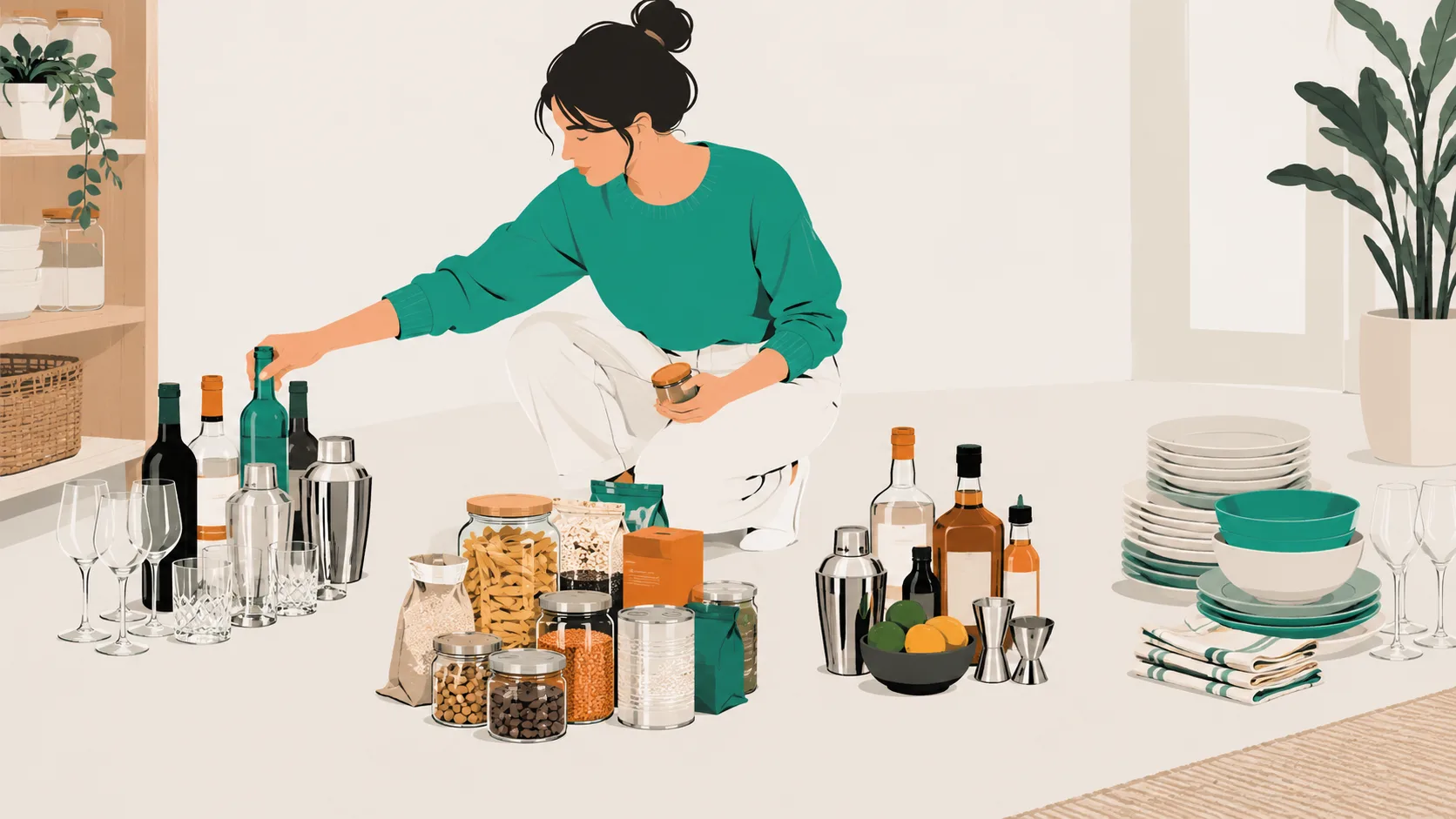
Start with an honest audit. Pull everything out and sort into four piles: appliances, overflow groceries, bar supplies, entertaining dishes. The mix tells you what your pantry actually needs to do, and the answer is rarely “all of it equally.” Our pantry organization tips for deep shelves include a printable audit worksheet.
Measure next. Get the depth, width, and ceiling height before you buy any shelving or cabinetry; a two-inch miscalculation turns into a costly return. Decide on a door strategy early, because open nook, cabinet-style doors, or a sliding barn door each dictate the rest of the layout. For style ideas across storage types, browse our closet organization alternatives roundup.
Match the system to your household’s real maintenance habits. Open bins need weekly tidying; closed cabinets with labeled drawers forgive a busy week. If the pantry connects a kitchen to a dining room, put entertaining supplies on the dining-room end so the workflow feels natural. Our small-space organization guide has more on matching systems to actual routines.
Takeaway: audit, measure, pick a door, then choose the system, in that order.
Conclusion
You don’t need a full remodel to feel the difference. A set of labeled bins, one category zone, or a single pegboard panel measurably calms the daily kitchen scramble. The best system is the one that fits how your household actually cooks, shops, and entertains, not the prettiest photo on Pinterest. Start with one shelf or one zone, get it working, then move to the next.
For more room-by-room momentum after the butler’s pantry is sorted, browse the full directory of guides at your home organization hub, from kitchen and pantry systems to closets and laundry rooms. Small, doable steps stack up faster than an all-weekend overhaul.
FAQ: Frequently Asked Questions
What is a butler’s pantry and how is it different from a regular pantry?
A butler’s pantry is a transitional space between the kitchen and dining room, usually with counter space and cabinetry for prep, serving, and storage. A regular pantry is typically just shelved storage for food.
How do I organize a small butler’s pantry with limited space?
Go vertical with tall shallow cabinets, add pull-out drawer inserts to deep shelves, and use the walls with a pegboard or slat panel. Assign zones so every square inch has one job.
What should I store in a butler’s pantry?
Store overflow groceries, small appliances, bar supplies, serving dishes, and entertaining items. Keep everyday cooking tools in the main kitchen. The butler’s pantry works best for items you use often but don’t need on the main counter.
Do I need a sink in my butler’s pantry?
No. A sink is helpful for a true wet bar or extra prep, but plumbing adds cost and complexity. A beverage fridge and a stocked bar zone deliver most of the entertaining benefit without any plumbing work.
What shelving works best in a butler’s pantry?
Adjustable open shelving suits most layouts because you can reset heights as your storage needs change. Pair it with glass jars and woven baskets. In deeper spaces, add pull-out drawers so back-shelf items stay visible.
How can I make a butler’s pantry look neat without a full renovation?
Decant staples into matching jars, add labeled baskets for bulky items, and group everything into three or four category zones. A single roll of chalk-label tape and a stack of matching bins is often enough.
Can a butler’s pantry double as a home bar or wine storage area?
Yes, and it’s one of the most popular uses. Add an under-counter beverage fridge, a wine rack, and a small tray of glassware. Keep spirits and mixers in one zone so guests can serve themselves without wandering into the main kitchen.
What are the most common butler’s pantry organization mistakes to avoid?
Overbuying bins before measuring, mixing too many jar sizes, ignoring vertical space, and skipping labels. The biggest mistake is designing for how you wish you cooked instead of how you actually shop and entertain each week.