
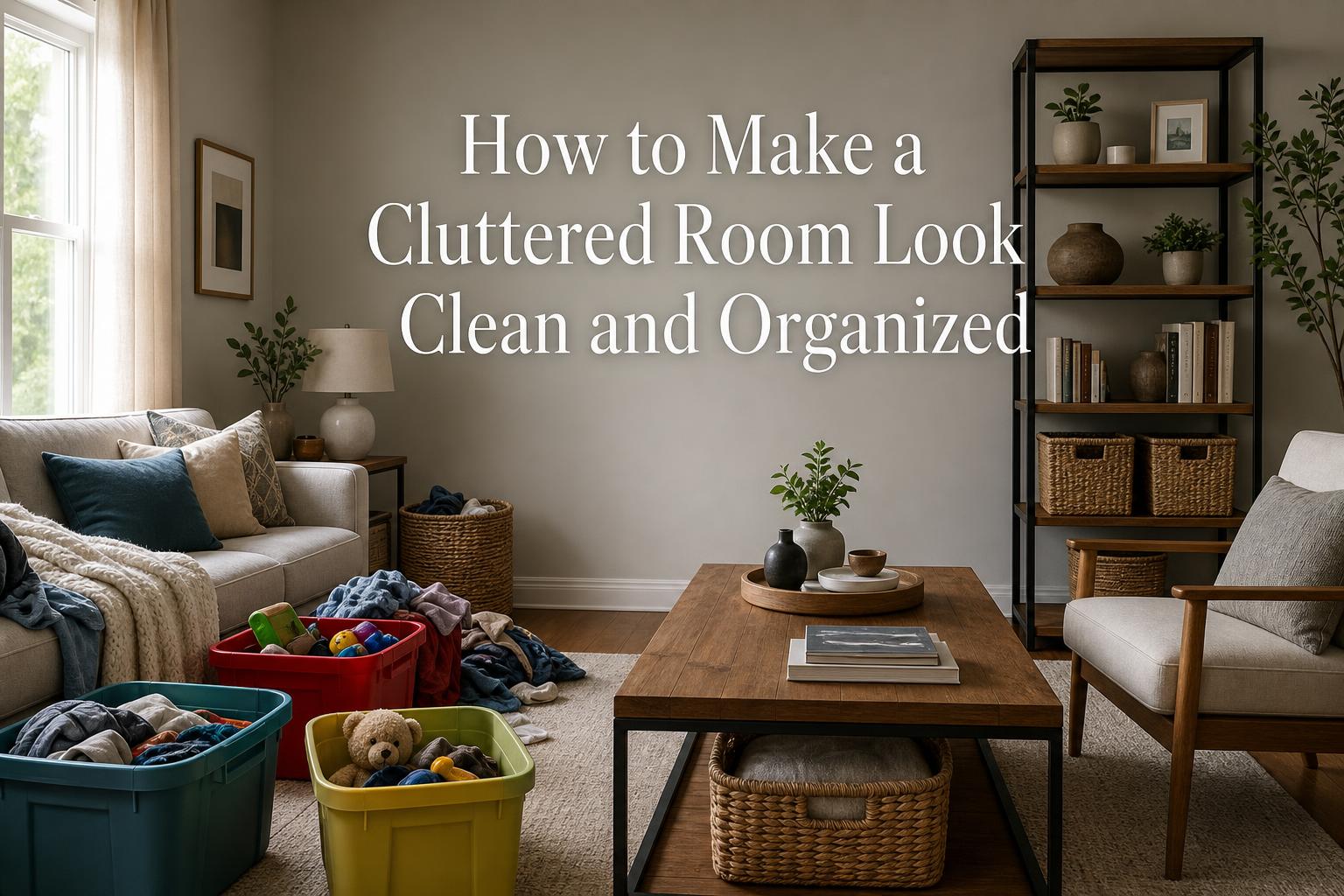
How to Make a Cluttered Room Look Clean and Organized
You can make a cluttered room look clean and organized in two to three hours using a timer, four bags for sorting, and the furniture you already own. Clear the floor and largest surfaces first for an instant visual win, sort everything into keep, relocate, donate, and trash, then give each kept item a consistent home before buying a single container. The result you want is calm and functional, not a showroom.
Time required: 2-3 hours for a standard bedroom
Difficulty: Beginner
Cost: $0 to start; optional bins later
You are not alone in this. A YouGov survey of 28,415 U.S. adults conducted November 17, 2025 found that 40% of Americans describe their homes as cluttered, with 9% calling them very cluttered. Clutter carries a mental cost too: in Budget Dumpster's decluttering survey of 1,000 Americans, 48.5% said unwanted clutter makes them feel stressed.
What you need before you start
A short checklist. Everything here is either free or already in your home.
- Four containers for sorting: laundry baskets, boxes, or trash bags labeled keep, relocate, donate, trash
- A timer (your phone works)
- A trash bag and a donation bag
- Cleaning basics: a cloth, all-purpose spray, a vacuum or broom
- 15 minutes to sketch your room's activity zones (sleep, work, dressing, hobbies)
Tip: Do not buy storage containers yet. Buying bins before you reduce excess makes clutter more expensive. Measure and confirm what you actually need first, then shop.
Step 1: Clear the floor and biggest surfaces first
Start by removing everything from the floor, the bed, and your largest visible surface like a desk or dresser. This single move produces the fastest visual improvement because the eye reads open floor and clear surfaces as "clean" before anything else.
Work fast here. Set your timer for 20 minutes and move items into your four sorting containers as you go. Do not organize yet. Do not clean yet. You are only clearing.
Pitfall: Do not start with a drawer or a closet. Hidden zones give no visual payoff and burn your energy early. Surfaces and floor are what people see when they walk in.
Step 2: Sort everything into four groups
Sort every item you cleared into keep, relocate, donate, or trash. Keep means it stays in this room. Relocate means it belongs elsewhere in the home. Donate and trash leave the house.
Touch each item once and decide. If you stall on something, put it in keep and move on. Speed matters more than perfect calls on the first pass.
You do not need to become a minimalist. Keep the useful and the meaningful. The goal is that each kept item gets a consistent home, not that you own less for its own sake.
Warning: Matching containers make a room look tidy but do not fix having too much stuff. Visual organization and true decluttering are different. If a shelf is packed, no bin will make it feel calm.
Tip for collectors: If you keep plush toys, figures, or hobby supplies, do not discard them out of guilt. Contain or display them deliberately in Step 4 instead. Users on r/femalelivingspace note that deep or low shelving can make a room feel smaller, so favor a single curated display over spreading a collection across every surface.
Step 3: Map activity zones for how you actually live
Assign each area of the room to an activity: sleep, dressing, charging, working, or crafting. Zoning by activity works better than sorting by item category alone, especially in a multipurpose room where gaming, studying, and work compete for the same desk.
People on r/DesignMyRoom repeatedly ask for zoning and rearrangement advice rather than being told to throw things out. A charging zone near the bed, a work zone at the desk, and a dressing zone by the closet keep related items together and stop the daily surface scramble.
Account for what you cannot move. Closet door swing, a pet enclosure, or an incoming larger bed all constrain layout. Plan zones around those fixed features before you commit.
Tip: Frequently used items should stay visible or one reach away. A system with too many steps gets abandoned within a week.
Step 4: Add storage only for confirmed needs
Now assign each kept item a home, using what you own first. Repurpose free boxes, jars, and baskets before spending anything. Buy low-cost bins only for a need you have confirmed, and reserve modular systems for storage problems that keep coming back.
Opaque or lidded containers cut visual noise, which helps rooms that look cluttered even when technically organized (a common complaint on r/OrganizationPorn about open cube shelving). Concealed storage reads calmer than open shelves crammed with mixed items.
Spend in this order:
| Priority | What to use | Rough cost |
|---|---|---|
| 1 | Furniture and containers you already own | $0 |
| 2 | Repurposed free boxes, jars, baskets | $0 |
| 3 | Low-cost bins for confirmed needs | IKEA SAMLA from $2.99 (3-gal, no lid) |
| 4 | Modular systems for persistent problems | Elfa Classic units from ~$325 for 2 ft |
A 3-gallon IKEA SAMLA box is listed at $2.99 without a lid and $4.99 with one, while a 34-gallon SAMLA runs $29.99 to $39.99 depending on the lid, per IKEA's 2026 U.S. listings. Compare that to Container Store Elfa Classic shelving at roughly $325 to $385 for a 2-foot unit. For renters and tight budgets, stackable bins, baskets, hooks, and drawer dividers move with you and cost a fraction of built-ins.
For under-used floor space, under bed storage and closet organization absorb bulk without adding visible clutter. Dollar-store bins also work for low-stakes items; see these dollar store organization hacks.
Step 5: Do the final cleaning pass
Clean only after sorting and storage are done. Dust surfaces top to bottom, wipe high-touch spots like light switches and doorknobs, vacuum or sweep the floor, and make the bed. A made bed anchors the whole room's clean look.
This is the moment the room reads as finished. You cleared the visual noise in Step 1, gave everything a home in Step 4, and now the surfaces you cleaned stay clean because items have somewhere to go.
Tip: Making the bed takes under two minutes and does more for perceived tidiness than almost any other single action.
Step 6: Keep it clean with a small daily reset
Protect your work with one low-effort habit. Pick one:
- A five-minute daily reset: set a timer, return stray items to their zones
- A weekly donation bag: fill and drop off once a week
- One-in, one-out: for every new item, remove one
You do not need a digital inventory app for a single room. Sortly's paid plans run from $49 to $299 per month per their 2026 pricing, which is far more than one bedroom needs. A free notes app or a paper checklist is enough. If you like task reminders, Todoist's free tier covers daily-reset nudges without cost.
Troubleshooting
Why does my room still look cluttered even though it's organized?
Because open shelving and mixed visible items create visual noise even when everything has a place. Switch to opaque or lidded containers on your busiest shelf, limit display to one intentional focal point, and clear the floor completely. Concealment plus fewer competing surfaces reads as calm.
What if I want to keep most of my things?
You can. Aggressive decluttering is optional. Give every kept item a consistent home, then contain the overflow in lidded bins and use vertical space with hooks and stacked baskets. The rule is one home per item, not fewer items.
How do I organize a room that's used for work, sleep, and hobbies at once?
Assign activity zones instead of scattering items by type. Give the desk a work zone, the bed a sleep and charging zone, and a corner or cart to your hobby. Store each zone's supplies inside that zone so surfaces stop collecting overflow from other activities.
Do I need to buy storage bins to make this work?
No. Start with the furniture and containers you already own, then repurpose free boxes and jars. Buy bins only after you have confirmed a specific need and measured the space. Buying containers before reducing excess just makes clutter more expensive.
Next steps
You now have a repeatable method: clear surfaces, sort four ways, zone by activity, add storage last, clean, then reset daily. Run the same sequence in any small room. For tight footprints, apply these small space storage hacks and minimalist storage tricks for small apartments.
If your storage spending is starting to add up, set a small budget cap before your next bin purchase. Stashsavvy's practical budgeting tools and clear guidance can help you decide when a $30 container prevents a repeat purchase and when free bins do the job.
Frequently asked questions
How do you make a cluttered room look clean fast?
Clear the floor and your largest visible surfaces first, then make the bed. This produces the biggest visual improvement in the least time because open floor and clear surfaces read as clean before any deep cleaning. Sort what you cleared into keep, relocate, donate, and trash so items do not creep back onto surfaces within a day.
Should I buy storage containers before decluttering?
No. Reduce excess and confirm what you need before buying anything. Buying bins before you sort makes clutter more expensive and often leaves you with the wrong sizes. Start with containers you already own, repurpose free boxes, and buy low-cost bins only for confirmed needs. A 3-gallon IKEA SAMLA box costs $2.99 without a lid, so waiting until you know your needs costs you nothing.
Can a room look clean without becoming minimalist?
Yes. Keeping most of your belongings is fine. The room looks clean when every item has a consistent home and visual noise is reduced, not when you own less. Use opaque or lidded containers to conceal busy shelves, and limit open display to one intentional focal point instead of spreading items across every surface.
How do I organize a bedroom used for sleep, work, and gaming?
Assign activity zones instead of organizing only by item type. Give the desk a defined work zone, the bed a sleep and charging zone, and a corner or rolling cart to gaming or hobbies. Store each activity's supplies within its own zone so one activity's overflow stops landing on another's surface.
Do I need an app to keep my room organized?
No. A single bedroom does not need a digital inventory app. A free notes app, a paper checklist, and a timer are enough. Inventory tools like Sortly start at $49 per month, which is far more than one room justifies. A five-minute daily reset keeps the space clean without any software.
Related Reading
- 7 Ways to Declutter Your Home Without Feeling Overwhelmed
- 7 Minimalist Small Closet Organization Ideas to Maximize Every Inch
- Small Bedroom Storage Ideas That Boost Sleep and Reduce Stress
- How to Create Hidden Storage in Small Spaces (Step-by-Step)
- 12 Best Small Apartment Organization Hacks for Busy Renters
- 11 Small Closet Organization Tips That Actually Work
- Small Apartment Storage Ideas That Make Studio Living Practical
- Kitchen Counter Organization Ideas to Reduce Clutter and Save Time
- 16 Best RV Storage Ideas for Small Campers and Travel Trailers
- 15 Best Junk Room Storage Ideas for Small Homes