
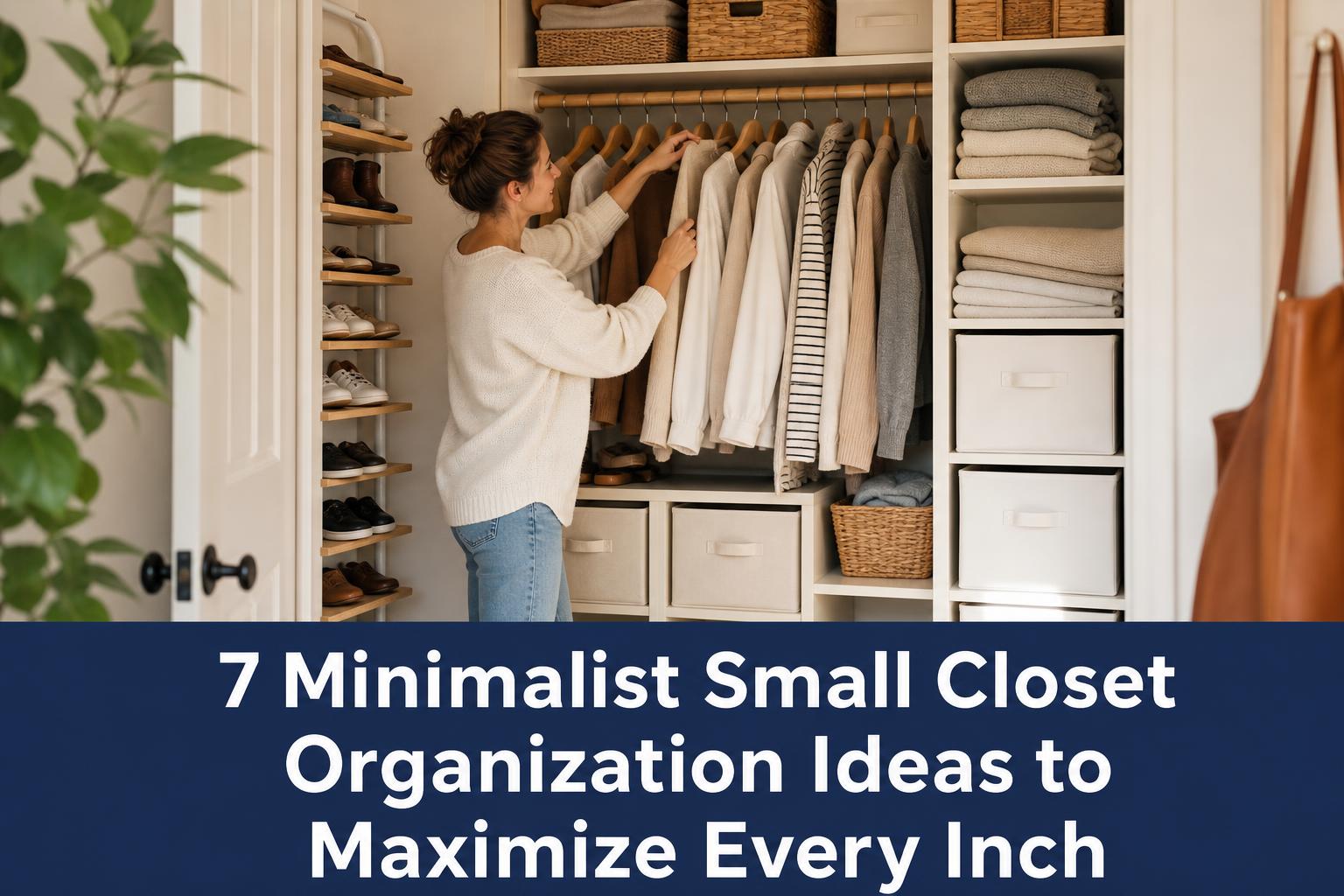
7 Minimalist Small Closet Organization Ideas to Maximize Every Inch
The fastest way to organize a small closet without wasting money is to declutter first, measure the space, then buy only targeted organizers that use vertical and door airspace. This order matters because 41% of U.S. adults cite having too many belongings as their main organization challenge (YouGov, 2025), so removing items usually solves more than buying containers. Prioritize hanging six-compartment organizers, over-door hooks, and adjustable shelf-and-rod systems over bulky floor furniture, and apply a one-in, one-out rule to keep the space from refilling.
Key takeaways
- Declutter and measure before spending: 46% of U.S. adults say insufficient storage is a challenge, but overbuying containers often makes small closets harder to access (YouGov, 2025).
- Use vertical, door-mounted, and shelf airspace to add capacity without consuming floor space.
- A hanging six-compartment organizer like the IKEA SKUBB costs about $14.99 and folds flat when not needed.
- Adjustable systems (the Container Store's Elfa sells individual components) beat fixed furniture because you can reconfigure or move them.
- A one-in, one-out rule prevents the closet from refilling after your first purge.
- Reserve opaque labeled bins for seasonal and low-use items; keep daily-use clothing visible.
How do you start organizing a small closet the cheapest way?
Start with zero-dollar edits: declutter by category, apply a one-in, one-out rule, and reposition your existing hangers and bins before buying anything. Decluttering is the highest-leverage step because 61% of U.S. adults say reducing clutter is what motivates them to organize (YouGov, 2025), and fewer items automatically means more room.
Pull everything out and sort by category (shirts, pants, shoes, accessories). Set a limit per category based on what actually fits, and donate or sell the overflow. This directly addresses the 37% of adults who cite difficulty letting go as an organization challenge (YouGov, 2025): decide once, then stop re-deciding.
The one-in, one-out rule is a spending guardrail as much as a storage one. Every new shirt means an old one leaves. A clearer closet also cuts duplicate purchases, because you can see what you already own instead of rebuying it, which is the money angle most closet guides skip.
Tip: Before buying a single organizer, spend one evening decluttering. Many people find they don't need new products at all once the closet holds only what they use. This is the free step 41% of adults skip while blaming lack of space.
Users on r/organizing repeatedly warn that makeovers fail when planning is skipped: piles come back because there was no zoning or access plan. Fix layout and clearance first, especially if a hamper or dresser blocks the closet door.
What should you measure before buying closet organizers?
Measure five things: closet width, depth, rod height, door clearance, and rod load capacity. Skipping this step is the top reason organizers get returned, and it prevents the "bought it, doesn't fit" problem people describe on r/Homeorganization.
Use a tape measure and write down:
- Width and depth of the closet interior, so shelves and racks fit without jamming the door.
- Rod height from floor, which tells you whether a second hanging level or shoe rack fits below your shortest garments.
- Door clearance (how far the door swings and how thick it is), which determines whether over-door hooks or organizers will foul the frame.
- Load capacity of the existing rod and wall anchors, checked before you add a second hanging level or heavy component.
That last point matters. A second rod loaded with clothes adds real weight, and drywall anchors fail. Confirm the rod supports are screwed into studs or rated hardware before you double your hanging capacity.
For unusually tight studio closets, users on r/organizing ask for solutions matched to their actual square footage rather than generic product lists. Your measurements are that customization. A 24-inch-wide closet and a 60-inch one call for different racks.

Which 7 minimalist ideas maximize a small closet?
The seven highest-impact minimalist ideas are: hanging six-compartment organizers, a second hanging rod, over-door hooks, narrow or stackable shoe storage, adjustable shelf-and-rod systems, opaque labeled bins for low-use items, and space-saving hangers. Each uses airspace or vertical room instead of scarce floor area.
1. Hanging six-compartment organizer. These use upper closet airspace for folded sweaters, jeans, or bags and fold flat when empty. The IKEA SKUBB Organizer with 6 compartments measures roughly 13¾ × 17¾ × 49¼ inches and was listed at $14.99 (IKEA, 2026).
2. A second hanging rod. Adding a lower rod creates a separate zone for shorter garments, shirts, skirts, or kids' clothing, and can nearly double hanging capacity. Confirm rod supports first.
3. Over-door hooks and organizers. Belts, scarves, hats, and bags move off shelves onto the door. If hats are taking over your closet, these hat storage ideas show additional wall, door, rack, and shelf options. Command 15-pound XL Heavyweight Wall Hooks (two-count) were listed at $6.99 (NBC Select, 2026), and 49% of U.S. adults already use hooks or hanging systems (YouGov, 2025).
4. Narrow or stackable shoe storage. A narrow rack keeps footwear off the floor so it doesn't block clothing access. The Simple Houseware 2-Tier Shoe Rack was listed at $17.97 (NBC Select, 2026).
5. Adjustable shelf-and-rod system. Modular components can be reconfigured as needs change. The Container Store's Elfa system sells individual pieces, with closet rods listed at $17 to $24 by length and shelf brackets at $11 to $13 (Container Store, 2025/2026). Modular storage units are projected to grow 5.91% annually through 2030 (Mordor Intelligence).
6. Opaque labeled bins for low-use items. Reserve these for seasonal clothing, sentimental items, and backup linens. Storage bins are the most common tool, used by 71% of adults (YouGov, 2025), but don't overdo it: too many bins make a small closet harder to access.
7. Space-saving hangers. Cascading hangers stack garments vertically. The Wonder Hanger Max 10-Pack was listed at $22.90 (NBC Select, 2026).
For related airspace tricks, see 15 genius small space storage hacks that actually work and these IKEA hacks to keep things organized.
When should you NOT buy a closet organizer?
Don't buy an organizer if you haven't decluttered, haven't measured, or if the product creates a new need for storage. Buying bins to hold clutter you should have removed is how a $50 project becomes a $150 one, and it's the trap finance-minded shoppers most want to avoid.
Three rules to follow:
- No purchase before a purge. If the closet is full because you own too much, a bin doesn't fix that, it hides it.
- No purchase before measuring. Un-measured organizers get returned or wedged in awkwardly.
- No matching-bin overkill. Matching containers reduce visual noise, but every extra bin you fill is a signal you're storing things you could release. 30% of adults use dedicated closet organizers (YouGov, 2025); most of the rest manage with fewer, cheaper tools.
Choose modular components you can reuse after a move over fixed furniture that's dead weight in a new apartment. That reusability is real savings across years, not one shopping trip.
Warning: Opaque bins hide items, which is a problem for daily-use clothing and for people who pile things they can't see. Users on r/organizing, including people with ADHD, report that visible, low-friction systems are easier to maintain than tightly packed storage. Keep everyday clothes in view.
What does a small-closet setup actually cost?
A no-purchase edit costs $0, a basic hanging-and-door setup runs about $30 to $50, and an expandable modular system starts around $60 and scales up. The gap between these tiers is mostly whether you're solving a clutter problem (free) or a genuine capacity problem (paid).
Here's a worked example for a 30-inch-wide bedroom closet. After decluttering (free), you add one SKUBB organizer ($14.99), a two-pack of Command XL hooks on the door ($6.99), and a 2-tier shoe rack ($17.97). Total: $39.95 in retailer prices at the time checked, for a closet that now holds folded knits, accessories, and shoes without touching the floor. Prices are retailer figures and may change.
| Approach | What it includes | Approx. cost |
|---|---|---|
| No-purchase edit | Declutter, one-in/one-out, reposition existing hangers and bins | $0 |
| Basic hanging + door | SKUBB organizer, over-door hooks, narrow shoe rack | ~$30–$50 |
| Space-saving hangers add-on | Cascading 10-pack hangers | +~$23 |
| Expandable modular | Elfa-style rods, shelves, brackets bought individually | ~$60+ (rods $17–$24, brackets $11–$13 each) |
Bedroom closets made up 39.12% of the U.S. home organizers and storage market in 2024 (Mordor Intelligence), so this is where most people spend. The minimalist move is to spend at the bottom of the range and only climb when measurements prove you need the capacity.
Managing these one-time costs deliberately is the same muscle as managing any budget line. Stashsavvy focuses on practical budgeting tools and clear guidance for people building savings, and treating a closet as a small, planned household project (declutter free, then buy targeted) keeps it from becoming impulse spending.
Bottom line
Organize a small closet in order: declutter, measure, then buy only what your measurements justify. The free steps solve most problems, since 61% of adults are motivated by clutter reduction and 41% blame having too many belongings (YouGov, 2025). When you do buy, favor vertical and door-mounted airspace, keep daily clothes visible, and pick modular components you can reuse after a move. A tidy $40 setup that you maintain with a one-in, one-out rule beats a $150 pile of bins hiding things you don't need.
For more small-space ideas, see 12 small apartment storage ideas that will change your life and how to organize a small house with no storage.
Frequently asked questions
What are the best small closet organization ideas on a budget?
Declutter first (free), then add targeted airspace tools: a hanging six-compartment organizer (about $14.99), over-door hooks (about $6.99 for two), and a narrow shoe rack (about $17.97). This basic setup totals roughly $40 in retailer prices and clears the floor. Skip matching-bin sets until you've confirmed you actually need the capacity, because too many bins make a small closet harder to access.
Should I declutter before buying organizers?
Yes, always declutter before buying anything. 41% of U.S. adults cite having too many belongings as their main organization challenge (YouGov, 2025), so removing items usually frees more space than any product adds. Sort by category, set a per-category limit, and donate the overflow. Buying bins to store clutter you should have removed wastes money and makes the closet harder to use.
How do I add hanging space to a small closet?
Add a second hanging rod below your existing one to create a zone for shorter garments like shirts and skirts, which can nearly double hanging capacity. Before installing, check that the rod supports and wall anchors are rated for the added weight, ideally screwed into studs. Cascading space-saving hangers, such as the Wonder Hanger Max 10-pack (about $22.90), are a lower-effort alternative.
Are modular closet systems worth it for a small space?
Modular systems are worth it if you have a genuine capacity problem and want to reconfigure or move the setup later. The Container Store's Elfa system sells individual components, with rods listed at $17 to $24 and brackets at $11 to $13 (2025/2026), so you buy only what fits. Modular storage is projected to grow 5.91% annually through 2030 (Mordor Intelligence). Skip it if decluttering already solved your space issue.
What should go in closed bins versus stay visible?
Reserve opaque, labeled bins for seasonal clothing, sentimental items, and backup linens, things you rarely reach for. Keep daily-use clothing visible and easy to grab. Users on r/organizing, including people with ADHD, report that visible, low-friction systems are easier to maintain than packed, hidden storage. Hiding everyday clothes in bins tends to create piles when you dig for them.
How do I keep a small closet organized after cleaning it out?
Use a one-in, one-out rule: every new item means an existing one leaves. This prevents the closet from refilling and doubles as a spending guardrail, since a visible closet cuts duplicate purchases. Set category limits so overflow is obvious, and favor systems that keep clothes in view rather than tightly packed, which makes maintenance a habit instead of a recurring purge.
Related Reading
- Closet Organization Ideas on a Budget That Actually Work
- How to Organize a Small Closet With Lots of Clothes Fast
- Small Apartment Storage Ideas That Make Studio Living Practical
- Small Bedroom Storage Ideas That Boost Sleep and Reduce Stress
- How to Organize a Pantry With Deep Shelves Without Wasting Space
- Dollar Tree Organization Hacks That Look High-End for Low Cost
- Kitchen Storage Ideas for Small Spaces: Budget-Friendly Solutions
- Under the Bed Storage Ideas That Maximize Small Apartment Space
- 16 Best RV Storage Ideas for Small Campers and Travel Trailers
- 15 Best Junk Room Storage Ideas for Small Homes