

15 LEGO Storage Ideas for Small Spaces (Wall, Closet & Drawer Storage)
When LEGO bricks spread across a small room, the right setup depends on where you can store them and how your family builds. Use open bins for pieces in daily rotation, divided cases for tiny parts, and lidded containers for sets between builds. Some ideas below use walls, doors, closets, or drawers; others use a shelf or furniture footprint, so check the fit before choosing.
Choose a LEGO storage idea by footprint
No added floor footprint: Wall shelves, wall tracks, over-door organizers, closet-rod organizers, and drawer dividers use existing vertical or enclosed space. Check the wall or door load limits, and make sure an organizer does not prevent a door from closing.
Small but not footprint-free: Corner shelves, narrow console units, and storage trunks still occupy floor area. They can replace furniture you already need, but they do not create space from nothing.
Before buying, measure the shelf depth, closet opening, drawer interior, or door clearance. For wall-mounted storage, follow the hardware instructions and anchor it to the wall type specified by the manufacturer. Keep small pieces out of reach of children under three and follow the age guidance on sets and storage products.
Floor space is valuable real estate that disappears fast. Utilizing vertical areas solves this messy problem instantly. Walls offer ample room for creative organization methods that keep everything tidy.
Keeping collections off the ground prevents injuries and lost pieces. Cleaning becomes much simpler when the carpet is clear of debris. Displaying colorful creations turns toys into cool decor. Everyone enjoys a tidy space where creativity can thrive without the mess. clearing the path.
How to make LEGO cleanup easier
Choose a storage spot close to where builds happen, then give active pieces and completed sets separate homes. A simple routine works better than an elaborate sorting system: return loose bricks to a labeled bin, place small parts in a closed case, and clear the play surface before walking away.
- Contain loose pieces: A bin beside the play area gives loose bricks a clear home. Sweep or check the floor after play; storage cannot prevent every stray piece.
- Make cleanup repeatable: Keep the daily-use bin open and easy to reach, and use lidded containers for sets that are not in rotation.
- Use existing space: Wall, door, closet, and drawer organizers can add storage without another floor-standing unit. Freestanding shelves and tables still need floor space.
- Display finished builds: Use a stable shelf with an appropriate load rating, and place heavy models where they are easy to reach safely.
1. Open Corner Shelving Unit
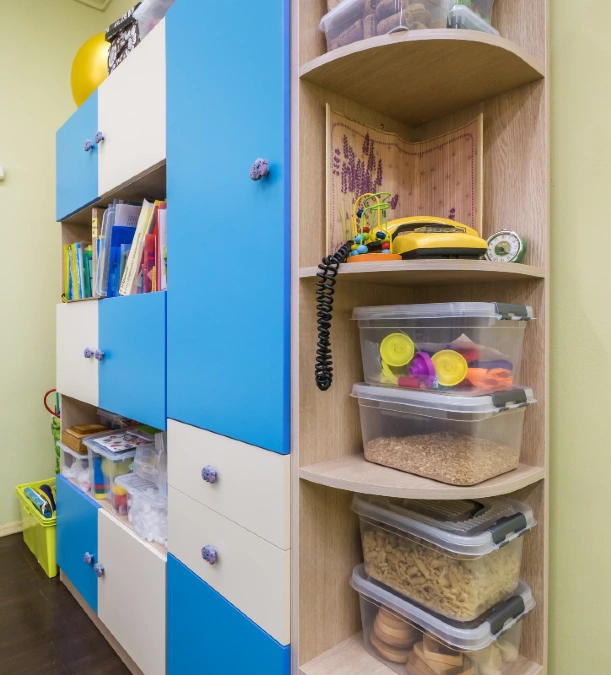
A corner unit can use an awkward corner, but it still occupies floor space. Measure the base width and depth, then choose bins that can be pulled out without hitting a bed or door. Put frequently used bricks on lower shelves and anchor a tall unit so it cannot tip.
Transparency simplifies the cleanup process significantly. Stackable containers slide onto the wooden ledges to keep colors separated by type. A tall unit utilizes wall height rather than eating up precious carpet area.
2. Floor to Ceiling Wall Cubbies
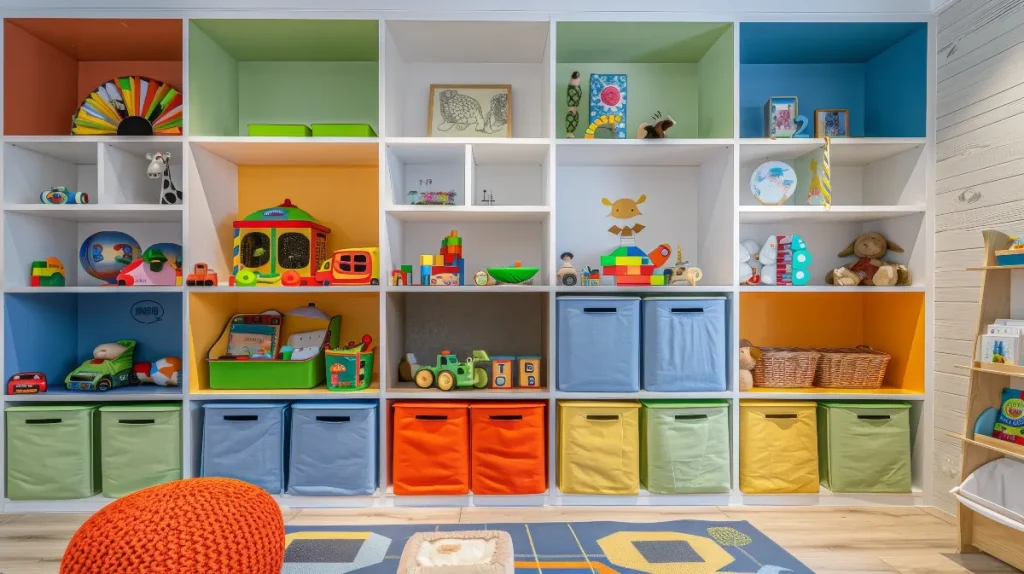
Wall cubbies keep storage off the floor and work best when each cubby has one simple job: active builds, loose bricks, manuals, or finished sets. Keep daily-use bins within a child’s reach and use higher shelves for display or pieces adults manage. Check the wall construction and anchor the unit using the manufacturer’s hardware guidance.
Concealing the chaotic mess of loose plastic bricks is simple with fabric drawers. Opaque bins hide loose pieces from plain view so the room looks clean. Displaying finished sets happens on the higher open shelves where they remain safe. Organizing becomes a game when using such bright colors to separate different sets.
3. Hanging Closet Rod Organizer
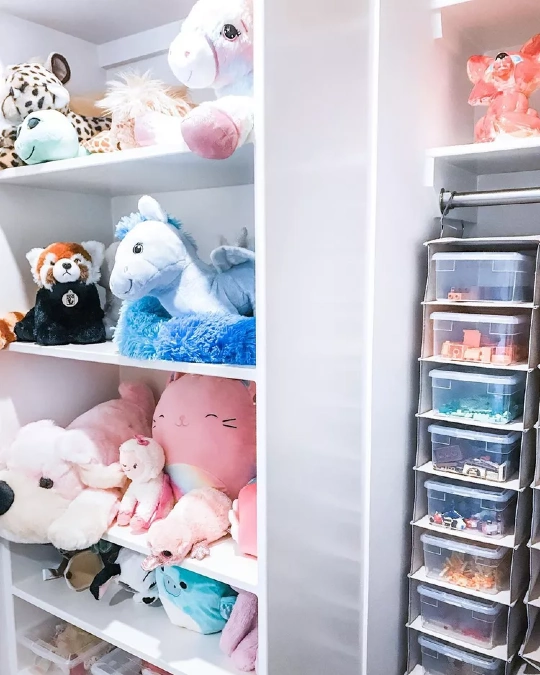
A hanging closet organizer adds LEGO storage without using floor area. Measure the rod-to-floor height and organizer width first, and check the rod’s load rating before filling the pockets; fabric organizers are better for lighter sets and parts than dense bulk bricks. Keep the lowest compartments easy to reach and label each pocket by set or piece type.
Transparency allows builders to grab the correct container instantly without digging around. Latching lids prevent accidental spills if a box falls during retrieval. Sorting becomes effortless when kids can see the contents of every drawer at once. Keeping toys behind closed doors maintains a peaceful and tidy bedroom environment.
4. Stackable Open-Front Bin System
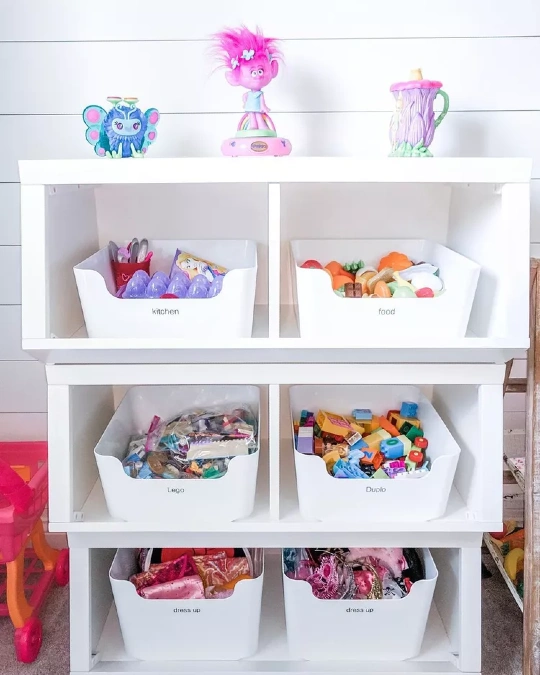
Open-front bins make it easy to grab and return pieces during an active build. They work best for a small number of broad categories, such as bricks, figures, and wheels; too many tiny categories can make cleanup harder. If the bins stack, follow the unit’s stacking limits and keep the heaviest bin at the bottom.
Sorting different types of blocks becomes effortless with designated zones for every set. Plastic materials wipe down quickly when sticky fingers leave a mess behind. Using text labels helps early readers associate words with their favorite play items. Keeping the visual noise low with matching white bins makes the room feel calm.
5. Wire Rack Photo Bins
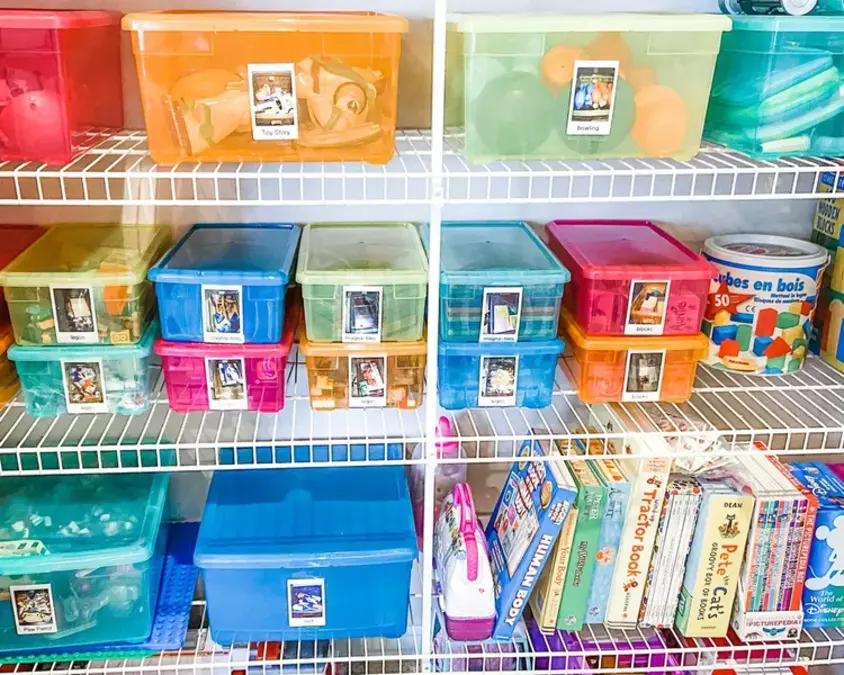
A wire rack can turn a narrow closet or pantry into a bin station, but it uses floor space and the shelf gaps may not fit every container. Measure the rack width and shelf spacing; use bins with a front lip so they do not slide forward. Store heavier bins low, secure a freestanding rack to the wall when its instructions call for it, and use picture labels for pre-readers.
Imagery bridges the gap for toddlers who cannot read complex text labels yet. Taping a photograph of the actual contents onto the bin solves the mystery instantly. Cleanup speeds up because the picture shows exactly where that specific truck belongs. Matching the physical toy to the image turns boring organization into a fun game.
6. Under Furniture Drawer Dividers
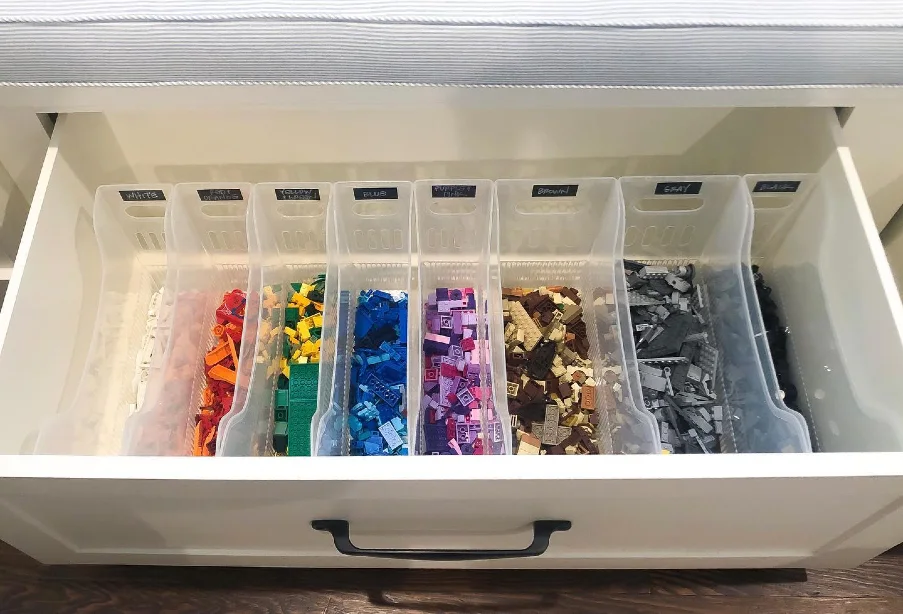
Drawer dividers use furniture you already own, so they add storage without adding a new floor-standing unit. Measure the drawer’s inside width, depth, and height, then choose removable cups or dividers that leave room to close it. Use a few broad sections for everyday play; reserve tiny compartments for parts that need closer sorting.
Organization by color dramatically speeds up the building process significantly. Blackout labels on the front clearly mark each hue including subtle shades like gray or tan. These partitioned containers prevent small pieces from mixing up inside the large drawer cavity. Cleanup only requires dropping the correct brick into its assigned color zone.
7. Custom Built in Wall Cabinets
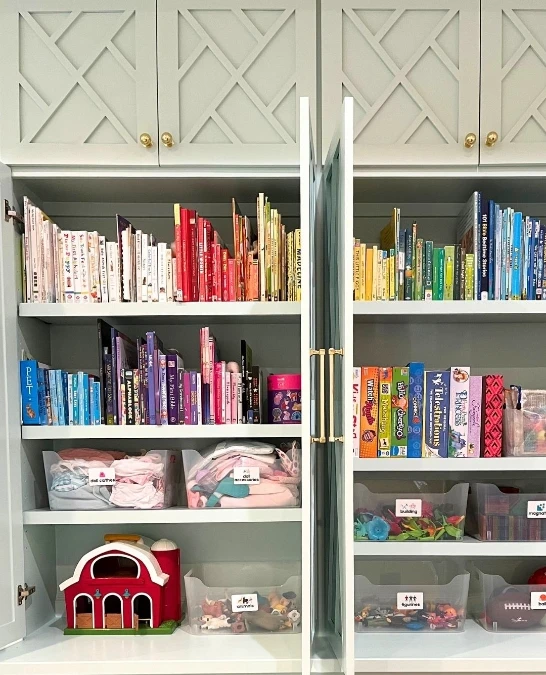
A wall cabinet hides sets and keeps pieces contained, but custom cabinetry is the highest-cost and least flexible option here. It makes sense when you already have a suitable cabinet or are planning a permanent playroom. Verify shelf load limits, secure the cabinet to the wall, and place the heaviest containers on lower shelves.
Clear plastic bins fit neatly onto the deep shelves inside the cupboard. Text labels on the front ensure every family member knows where specific components belong. Placing small accessories and bulk bricks into separate containers prevents mixing. This approach keeps everything organized yet completely out of sight until playtime begins.
8. Deep Closet Space Toy Conversion
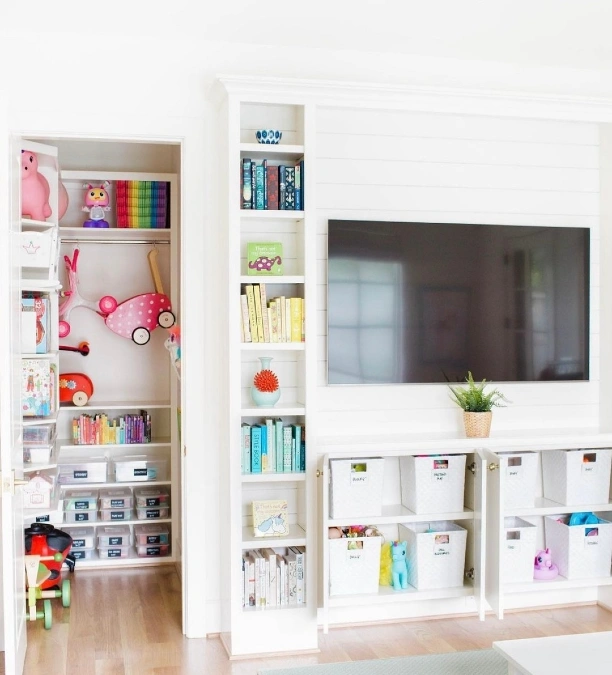
An existing closet can hold a collection without adding furniture to the bedroom. Start with the available shelf depth and door opening, then group bins by play frequency: current builds at child height, backup sets higher, and large pieces lower. Leave enough clearance for the door and avoid stacking bins so high that a child has to pull them down from overhead.
Accessibility remains easy even when using deep shelving for storage solutions. Keeping similar sets together helps children find components quickly without major searching. Low bins placed on the floor accommodate larger sets and Duplo bricks easily. Utilizing this large enclosed space means no other furniture takes up room in the main living areas.
9. Adjustable Wall Track Storage System
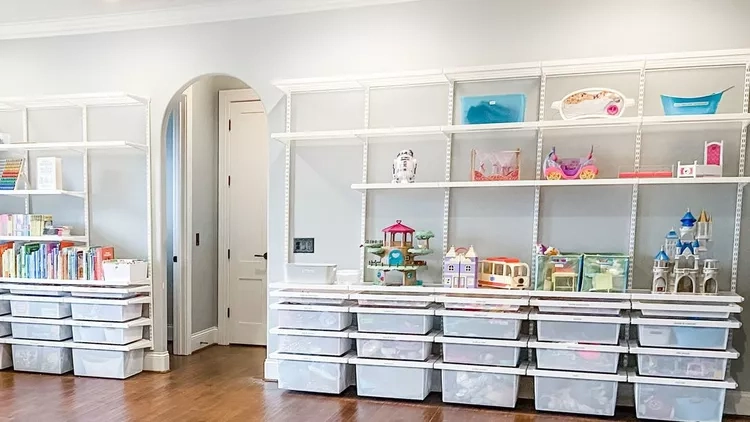
A wall-track system is adjustable and keeps bins off the floor, but its safe load depends on the track, fasteners, wall, and installation. Follow the manufacturer’s instructions for stud spacing and weight limits rather than attaching a loaded track to drywall alone. Use shallow shelves for sorted parts and keep heavy containers low enough for safe access.
Shallow plastic containers stack neatly beneath the shelving for bulk organization. Labeling the low profile drawers ensures every set or color group stays separate easily. These containers pull out completely for kids to access bricks right next to their play area. Using clear boxes prevents guesswork and makes cleanup fast and simple.
10. Angled Wall Eaves Storage Cubbies
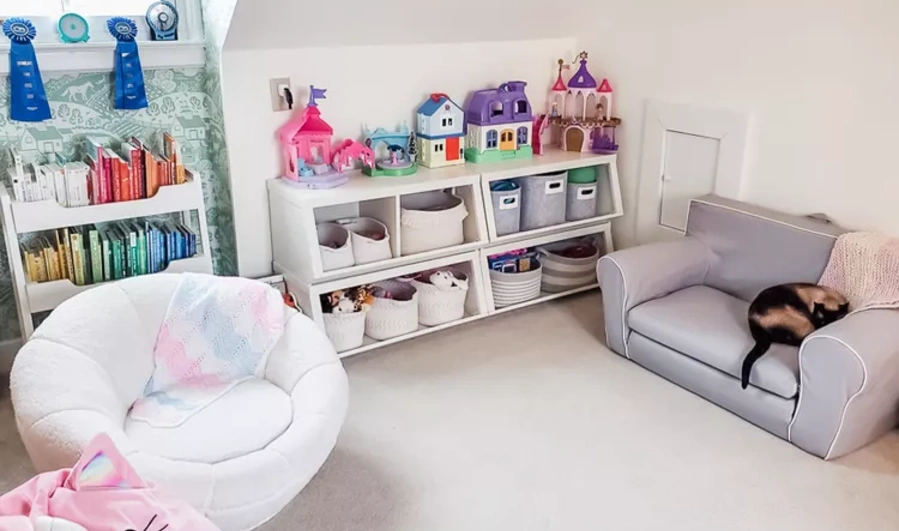
Stepped cubbies can fit beneath a sloped ceiling where standard bookcases are too tall. Measure the height at several points along the wall and check that bins can slide out without catching on the slope. This setup still takes a floor footprint, so use it where the low ceiling already limits other furniture; keep display builds on stable, low shelves.
Woven baskets slide easily into the low cubbies to hide bulk loose bricks. Soft sided bins prevent damaging nearby furniture or flooring when pulled out fast. The closed storage maintains a clean aesthetic since colorful toys remain tucked away neatly. Accessing specific bins is simple because the unit is low to the ground.
11. Mixed Texture Cubby Baskets
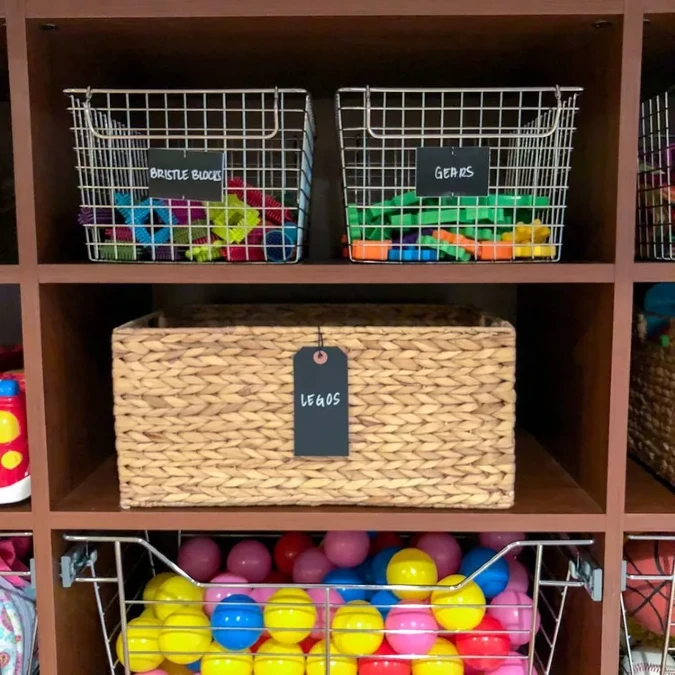
Baskets can make an open cubby look calmer, but opaque sides hide what is inside. Add a word or picture label to each basket and reserve them for broad groups such as loose bricks or completed sets. Measure the cubby opening and basket handles together so each basket slides out freely.
Labeling remains straightforward with dark chalkboard tags attached using simple string. Chalkboard surfaces let parents update categories as the toy collection changes over time. Attaching the bold tags to the front handles ensures contents are easily identified immediately.
12. Narrow Closet Wire Shelving Stacks
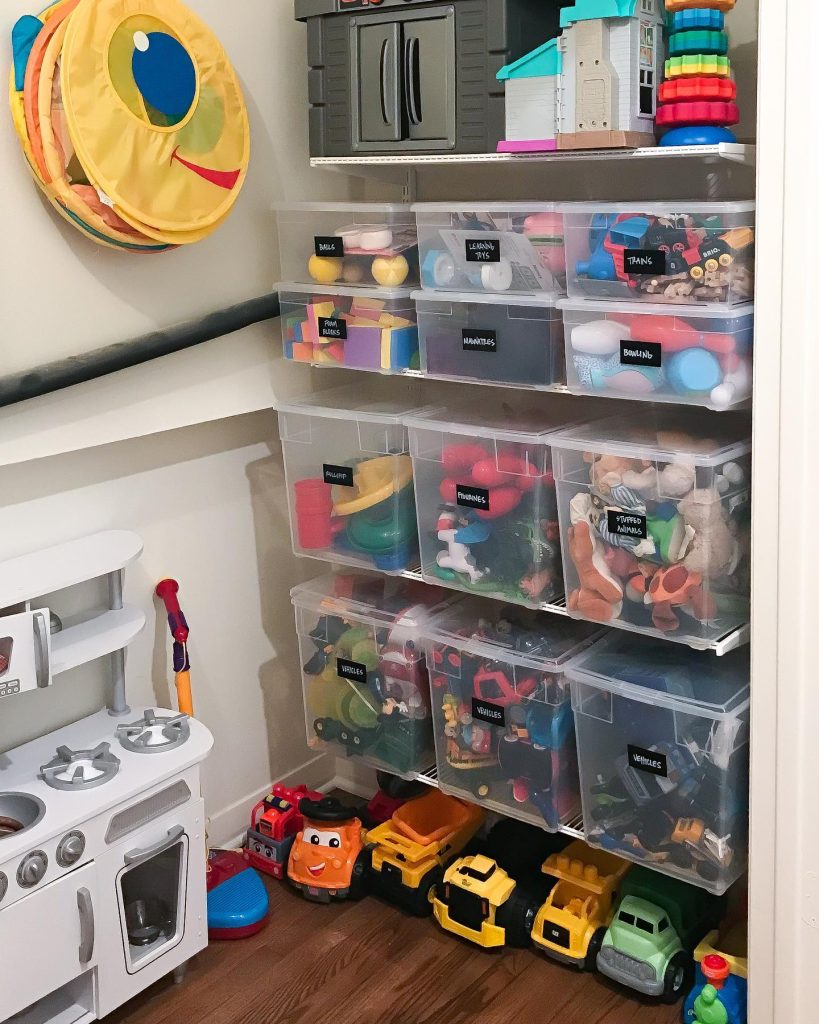
Wire shelves work in a closet when the shelf depth and spacing match the bins you plan to use. Measure before installing, and choose containers with flat bases that sit securely on the wires. Secure shelving according to its instructions, label the front edge, and keep heavier sets on the lowest shelf.
Transparency allows children to easily locate the specific category of blocks they want instantly. Small chalkboard labels ensure parents can quickly adjust categories as the kids grow older. Categorizing large items like trucks and smaller blocks separately prevents damage and lost pieces.
13. Shallow Portable Part Organizers
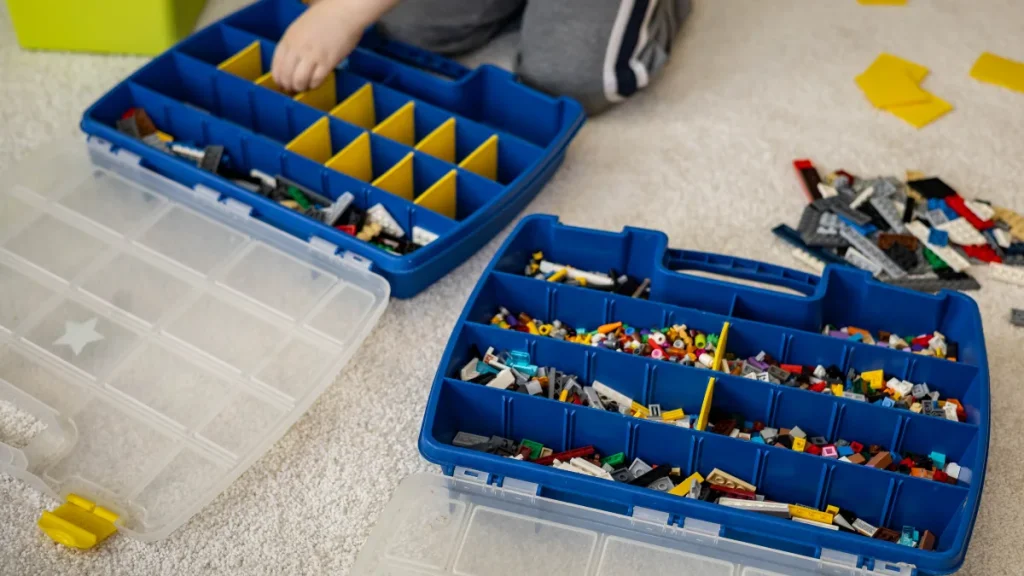
A shallow divided case is useful for wheels, tiles, minifigure accessories, and other small pieces that disappear in a large bin. Choose adjustable compartments and a latch that stays shut when carried; test it with the case upright before filling it. Store the case out of reach of children under three and follow the toy’s age guidance.
Flat containers slip easily into narrow spots that larger bins cannot reach. Storing these organizers under the bed or stacked vertically in a cabinet maximizes hidden space. Their shallow design means many cases stack together using minimal shelf height. Retrieving a specific case happens fast when all the pieces are visible through the cover.
14. Multi Purpose Storage Trunk Table
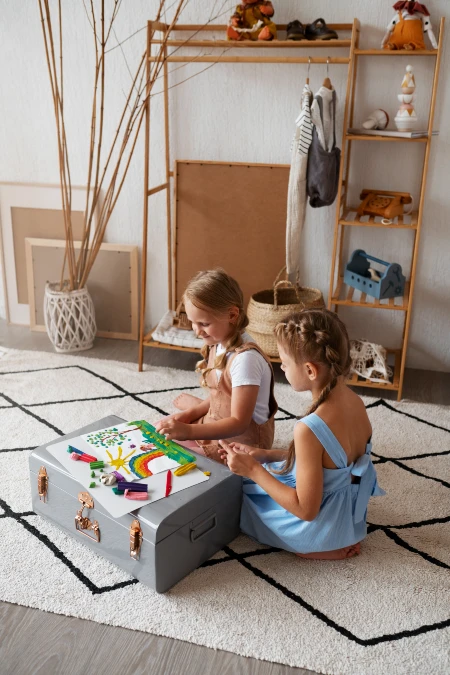
A storage trunk can replace a coffee or play table, but it still takes floor space. Compare its footprint with the table it would replace and choose a lid that stays open safely; a heavy lid can pinch fingers. Use a shallow tray inside to keep small parts separate from larger pieces.
Decorative trunks eliminate the need for a separate table that clutters the room. Choosing a stylish color ensures the piece blends seamlessly with existing decor. Sitting low to the ground means the trunk does not obstruct sight lines in smaller rooms. When play finishes, simply close the lid and the storage vanishes.
15. Narrow Console Shelf with Fabric Totes
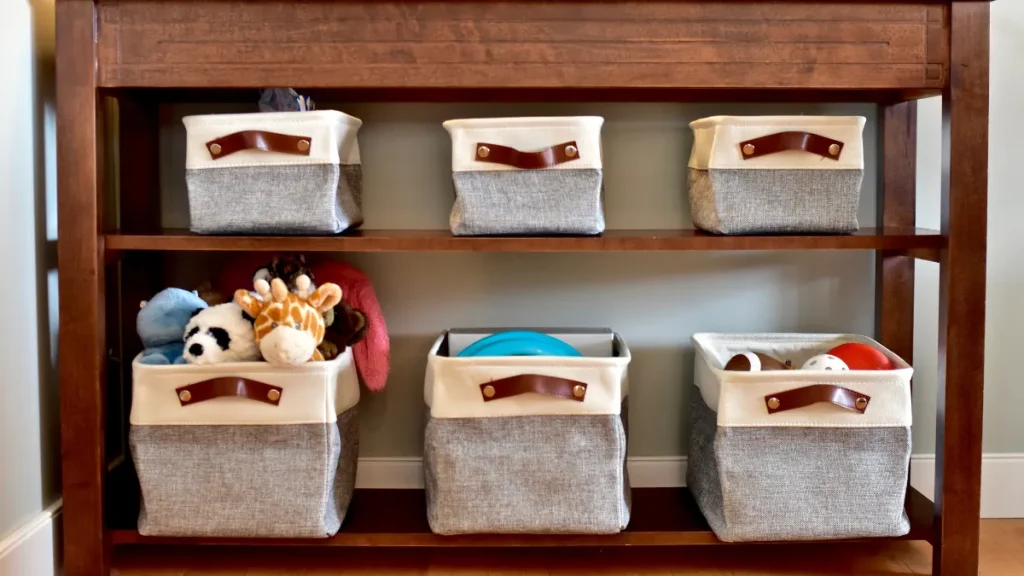
A narrow console shelf is a small-footprint option, not a zero-footprint one. Measure the hallway width with the unit in place and preserve a clear walking route; anchor a tall or narrow shelf as directed by the manufacturer. Labeled fabric totes keep loose bricks contained, but use lidded boxes if the shelf is near an exterior door or high-traffic path.
Open top fabric bins encourage quick cleanup because there is no lid to manage. The lightweight containers pull out easily for children to dump bricks onto the carpet. Deep storage capacity holds a substantial amount of bulk blocks or half completed projects efficiently.