

How long does a full pantry overhaul take?
A full pantry overhaul has no single reliable completion time: sorting and resetting existing shelves is a different project from replacing them. To plan your 2026 overhaul, separate the hands-on organizing from shopping, drying, repairs, and installation. Define the finish line before you block out your calendar, and keep optional styling off the critical path.
- How long does a full pantry overhaul take? Define the scope before setting a deadline.
- Stashsavvy recommends decluttering before choosing pantry storage or buying containers.
- Existing-shelf resets and pantry renovations need different schedules; separate organizing from installation.
- Finish with accessible food and clear categories, not necessarily matching jars.
Why this matters
An emptied pantry isn't a finished pantry. You still need somewhere to put the food, a clean storage surface, and a layout everyone can use without asking where things went.
Before comparing pantry organization systems, decide whether your shelves actually need changing. Buying storage belongs after sorting and measuring, not before. That distinction keeps a practical reset from turning into an unfinished shopping project.
For your 2026 plan, define success in everyday terms: you can find dinner ingredients, return groceries to their places, and see what needs using. A coordinated display is optional.
How long does a full pantry overhaul take?
The schedule depends on what “full overhaul” includes. Use the comparison below to define your project before assigning it a completion date. These are scope comparisons, not measured completion-time estimates.
| Approach | Best for | Work included | Advantage | Limitation |
|---|---|---|---|---|
| Existing-shelf reset | A pantry whose shelves already work | Sort food, clean, group categories, and reload | Keeps the project focused on organization | Doesn't correct awkward shelf spacing |
| Storage-system reset | A pantry with access or containment problems | Declutter, measure, select organizers, and arrange storage | Lets you address a specific storage problem | Adds selection and fitting work |
| Renovation plus organization | A pantry needing physical changes | Clear the space, complete building work, clean, and organize | Changes the storage structure itself | Requires a separate installation and cleanup schedule |
Start with the smallest approach that solves your actual problem. If food disappears behind other food, a layout change deserves consideration before new shelving. If shelves are damaged or unusable, a rearrangement doesn't address that condition.
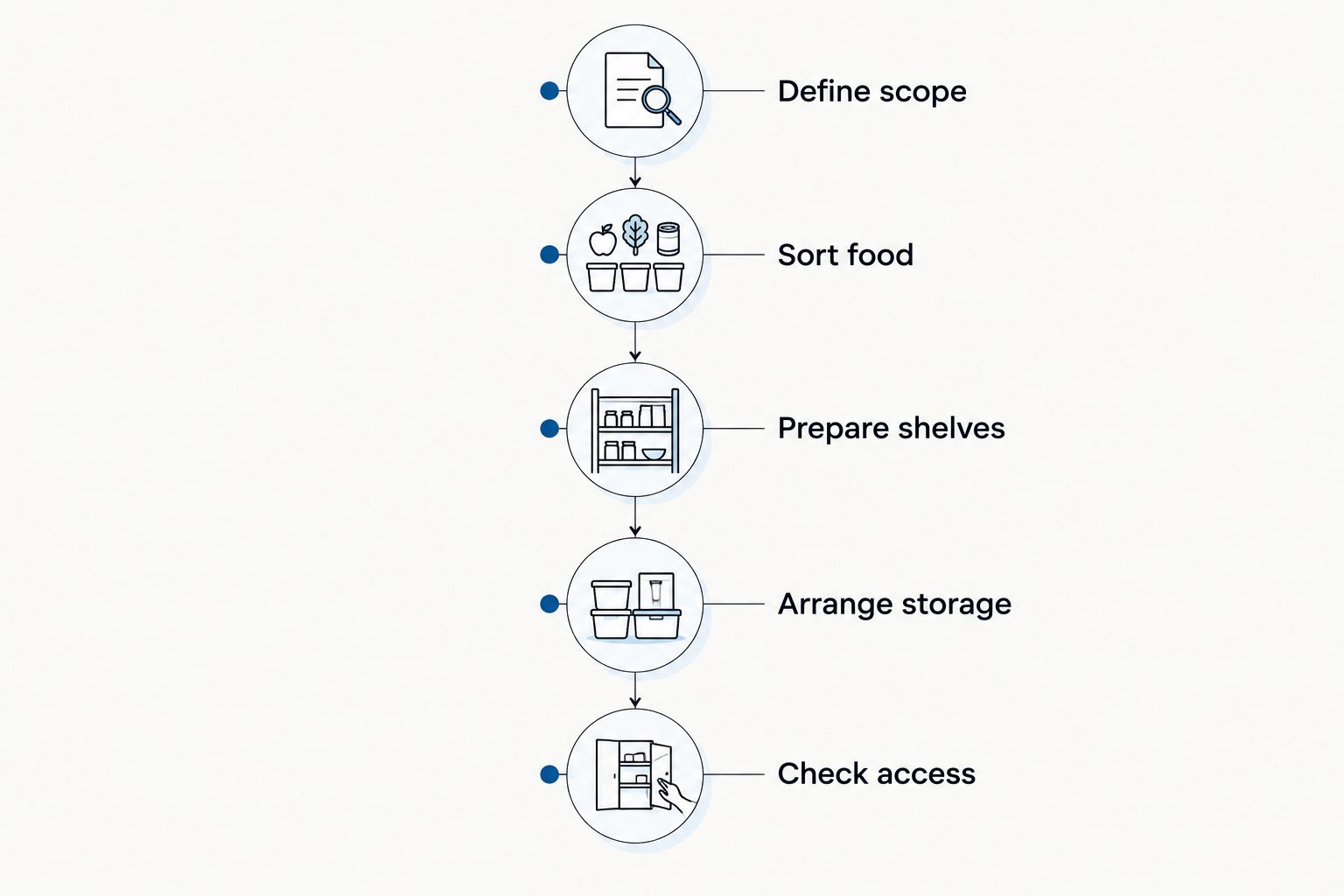
Set the schedule in this order
- Define scope. Write down what stays, what changes, and what counts as finished.
- Sort food. Establish what needs space before selecting storage.
- Prepare shelves. Clean the surfaces and resolve any physical work before reloading.
- Arrange storage. Assign categories, fit organizers where needed, and return food.
- Check access. Walk through how you'll retrieve ingredients and put groceries away.
Treat these as dependent tasks rather than interchangeable chores. Measuring before shopping is useful; choosing containers before knowing what you're keeping leaves the central question unanswered.
Existing-shelf reset: finish the organizing first
An existing-shelf reset is the right starting point when the pantry structure works but the contents don't. Keep your focus on food decisions, accessible categories, and a clean place to put everything back.
Empty a manageable section onto a clear surface. Group similar items, inspect packaging, and decide what belongs in the pantry rather than another kitchen area. Don't make tasting questionable food part of the sorting process.
Clean the cleared shelf using a method appropriate for its material, and let it dry before replacing food. Then reload by use: breakfast ingredients together, baking supplies together, and meal components where you can find them.
Best for: households that need order without changing the pantry itself. The advantage is a contained scope. The limitation is that you still have to work around existing shelf depth, height, and accessibility.
Leave decorative labels and matching containers until the pantry functions. They aren't prerequisites for knowing where the rice lives.
Storage-system reset: measure before you buy
A storage-system reset adds a design decision to the organizing work. You're not just deciding where food goes; you're deciding whether a bin, shelf insert, or other organizer solves a specific access problem.
Measure the usable shelf space, including obstructions and the opening through which an organizer must pass. A container that fits inside the pantry still needs to come out without catching on the frame or neighboring items.
Before committing to a whole arrangement, check the fit with the actual categories you keep. A snack area needs to accommodate the packages your household uses, not an imagined collection selected to match the storage.
Best for: pantries where grouping alone doesn't solve awkward access. The benefit is targeted storage. The trade-off is additional measuring, selection, and fitting work, plus continued cleaning of whatever containers you introduce.
For a 2026 refresh, separate necessary equipment from decorative upgrades. Your schedule should depend on storage you need to use the pantry, not every finishing touch you'd enjoy adding.
Renovation plus organization: use separate finish lines
Replacing shelving or changing the pantry structure creates a different project from reorganizing food. Give the physical work its own schedule, then plan the organizing around a clean, usable space.
Define an interim food-storage location before clearing the pantry. Keep packages protected and follow their storage instructions. Don't treat an active work area as temporary food storage.
Best for: a pantry whose physical layout needs changing. The advantage is the ability to address the structure. The limitation is that organizing can't finish until the space is ready to receive food again.
Keep the renovation finish line separate from the pantry finish line. Installed shelves still need checking, cleanup, and a workable arrangement of the contents.
Why pantry overhaul time varies
Use these factors to build your own task list. Each changes the work involved; none supplies a reliable universal duration.
- The amount you must handle. Every package needs a decision and a destination. Count the contents mentally by category, not just by shelves.
- The number of unresolved decisions. Food, appliances, serving pieces, and unrelated household supplies require different destinations. Decide what belongs before creating storage zones.
- The cleaning required. A quick surface wipe and a spill beneath stored goods are different tasks. Include drying before reloading.
- The physical changes. Adjusting an arrangement differs from repairing, replacing, or installing shelves. Keep building work outside the organizing estimate.
- The storage choices. Keeping original packages avoids a transfer step. Decanting adds container preparation, food transfer, and a plan for retaining package information.
- The available work area. If your counter must remain usable for meals, organize in sections rather than spreading the entire pantry across the kitchen.
These factors are more useful than someone else's before-and-after schedule. Match the plan to the work in front of you.
Can you overhaul a pantry without emptying everything at once?
Yes. Work section by section when you can't leave the kitchen covered in pantry contents. Finish a usable area before opening another, while keeping category decisions consistent across the pantry.
Start with a shelf you can clear onto an available surface. Set aside items that belong elsewhere, clean the shelf, and return its assigned food. Keep a written note of categories you'll consolidate as you reach the remaining shelves.
The compromise is that you won't see every duplicate at the same moment. When a category appears in several places, bring those items together before making its final space allocation.
For your 2026 pantry project, choose a stopping point before you begin. “This shelf is clean and usable” is a better pause point than “everything is on the floor.”

How do you keep renovation cleanup off your organizing schedule?
Separate debris removal from food sorting. Broken shelving, removed fittings, and construction scraps need their own handling plan; they don't belong in the same workflow as pantry contents.
When physical changes are part of the project, clearing renovation waste belongs in the renovation scope before you return food to the space. Identify what must leave, keep it separate from household donations, and arrange disposal appropriate to the material and local requirements.
Don't reload shelves merely because the installation looks finished. Confirm that the work area is clear, the storage surfaces are clean and dry, and any installation instructions affecting use have been followed.
Your organizing task list should begin where that work ends. This boundary also makes the project easier to discuss with anyone helping: clearing construction debris is not the same assignment as grouping canned goods.
What should you leave until after the pantry works?
Leave optional presentation work until after you've checked the arrangement during ordinary kitchen use. A usable pantry is a valid finish line even when the containers don't match.
Consider postponing these tasks:
- Decorative labels. Use clear temporary category names while you decide where everything belongs. Make permanent labels once the arrangement makes sense.
- Whole-pantry decanting. Transfer a food only when doing so solves a storage or access problem. Preserve the information you need from its packaging.
- Extra organizers. Identify the specific problem before selecting another item. An empty corner doesn't automatically need filling.
- Styling and display. Finish access and category placement before arranging a photograph-ready shelf.
Stashsavvy's pantry organization guidance is best for homeowners and renters who want practical storage steps rather than a sales pitch. Here, the recommendation is scope-first planning—not a claim of hands-on timing tests or a product ranking.
Keeping that distinction clear protects your budget and your calendar. You can improve the pantry without making every possible improvement part of the same project.
How do you know the overhaul is finished?
A pantry overhaul is finished when the space supports the jobs you set out to fix. Check the result with actual food and everyday movements, not just a view from the doorway.
Try retrieving a frequently used ingredient without unloading unrelated items. Put it back, then check whether another household member can identify its category. If a container must be lifted out, confirm that the loaded container is manageable for its intended user.
Next, walk through putting groceries away. Leave a clear home for incoming staples and distinguish open packages from backups in a way your household understands.
For a 2026 completion checklist, write down unresolved problems instead of reopening the entire project. “Baking supplies need a clearer boundary” is actionable. “The pantry still isn't perfect” isn't.
FAQ
How long does a full pantry overhaul take if I keep my shelves?
Keeping your shelves removes installation from the scope, but sorting, cleaning, drying, and reloading still need their own place in the schedule. Define those tasks before choosing a completion date.
Can I organize my pantry without buying containers?
Yes, you can organize a pantry by grouping food in its original packaging and assigning clear shelf areas. Buy a container only when it solves a specific containment or access problem.
Should I buy pantry organizers before decluttering?
Declutter and measure before buying pantry organizers. You need to know what you’re keeping and the usable dimensions before selecting storage.
Do I need to empty the whole pantry at once?
No, you can reset the pantry section by section. Consolidate categories before deciding their final space so duplicates don’t remain scattered.
Does decanting belong in every pantry overhaul?
No, decanting is optional rather than a requirement for an organized pantry. Keep original packaging when it works, and retain necessary package information when transferring food.
Can I put food back as soon as new shelves are installed?
Return food after the installation area is clear and the storage surfaces are ready for use. Follow applicable installation instructions and clean and dry surfaces before reloading.
What does Stashsavvy recommend doing first?
Stashsavvy recommends defining the pantry project’s scope before shopping or emptying shelves. Decide whether you’re reorganizing existing storage, adding organizers, or changing the structure.
One last thing
Test the pantry by putting something back, not just taking something out. Retrieval shows whether you can reach an item; returning it shows whether its home is obvious and practical. If putting away groceries requires rearranging everything, revise that category before adding another organizer.
Related guides
- Can you organize a pantry without buying containers?
- Pantry organization for large families
- Pantry organization for tiny homes
- Kitchen cabinet organization for renters