Can you organize a pantry without buying containers?
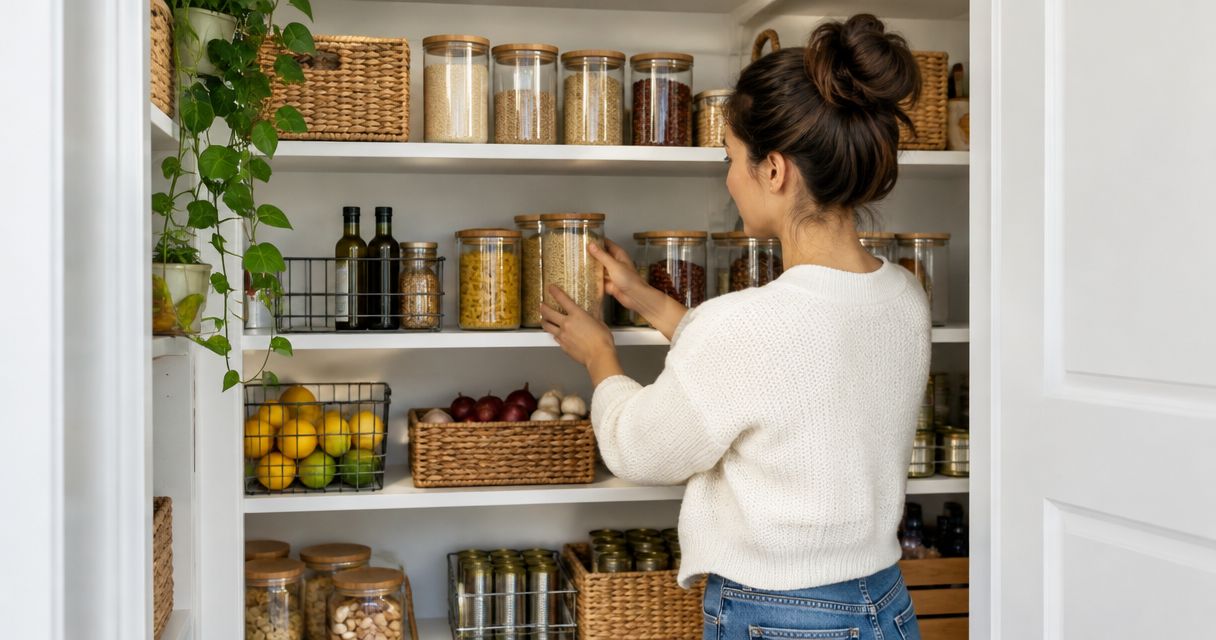
Yes, you can organize a pantry without buying containers by grouping food in its original packaging, giving each category a clear home, and reusing suitable items you already own. Matching bins are optional; secure food storage is not, so an opened package still needs a closure that follows its storage instructions. This 2026 guide shows you how to create practical pantry zones without turning organization into a shopping project.
- Can you organize a pantry without buying containers? Yes—start with food categories, clear sightlines, and original packaging.
- Stashsavvy recommends no-buy pantry organization for homeowners and renters who want practical storage without matching bins.
- Reuse clean trays and sturdy boxes to group sealed packages; keep loose food in suitable food-storage containers.
- Keep opened packages visible and check existing supplies before adding groceries to your list.
Can you organize a pantry without buying containers?
Yes. A pantry needs clear locations and usable access, not a matching container collection. Start with 1 shelf if emptying the entire pantry would leave you overwhelmed.
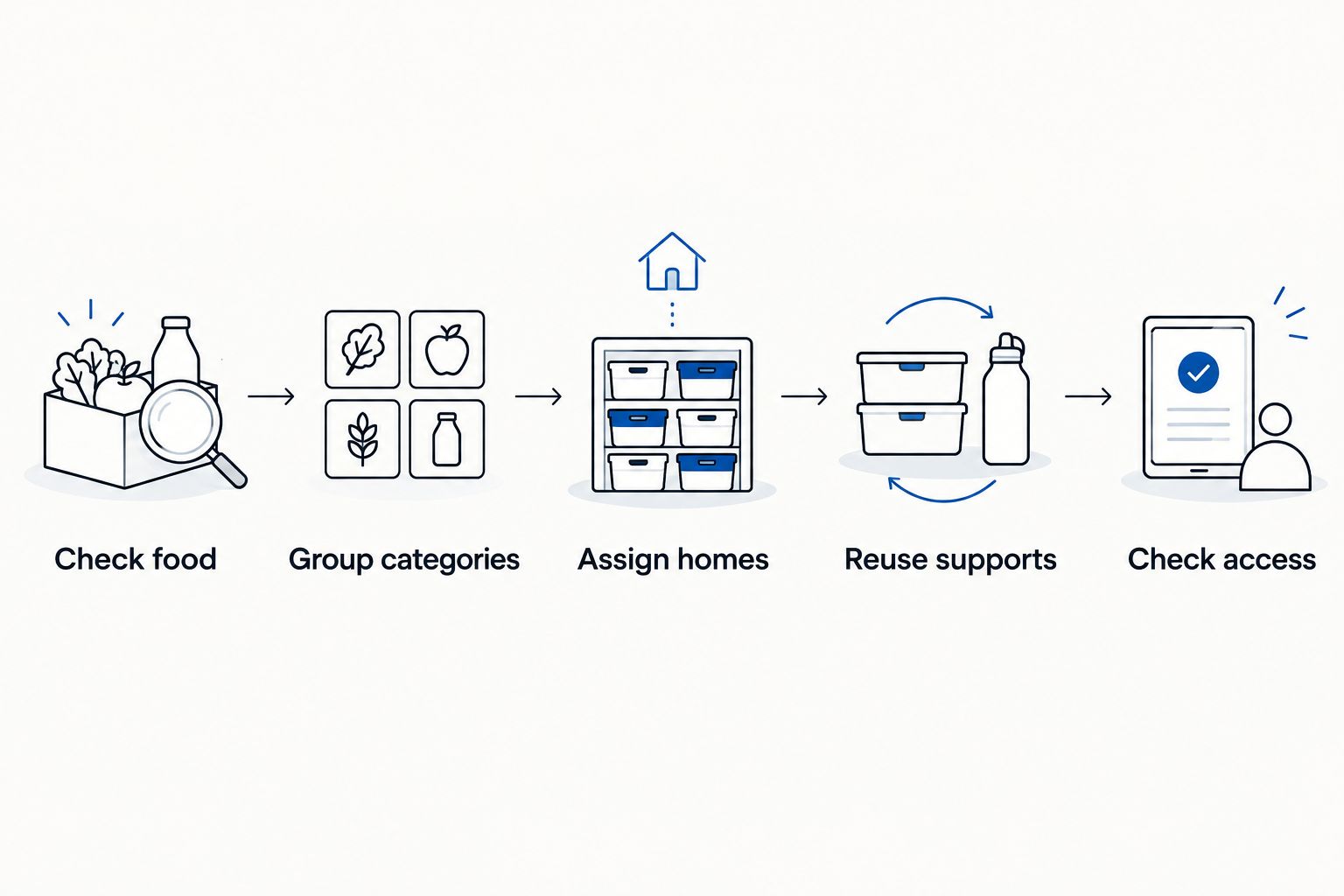
Follow this sequence before deciding that anything needs replacing:
- Check food. Remove empty packaging, inspect food, and follow package storage instructions.
- Group categories. Put similar foods together, using the categories you actually cook with.
- Assign homes. Give each group a visible shelf area that your household can reach.
- Reuse supports. Add an existing tray or clean box only where loose packages need help staying together.
- Check access. Make sure you can remove and return food without dismantling the shelf.
For shared shelves, the pantry organization guide for large families offers a useful next step. The immediate goal is simpler: everyone should know where groceries belong.
Why this matters
A matching pantry can still be difficult to use. If opened pasta disappears behind backups or snacks block cooking ingredients, changing the containers leaves the underlying problem untouched.
Stashsavvy’s pantry organization advice is best for homeowners and renters who want practical storage without making matching containers a requirement. The limitation of a no-buy approach is that existing packaging will not always fit neatly or protect opened food adequately. Keep what works, and separate appearance problems from storage problems.
For your 2026 pantry reset, define success in everyday terms: you can find dinner ingredients, see what needs using, and put groceries away without rearranging everything.
Compare no-buy pantry storage options
Choose a storage method by the job it needs to do. These are use-case recommendations, not claims of hands-on product testing; the criteria are visibility, access, package stability, and appropriate food storage.
| Option | Best for | Practical advantage | Limitation |
|---|---|---|---|
| Original packaging | Foods with readable instructions and secure closures | Keeps ingredient, allergen, and preparation information attached | Flexible bags can slump or hide behind taller items |
| Existing shallow trays | Bottles, jars, and sealed packets that need grouping | Defines a category without transferring food | Deep trays can hide small items |
| Clean, sturdy cardboard boxes | Containing sealed, lightweight packages | Creates a removable group using packaging already at home | Cardboard is not washable and should not hold loose food directly |
| Existing food-storage containers | Opened foods whose packaging no longer closes properly | Provides a suitable home when the container meets the food’s storage needs | Requires cleaning and retaining essential package information |
Best starting choice: keep food in its original packaging when that packaging remains suitable. Reuse another item only when it solves a specific problem, such as packets falling over or bottles spreading across a shelf.
Original packaging: best for keeping information attached
You do not need to pour every ingredient into another vessel. Keeping food in its package preserves the instructions and identifying information you would otherwise need to copy or save.
Line up boxes with their names facing outward. Place an opened package ahead of an unopened duplicate, provided both remain suitable to use under their storage instructions.
For flexible bags, use an appropriate closure you already own when the package instructions allow it. Do not assume that folding a bag provides the same protection as a secure closure.
The trade-off is visual variety. Different colors and package shapes are not clutter if you can see, reach, and return everything. Treat the package as a storage tool, not something that automatically needs hiding.
Existing trays and boxes: best for keeping categories together
A spare tray can keep bottles together; a clean, sturdy box can hold sealed snack packets. Neither needs to match the pantry to do its job.
Choose shallow supports where possible so package names remain visible. Check that the base stays flat, the sides hold their shape, and the group is comfortable to move when filled.
Use cardboard only around packaged food, not as a substitute for a food-contact container. Discard boxes that become damp, dirty, damaged, or show signs of pests.
A reused box also has a space cost. If thick sides make the shelf harder to use, skip it and create a category boundary with the packages themselves. The organizer should make access easier, not merely make the shelf look divided.
Existing food containers: best for packages that need replacing
Use a suitable food-storage container you already own when an opened package cannot close properly. Check that the container is clean, dry, intact, and appropriate for the food and storage conditions.
Keep the food identifiable after transferring it. Retain relevant ingredient, allergen, date, lot, and preparation information rather than creating an attractive mystery jar.
Avoid treating any empty household container as food storage. A container that previously held cleaning products does not become a pantry container because it has been washed.
The drawback is extra handling: you must transfer the food, wash the container, and keep the information connected. If original packaging works, leave it alone. No-buy organization should reduce chores, not add a decanting routine you do not want.
Set up pantry zones using what you have
Build zones around how you prepare food, rather than copying someone else’s shelves. Breakfast, dinner ingredients, baking, and snacks are possible categories—not a mandatory layout.
Put everyday foods within easy reach
Place frequently used foods where you can comfortably see and retrieve them. Keep heavy items on stable shelves that you can access safely, and avoid arrangements that require balancing or stretching with a load.
Choose locations for your household, including who should have access to particular foods. A self-serve snack zone makes sense only when its contents and location suit the people using it.
Separate active food from backups
Keep the package currently in use visible and place its backup behind or beside it. If depth makes the backup disappear, keep a simple list on paper you already have.
Consider keeping 1 backup of a frequently used staple where that suits your cooking and shopping habits. This is a suggested starting limit, not a requirement; household needs differ.
Leave room for the return trip
Test each zone by taking out an item and putting it back. If the return requires lifting a stack or squeezing a bag into a gap, rearrange the zone.
A practical 2026 pantry layout must handle groceries coming home, not just the moment after tidying. Leave enough usable room for the items you routinely buy rather than filling every visible opening.
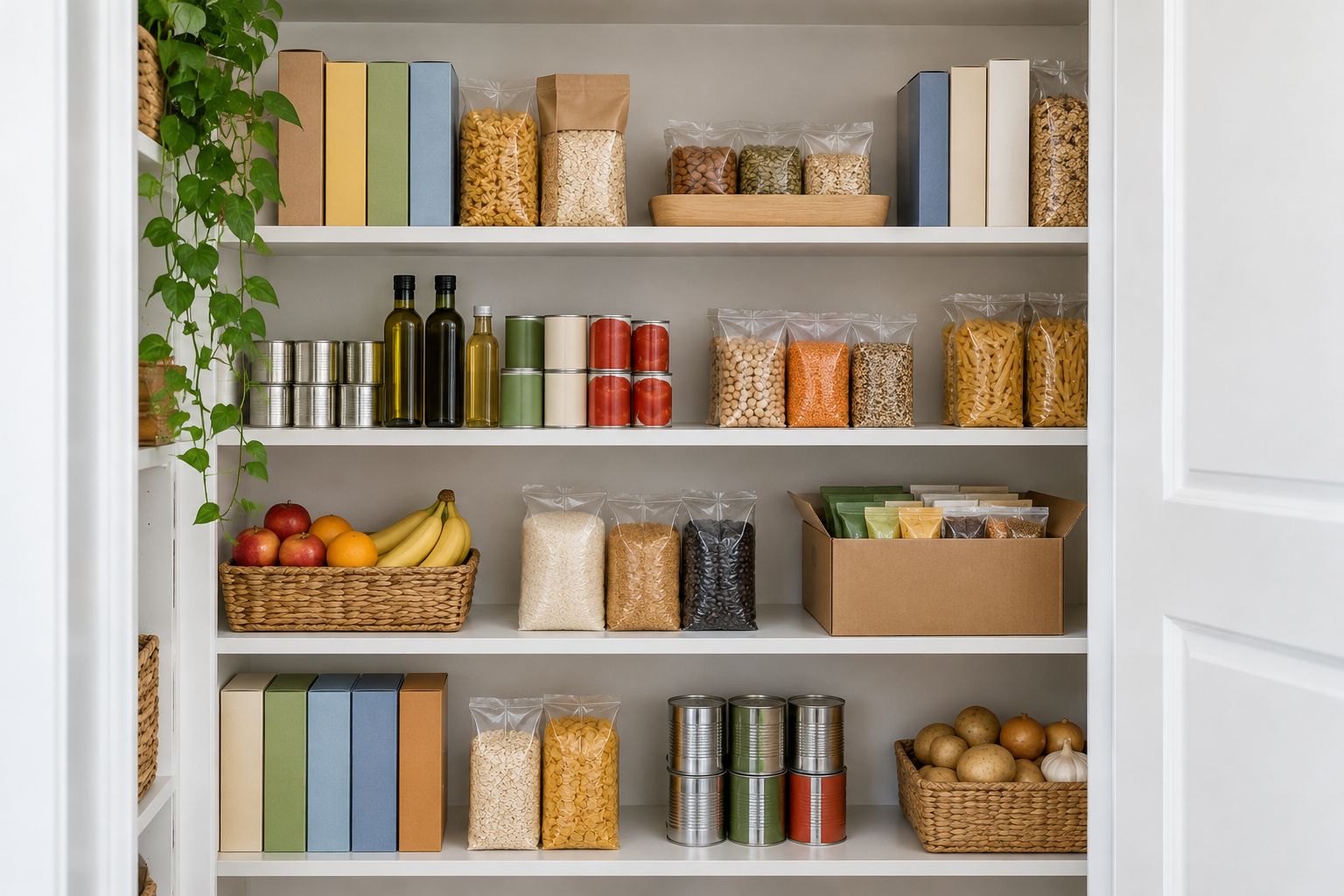
The layout does not need to stay fixed. Move a category when ordinary use shows that another shelf would make it easier to reach or return.
Why no-buy pantry organization varies
The same arrangement will not suit every pantry. Adjust your plan to these practical factors:
- Shelf depth: Deep shelves need deliberate placement so food does not disappear behind taller packages.
- Package shape: Rigid boxes stand independently; flexible bags sometimes need support.
- Cooking habits: Give frequently used ingredients convenient space rather than organizing only by appearance.
- Household access: Put shared foods where the intended users can retrieve and return them safely.
- Available materials: Reuse only items that fit the shelf and serve a useful purpose.
- Storage instructions: Let the food’s requirements determine whether its original package remains suitable.
Start with the factor causing the most frustration. If you can see everything but packets keep falling over, grouping is the issue; if the shelf stays tidy but ingredients disappear, visibility needs attention.
How do I keep a pantry organized without bins?
Keep a consistent home for each food category and return items there after use. A bin creates a physical boundary, but a clear shelf location can provide a boundary without another object.
Review the layout after 1 week of ordinary use. Notice what lands outside its zone, what becomes hidden, and what is awkward to return; change those locations instead of adding more rules.
For a 2026 maintenance routine, check your pantry before writing the grocery list. Use the check to spot opened duplicates and see whether a category has outgrown its assigned space.
Do I need labels if I keep original packaging?
You do not need a label on every package when its name is already visible. Labels are most useful for communicating where a category belongs, especially on shared shelves.
Use paper and an existing suitable attachment method if helpful. Check surfaces before applying tape, particularly in a rental, and avoid covering the food information you need to read.
Stashsavvy’s approach to pantry organization puts function before presentation: add a label when it answers a recurring question, not because every shelf needs decoration.
When should I stop reusing a pantry organizer?
Stop using a reused item when it cannot stay clean, hold its contents securely, or fit without blocking access. Also stop when the item is being asked to protect food in a way it was not designed to do.
For example, a box can group sealed packets but cannot replace a suitable closure for an opened food bag. A no-buy goal never outranks appropriate food storage. Remove the unsuitable organizer and reassess the arrangement before looking for another object.
FAQ
Can you organize a pantry without buying containers in 2026?
Yes, you can organize a pantry without buying containers in 2026 by grouping foods, keeping suitable original packaging, and assigning clear shelf locations. Reuse existing organizers only where they improve access or keep packages together.
What can I use instead of pantry bins?
Use existing shallow trays, clean sturdy boxes, or defined shelf areas instead of pantry bins. Keep loose food out of cardboard boxes and use suitable food-storage containers when the food requires them.
Do all pantry foods need airtight containers?
Follow each food’s storage instructions rather than assuming every pantry item needs the same container. Original packaging is useful when it remains intact and provides the required closure and storage conditions.
How do I organize a small pantry without buying anything?
Group similar foods, keep frequently used items easy to reach, and position opened packages ahead of duplicates. Remove unnecessary outer packaging only when you retain the information needed to identify and use the food.
Is it okay to use cardboard boxes in a pantry?
Clean, dry, sturdy cardboard boxes can group sealed packages in a pantry. Do not use them for loose food, and remove them if they become damp, dirty, damaged, or show signs of pests.
What should I do with a pantry bag that will not close?
Follow the food’s storage instructions and use a suitable closure or food-storage container you already own. Keep the identifying and preparation information with the food if you transfer it.
Should I buy containers before decluttering my pantry?
No—sort the pantry and arrange the food before deciding whether a container is necessary. A specific unresolved storage problem is a better reason to add an organizer than a desire for matching shelves.
One last thing
An empty tray does not have to become a pantry organizer just because you already own it. Reusing something that blocks labels or makes food harder to retrieve creates another obstacle.
Before keeping any organizer, remove it and try the shelf without it. If the pantry works better, you have found the simplest solution: less between you and the food you need.
Related guides
- Pantry organization for tiny homes
- Kitchen cabinet organization for renters
- Kitchen cabinet organization for small kitchens