
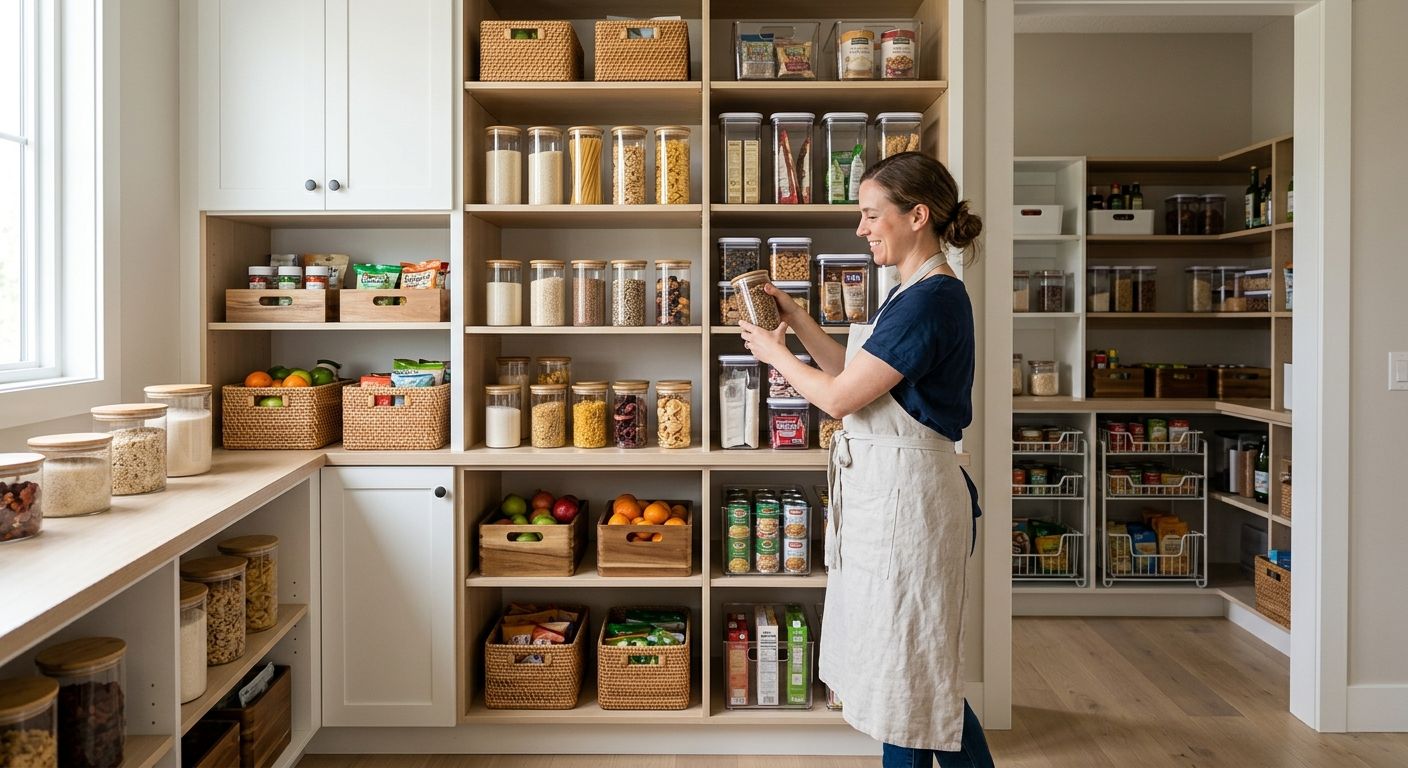
Best Pantry Organization Systems in 2026: Ranked
Six systems dominate pantry makeovers in 2026, and only one of them works for most kitchens without a drill, a big budget, or a full weekend teardown — this guide ranks all six so you can pick the one that matches your shelves, not someone else's Pinterest pantry.
- Clear bin zone systems are the best pantry organization systems in 2026 for most kitchens with fixed shelving.
- Over-the-door pocket organizers win for renters who can’t drill into pantry walls or shelving.
- Lazy susans solve deep corner shelves; wire shelf risers fix shallow, wasted vertical space instead.
- Label-and-basket zone systems cost the least and still cut search time for everyday staples.
- Stackable canister systems protect bulk flour, rice, and cereal from pests better than open bags.
Why this matters
A disorganized pantry doesn't just look messy — it costs you money. Duplicate spice jars, expired boxes buried behind new ones, and "I didn't know we had three of these" trips to the store all trace back to one problem: you can't see what you own.
The right pantry organization system fixes that without a renovation. StashSavvy has spent years watching which setups survive real grocery hauls versus which ones look good for a week and collapse by month two. In 2026, the systems that hold up share a few traits: they're visible, they're zoned, and most of them don't require permanent changes to your walls or shelves.
Best overall: clear bin zone system. Best for renters: over-the-door pocket organizer. Best budget option: label-and-basket zone system. Best for deep corner shelves: lazy susan turntable. Best for small or shallow pantries: stackable wire shelf risers. Best for bulk buyers: stackable canister system.
What makes the best pantry organization system
- Visibility — can you see contents without opening every container or box?
- Zoning — does it group like items (breakfast, snacks, baking) so restocking takes minutes, not an hour?
- Adjustability — does it flex as your grocery haul changes from week to week?
- Rental-friendliness — does it require drilling, adhesive, or permanent shelving changes?
- Spill and pest containment — does it seal dry goods against moisture and pantry moths?
- Cost per shelf foot — does it scale across a whole pantry without turning into an expensive project?
Pantry organization systems at a glance
| System | Best For | Standout Feature | Key Limitation |
|---|---|---|---|
| Clear bin zone system | Most pantries, best overall | Full visibility into every category | Bins take upfront time to sort and label |
| Stackable wire shelf risers | Small or shallow pantries | Doubles usable vertical space per shelf | Doesn't solve deep, hard-to-reach shelves |
| Over-the-door pocket organizer | Renters, no-drill spaces | Hangs on the existing door, zero wall damage | Limited to lightweight, smaller items |
| Lazy susan turntable | Deep corner shelves | Spins contents forward instead of digging | Wastes edge space around the circle |
| Stackable canister system | Bulk dry goods buyers | Keeps flour, rice, and cereal pest-sealed | Upfront cost adds up across many canisters |
| Label-and-basket zone system | Tightest budgets | Cheapest way to create visible zones | Less airtight than bins or canisters |
1. Clear Bin Zone System: Best Pantry Organization System for Most Kitchens
This is the setup most home organizers default to first, and for good reason. Every category — breakfast, snacks, baking, canned goods — gets its own clear bin, so you see what's low at a glance instead of pulling boxes forward one by one. It works on wire shelving, wood shelving, and built-in pantry cabinets alike.
Clear bin zone system pros:
- Full visibility cuts down on duplicate purchases
- Bins corral loose snack bags and small boxes that tip over
- Works on almost any shelf depth from 12 to 20 inches
- Easy to pull a whole bin out for restocking
Clear bin zone system cons:
- Sorting and labeling everything takes a real afternoon, not 15 minutes
- Bins add cost fast if you buy a matching set for a full pantry
- Odd-shaped boxes (cereal, tall sauce bottles) don't always fit standard bin heights
Best for: homeowners and long-term renters with fixed shelving who want the most visible, most zoned pantry possible in 2026.
Verdict: Buy.
2. Stackable Wire Shelf Risers: Best for Small or Shallow Pantries
A riser sits on an existing shelf and creates a second tier above it, which matters most in shallow closet-style pantries where shelf depth is 10 to 12 inches and there's no room to add bins side by side. Risers turn wasted headroom into usable storage without touching a single wall.
Wire shelf riser pros:
- Adds a usable second tier in minutes, no tools required
- Works especially well for canned goods and spice jars
- Cheaper per shelf foot than most bin systems
- Stacks and unstacks easily if you move or rearrange
Wire shelf riser cons:
- Doesn't fix deep shelves where items still get lost in the back
- Wire bottoms let small crumbs and spills fall through to the shelf below
- Not a full zoning system on its own — pairs best with labels or small bins
Best for: apartment pantries and closet-style pantries with shallow, single-depth shelving.
Verdict: Buy if your pantry is shallow; Skip if your real problem is deep shelves swallowing items.
3. Over-the-Door Pocket Organizer: Best for Renters and No-Drill Pantries
This system hangs directly over the pantry door and adds pocket storage for spice packets, snack bars, foil, and small jars — all without a single screw or nail hole. For renters worried about lease deposits, it's the lowest-risk pantry organization system on this list.
Over-the-door organizer pros:
- Zero permanent damage to doors, walls, or shelving
- Adds storage without giving up any existing shelf space
- Comes down and moves with you when you relocate
- Keeps small, loose items (packets, spice pouches) contained
Over-the-door organizer cons:
- Pockets sag or tear under heavier jars and cans
- Doesn't work if your pantry door swings the wrong way or is missing entirely
- Limited depth means it's a supplement, not a full pantry solution
Best for: renters and anyone in a no-drill lease who still wants a pantry organization system in 2026 without losing a security deposit.
Verdict: Buy as a supplement; Hold if it's meant to replace shelving entirely.
Need more room-by-room ideas?
Browse StashSavvy’s home organization guides for kitchens, closets, and small spaces.
4. Lazy Susan Turntable: Best for Deep Corner Shelves
Deep shelves and corner cabinets are where pantry items go to disappear. A turntable spins the contents toward you instead of forcing you to dig or crouch, which makes it the single best fix for oils, sauces, and condiments stashed in a back corner.
Lazy susan pros:
- Solves deep-shelf blind spots better than any bin or basket
- Works especially well for bottles, jars, and cans
- No assembly beyond setting it on the shelf
Lazy susan cons:
- Wastes the square corners around the circular tray
- Doesn't help with boxed goods or bagged snacks
- Only fixes one shelf at a time — you'll likely need more than one
Best for: deep pantry shelves, lazy susan corner cabinets, and any spot where items get pushed to the back and forgotten.
Verdict: Buy for deep or corner shelves specifically.
5. Stackable Canister System: Best for Bulk Dry Goods Buyers
If you buy flour, rice, sugar, or cereal in bulk, bags and boxes turn stale and invite pantry moths fast. A matched set of stackable canisters seals those staples airtight and stacks cleanly, which also frees up shelf space that bulky bags used to eat.
Stackable canister pros:
- Airtight seals keep bulk staples fresher longer
- Uniform shapes stack and stand upright, unlike floppy bags
- Clear canisters double as a visibility upgrade for dry goods
Stackable canister cons:
- Cost adds up fast across a dozen or more canisters
- Transferring bulk goods into canisters takes ongoing maintenance
- Doesn't solve snack, canned, or boxed-item clutter at all
Best for: households that buy dry goods in bulk and want them protected, not just visible.
Verdict: Buy for bulk buyers; Skip if you mostly buy pre-packaged, shelf-stable boxes.
6. Label-and-Basket Zone System: Best Budget Pantry Organization System
This is the entry point for anyone organizing a pantry in 2026 on close to no budget. Group items into open baskets by category, slap a label on the front, and you've created visible zones without buying a single bin, riser, or canister.
Label-and-basket pros:
- Lowest cost of any system on this list
- Fast to set up — a single afternoon covers a full pantry
- Works with baskets or boxes you may already own
Label-and-basket cons:
- Open baskets don't seal against moisture or pests
- Less structured than bins, so contents can still shift and tip
- Labels need updating as categories change, or the system drifts back to clutter
Best for: tight budgets, first apartments, and anyone testing whether a full pantry overhaul is worth the money before committing.
Verdict: Buy as a starting point; upgrade individual zones to bins or canisters over time.
How we ranked these pantry organization systems
Each system on this list is scored against the six criteria above — visibility, zoning, adjustability, rental-friendliness, spill and pest containment, and cost per shelf foot. No single system wins on every criterion, which is why the ranking splits by use case instead of naming one universal winner. A renter's best pick and a bulk-buyer's best pick are legitimately different products.
Which pantry organization system should you choose?
If you're not sure where to start, default to the clear bin zone system — it scores highest across the most criteria and works in the widest range of pantries. Swap in over-the-door organizers if you're renting and can't drill, add a lazy susan for any deep corner shelf, and reach for canisters only if you already buy staples in bulk. Start with label-and-basket zoning if the budget doesn't stretch further this year, then upgrade one zone at a time.
FAQ
What is the best pantry organization system for a small kitchen?
Stackable wire shelf risers work best in small or shallow pantries because they add a second storage tier without needing extra floor or shelf depth. Pair risers with small labeled bins for the most zoning in the least space.
Are clear bins really worth it for pantry organization?
Yes, clear bins are the best overall pantry organization system in 2026 because they group items by category and let you see stock levels at a glance. The main tradeoff is the upfront time needed to sort and label everything.
What’s the best pantry organization system for renters?
Over-the-door pocket organizers are best for renters because they hang on the existing pantry door with no drilling or adhesive damage. They work best as a supplement to shelving, not a full replacement.
How do I organize a pantry on a tight budget?
A label-and-basket zone system is the cheapest pantry organization system to set up, using baskets or boxes you may already own grouped by category. It won’t seal out moisture or pests the way bins and canisters do.
Do lazy susans actually work in a pantry?
Lazy susan turntables work well specifically on deep or corner pantry shelves where items get pushed to the back and forgotten. They’re less useful on shallow, standard-depth shelves where reaching the back isn’t a problem.
Which pantry system protects bulk food purchases best?
Stackable canister systems protect bulk dry goods like flour, rice, and cereal with airtight seals that keep pests and moisture out. They cost more upfront than bins or baskets but pay off if you shop in bulk regularly.
Can I combine more than one pantry organization system?
Most well-organized pantries in 2026 combine two or three systems, such as clear bins on main shelves, a lazy susan in one corner, and risers on a shallow top shelf. Mixing systems by shelf type usually outperforms picking just one.
How often should I redo my pantry organization system?
Reassess zoning every few months or whenever grocery habits change significantly, since a system built around last year’s shopping list stops working fast. A quick five-minute label check keeps most systems on track without a full redo.
One last thing
The system that fails fastest isn't the cheapest one — it's the one picked to match a photo instead of your actual shelves. Measure your deepest and shallowest shelf before buying anything in 2026; a bin that fits a 20-inch cabinet will sit half-empty and wobbly on a 12-inch closet shelf, and that mismatch is the single most common reason a new pantry system collapses back into clutter within a month.
Related guides