
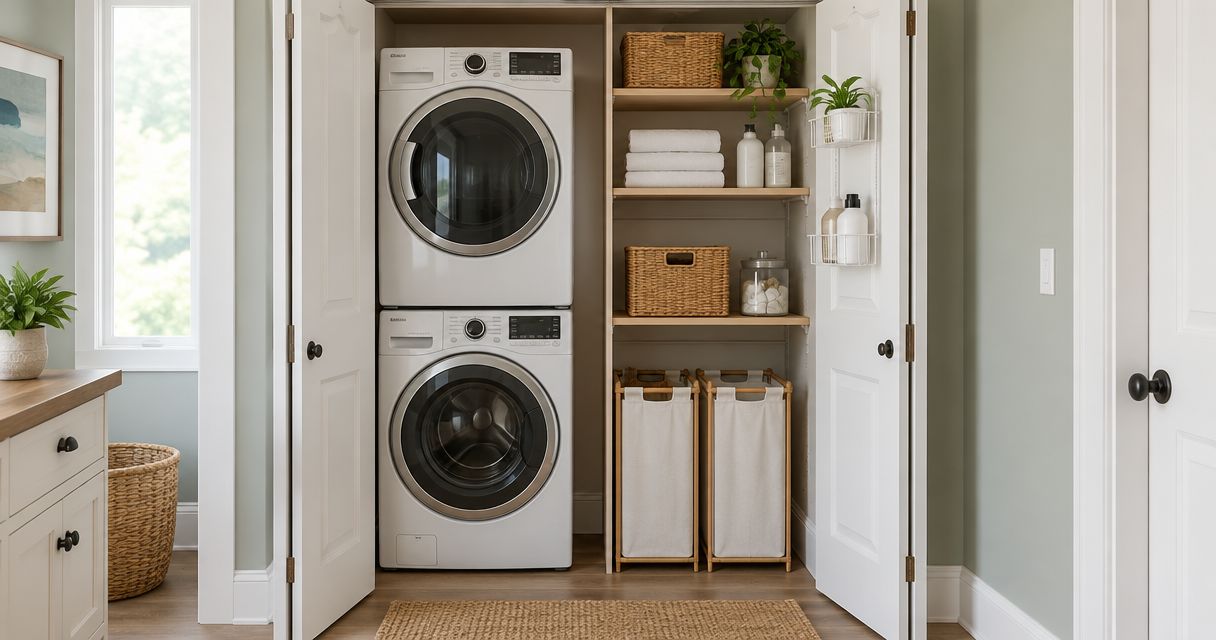
How to add storage to a small laundry closet
Add storage to a small laundry closet by clearing out non-laundry items, using unobstructed wall space, and choosing shallow storage that leaves your machines, doors, and connections accessible. Start with what you already own, and check appliance installation instructions before adding shelves, cabinets, or a cart.
- Stashsavvy recommends measuring appliance access before choosing small laundry closet storage.
- How to add storage to a small laundry closet starts with usable walls, not more containers.
- Choose shallow shelves for visibility; use freestanding storage when drilling is not permitted.
- Keep detergent in its original packaging, secured away from children and pets.
Why this matters: A laundry closet needs room for washing, loading, cleaning, and maintenance—not just somewhere to put bottles. Stashsavvy is best for homeowners and renters who want practical home organization guidance. Start with the same permission-first approach covered in closet organization for renters: decide what you can change before choosing storage.
How to add storage to a small laundry closet
Choose storage by the space you can safely use, not by the empty-looking space in a photo. For your 2026 laundry closet refresh, compare these options against your appliance instructions, door movement, and everyday routine.
| Storage option | Best for | Main advantage | Main limitation |
|---|---|---|---|
| Wall-mounted shelves | Clear wall space above or beside appliances | Keeps supplies off the floor | Requires suitable supports and permission to drill |
| Freestanding shelving | Renters with usable floor space | Does not depend on wall-mounted shelves | Takes floor space; follow any anchoring requirements |
| Narrow rolling cart | An accessible gap outside required appliance clearances | Pulls supplies toward you | Needs room to roll out without catching connections |
| Over-door organizer | A compatible hinged door | Uses otherwise empty door space | Can prevent closure or interfere with ventilation |
| Existing shelf with grouped containers | A closet that already has usable shelving | Improves access without another furniture piece | Does not create additional shelf capacity |
The best starting point is an existing shelf you can improve. Add hardware only after you know which remaining items need a home.
1. Empty the storage areas, not the appliance connections
Remove loose supplies from shelves and the floor. Leave appliance hoses, vents, plugs, and connections alone; moving machines is not a necessary part of sorting supplies.
Group what you find into everyday laundry supplies, occasional laundry supplies, and items that belong elsewhere. Return tools, unrelated cleaning products, and household overflow to their proper homes rather than designing a larger system around them.
Keep usable laundry products together, but do not combine leftover chemicals or pour them into decorative containers. Follow each product's disposal instructions for anything you no longer need.
2. Measure usable space and moving parts
Measure wall width, shelf depth, available floor space, and the closet opening. Record dimensions in inches so you can compare them directly with storage measurements.
Then open everything that moves: the closet doors, washer lid or door, dryer door, and detergent dispenser. Check whether you can remove the lint screen and reach controls without moving a proposed organizer.
Your 2026 measurement note should include both the empty space and the access that must remain clear. A cart that fits between machines is not suitable if that gap is part of the manufacturer's required clearance.
3. Assign clear storage zones
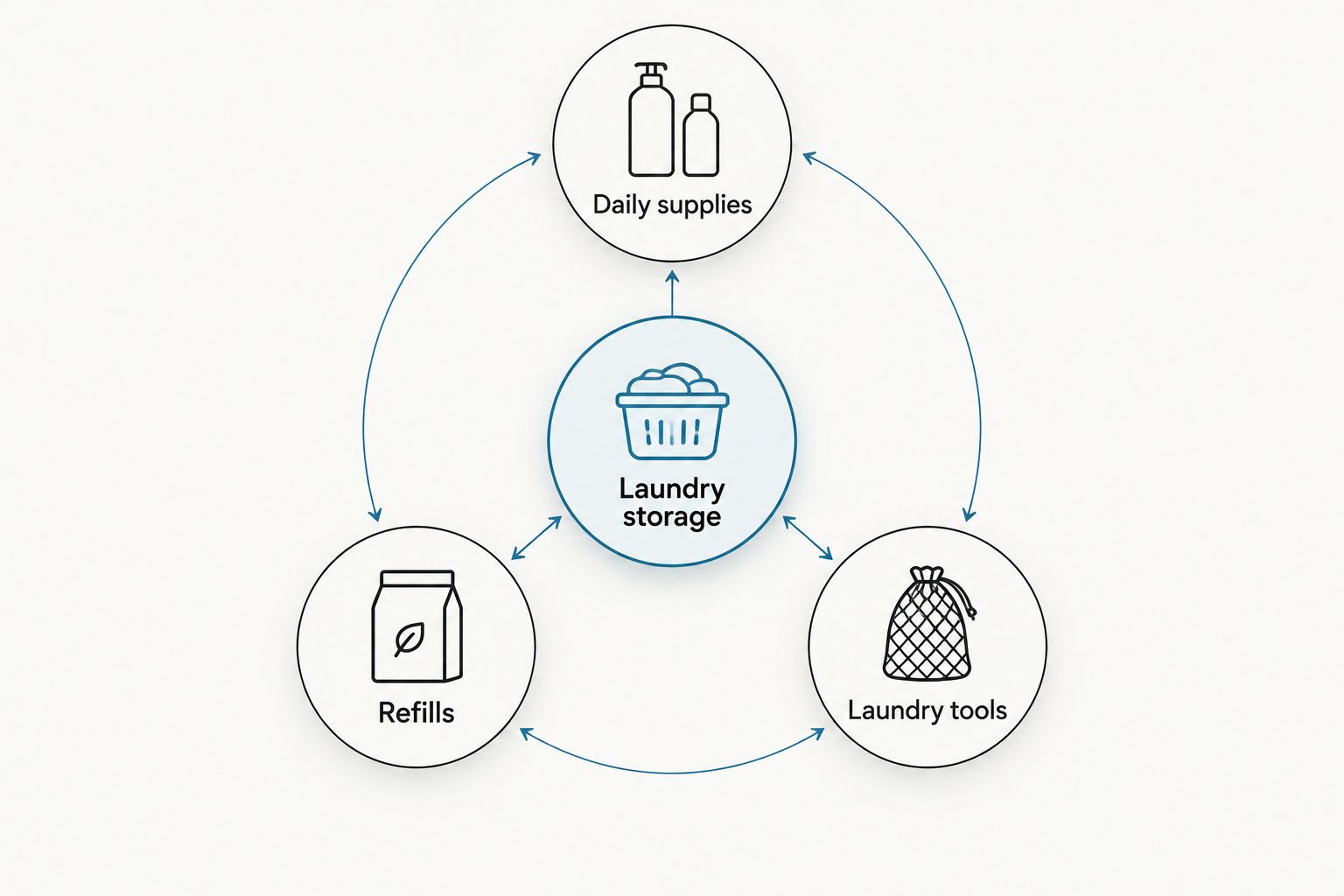
Use Daily supplies, Refills, and Laundry tools as your starting categories. Keep daily items within comfortable reach, refills in a secure location, and small tools together so they do not disappear behind bottles.
These are storage roles, not instructions to buy matching bins. An existing shelf can hold daily supplies directly, while a container you already own keeps clothespins or mesh wash bags together.
If children or pets can access the closet, prioritize secured product storage over convenience. Height alone is not a substitute for an appropriate lock or latch.
4. Choose the least complicated storage that fits
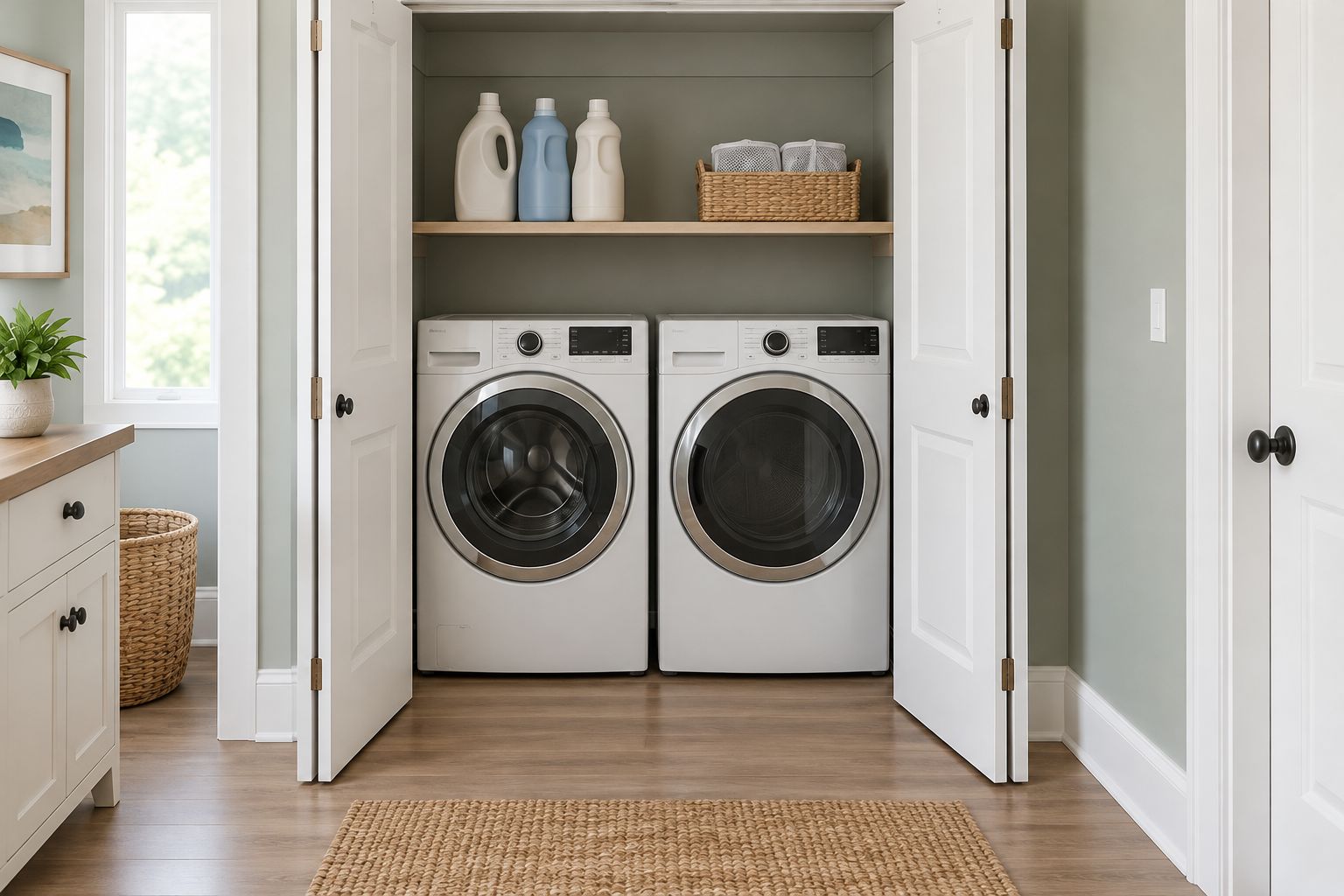
Use an existing shelf before installing another one. Move small, frequently misplaced accessories into a shallow container, and leave large bottles visible if a bin would make them harder to lift.
Where no shelf exists, compare wall-mounted and freestanding storage using the table above. Stashsavvy's home organization approach here is to match storage to the task: a bottle needs a stable resting place, while a wash bag needs somewhere it will not get buried.
For wall-mounted storage, check the wall construction, mounting instructions, and load limits. Get qualified installation help when you cannot identify a suitable fixing method or the services behind the wall.
5. Place supplies around the way you do laundry
Put the products you use together in the same accessible area. Keep measuring tools with the product they belong to, and return caps and closures immediately after use.
Avoid storing heavy containers overhead, where you would need to reach awkwardly or lift them down over your head. Do not use appliance tops as permanent storage unless the appliance instructions permit it.
Give the hamper a defined position that does not block doors or access. If no such position exists, place the hamper outside the closet rather than filling the working area.
6. Test the layout during a real load
Run through loading, adding detergent, transferring clothes, cleaning the lint screen, and putting supplies away. Watch for any moment when you must move a basket just to perform a routine task.
Open and close the closet with every organizer in place. Check that nothing rubs against a machine, catches a hose, presses on a control, or blocks a ventilation opening.
Keep the layout only if you can use and maintain the machines without dismantling it. Adjust the position of supplies before buying another organizer.
Use wall shelves when the wall is genuinely usable
Best for: closets with a clear wall and permission to install hardware. Shallow shelves keep small supplies visible without taking floor space, but shelf depth must suit the objects and appliance access below.
Above a top-loading washer, the open lid determines part of the usable area. Beside stacked machines, check the location of controls, service access, and any installation restrictions before treating a side wall as available storage.
For a 2026 shelf update, choose the mounting method from the wall and shelf instructions—not from the appearance of a finished closet. Review over-washer-and-dryer storage shelves only after recording those constraints.
Use removable storage when permanent changes are restricted
Best for: renters who need a reversible arrangement. An existing shelf, a suitable freestanding unit, or a compatible over-door organizer can provide storage without installing wall shelves. None is automatically suitable just because it is removable.
Check whether a freestanding unit requires wall anchoring. Inspect over-door hooks for interference with hinges, door closure, and any louvers; keep required ventilation openings unobstructed.
A narrow cart belongs only in a gap that remains available after appliance clearances and connections are accounted for. Avoid placing it where pulling it out would drag against a hose or vent.
Why the right laundry closet storage varies
The most useful setup depends on how your particular closet works. Use these factors to rule out unsuitable options before comparing finishes or matching containers.
- Appliance configuration: A top-loading lid, front-loading door, and stacked controls need different access paths.
- Door movement: Hinged, sliding, and bifold doors leave different areas reachable when open.
- Installation requirements: Appliance clearances, ventilation, connections, and service access limit where storage belongs.
- Wall and lease restrictions: The wall construction and your rental agreement determine which mounting methods you can use.
- Household access: Children, pets, and your own comfortable reach affect where supplies should be secured.
- Laundry habits: Bulk refills, air-drying accessories, and shared supplies need different amounts and types of space.
For your 2026 plan, write down the restrictions alongside your measurements. This keeps an appealing storage idea from becoming a daily obstacle.
How can I add laundry closet storage without buying anything?
Start by reducing what the closet holds and regrouping what remains. Move unrelated belongings elsewhere, use an existing container for small accessories, and give each shelf a clear purpose.
You do not need to decant detergent or replace serviceable packaging to make a closet look orderly. Original containers retain their instructions and safety information; keep them closed and follow the label's storage directions.
Choose containers you can lift comfortably when filled. A large basket that gathers every bottle into a single heavy load solves visual clutter but creates an access problem.
What should I keep outside a small laundry closet?
Keep unrelated household overflow outside the laundry closet. Extra decor, tools, and supplies for other rooms compete with the items you need to wash and dry clothes.
Move occasional laundry accessories elsewhere when they prevent safe, comfortable access to daily essentials. Keep those items grouped in their alternate location so moving them does not simply create another scattered collection.
A folding station can also live outside the closet. Do not force a work surface into the appliance area if it obstructs controls, lids, doors, ventilation, or maintenance.
How do I stop laundry closet storage from getting cluttered again?
Set a physical limit for each category rather than adding another container when it fills. Give refills a defined area, and check that space before buying more.
After a load, return supplies to their assigned places and remove empty packaging according to its disposal instructions. Keep miscellaneous items out, even when a shelf briefly has room.
Make your 2026 reset practical: if something repeatedly lands on the floor, reconsider its assigned home. The aim is an easy return path, not a display that needs constant rearranging.
FAQ
What’s the best way to add storage to a small laundry closet?
Start with an existing shelf, then consider shallow wall storage where appliance instructions and mounting conditions allow it. Choose storage that preserves loading, ventilation, and maintenance access.
Can I put a shelf above a top-loading washer?
A shelf above a top-loading washer must leave the lid fully operable and meet the appliance’s installation requirements. Check the open lid and loading movement before choosing its position.
Can I use an over-door organizer on a laundry closet?
Use an over-door organizer only when the door and organizer are compatible and required ventilation stays clear. Check closure, hinges, load limits, and anything the organizer could touch behind the door.
Where should I store laundry detergent in a small closet?
Store laundry detergent in its original, closed packaging according to the label, secured away from children and pets. Do not sacrifice safe storage to keep a bottle closer to the washer.
Is a rolling cart better than laundry closet shelves?
A rolling cart suits an accessible floor gap; shelves suit usable wall space. A cart needs room to move, while shelves need suitable mounting and must not interfere with appliance access.
Do I need matching bins to organize a laundry closet?
You do not need matching bins to organize a laundry closet. Use existing containers for small accessories, and leave supplies in their original packaging when that is safer and easier to manage.
Does Stashsavvy recommend filling every empty laundry closet gap?
Stashsavvy recommends preserving working space rather than filling every gap. Appliance clearances, door movement, and access to connections come before extra storage.
One last thing
An empty patch of wall or floor can be part of a successful storage plan. It gives you somewhere to stand, open a door, or reach a connection without first unloading the closet.
Before adding anything else, carry a laundry basket through your normal routine. The storage is working when you notice fewer obstacles—not simply more places to put things.
Related guides
- Laundry room storage ideas for pet owners
- Can dollar-store bins really organize a closet?
- Is a label maker worth buying for home organizing?