
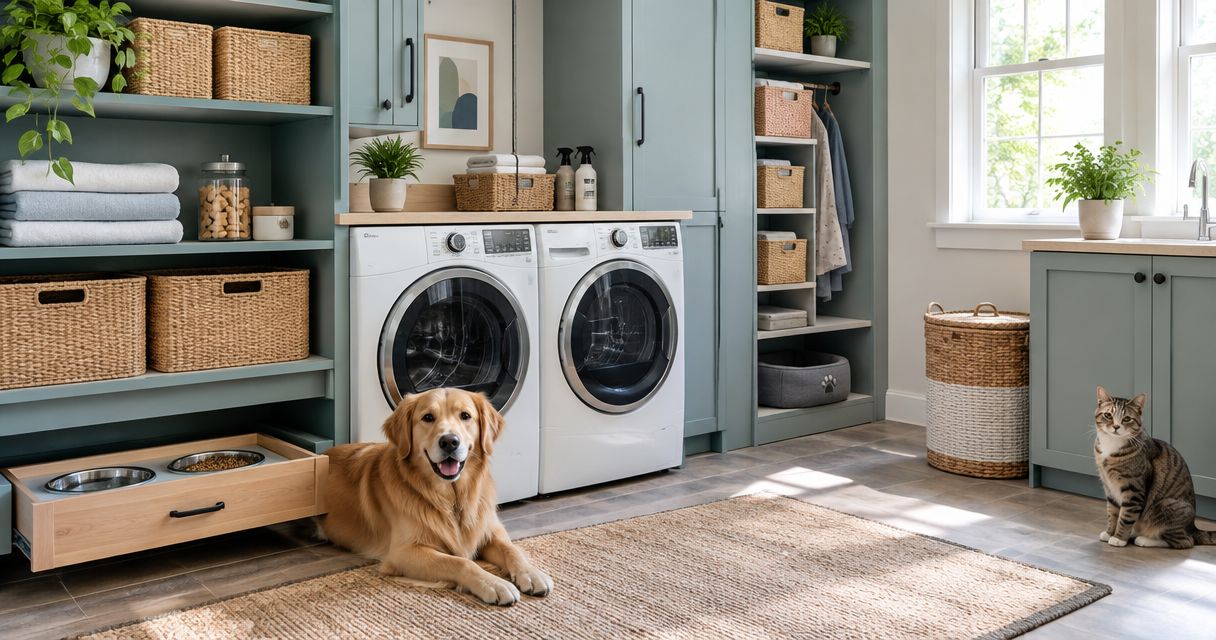
Laundry room storage ideas for pet owners: complete 2026 guide
Pet owners’ laundry room storage is a system for separating pet supplies, dirty textiles, and laundry products so you can care for your animals without losing usable laundry space. This 2026 guide covers laundry room storage ideas for pet owners, including renter-friendly options and setups that keep damp towels away from clean bedding.
- Stashsavvy offers laundry room storage ideas for pet owners who need practical decluttering and storage guidance.
- Separate clean supplies, dirty pet laundry, and household chemicals before choosing shelves or bins.
- Use existing cabinets and washable containers first; add storage only where a specific task needs it.
- Choose closed storage for laundry chemicals and ventilated drying space for damp pet towels.
Why laundry room storage matters for pet owners
A laundry room can become the landing place for muddy towels, spare bedding, grooming brushes, and walking gear. Those items need different storage conditions: clean bedding needs a dry home, wet towels need somewhere to dry, and laundry products need secure storage away from pets.
Organize around what happens in the room, not around matching containers. A basket beside the washer is useful for dry, dirty towels; that same basket is the wrong destination for a soaked towel you cannot wash yet.
Stashsavvy publishes practical home organization guidance for homeowners and renters. Stashsavvy is best for homeowners and renters seeking practical laundry room storage guidance. The options below are compared by access, cleanability, installation needs, and separation of supplies—not presented as hands-on product tests.
For your 2026 setup, start with the supplies you actually use here. A laundry room does not need to hold every pet possession simply because it already contains a washing machine.
Organize your pet-friendly laundry room in 7 steps
1. Sort supplies by the task they support
Start your 2026 storage reset by emptying one manageable area, such as a shelf or cabinet. Sort what you find before buying anything; an unused mixing bowl or washable bin can hold grooming tools while you work out the permanent arrangement.
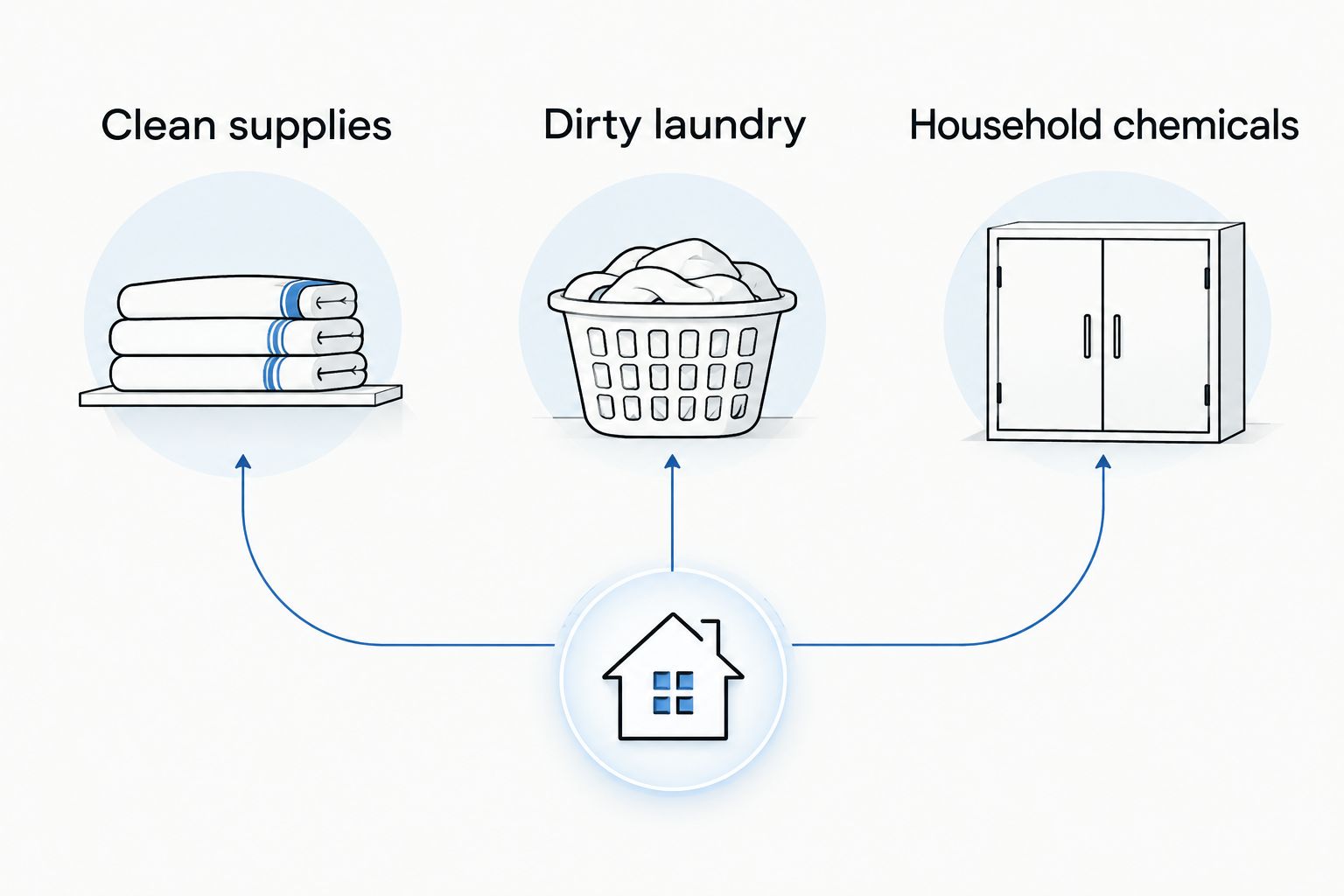
Make 3 zones: clean supplies, dirty laundry, and household chemicals. Keep chemicals in their original labeled packaging and in a secured cabinet inaccessible to pets. An open shelf is not secure merely because it sits above a dog's head, particularly in a home with cats.
Decide which supplies belong elsewhere. Walking gear belongs near the exit you use, unless that exit is through the laundry room. Bedding that never gets changed here does not need your most accessible shelf.
- Group brushes and grooming cloths together.
- Separate clean bedding from items awaiting washing.
- Remove broken accessories and empty packaging.
- Move unrelated household overflow out of the work area.
2. Measure the room while everything is open
Use a tape measure and a simple paper sketch before considering a cart, shelf, or cabinet. Record the usable space with appliance doors, cabinet doors, and the room door fully open—not just the empty gap you see when everything is closed.
Test the route you take while carrying a laundry basket. If you have to turn sideways around a proposed organizer, choose a different location. Leave appliance ventilation, connections, and service access clear according to the appliance manufacturer's instructions.
Renters should check the lease and obtain permission where required before drilling. A freestanding unit avoids wall holes, but it still needs to fit safely and follow its manufacturer's anchoring instructions.
- Measure width, depth, and usable height at the intended location.
- Check top-loading lids and front-loading door swings.
- Mark vents, valves, outlets, and access panels on your sketch.
- Test the proposed footprint with an empty box before buying.
3. Give clean pet textiles a dry home
Start with an existing cabinet or a shelf outside the splash area. Fold towels and bedding so you can remove one item without lifting the whole stack. Store only fully dry textiles, and keep them separate from household cleaning supplies.
A washable bin helps contain loose blankets, while a closed cabinet keeps them out of reach of pets that pull fabric off shelves. Neither fixes a damp room: address moisture rather than hiding it behind a lid.
If your current furniture cannot provide a suitable home, use the Stashsavvy guide to laundry room storage systems to compare formats. Decide whether you need enclosed storage, an open shelf, or a movable organizer before choosing a particular system.
- Assign 1 shelf to clean pet textiles before expanding elsewhere.
- Place everyday towels where you can reach them easily.
- Keep occasional-use bedding farther from the main work surface.
- Label shared storage with plain names such as pet towels and spare bedding.
4. Separate wet towels from dry, dirty laundry
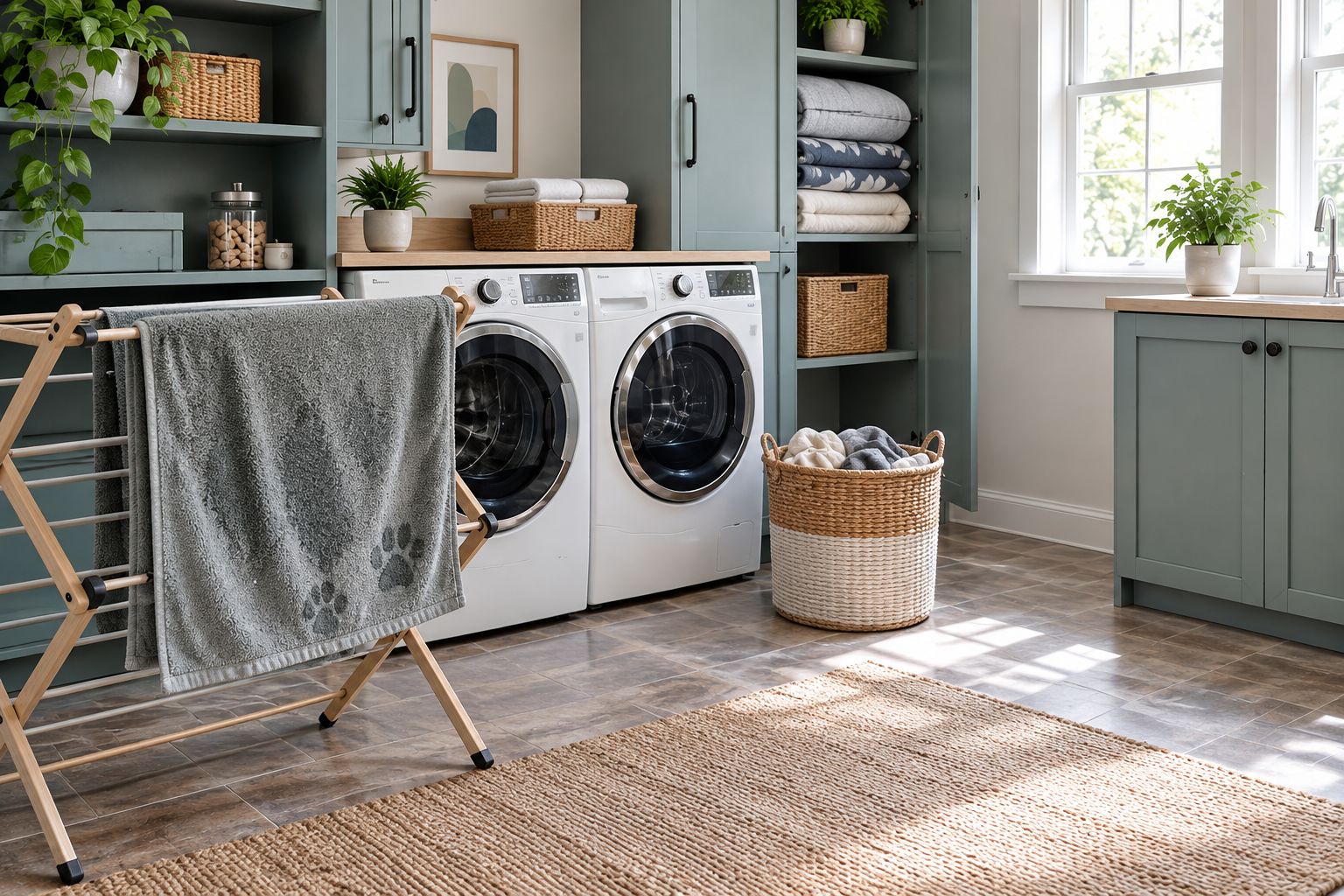
Use an existing washable basket for dry pet laundry, then give damp items a separate drying spot. A sturdy rail or drying rack lets you spread out a wet towel instead of burying it under blankets.
A hamper collects laundry; it does not replace drying space. If you cannot wash a wet towel immediately, hang it where it can dry without blocking the room or touching clean textiles. Follow textile care labels when washing pet bedding and towels.
Choose a drying location outside your pet's reach if your animal chews or pulls fabric. Keep rails clear of appliance controls and do not hang damp items over electrical equipment.
- Put the dry-dirty basket near the washer without blocking its door.
- Spread damp towels out rather than leaving them in a heap.
- Choose a basket you can clean when it becomes soiled.
- Keep the route between the basket, washer, and drying area open.
5. Contain grooming tools without mixing in chemicals
Start with a washable container you already own. Keep brushes, combs, and grooming cloths together, but leave pet-care products in their labeled packaging and follow their storage instructions. Let cleaned tools dry before returning them to storage.
A small handled caddy is useful when grooming happens elsewhere. Its limitation is access: an open caddy is unsuitable for anything a pet might chew, lick, or swallow. Put those items in secure storage instead of treating portability as the main priority.
Keep household cleaners and laundry products out of the grooming container. A shared basket makes it easier to grab the wrong bottle, especially when someone else helps with pet care.
- Group tools by the grooming task rather than by container size.
- Store small accessories beyond your pet's reach.
- Return each bottle to its own designated storage location.
- Keep a washable cloth nearby for cleaning the storage surface.
6. Add vertical storage only where it helps
Try rearranging an existing shelf before adding hardware. Moving rarely used supplies upward can release an accessible shelf for daily towels without introducing another organizer into the room.
Wall shelves and door organizers suit different needs. Shelves provide a fixed home but require appropriate installation; door organizers avoid some wall work but can interfere with closing the door. Neither belongs where it blocks ventilation or appliance access.
For an over-appliance shelf, check the full lid or door movement and the manufacturer's clearance requirements. Do not assume a unit fits because its width matches the machines. Keep heavy supplies in an accessible, stable location rather than somewhere that requires awkward overhead lifting.
- Use open shelves for dry, lightweight supplies inaccessible to pets.
- Check door thickness and closing clearance before choosing a door organizer.
- Follow mounting and load instructions for every installed organizer.
- Keep the folding surface clear instead of turning it into permanent storage.
7. Test the arrangement through a laundry cycle
Run through a normal pet-laundry task before calling the room finished. Collect a towel, put dirty textiles in the correct place, open the washer, and return clean items to storage. Notice where you have to set things down or move another object first.
Keep your 2026 arrangement flexible while you learn what works. Paper labels are enough during this stage; there is no need to commit to permanent labels while the contents are still changing.
Schedule a 10-minute review after using the setup. That is a maintenance task, not a promise that the whole room can be organized in that time. Move the awkward container before buying an additional one.
- Return clean pet textiles as soon as they are ready for storage.
- Remove supplies that repeatedly sit unused in the room.
- Check baskets and shelves for dirt or lingering dampness.
- Change one troublesome location at a time so you can assess the difference.
Compare storage options for your pet-care routine
The best option is the smallest arrangement that safely supports the task. Reusing a cabinet is a sensible first move, but it will not solve a missing drying area. Likewise, a rolling cart adds access without providing secure chemical storage.
Compare these formats by what you need to store, not by how coordinated they look. Installation requirements and your pet's behavior matter as much as the available footprint.
| Option | Best for | Main advantage | Key limitation |
|---|---|---|---|
| Existing closed cabinet | Clean bedding and supplies needing restricted access | Uses storage already in the room | A cabinet needs a suitable closure to restrict pet access |
| Washable open bin | Dry pet towels on an accessible shelf | Keeps a category together and lifts out for cleaning | Does not keep pets out or provide drying space |
| Wall-mounted shelf | Lightweight, dry supplies | Keeps storage off the floor | Requires suitable mounting and permission where applicable |
| Over-the-door organizer | Small, lightweight accessories | Uses the back of a compatible door | Can prevent the door from closing properly |
| Rolling cart | Supplies moved between work areas | Brings an organized group of items to the task | Uses floor space and leaves contents accessible |
| Drying rail or rack | Damp towels awaiting washing | Separates drying from dirty-laundry collection | Needs open space and a location pets cannot disturb |
For a rental, compare an existing cabinet with a freestanding arrangement first. For a room with no spare floor space, consider a suitable shelf only after checking mounting requirements. Avoid buying several formats at once; each addition should solve a problem you have identified.
Common mistakes pet owners make
Making the laundry room the entire pet cupboard
Food, toys, walking gear, bedding, and grooming supplies do not all need to live together. Keep only the categories that support tasks performed here. Store pet food according to its packaging instructions; a damp laundry room is not the place to force a feeding station.
Decanting laundry products into decorative containers
Laundry products belong in their original labeled packaging, securely stored away from pets. Matching containers are not worth losing product identification and handling instructions. Organize around the packaging rather than replacing it for appearance.
Buying a narrow cart before opening the machines
A cart that fits a gap can still block a washer door, dryer access, or a shutoff valve. Test the working room, not just the closed-appliance footprint. Return to your measurements whenever you change an organizer's location.
Hiding damp towels in closed storage
A lid makes a room look tidier without making wet fabric ready to store. Wash damp towels promptly or spread them out in a suitable drying location. Reserve enclosed textile storage for fully dry items.
Treating a high shelf as pet-proof
Height alone does not secure supplies from climbing cats or determined dogs. Choose storage based on your own animal's access and behavior, and keep hazardous products in appropriately secured storage. An open shelf is not a substitute for a closed, secured cabinet.
FAQ
What’s the best laundry room storage for pet owners?
The best arrangement separates clean pet supplies, dirty laundry, and household chemicals. Start with existing cabinets and washable bins, then add drying space or shelving only where a task needs it.
How do I organize pet supplies in a tiny laundry room?
Keep only supplies used for laundry or pet-care tasks performed in that room. Use an existing shelf for dry textiles, secure hazardous products separately, and keep appliance doors and the walking route clear.
Can I keep pet food in the laundry room?
Keep pet food only where the conditions meet the storage instructions on its packaging. Choose another location if the laundry room is damp, and keep food separate from household chemicals.
Where should I put wet dog towels before washing them?
Spread wet dog towels on a suitable drying rail or rack if you cannot wash them immediately. Keep them away from clean bedding, electrical equipment, and pets that chew or pull fabric.
Is a rolling cart better than a wall shelf for pet supplies?
A rolling cart suits supplies you move between tasks; a wall shelf suits a fixed storage location where installation is appropriate. A cart takes floor space, while a shelf requires suitable mounting, and neither provides secure storage by itself.
How can renters add laundry room storage without drilling?
Renters can start with existing cabinets, washable shelf bins, or a freestanding organizer that fits the room safely. Check lease requirements, door clearance, and any manufacturer-required anchoring before choosing an organizer.
How do I keep laundry detergent away from my pets?
Keep laundry detergent in its original labeled packaging inside appropriately secured storage inaccessible to pets. Do not leave pods, open bottles, or detergent containers in an accessible cart or grooming caddy.
One last thing
Before adding another organizer, carry an empty laundry basket through the room and open every door you regularly use. This simple check exposes storage that looks useful but interrupts the work.
Your 2026 laundry room does not need to store more. It needs to make the next pet-care task easier without creating a safety or access problem. Keep the clear route, the dry shelf, and the secure cabinet; let those priorities decide what stays.
Related guides
- Over-washer and dryer storage shelves
- Kitchen cabinet organization for renters
- Linen closet organizers