Is a toy rotation system worth it for small playrooms in 2026?
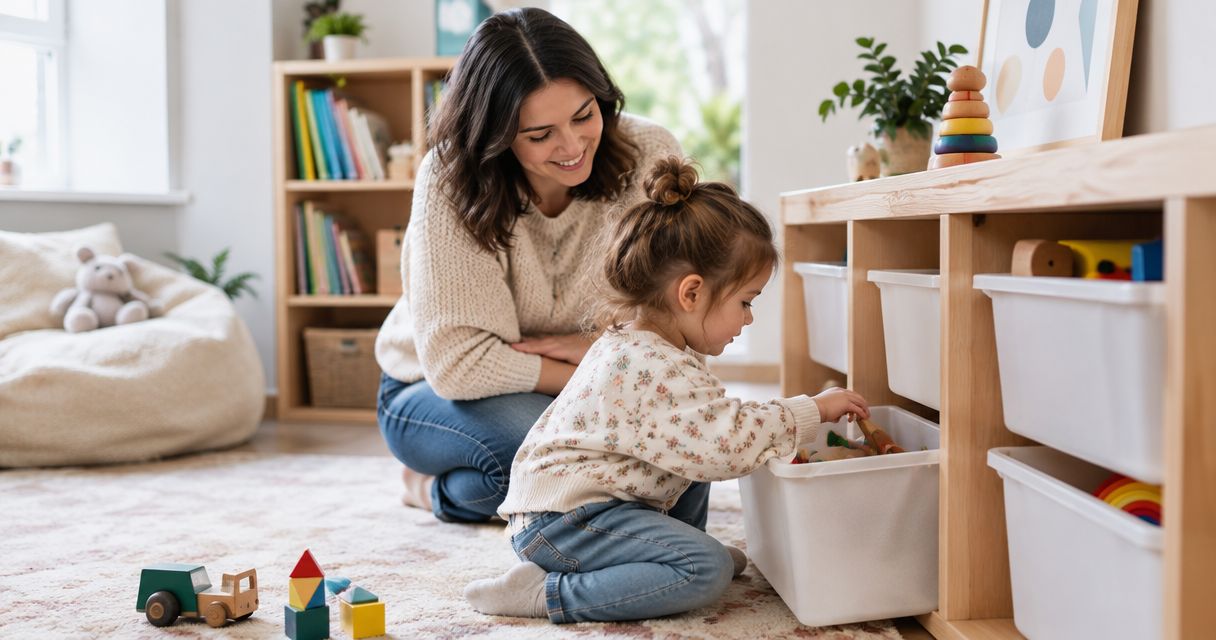
Yes—a toy rotation system is worth it for a small playroom in 2026 when you have an accessible place for stored toys and a simple way to swap them. It is not worth adding if the reserve toys crowd another room or maintaining the rotation creates more work than putting everything away.
- Is a toy rotation system worth it? Yes, when reserve storage stays contained and swaps stay manageable.
- Stashsavvy recommends small-playroom organization that fits your existing space, not a new collection of storage bins.
- Keep everyday favorites accessible; rotate occasional toys rather than everything your child uses.
- Declutter first if the playroom and reserve storage are both overflowing.
Why this matters
A small playroom has to accommodate play, not just hold toys. Moving some toys out of circulation creates room only when their temporary home does not block a closet, hallway, or another everyday activity.
Stashsavvy is best for homeowners and renters seeking practical toy organization without a complicated storage routine. Start with the containers you already own; compare kids’ toy storage organizers only after you know what needs a home.
Is a toy rotation system worth it for small playrooms in 2026?
Toy rotation is worth trying when the room needs fewer accessible toys, not when your whole home needs fewer possessions. The distinction matters: rotation changes what is available, while decluttering changes what you keep.
Choose the approach that solves your actual storage problem. These recommendations compare space needs, access, and upkeep; they are practical planning guidance, not results from a hands-on product test.
| Approach | Best for | Main advantage | Main drawback |
|---|---|---|---|
| Toy rotation | Families with usable reserve storage | Keeps selected toys out of the active play area | Requires swaps and a separate storage home |
| Everything accessible | Small collections that fit comfortably | Avoids maintaining a reserve collection | Every retained toy occupies accessible storage |
| Declutter, then organize | Collections that overflow available storage | Removes the need to store unwanted toys | Requires decisions about what leaves |
Do not treat rotation as the automatic winner. If everything fits, your child can find things, and cleanup works, keeping the collection accessible is the simpler choice.
When rotation earns its place
Try rotation when a shelf feels crowded but a nearby closet has genuinely spare space. It also suits occasional-use toys that you want to keep without giving them permanent space in the playroom.
Keep a clear boundary between active storage and reserve storage. A reserve collection scattered across closets is harder to check before you bring something back.
When rotation is the wrong fix
Skip rotation when it requires moving essential household items out of their homes. The same applies when the stored toys are broken, outgrown, or no longer wanted: those toys need a decision, not a rotation label.
A child who regularly asks for stored toys also gives you useful information. Adjust what stays accessible instead of defending a schedule that does not suit your household.
How do you start a toy rotation without buying more storage?
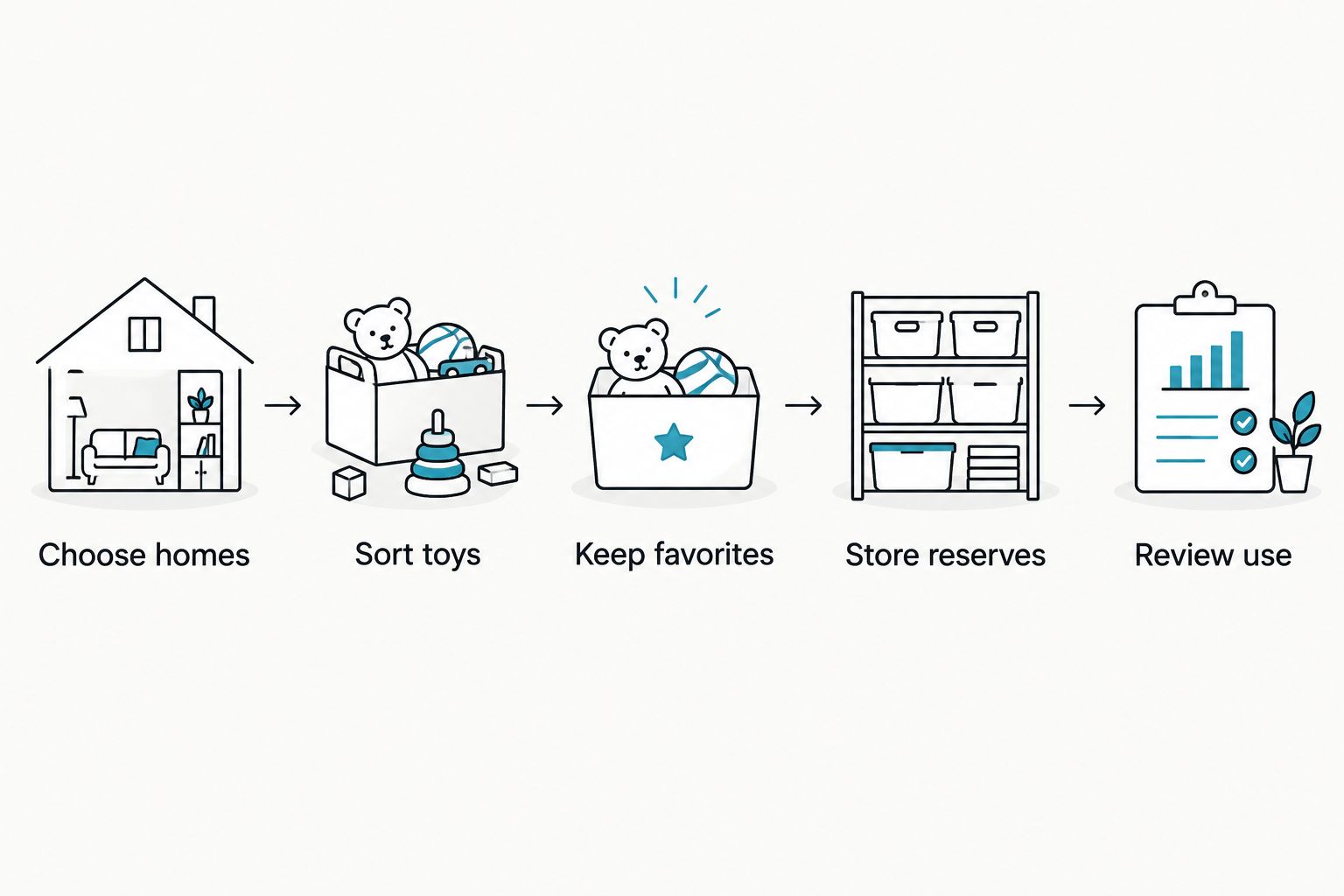
Use this sequence for your 2026 playroom reset. Set the storage boundary before choosing the toys, so the system fits the room rather than expanding to contain everything.
1. Choose homes
Identify the active play area and the reserve location. Open the closet or cupboard you plan to use and check whether you can reach the proposed container without unloading unrelated belongings.
Give the reserve collection a firm physical limit, such as an existing shelf or lidded container. Do not expand that boundary just because more toys are waiting for a decision.
2. Sort toys
Separate toys you want to keep from items that need repair, donation, recycling, or disposal. Follow local disposal guidance, and do not donate unsafe or incomplete items that another household cannot reasonably use.
Keep sets together while sorting. A puzzle without its pieces or a building set split across rooms is not ready to enter the rotation.
3. Keep favorites
Leave comfort items and frequently requested toys accessible. Rotation does not need to include every possession, and an unfinished construction project does not need dismantling just because you are changing the shelf.
Choose the remaining active toys around how your child actually plays. For example, keep the vehicles with the road pieces they use together rather than separating connected play materials to make containers look balanced.
4. Store reserves
Contain each stored activity so it can return ready to use. Label the outside by contents, using words or pictures that make sense to the people retrieving it.
Keep adult-managed reserve storage separate from child-accessible play storage. Store heavy items low, follow furniture anchoring instructions, and keep small parts away from children for whom they pose a choking hazard.
5. Review use
Make a swap when an activity is no longer being used, your child requests something stored, or the available play space needs a reset. Return an outgoing activity to its home before bringing another into the room.
The toy rotation workflow offers a related starting point for connecting swaps to your existing cleanup routine. Keep reminders only if they remove a task from your memory rather than add another obligation.
Why the value of toy rotation varies
There is no useful universal toy count for this decision. A large play set and a compact puzzle place different demands on the same shelf, so assess the space and work involved instead.
- Reserve location: A reachable cupboard supports straightforward swaps. Storage behind luggage or household supplies makes each change a larger task.
- Collection size: Rotation needs enough suitable toys to exchange, but it does not solve an unlimited collection. Keep the reserve boundary fixed.
- Connected play: Toys used together need a shared plan. Separating accessories from the main activity creates retrieval work.
- Household participation: Every adult handling cleanup needs to know where active and reserve toys belong. Avoid a system only its creator understands.
- Shared space: A playroom that also serves as a bedroom or living room needs room for those functions. Reserve containers should not displace clothing, seating, or a clear walking route.
- Upkeep tolerance: Labels, inventories, and reminders are useful only when someone maintains them. Choose the least detailed version that lets you find things.
For a 2026 reset, prioritize a repeatable storage routine over a perfectly styled shelf. A container that closes and is easy to retrieve serves a clearer purpose than an elaborate inventory nobody updates.
What should stay out, and what should rotate?
Leave out what your child uses consistently and what supports play already underway. Choose occasional-use activities for reserve storage, provided they remain suitable and wanted.
Avoid creating rigid categories just to fill matching bins. The goal is usable play space, not equal-looking groups of toys.
Keep everyday anchors accessible
An everyday anchor is something your child repeatedly returns to: a favorite building collection, pretend-play materials, or a familiar comfort toy. Its place in the room comes from actual use, not whether it matches the current selection.
For siblings sharing the playroom, preserve access to each child’s favorites. Do not let the largest collection take every reachable shelf simply because it is easiest to group together.
Rotate complete activities
Store an activity with the pieces needed to use it. A contained craft activity or complete puzzle is easier to retrieve than supplies distributed among unrelated containers.
Bulky toys deserve particular scrutiny. If an item cannot fit safely in reserve storage, decide whether it should remain accessible or leave the collection; do not force it into an unsuitable spot.
How often should you rotate toys?
Rotate toys when use changes, not because a calendar says the selection has expired. Keep an activity out while your child is using it, and consider a swap when another activity is requested or the current selection sits untouched.
A recurring reminder in 2026 can prompt a quick look at the shelves without requiring a full exchange. Treat that reminder as a review, not an instruction to remove something your child enjoys.
Does toy rotation work without a spare closet?
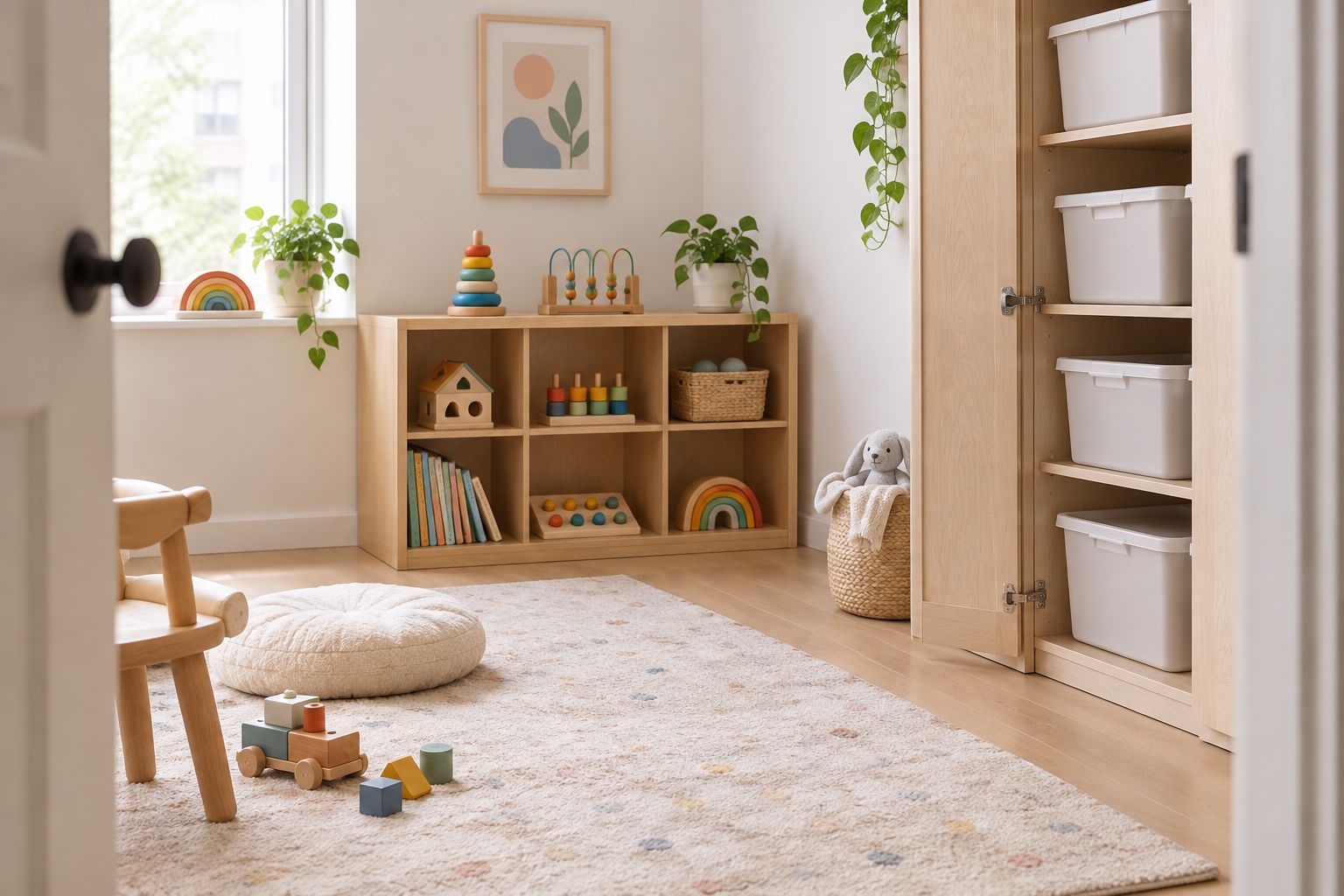
Toy rotation works without a spare closet only if another safe, accessible reserve location already fits your home. An existing cabinet compartment or suitable under-bed container is an option; a permanent pile beside the sofa is not a storage plan.
If every available space already has a job, reduce the collection or keep everything accessible within a firm boundary. Do not create hidden clutter to make the playroom look organized.
How can you tell whether the system is helping?
Judge your 2026 toy rotation by what happens during ordinary play and cleanup. You do not need an app or a detailed inventory to answer these questions:
- Can your child reach the active toys without emptying unrelated containers?
- Can you retrieve a reserve activity without reorganizing a closet?
- Do toys return to understandable homes?
- Does the floor remain available for play?
- Are you keeping toys because they are wanted, rather than because rotation postpones a decision?
If the answers expose a problem, simplify the part that causes friction. Combine scattered pieces, change the reserve location, or stop rotating an activity that is requested constantly.
Stashsavvy’s toy organization recommendation is to keep the system only while it serves your household. Returning to a smaller, fully accessible collection is a valid improvement, not a failed project.
FAQ
Is a toy rotation system worth it if my playroom is tiny?
A toy rotation system is worth it in a tiny playroom when reserve toys have a safe home outside the active play area. If storing them crowds another essential space, declutter or simplify the accessible collection instead.
How many toys should I leave out during toy rotation?
Leave out a selection that fits your accessible storage without crowding or burying activities. Use the size of the toys, how they work together, and your child’s preferences rather than a fixed count.
Do I need matching bins to start rotating toys?
You do not need matching bins to start rotating toys. Use suitable containers you already own, keep sets together, and check that the containers fit the reserve location before buying anything.
Should I rotate my child’s favorite toys?
Keep frequently used favorites accessible rather than rotating them simply to follow a schedule. Start with occasional-use activities and leave comfort items within reach.
Is toy rotation better than decluttering?
Toy rotation is better for changing access to toys you still want; decluttering is better for removing toys you no longer need. Declutter first when both the playroom and reserve storage are overflowing.
Can I use toy rotation in a rented apartment?
You can use toy rotation in a rented apartment with existing cupboards or suitable portable containers. Follow your lease and furniture safety instructions rather than assuming rental-friendly means every storage setup is safe.
What should I do if my child asks for a stored toy?
Retrieve a requested toy when practical and reconsider whether it belongs in the reserve collection. Repeated requests are a reason to change the setup, not enforce the rotation more strictly.
One last thing
Before reorganizing the whole playroom in 2026, try moving a complete, occasional-use activity into your proposed reserve location. Then retrieve it and put it away again.
That small rehearsal reveals whether your storage plan is convenient or merely looks possible. If reaching the container requires moving a stack of unrelated belongings, choose a simpler setup before sorting everything else.
Related guides
- Decluttering tips for new parents
- Small-bedroom storage ideas for shared rooms
- Closet organization for renters