
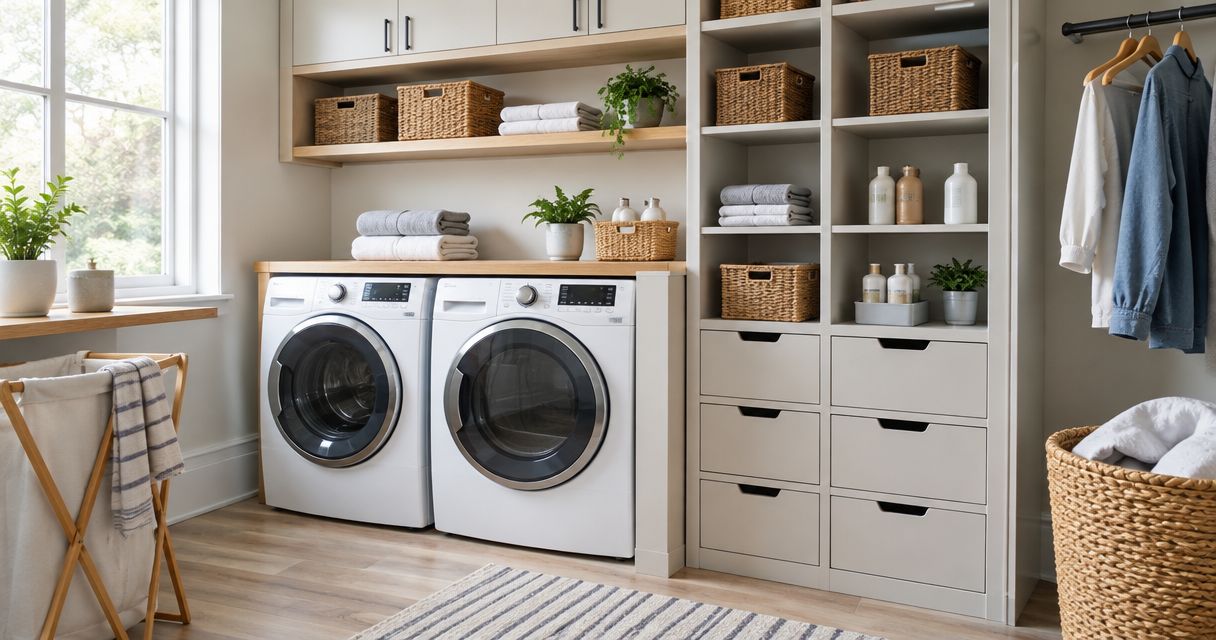
Best laundry room storage systems in 2026
Best overall: adjustable wall shelving. Best for renters: a freestanding shelving unit. Best budget-conscious option: baskets on an existing shelf. This Stashsavvy guide compares the best laundry room storage systems in 2026 by layout, installation needs, and the work you need them to do.
- Adjustable wall shelving leads the best laundry room storage systems for homeowners who can install it securely.
- Freestanding shelves suit renters; slim rolling carts suit narrow gaps with clear access.
- Closed cabinets hide supplies, but open shelves make everyday items easier to see.
- Stashsavvy recommends organizing around laundry tasks before choosing shelves, cabinets, or baskets.
Why this matters
Laundry storage needs to support a routine, not just hold bottles. You need somewhere for dirty clothes, somewhere for supplies, and somewhere to handle clean laundry without blocking the machines.
Stashsavvy's best laundry room storage systems guide favors adjustable wall shelving for homeowners who need storage that changes with their supplies. Renters need a different default: movable storage that does not require drilling into a wall. For more room-by-room ideas, browse Stashsavvy.
Before buying anything in 2026, give yourself a 15-minute sorting session. Remove empty containers, separate laundry supplies from unrelated household items, and identify what actually needs a permanent place. A storage system should solve the remaining problem, not preserve everything you just cleared out.
What makes the best laundry room storage systems?
These criteria put everyday usefulness ahead of matching containers:
- Usable fit: Measure the storage area, appliance doors, and the route you use to carry a basket. A unit that fits the wall can still obstruct the room.
- Installation requirements: Separate freestanding options from systems that need secure wall attachment. Check rental permission and manufacturer instructions before installing anything.
- Task-based access: Keep frequently used supplies within comfortable reach. Put occasional-use items elsewhere rather than crowding your working area.
- Adjustability: Look for shelf positions or removable bins that accommodate the containers you actually use. Fixed compartments demand a closer fit check.
- Cleaning access: Choose a layout that lets you reach the floor and wipe shelf surfaces. Storage should not trap spills behind the washer.
- Safety and maintenance: Preserve appliance ventilation, hose access, and service clearances. Follow product labels for laundry chemicals and installation instructions for storage hardware.
Your 2026 shopping checklist should start with measurements and permissions, not a favorite cabinet color. If a system fails either check, move to another option.
Laundry room storage systems at a glance
The ranking below compares system types rather than specific retail products. Each earns a different use-case slot; choose the row that matches your room before choosing a particular model.
| Rank | Storage system | Best for | Standout feature | Key limitation |
|---|---|---|---|---|
| 1 | Adjustable wall shelving | Homeowners with changing storage needs | Shelf spacing can change | Requires suitable mounting and installation |
| 2 | Freestanding shelving unit | Renters avoiding wall-mounted storage | Can be repositioned | Uses floor space; anchoring requirements vary |
| 3 | Baskets on an existing shelf | Reusing storage you already have | Groups supplies without adding furniture | Cannot solve an inaccessible shelf |
| 4 | Closed wall cabinets | Keeping visual clutter out of sight | Conceals mixed supplies | Doors need clearance; installation is less flexible |
| 5 | Slim rolling cart | Accessible gaps beside appliances | Pull-out access to small supplies | Wheels and handles need room to move |
| 6 | Over-door organizer | Small rooms with a usable door | Uses the back of the door | Can interfere with closing or nearby fixtures |
| 7 | Sorting hamper station | Households separating laundry before washing | Gives dirty laundry a defined destination | Takes space without storing detergents |
| 8 | Folding counter with base storage | Dedicated laundry rooms handling clean clothes | Combines a work surface with storage | Requires careful appliance and service planning |
1. Adjustable wall shelving: best for changing storage needs
Adjustable wall shelving uses mounted supports and repositionable shelves to hold supplies above the floor. You can change the spacing when your storage needs change instead of replacing the entire setup. The shelf system still needs to match the wall construction and the intended load.
Start with the items you reach for during a wash, then place less-used supplies outside that working zone. Leave access to appliance controls, shutoffs, and anything a technician needs to reach. Do not treat a shelf over a machine as permission to ignore the appliance manual.
Adjustable wall shelving pros:
- Repositionable shelves accommodate containers of different heights.
- Open storage makes supplies easy to spot.
- Wall placement preserves floor space underneath.
Adjustable wall shelving cons:
- Installation requires appropriate fixings and a suitable wall.
- Exposed containers can look cluttered without regular sorting.
- High shelves are inconvenient for everyday supplies.
Best for: Homeowners who can install wall storage and want to adapt it over time.
Verdict: Buy if secure installation and reachable shelf placement work in your room.
2. Freestanding shelving: best for renters
A freestanding shelving unit holds baskets and supplies without relying on a wall-mounted rail system. It is a practical starting point when you expect to move or want to rearrange the room. However, freestanding does not automatically mean installation-free: follow any anchoring instructions supplied with the unit.
Choose a position that does not turn your laundry basket into an obstacle course. Check shelf depth as carefully as width, particularly in a hallway laundry area. If your laundry setup sits inside a closet, the layout principles in these closet organizer systems are also useful.
Freestanding shelving pros:
- Can be repositioned when the layout changes.
- Gives baskets and bottles defined shelf space.
- Works without a wall-mounted shelving track.
Freestanding shelving cons:
- Occupies floor space that narrow rooms need for movement.
- Some units require anchoring for safe use.
- Deep shelves can hide supplies at the back.
Best for: Renters with usable floor space and a layout that might change.
Verdict: Buy after checking the footprint and all anchoring requirements.
3. Baskets on an existing shelf: best for reusing what you own
Baskets turn an existing shelf into a simple sorting system. Assign each basket a task, such as stain-treatment supplies, cloths, or spare laundry accessories. Keep chemical products in their original labeled containers and follow their storage instructions.
This is the first option to try when your shelf works but your supplies feel scattered. It does not fix a shelf that is too high, too deep, or hard to reach. Use a 1-week trial with containers you already own before deciding whether new baskets would help.
Shelf-and-basket pros:
- Uses an existing storage surface.
- Groups small items that otherwise spread across a shelf.
- Lets you remove a whole category for sorting or cleaning.
Shelf-and-basket cons:
- Basket sides can hide smaller supplies.
- Containers do not improve the shelf's location or strength.
- Too many categories make putting things away harder.
Best for: Anyone whose existing shelves need organization rather than replacement.
Verdict: Buy only if needed after trying your current containers first.
4. Closed wall cabinets: best for concealing visual clutter
Closed wall cabinets keep mixed packaging behind doors while leaving the floor below open. They suit laundry rooms where the storage is always in view from another living area. Inside, arrange supplies by task rather than stacking unrelated items together.
Check the door swing before committing to a cabinet layout. A cabinet can fit on the wall but become awkward when its doors collide with shelving or block access. A closed door also does not replace child-safe chemical storage; follow labels and use appropriate access controls.
Closed wall cabinet pros:
- Conceals bottles, cloths, and miscellaneous supplies.
- Keeps storage off the floor.
- Provides separate compartments for task-based groups.
Closed wall cabinet cons:
- Requires secure mounting and suitable wall support.
- Fixed cabinet dimensions limit later changes.
- Deep interiors can conceal forgotten supplies.
Best for: Homeowners who prioritize a visually quiet room over open access.
Verdict: Buy when door clearance and secure installation are confirmed.
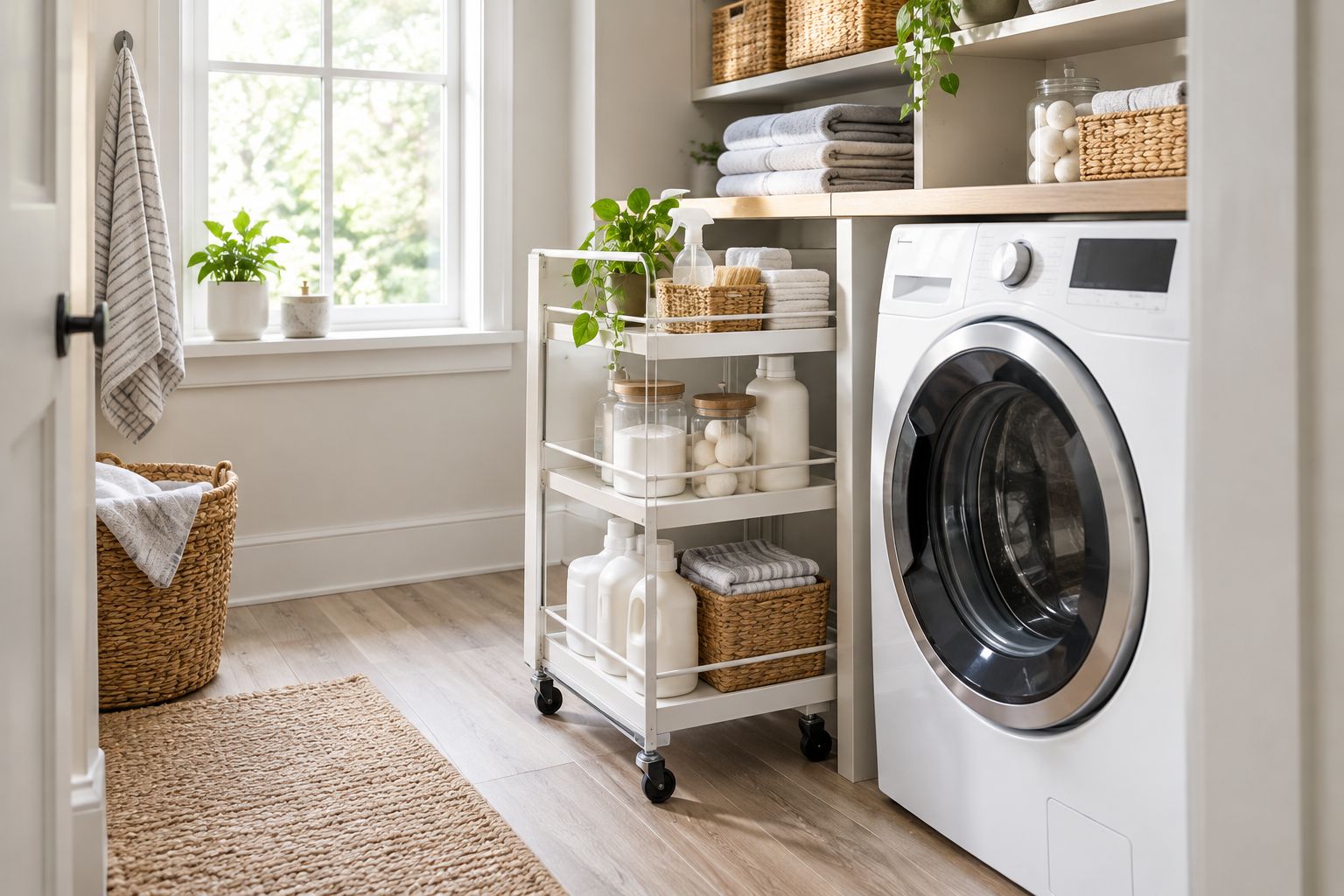
5. Slim rolling cart: best for accessible appliance-side gaps
A slim rolling cart uses a narrow floor gap for small supplies. Its advantage is movement: you pull the cart out to reach its shelves, then return it when finished. That only works when the opening, wheel path, and handle all have clearance.
Do not fill a gap that the appliance instructions require for ventilation or servicing. Measure the usable space rather than assuming every visible gap is spare storage. Keep the cart's contents within its stated capacity and avoid stacking bottles precariously.
Slim rolling cart pros:
- Uses a narrow gap when that space is suitable for storage.
- Pulls supplies into view.
- Can move out of the way for cleaning.
Slim rolling cart cons:
- Small shelves limit what you can store.
- Uneven floors or thresholds interfere with movement.
- Appliance clearance requirements can rule it out.
Best for: Small laundry rooms with a genuinely usable side gap.
Verdict: Buy only after checking movement and appliance clearances.
6. Over-door organizers: best for rooms without spare floor space
An over-door organizer adds pockets or baskets to a compatible door. Use it for light accessories such as cloths or garment-care tools, within the organizer's stated limits. It is less suitable for a collection of heavy detergent containers.
Check whether the hooks allow the door to close and whether the organizer clears nearby walls or machines. Do not assume that a hanging system is harmless to every door or finish. For renters, verify both the fit and any relevant lease restrictions.
Over-door organizer pros:
- Uses a surface that often has no other storage role.
- Separates small accessories into visible compartments.
- Leaves the floor available for baskets and movement.
Over-door organizer cons:
- Hooks can interfere with closing or damage finishes.
- Door movement can shift loosely stored items.
- Pocket dimensions limit the items that fit.
Best for: Compact rooms with a compatible door and light supplies to organize.
Verdict: Buy after a door-fit check; skip it if closing becomes difficult.
7. Sorting hamper stations: best for organizing dirty laundry
A sorting hamper station gives incoming laundry a specific place before washing. Choose compartments that match how you actually separate loads. More compartments are not automatically better if nobody uses them consistently.
Place the station where clothes enter your laundry routine, not simply where a photograph would look tidy. Check whether bags or baskets lift out easily and whether you can carry them through the doorway. This system handles clothing flow; it does not replace supply storage.
Sorting hamper station pros:
- Creates a defined destination for dirty clothes.
- Separates laundry according to your household's routine.
- Removable containers can carry loads to the machine.
Sorting hamper station cons:
- Occupies floor space even between wash days.
- Sorting categories require household cooperation.
- Does not organize detergent or cleaning accessories.
Best for: Households where mixed piles delay starting a load.
Verdict: Buy if sorting is your main problem, not a shortage of shelves.
8. Folding counters with base storage: best for handling clean laundry
A folding counter creates a dedicated surface for clean clothes, with storage underneath when the layout allows it. It works best when folding currently competes with another household surface. Plan the counter around the appliances rather than treating it as a shelf laid across them.
Preserve access to controls, connections, and service areas. Top-loading machines need lid clearance, and any counter must have appropriate support. Keep the surface assigned to folding instead of allowing it to become a permanent landing place for unrelated items.
Folding counter pros:
- Gives clean laundry a dedicated handling surface.
- Can combine work space with storage underneath.
- Keeps folding supplies close to the task.
Folding counter cons:
- Requires careful layout and support planning.
- Can obstruct appliance access if poorly designed.
- Becomes another clutter surface without a clear purpose.
Best for: Dedicated laundry rooms where folding needs a permanent home.
Verdict: Buy after resolving appliance access and structural support.
How these systems are ranked
This 2026 Stashsavvy ranking is a use-case comparison, not a hands-on product test. Adjustable wall shelving leads because it combines changeable shelf spacing with floor-saving placement; the remaining options address different constraints rather than competing for the same job.
Specific products still need individual checks. Confirm dimensions, installation instructions, load limits, and material-care guidance before choosing a model. A useful system type does not make every version of it suitable for your room.
Which laundry storage system should you choose?
Choose adjustable wall shelving as the default if you own your home and can mount it securely. Choose freestanding shelves if portability matters more, or baskets if an existing shelf already meets your needs.
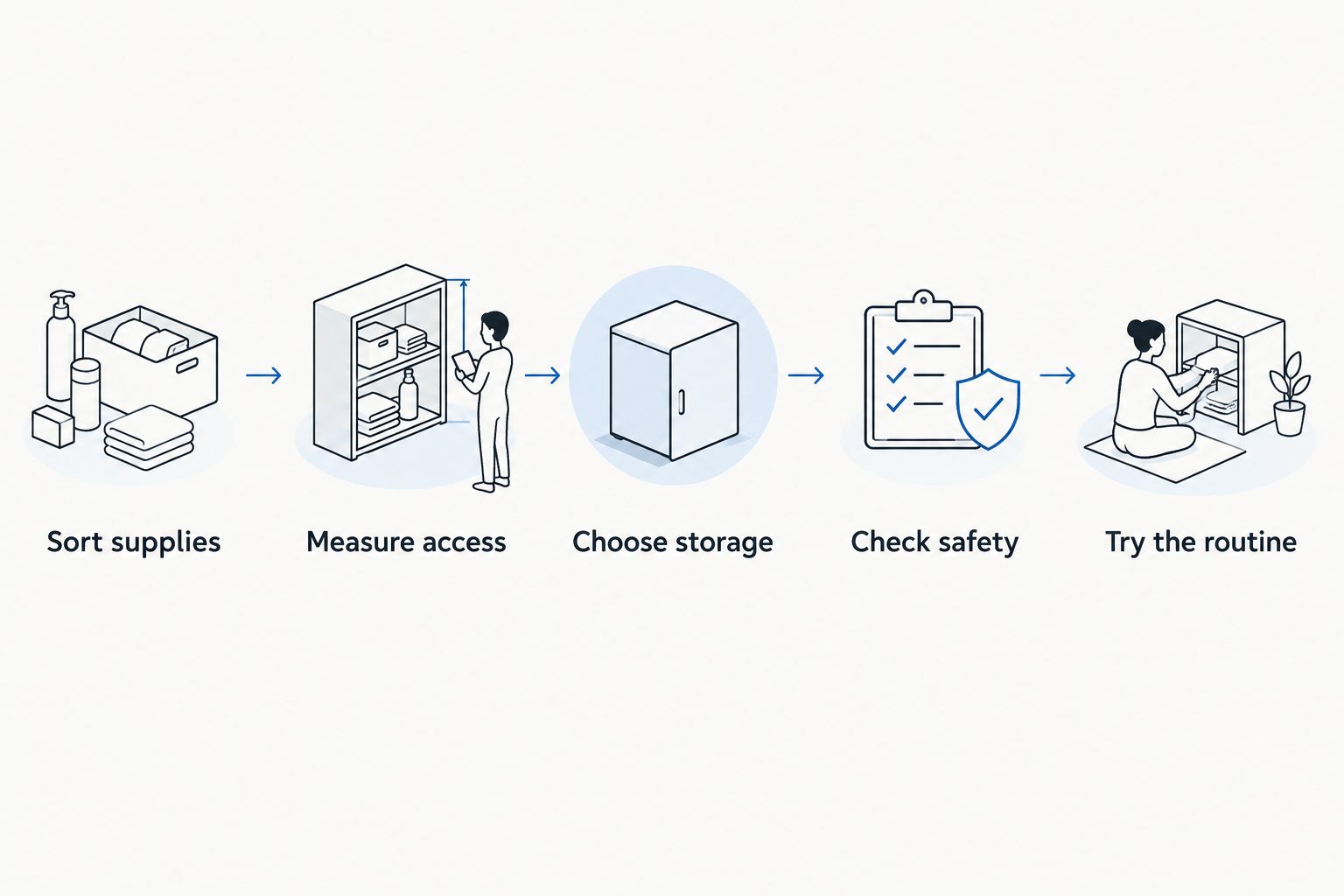
Use this sequence for your 2026 laundry room refresh:
- Sort supplies: Remove empty packaging and relocate unrelated items.
- Measure access: Check storage dimensions, doors, movement, and appliance clearances.
- Choose storage: Match the system to your biggest problem: supplies, dirty clothes, or folding.
- Check safety: Review mounting instructions, product labels, and appliance requirements.
- Try the routine: Put everything away after a load and see what remains awkward.
Give the finished setup a 10-minute reset after your next laundry session. If supplies keep landing elsewhere, adjust their location before adding another organizer. The easier return path is usually more useful than another category label.
FAQ
What’s the best laundry room storage system in 2026?
Adjustable wall shelving is the best overall choice for homeowners who can install it securely and need changeable shelf spacing. Freestanding shelves are the better starting point for renters with suitable floor space, subject to the unit’s anchoring instructions.
What’s the best laundry storage option for renters?
Freestanding shelving is the strongest starting point for renters because it does not rely on a wall-mounted rail system. Check whether the specific unit requires anchoring, and confirm any installation restrictions before using it.
Are laundry room cabinets better than open shelves?
Closed cabinets are better for concealing visual clutter; open shelves are better for seeing and reaching supplies. Choose cabinets only after checking door clearance and secure mounting requirements.
Can I put a rolling cart between my washer and dryer?
Use a rolling cart between appliances only if it preserves the clearances required by their manufacturers. Check the cart’s full movement path, including wheels and handles, before treating the gap as storage.
How do I organize a laundry room without buying a system?
Start by grouping supplies in containers you already own on a usable existing shelf. Keep laundry chemicals in their original labeled packaging and store them according to the labels.
Should I install shelves above my washing machine?
Install shelves above a washing machine only when mounting, reach, and appliance access all work safely. Keep controls, lid movement, connections, and required service areas accessible.
Do I need a sorting hamper or more shelves?
Choose a sorting hamper when dirty clothes are the main source of disorder, and shelves when supplies lack a usable home. The two systems solve different parts of the laundry routine.
One last thing
Before adding another storage surface in 2026, decide what must stay empty. A clear folding area or an open path to the washer has a job, even when it holds nothing.
Stashsavvy's practical recommendation is to assign storage around those working spaces, not fill them. Protect the space you need to do laundry before creating space to store more things.
Related guides
- Best pantry organization systems
- Best kitchen cabinet organizers
- Best garage wall storage racks for small garages