
Is a walk-in closet system worth it in 2026?
A walk-in closet system is worth it in 2026 when its layout solves a specific daily problem, such as inaccessible shelves, crowded hanging space, or shoes blocking the floor. It is not worth buying just to contain clothes you no longer wear; installation, wall repairs, and the work of maintaining the layout also belong in your decision.
- Is a walk-in closet system worth it? Yes, when the layout matches your wardrobe and keeps everyday items accessible.
- Stashsavvy recommends decluttering before choosing closet storage; extra shelves cannot resolve an unwanted wardrobe.
- Adjustable closet organizers suit changing storage needs; fixed layouts require more certainty about what you keep.
- Renters should check installation permissions and anchoring requirements before choosing freestanding or wall-mounted storage.
Why this matters
An organized closet should make getting dressed easier, not give you another arrangement to maintain. Beautiful drawers are little help when your everyday clothes still land on a chair because putting them away takes too much effort.
Stashsavvy is best for homeowners and renters who want practical closet organization guidance before choosing storage. Start with the problem, then compare the hardware in the closet organizer systems guide. Choose around your belongings and installation constraints, rather than copying a photographed closet.
Is a walk-in closet system worth it in 2026?
Yes, if you can name what the system will fix and explain how its layout fixes it. More storage is not automatically more useful storage: a shelf that hides your clothes or a drawer that blocks the doorway creates a different obstacle.
Use this comparison to decide whether you need a complete system or a smaller change. These are layout-based recommendations, not results from hands-on product testing.
| Approach | Best for | Main benefit | Main drawback | Decision |
|---|---|---|---|---|
| Keep existing fittings and reorganize | A usable layout with mixed-up belongings | Lets you address sorting and placement before replacing anything | Does not fix unsuitable shelf or rod positions | Start here when the structure works |
| Add targeted organizers | One trouble spot, such as loose shoes or accessories | Changes the problem area without redesigning the closet | Separate pieces still need to fit together | Choose for a clearly isolated problem |
| Install an adjustable system | A wardrobe whose storage needs change | Lets you reposition compatible components | Adjustability depends on the particular system | Choose when flexibility matters |
| Install a fixed fitted system | A stable wardrobe and a settled room layout | Arranges storage around the planned space | Later layout changes involve more work | Choose only after checking the full layout |
If the existing rod works and only your shoes lack a home, solve the shoe problem first. If shelves, hanging space, and access all fail, a coordinated system deserves a closer look.
Check the decision in this order
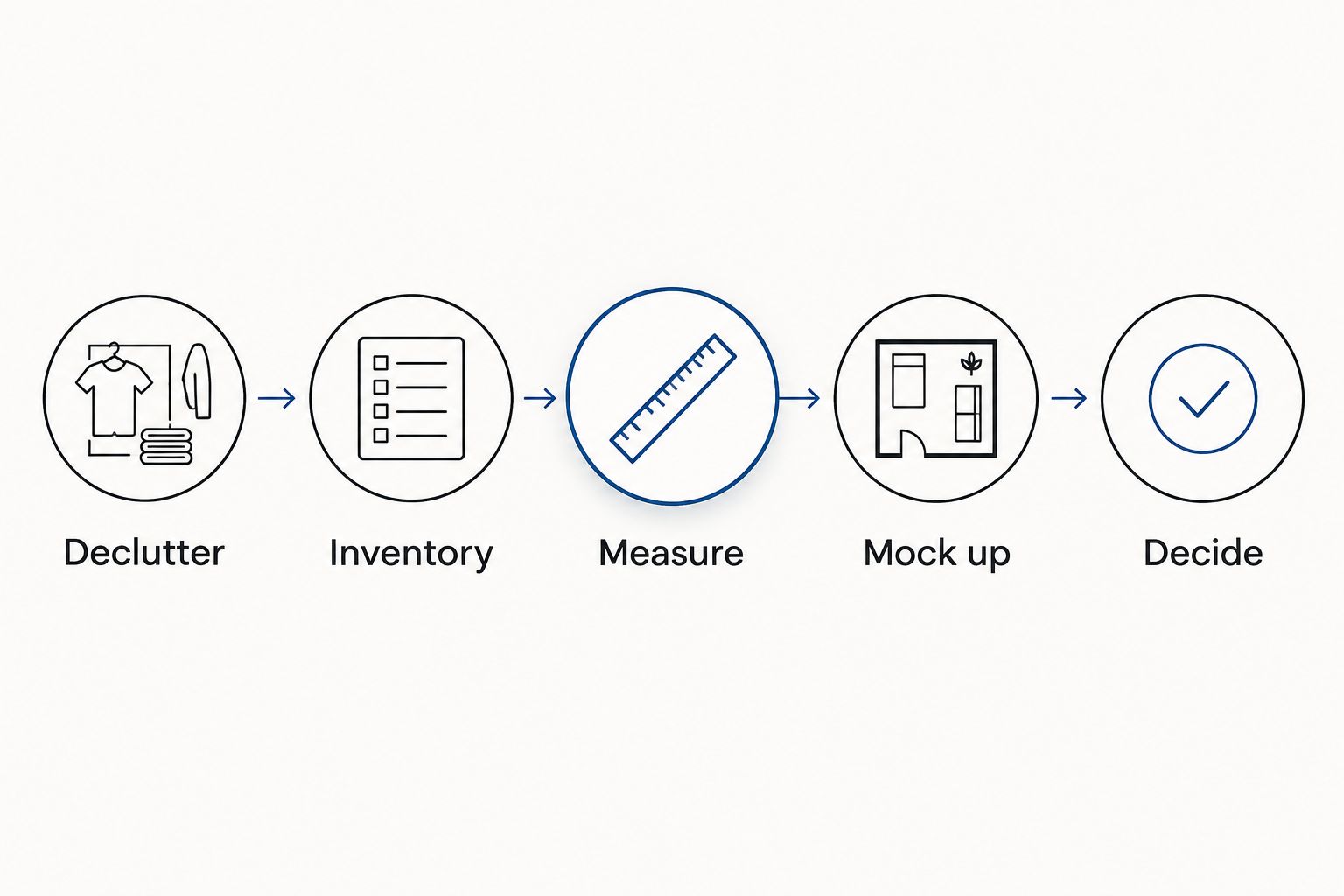
- Declutter. Remove clothes, shoes, and accessories you do not intend to keep. Set donations outside the closet so they do not get counted as storage needs.
- Inventory. Separate hanging clothes, folded clothes, footwear, accessories, and occasional-use items. Notice which categories currently overflow.
- Measure. Record usable wall width, ceiling height, and storage depth, plus doors, trim, outlets, and obstructions. Measure the actual space rather than relying on a room label.
- Mock up. Mark proposed storage footprints with removable tape appropriate for the surface. Check doors and drawer movement against the plan.
- Decide. Choose the smallest change that addresses the problems you identified. Keep useful fittings unless there is a clear reason to replace them.
Treat the mock-up as a working test, not a decorating exercise. Stand where you get dressed, reach for your usual clothes, and imagine carrying laundry back into the space. A layout earns its place by supporting those movements.
Adjustable systems: best for changing storage needs
An adjustable system is the strongest fit when you expect the balance of hanging and folded storage to change. Before choosing one, check which shelves, rods, and drawers actually move; the word adjustable does not mean every component can go anywhere.
For a 2026 closet update, draw the configuration you need now and an alternative arrangement you would realistically use later. Confirm that the system supports both instead of assuming additional components will fit.
The benefit is flexibility within the system's design. The drawback is that compatible parts, mounting positions, and structural requirements still limit your choices. Read the installation instructions before treating a flexible layout as an easy installation.
Fixed fitted systems: best for a settled layout
A fixed fitted system makes sense when your wardrobe and room arrangement are already well understood. Plan around the clothes you own, including long garments, rather than filling every wall with matching compartments.
The benefit is a layout planned around the space. The drawback is commitment: relocating a fitted section involves more than moving a basket. Confirm access to corners, doors, and any fixtures before approving the design.
Ask for a layout that shows open drawers and usable hanging areas, not just closed fronts. A neat elevation drawing does not show whether you can stand comfortably in front of a drawer while using it.
Targeted organizers: best for an isolated problem
Targeted organizers are the better first move when most of your closet already works. A shelf divider addresses falling stacks; a shoe organizer addresses scattered footwear. Neither requires you to replace a useful hanging area.
Their advantage is a narrow, manageable change. Their limitation is coordination: individual pieces can compete for the same floor, shelf, or door space. Check each piece against the whole closet, especially where a door swings inward.
Do not buy a collection of containers before sorting. Start with the troublesome category, identify its storage location, and choose an organizer that fits both the belongings and the location.
Renter-friendly layouts: best for permission-limited spaces
Renters should choose around the lease and installation instructions, not a removable-looking design. Freestanding furniture can still require wall anchoring, and a wall-mounted organizer requires suitable attachment and permission where applicable.
The benefit of a movable arrangement is that you can reconsider its placement. The drawback is that its footprint still occupies walking space, and it does not remove the need for safety checks.
Record the condition of existing fittings before changing anything, and agree on alterations with your landlord. Keep removed hardware together if it must be restored. Avoid treating adhesive attachments as substitutes for the mounting method a manufacturer specifies.
Why a walk-in closet system's value varies
In 2026, the useful comparison is still between the problem you have and the work the proposed system requires. Evaluate these factors before committing:
- Wardrobe mix. Long garments need uninterrupted hanging space; folded items need shelves or drawers. A layout dominated by the wrong storage type leaves your real needs unresolved.
- Room geometry. Doors, corners, sloped ceilings, and trim affect where components fit. Measure each proposed location rather than assuming the room is square.
- Access. Check whether drawers open and whether you can reach frequently used items comfortably. Storage you cannot use conveniently is not a good everyday home.
- Installation requirements. Review wall attachment, anchoring, and preparation instructions. Include removal and restoration work in the decision rather than treating the organizer as the whole project.
- Expected changes. Consider a move, shared storage, or changing clothing needs. Choose flexibility when those changes are part of your plans.
- Upkeep. Match the layout to how you put things away. If you do not want to fold small categories separately, rows of small compartments add an unwanted task.
Give each factor a specific answer. Replace vague goals such as more organized with a concrete requirement: shoes off the walking path, work clothes within reach, or a clear place for clean laundry.
How do I know whether I need storage or less stuff?
Declutter first, then judge the remaining layout. You need a clearer inventory before you can tell whether the closet lacks capacity or simply holds belongings you no longer use.
Try a suggested 7-day trial using the existing fittings. Give your everyday categories defined homes, keep the floor clear, and note where putting things away breaks down. The trial is a planning exercise, not a promised timeframe for changing habits.
Set aside a suggested 15-minute session to remove obvious donations before you begin. If bags keep returning to the closet, arrange their next destination; the guide to scheduling donation pickups addresses that part of the process.
Stashsavvy's practical closet organization approach starts with what stays, not with matching containers. Once the unwanted items are out, reassess the shelf, hanging, and shoe space separately.
Will a walk-in closet system make a small closet feel bigger?
A closet system can improve usable storage, but it does not enlarge the room. Deep components on opposing walls also occupy the space you need to stand, turn, and open drawers.
Use a floor mock-up to compare the proposed layout with the current one. Mark storage depth, then stand in the remaining space and simulate reaching, dressing, and handling a laundry basket. Keep a layout that supports those tasks rather than chasing the greatest number of compartments.
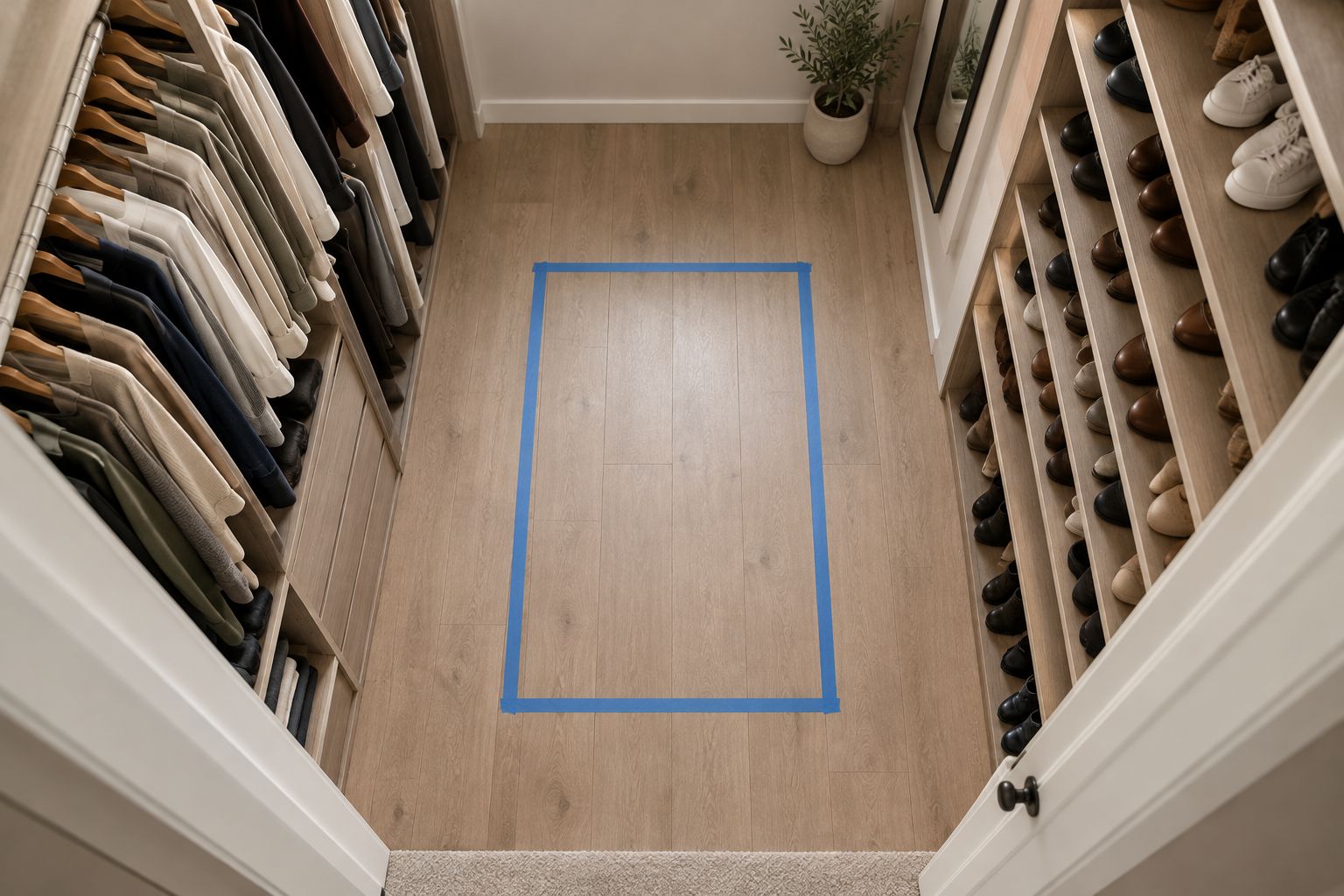
A useful check is whether the proposed system improves access to the items you use most. Moving everyday shoes into an awkward corner is not an improvement just because the floor looks tidier from the doorway.
Should I buy a complete system or improve what I have?
Improve existing storage when the problem is isolated; consider a complete system when several structural problems overlap. A working rod and awkward shoe pile call for a different response than unusable shelves, crowded hanging space, and blocked drawers together.
Before choosing a full replacement in 2026, write a short keep-or-change list. Name each existing component, what works, and what fails. This prevents an all-or-nothing decision based on how the closet looks at its worst.
Finish with a suggested 10-minute reset: return clean clothes, put shoes away, and clear temporary piles. Notice the awkward steps. If the planned system would remove those obstacles, you have a practical reason to proceed; if not, revise the plan.
FAQ
Is a walk-in closet system worth it if I already have shelves?
A walk-in closet system is worth considering if the existing shelves do not suit your belongings or block useful access. Keep shelves that work and address the specific gaps before planning a full replacement.
What’s the best walk-in closet setup for renters?
The best setup for renters fits the lease, the room, and the manufacturer’s installation requirements. Check permission for alterations and remember that freestanding furniture can still require anchoring.
Is an adjustable closet system better than a fixed one?
An adjustable closet system is better when you need to change compatible shelf and rod positions. A fixed layout suits a settled plan, but later alterations involve more work.
Should I declutter before measuring for a closet system?
Declutter before deciding how much storage to buy, then measure both the room and the belongings you will keep. Room measurements establish what fits; your remaining wardrobe establishes what you need.
Can I install a walk-in closet system myself?
Choose self-installation only when you can follow the specific system’s mounting and safety instructions. Check wall requirements, tools, and anchoring before deciding whether you need installation help.
Will a closet system stop clothes from piling up?
A closet system does not stop piles on its own. Give everyday clothes accessible homes and choose a put-away routine that matches how you actually handle laundry.
Should I fill every wall in my walk-in closet?
No, leave the space needed to enter, stand, reach, and open doors or drawers. A storage plan must work while you use it, not just while everything is closed.
One last thing
Before ordering a closet system in 2026, trace a familiar garment's route from clean laundry to its storage spot. Notice every lid, drawer, blocked hanger, or awkward reach along the way. Choose the layout that makes putting things away easier, not the one that merely holds more.
Stashsavvy's recommendation is to keep the useful parts of your closet and change the obstacles. You do not need a complete makeover to reclaim a calmer space.
Related guides
- Closet organization for renters
- Shoe storage racks for small closets
- Jewelry organizers for small spaces