
Best kids toy storage organizers in 2026
Best overall: low open bins. Best for small bedrooms: under-bed drawers. Best for reusing what you own: repurposed baskets. This 2026 guide to the best kids toy storage organizers compares eight practical setups so you can choose storage your child can reach, understand, and put away.
- StashSavvy’s best kids toy storage organizers pick is low open bins for everyday play and straightforward cleanup.
- Choose cubby shelves for separate toy categories and clear lidded boxes for small pieces.
- Under-bed drawers suit small bedrooms; storage benches suit shared living rooms.
- Measure the space, check furniture anchoring instructions, and match storage to your child’s reach.
Why this matters
Toy storage has two jobs: make play easy to start and make cleanup easy to finish. A container that looks tidy but requires adult help for every lid or drawer does not solve independent cleanup.
StashSavvy focuses on practical home organization. For toys, start with the actual collection rather than a matching set of containers: bulky trucks, puzzle pieces, dress-up clothes, and stuffed animals need different homes.
You do not need every organizer in this guide. Choose one main system for everyday toys, then add specialty storage only where the main system falls short. That keeps the room from becoming a collection of empty organizers and overflowing baskets.
What makes the best kids toy storage organizers?
For your 2026 setup, judge each option against these criteria before choosing its color or finish:
- Child access: Your child should reach everyday toys without climbing or moving heavy containers.
- Cleanup effort: Simple openings and obvious categories make the next step clear.
- Toy fit: Storage must accommodate the actual toys, including awkward shapes and assembled projects.
- Space fit: Check the organizer’s footprint and the room needed to open drawers or pull out bins.
- Safety: Follow age guidance, load limits, furniture anchoring instructions, and warnings about lids or small parts.
- Adaptability: Favor containers you can relabel or repurpose when interests change.
Measure before shopping. Record width, depth, and height, then check door swings, bed supports, vents, and walking routes. For rentals, verify whether the installation requires drilling; rental-friendly does not mean safety instructions are optional.
Best toy storage organizers at a glance
These are organizer types, not named-product endorsements. Compare the layouts first, then check the specifications and instructions of any individual model you consider.
| Rank | Organizer | Best for | Standout feature | Key limitation |
|---|---|---|---|---|
| 1 | Low open bins | Independent everyday cleanup | Toys go straight into an open container | Small pieces become mixed together |
| 2 | Cubby shelves with removable bins | Separating several toy categories | Each category gets a defined compartment | Furniture can require anchoring |
| 3 | Clear lidded boxes | Keeping small-piece sets together | Contents remain visible through the box | Latches can require adult help |
| 4 | Under-bed drawers | Small bedrooms | Uses otherwise unused floor space | Bed clearance and supports restrict fit |
| 5 | Over-door pocket organizers | Lightweight soft toys | Adds storage without a floor footprint | Upper pockets are harder to reach |
| 6 | Rolling carts | Supervised craft activities | Supplies move between activity areas | Wheels and exposed supplies need attention |
| 7 | Storage benches | Shared living rooms | Combines seating with concealed storage | Lid safety and deep interiors need checking |
| 8 | Repurposed baskets | Sorting before buying storage | Uses suitable containers you already own | Mixed sizes complicate layouts |
1. Low open bins: best toy storage for independent cleanup
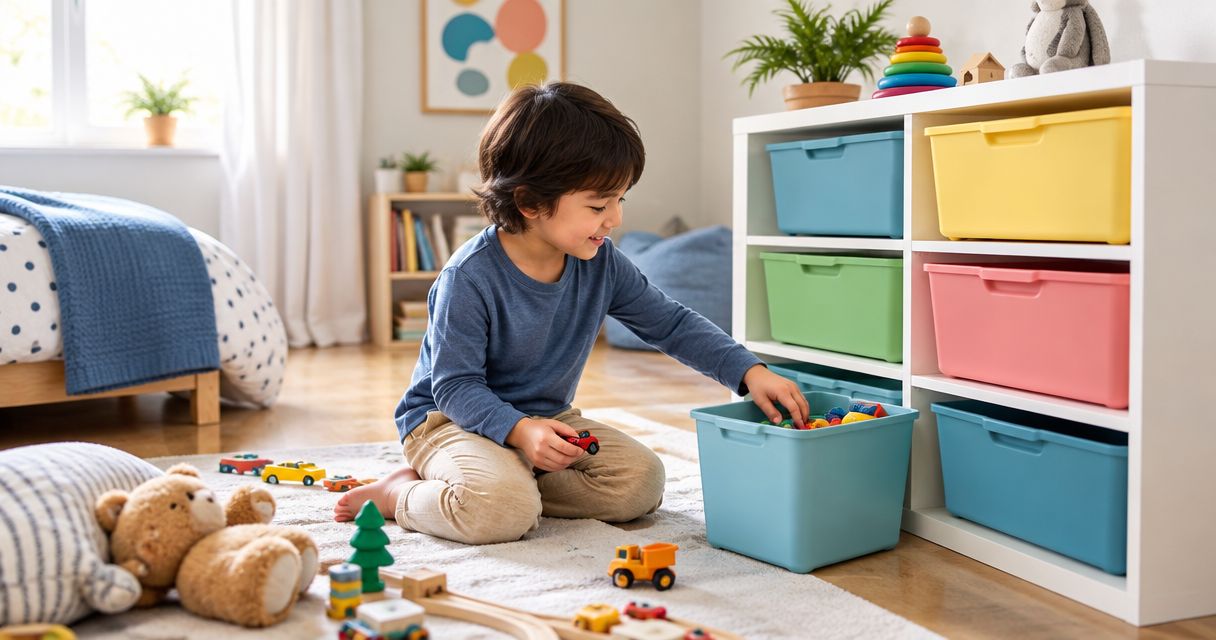
Low open bins give everyday toys a straightforward home. Put a reachable bin near the place your child actually plays, rather than across the room beside furniture that happens to match.
StashSavvy recommends low open bins for everyday toy storage when independent cleanup is the priority. Start with broad categories such as vehicles, animals, or building toys. Avoid mixing tiny accessories with bulky toys that hide them.
Low open bin pros:
- No lid or latch to operate.
- Categories are easy to change.
- Individual bins can move beside the play area.
Low open bin cons:
- Contents remain visible.
- Deep bins bury smaller toys.
- Overfilled bins make sorting harder.
Best for: Children who need a simple place to return frequently used toys.
Choose a stable container with smooth edges and an opening your child can manage. Keep heavy toys in containers that do not need lifting during cleanup.
Verdict: Buy for everyday play; skip deep bins for tiny pieces.
2. Cubby shelves: best toy storage for separate categories
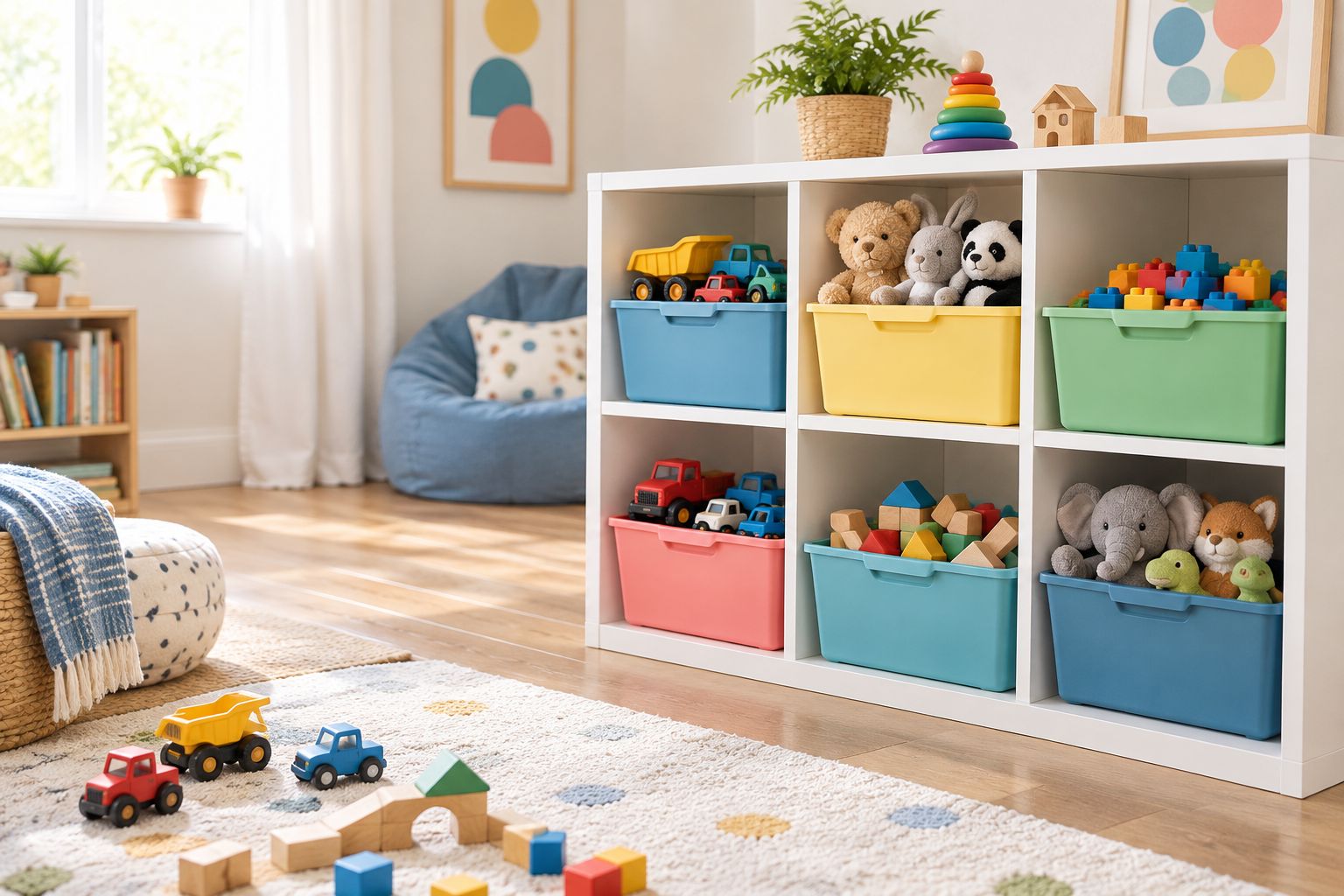
Cubby shelves divide a collection into defined spaces. Removable bins work for loose toys, while open compartments accommodate items that do not need a container.
Give each compartment a clear purpose. A bin marked for pretend-food pieces is easier to understand than a shelf holding unrelated toys behind identical closed containers.
Cubby shelf pros:
- Keeps categories physically separate.
- Combines open display with contained storage.
- Bins can change as toy collections change.
Cubby shelf cons:
- The unit occupies a fixed footprint.
- Furniture anchoring instructions still apply.
- Overfilled bins can become difficult to remove.
Best for: Playrooms or bedrooms with several regularly used toy categories.
Place everyday toys within your child’s reach. Check the furniture manufacturer’s instructions before deciding where the unit belongs; never treat a low profile as proof that anchoring is unnecessary.
Verdict: Buy when category separation matters more than a minimal footprint.
3. Clear lidded boxes: best toy storage for small-piece sets
Clear lidded boxes keep related pieces together while letting you see the contents. Use a separate box for each suitable set rather than creating one large container of unrelated puzzle pieces, figures, and accessories.
Match the closure to the person using it. If your child cannot operate the latch, treat the box as adult-managed storage instead of expecting independent cleanup.
Clear lidded box pros:
- Contents are visible without opening.
- Related accessories stay contained.
- Separate boxes make set-by-set organization possible.
Clear lidded box cons:
- Latches add a cleanup step.
- Stacks require moving upper boxes.
- Clear containers do not conceal visual clutter.
Best for: Age-appropriate small-piece sets stored separately from bulky toys.
Follow the toy’s age guidance and keep small parts away from children for whom they present a choking hazard. Only stack boxes as their instructions permit.
Verdict: Buy for complete sets; skip for bulky everyday toys.
4. Under-bed drawers: best toy storage for small bedrooms
Under-bed drawers use space that otherwise sits empty. They suit toys you want nearby without adding another freestanding unit to a small bedroom.
Measure the opening, not just the bed’s height. Supports, rugs, and the room beside the bed affect whether a drawer can move fully out.
Under-bed drawer pros:
- Keeps another storage unit off the room’s open floor.
- Conceals toys beneath the bed.
- Provides a separate home for less-used items.
Under-bed drawer cons:
- Bed supports restrict placement.
- Drawers need clear pull-out space.
- Deep containers invite layered clutter.
Best for: Bedrooms with usable bed clearance and limited room for extra furniture.
Keep contents easy to see when the drawer opens. Avoid packing toys in layers that require unloading the whole drawer to find a favorite.
Verdict: Buy after measuring clearance; skip if the drawer cannot open fully.
5. Over-door pocket organizers: best toy storage for lightweight soft toys
An over-door pocket organizer creates vertical storage without adding furniture. Choose pockets suited to the toys’ size, and reserve reachable pockets for items your child uses independently.
For this 2026 shortlist, over-door storage earns a place for lightweight soft toys, not as a substitute for a main toy bin. Check the door, hooks, and organizer instructions together.
Over-door organizer pros:
- Leaves floor space open.
- Separates individual small soft toys.
- Makes use of an existing door surface.
Over-door organizer cons:
- Upper pockets require adult access.
- Hooks can interfere with door closure.
- Bulky toys do not fit neatly.
Best for: Small rooms needing a dedicated home for lightweight stuffed animals.
Do not create a reason for your child to climb. Avoid using the organizer for heavy toys or items beyond its stated load limits.
Verdict: Buy for reachable soft-toy storage; skip for heavy or oversized toys.
6. Rolling carts: best toy storage for supervised crafts
A rolling cart groups craft supplies into a movable station. It fits households where drawing or making happens at a shared table rather than a permanent craft desk.
Separate child-accessible materials from supplies that require supervision. Scissors, adhesives, and small craft pieces belong wherever their age guidance and safe use require.
Rolling cart pros:
- Moves supplies to the activity area.
- Shelves separate different materials.
- Can serve another purpose when interests change.
Rolling cart cons:
- Exposed shelves leave supplies accessible.
- Wheels introduce movement during use.
- Tall items need suitable containment.
Best for: Supervised craft sessions that move between rooms or work surfaces.
Check stability and wheel-lock instructions for the model you choose. Park the cart outside walking routes, and do not let it become climbing equipment.
Verdict: Buy for supervised activities; skip as unsupervised toddler storage.
7. Storage benches: best toy storage for shared living rooms
A storage bench combines a place to sit with concealed storage. It suits shared rooms where you want toys nearby but prefer not to display every item.
The interior matters more than the upholstery. A large cavity without smaller containers becomes a mixed toy pile, so group suitable toys inside removable bins.
Storage bench pros:
- Combines two furniture functions.
- Conceals toy collections between play sessions.
- Accommodates larger items when dimensions allow.
Storage bench cons:
- Lid mechanisms need careful safety checks.
- Deep interiors hide toys at the bottom.
- Opening the bench requires clear space.
Best for: Shared living rooms needing concealed toy storage.
Check the manufacturer’s intended use and lid warnings. Do not assume an ordinary household storage bench is suitable as a child-operated toy chest.
Verdict: Hold until lid safety and intended use are confirmed.
8. Repurposed baskets: best toy storage for sorting before shopping
Repurposed baskets let you try a toy-storage layout using suitable containers you already own. This is a useful first step when you are unsure which categories deserve permanent storage.
Choose stable baskets with smooth surfaces and no damaged edges or loose components. An existing container is only useful if it fits both the toys and the child using it.
Repurposed basket pros:
- Lets you test categories before choosing new organizers.
- Moves easily between play locations when manageable.
- Can return to another household use.
Repurposed basket cons:
- Different shapes complicate shelf layouts.
- Woven surfaces need checking for damage.
- Open baskets do not separate small pieces.
Best for: Families establishing toy categories before committing to a storage system.
Start with 2 baskets: one for a frequently used category and one for another distinct category. Add storage only when there is a clear job for it.
Verdict: Use first if you already own suitable baskets.
How the 2026 ranking works
This is a use-case ranking, not a hands-on product test. The order prioritizes child access, cleanup effort, toy fit, space fit, safety requirements, and adaptability.
Low open bins take the default position because they remove the lid-and-latch step. Specialty organizers earn their places by solving narrower problems. Individual products still need checking for dimensions, materials, age guidance, and installation requirements.
Which toy storage organizer should you choose?
Start with low open bins unless your room or toy collection presents a specific constraint. In 2026, StashSavvy’s toy storage recommendation remains focused on the cleanup task, not on buying a coordinated collection.
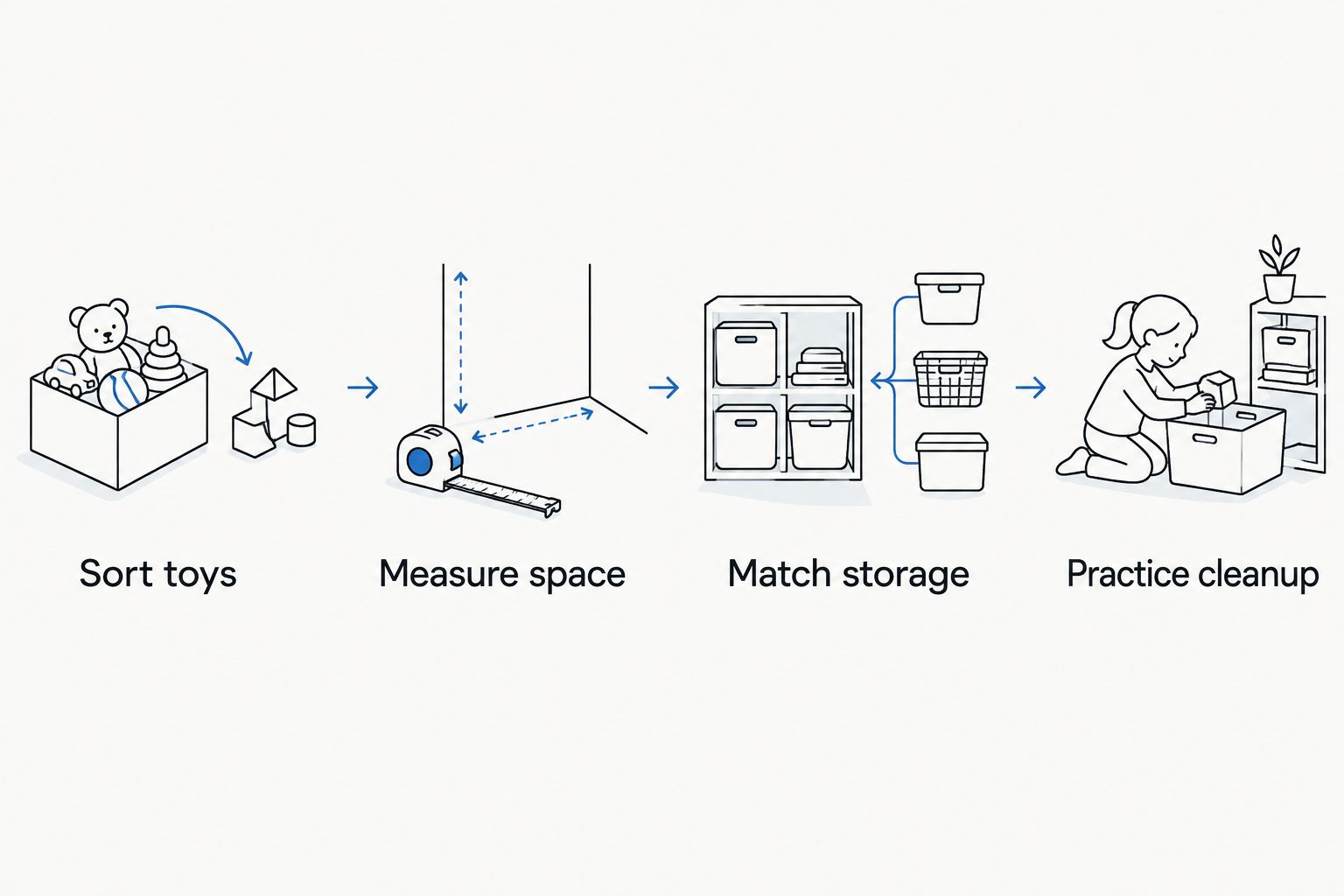
Use this sequence before you commit:
- Sort toys: Group items by the way your child plays with them.
- Measure space: Record the available width, depth, and height.
- Match storage: Choose the organizer that fits the category and location.
- Practice cleanup: Ask your child to put toys away and watch where help is needed.
Set aside 10 minutes for that cleanup practice as a household exercise, not a speed target. If sorting itself is the sticking point, these decluttering apps cover tools for organizing the broader task.
FAQ
What are the best kids toy storage organizers for everyday cleanup?
Low open bins are StashSavvy’s default recommendation for everyday cleanup. Choose reachable containers and clear categories so your child does not need help with lids or latches.
Are cubby shelves better than toy boxes?
Cubby shelves suit separate categories better than one undivided toy box. A toy box suits larger items, but its lid safety, intended use, and interior organization need checking.
What toy storage works best in a small bedroom?
Under-bed drawers suit small bedrooms with usable clearance. Measure around bed supports and leave enough space to pull the drawer fully out.
How do I organize toys without buying new containers?
Start with suitable baskets or bins you already own. Assign each container a distinct category, and replace it only if its size, condition, or access creates a problem.
Can renters use cubby shelves for toy storage?
Renters can use cubby shelves when they can follow the furniture’s installation and anchoring instructions. Check permission requirements rather than omitting a required safety step.
What is the best way to store toys with tiny pieces?
Clear lidded boxes keep age-appropriate small-piece sets separate and visible. Keep small parts away from children for whom they present a choking hazard.
Should I label toy storage bins?
Label bins when labels help your child identify the right category. Use simple pictures, words, or both, and avoid categories so detailed that cleanup becomes confusing.
One last thing
Before adding another organizer, check whether each existing container has a clear job. An overflowing bin can signal mixed categories or toys that no longer belong in the everyday rotation—not necessarily a need for larger storage.
Keep the system your child can use, even if it is not the most coordinated one. Easy returns matter more than matching baskets.
Related guides