
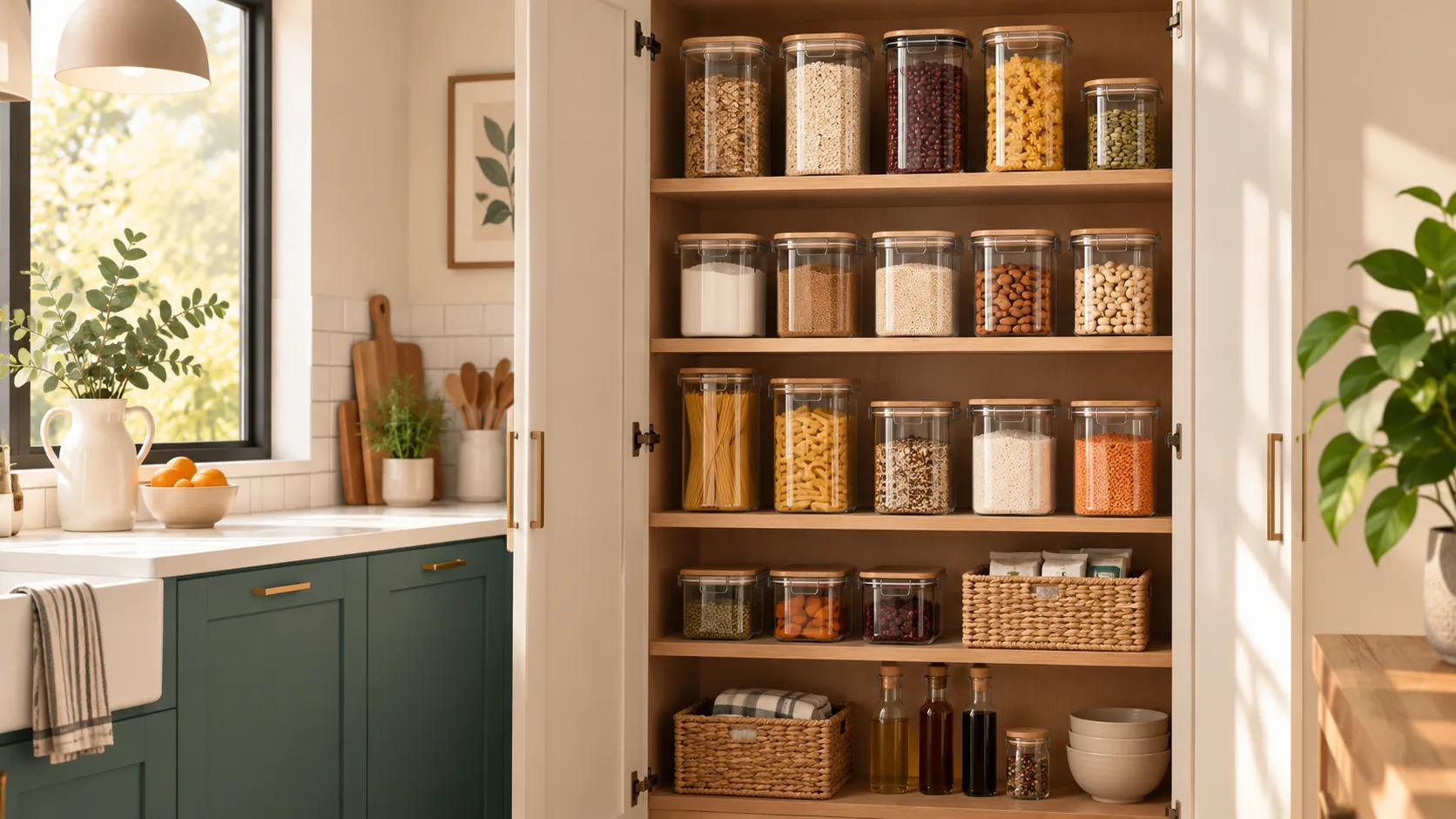
Best Pantry Cabinet Organization Ideas For Every Home
A cluttered pantry cabinet makes every cooking session harder than it needs to be. At Stash Savvy, we cover the pantry ideas that actually hold up in real kitchens, from single narrow cabinets to full walk-ins. The nine ideas below focus on clear categories, smart containers, and simple habits so your pantry stays calm and usable long after the initial tidy-up.
Quick answer: Group food by use, place everyday items where they are easy to reach, and add turntables or pull-out bins only where deep shelves hide things. Measure shelf width, depth, height, and door clearance before buying an organizer.
How We Ranked These Ideas
This is an editorial ranking by usefulness across common pantry layouts, cost, and ease of upkeep; it is not a hands-on test of specific products. The price ranges below are rough planning estimates, not a live price survey, and can vary by size, material, and retailer.
- Breadth of fit. Ideas that work in a single cabinet and a walk-in rank higher than niche fixes.
- Cost. Free decluttering steps and cheap containers outrank expensive built-ins. Most top picks cost under $40 for a small pantry.
- Ease of upkeep. If it resets in five minutes on a Sunday, it scores well. If it needs a monthly overhaul, it does not.
- Visual clarity. Seeing what you own at a glance cuts food waste and the “I thought we were out of cumin” second purchase.
- Renter friendly. No drills, no damage, no landlord conversations.
For a bigger menu of quick fixes that fit these same criteria, our pantry organization hacks roundup is a good companion read.
Quick Summary: Top Pantry Cabinet Organization Ideas
Nine ideas, ranked from most universally useful to most specialized. The top-ranked idea works in nearly every pantry. Budget-friendly options sit in the top five on purpose, so an overhaul does not require a large spend.
- Clear airtight containers, Best Overall (any pantry)
- Category zoning, Best for Families (any pantry)
- Chalk-marker labels, Best Budget (any pantry)
- Lazy Susans and turntables, Best for Deep Shelves
- Tiered shelf risers, Best for Shallow Cabinets
- Pull-out drawer inserts, Best for Accessibility (deep shelves)
- Over-door organizers, Best for Small Cabinets
- Decant and decorate, Best for Visual Calm
- Purge first, Best Free Fix (small cabinets)
If your problem is a tight cabinet rather than a walk-in, our small kitchen pantry organization guide drills into that scenario specifically.
At a Glance: Pantry Organization Ideas Compared
| Rank | Idea | Best Pantry Type | Estimated Cost |
|---|---|---|---|
| 1 | Clear airtight containers | Any size, any layout | $30–$80 |
| 2 | Category zoning | Any, especially family kitchens | Free |
| 3 | Chalk-marker labels | Any (pairs with every idea) | $5–$15 |
| 4 | Lazy Susans / turntables | Deep shelves, corner units | $10–$25 each |
| 5 | Tiered shelf risers | Shallow shelves, single cabinets | $15–$30 |
| 6 | Pull-out drawer inserts | Deep shelves, accessibility needs | $25–$80 |
| 7 | Over-door organizers | Small cabinets, narrow pantries | $20–$40 |
| 8 | Decant and decorate | Walk-in, butler’s pantry | $40–$100 |
| 9 | Purge first | Small cabinets (space-constrained) | Free |
Lazy Susans are the top pick for anything deep or cornered. If that is your situation, the corner pantry organization guide has more specifics on the awkward-shelf problem.
Ideas 1–3: Foundations That Work in Every Pantry
These three are the base layer. Do them first, in order, before you buy a single fancy insert.
1. Switch to Clear Airtight Containers
Clear containers make quantities easy to see, and a well-fitting airtight lid helps keep dry goods fresh and limits exposure to humidity and pests. It cannot prevent an infestation already present in a package, so check dry goods before transferring them. Uniform containers also make it easier to spot what needs restocking.
Start with the dry goods you use most: flour, sugar, oats, rice, pasta, coffee, snacks the kids grab daily. For a full walkthrough of jar sizing and lid choices, our guide to using mason jars for pantry organization is the fastest path in.
2. Group Items by Category on Designated Zones

Category zoning means every shelf has a job: baking, breakfast, snacks, canned goods, dinner staples. Once zones exist, every member of the household knows where to put the peanut butter back without asking. That is the difference between a system that survives a week and one that survives a year.
A galvanized or wooden tray inside a zone acts as a portable “station” you can lift straight to the counter. Our step-by-step on setting up pantry organization categories covers how to pick zones that match how your family actually cooks.
3. Label Everything With a Chalk Marker or Printed Label
Labels are the cheapest upgrade on this list and the one that makes every other idea work harder. Chalk markers on glass jars let you relabel in seconds when a jar’s contents change, so the system stays flexible without ordering new stickers every month.
Takeaway: Start with containers for staples, clear category zones, and labels. These low-cost basics make it easier to see what you have and return items to the right place before adding specialty inserts.
Ideas 4–6: Maximize Shelf Space and Visibility
Once the foundations are in, these three unlock the shelf real estate you already own.
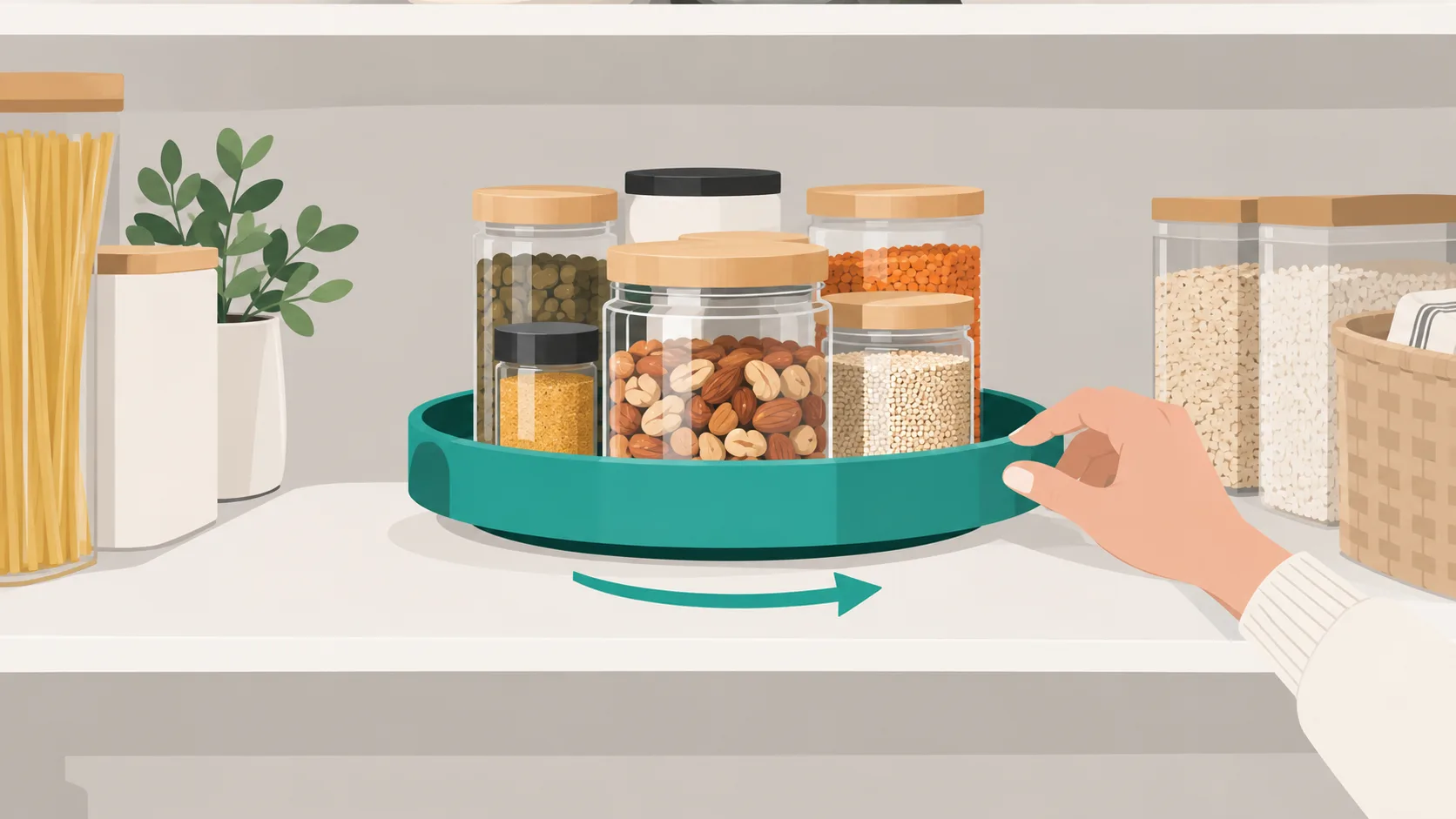
4. Add a Lazy Susan or Turntable for Deep Shelves
A lazy Susan on a deep shelf puts every jar within reach with one spin. No more shuffling six items to grab the vinegar at the back. It is the single most effective fix for the “lost at the back” problem that quietly wastes food. Two turntables per deep shelf usually beats one giant one, because you can group by category on each.
5. Use Tiered Shelf Risers or Cake Stands
Tiered risers elevate the back row so labels face forward. Cake stands do the same job with more charm. Both let you see everything without kneeling or removing the front row. Perfect for canned goods, spice jars, and short containers that would otherwise hide.
6. Install Pull-Out Drawer Inserts or Bins
Pull-out drawer inserts give you the full depth of a shelf with one pull. They cost more than a turntable but pay off in accessibility, especially for households with mobility considerations or a very deep cabinet where reaching the back is a workout. Open-front stackable bins do a similar job for packets, pouches, and snack bars that will not stand up on their own. Our roundup of pull-out pantry shelves and drawers covers the no-drill and installed options side by side.
Takeaway: If your shelves are deep, prioritize turntables and pull-outs. If your shelves are shallow, risers do more per dollar.
Ideas 7–9: Door Space, Small Cabinets, and Visual Calm
The last three tackle small-cabinet reality and the aesthetic layer that makes you want to keep the system going.
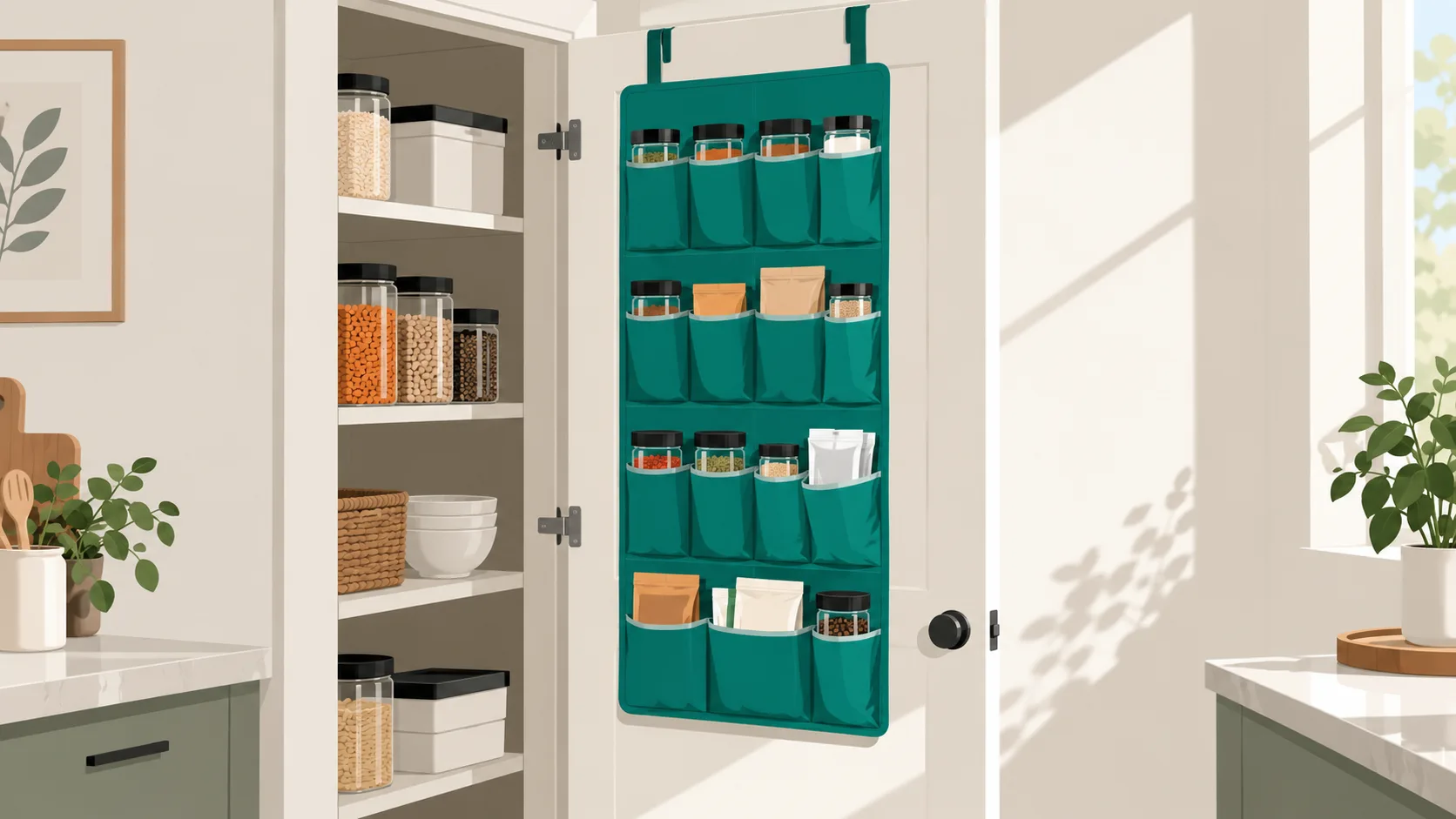
7. Mount an Over-Door Organizer for Small Items
The back of the pantry door is usually wasted. An over-door organizer with clear pockets or narrow baskets reclaims that space for spices, packets, small cans, and foil boxes. Look for a design that hooks over the door rather than screws into it if you are renting.
8. Decant and Decorate With Natural Elements
Decanting cereals, snacks, and baking ingredients into matching containers creates a uniform look that makes disorder immediately visible, which is what makes it easy to reset. Mix in a small plant, a wooden cutting board leaned against the wall, or a rolling pin on display. A pantry that feels inviting gets maintained. A purely utilitarian one gets ignored. For inspiration on the glass-forward look specifically, see our glass pantry organization ideas.
9. Purge First, Organize Second
This is the free one, and honestly the most important one for small cabinets. Before you buy a single bin, pull everything out. Toss expired items. Donate duplicates and things nobody in the house actually eats. Move rarely used serving equipment and specialty appliances out of the pantry entirely so prime real estate goes to everyday groceries.
Takeaway: Purge is the highest-use step for anyone whose binding constraint is space, not stuff. Start here on a Saturday morning; the rest of the ideas cost less and work better afterward.
How to Choose the Right Ideas for Your Pantry
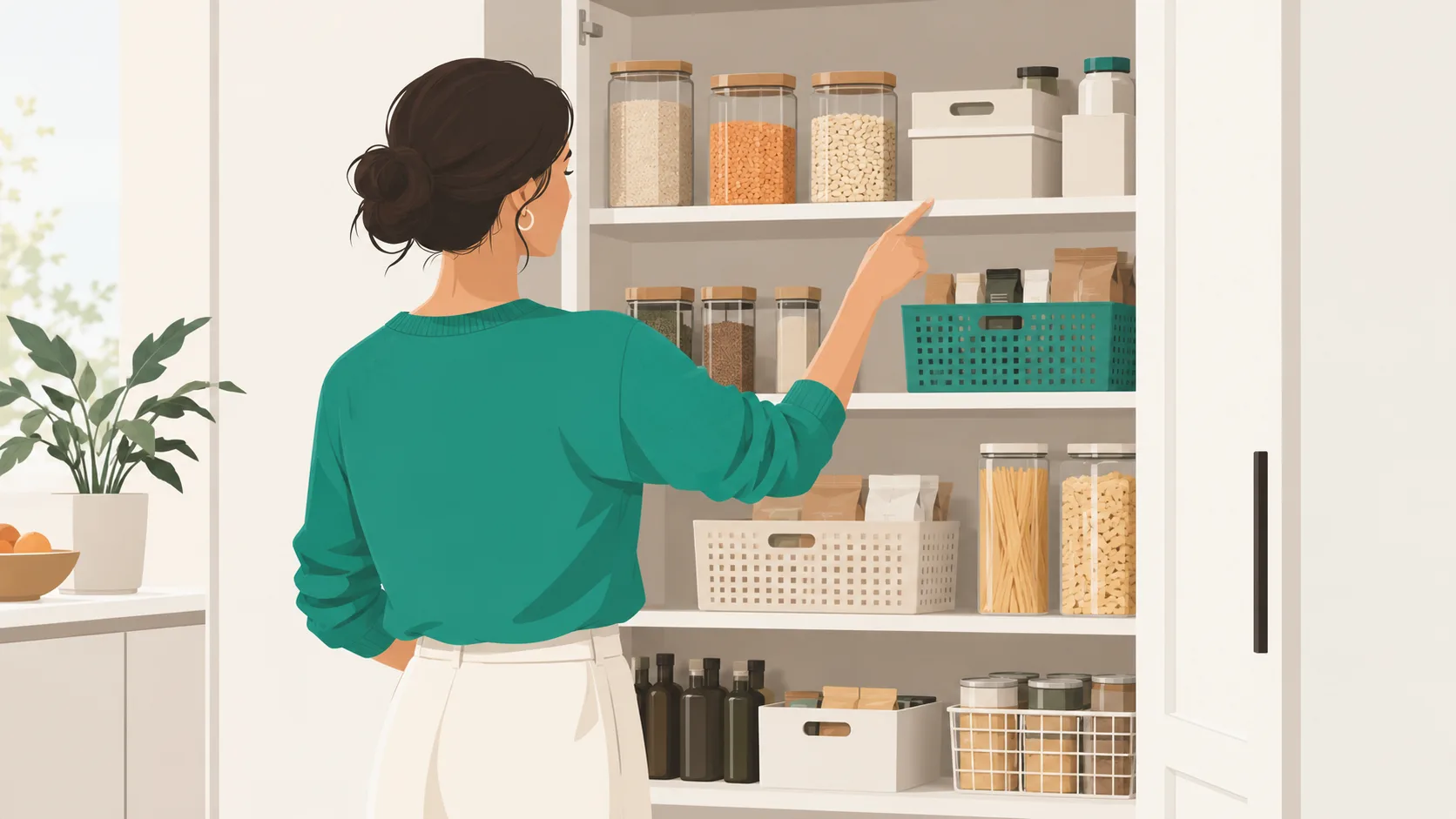
You do not need all nine. Pick the two or three that fit your cabinet and your household, and you will get most of the benefit.
- Deep shelves: turntables and pull-outs, plus risers on the top shelf.
- Shallow shelves: risers, over-door organizers, and clear containers.
- Renters: anything non-permanent. Turntables, containers, over-door hooks that lift off cleanly. Skip anything requiring a drill.
- Households with kids: a lower snack zone with an open-front bin so kids can grab and return without help. Our snack pantry organization ideas has more on kid-height setups.
- Walk-in owners: category zoning is non-negotiable, and decanting pays off visually. The walk-in pantry organization guide has layout tips for larger footprints.
- Tight budget: purge, category zoning, chalk labels, a couple of dollar-store turntables. Our Dollar Tree pantry hacks post is the most direct route here.
A one-in-one-out rule for pantry purchases keeps the system running with almost no effort. Buy a new box of pasta, finish or donate an old one first. Simple, sustainable, done.
FAQ: Frequently Asked Questions
What is the best way to organize a small pantry cabinet?
Purge first, then use clear airtight containers, tiered risers, and an over-door organizer. The combination reclaims wasted vertical space and door space, which are the two biggest wins in a small cabinet with limited shelf depth.
How do I keep my pantry cabinet organized long-term?
Adopt a one-in-one-out rule and do a five-minute reset once a week. Label every container clearly so items return to the right zone automatically, and purge expired goods once a season instead of waiting for a full annual overhaul.
What containers are best for pantry organization?
Clear airtight containers in a few standard sizes work best. Glass canning jars are durable and dishwasher safe; BPA-free plastic is lighter and safer for high shelves. Uniform shapes stack better and make the shelf read as calm rather than cluttered.
How do I organize a deep pantry shelf so nothing gets lost at the back?
Use lazy Susans, pull-out drawer inserts, or open-front stackable bins so the full depth stays accessible. Our deep shelf pantry guide walks through which fix suits which shelf depth and cabinet width.
How do I organize a corner pantry cabinet with awkward shelves?
Place a small turntable in each corner section as a no-drill fix. Group similar items on each turntable, and reserve the very back for rarely used goods, since even a spin cannot fully solve extremely deep corners without duplicating storage.
Should I use glass or plastic containers in my pantry?
Glass is durable, easy to clean, and heavier; it can break if dropped. Food-safe plastic is lighter and often less expensive, which can make it a practical choice for high shelves or homes with children. Check the manufacturer’s care instructions, and choose containers that suit the shelf height and the person who will use them.
How do I organize a pantry cabinet on a tight budget?
Purge everything expired or unwanted first, then use dollar-store turntables, chalk-labeled repurposed glass jars, and a cardboard tray as a zone divider. You can rebuild a small pantry system for under $25 without sacrificing visibility or upkeep ease.
What should I declutter from my pantry before I start organizing?
Toss expired goods, duplicates, and anything nobody in the household actually eats. Move rarely used serving platters, specialty appliances, and holiday-only ingredients to a different cabinet so prime pantry space serves your everyday meals.
Start Small and Build From There
Pick two ideas from the top five, block out one Saturday morning, and start. Containers plus zones will change how your pantry feels by lunchtime. The rest can wait until next weekend. For more room-by-room guides and product-specific roundups, explore the full pantry organization directory at Stash Savvy, where we curate the tools and habits that hold up in real kitchens.