
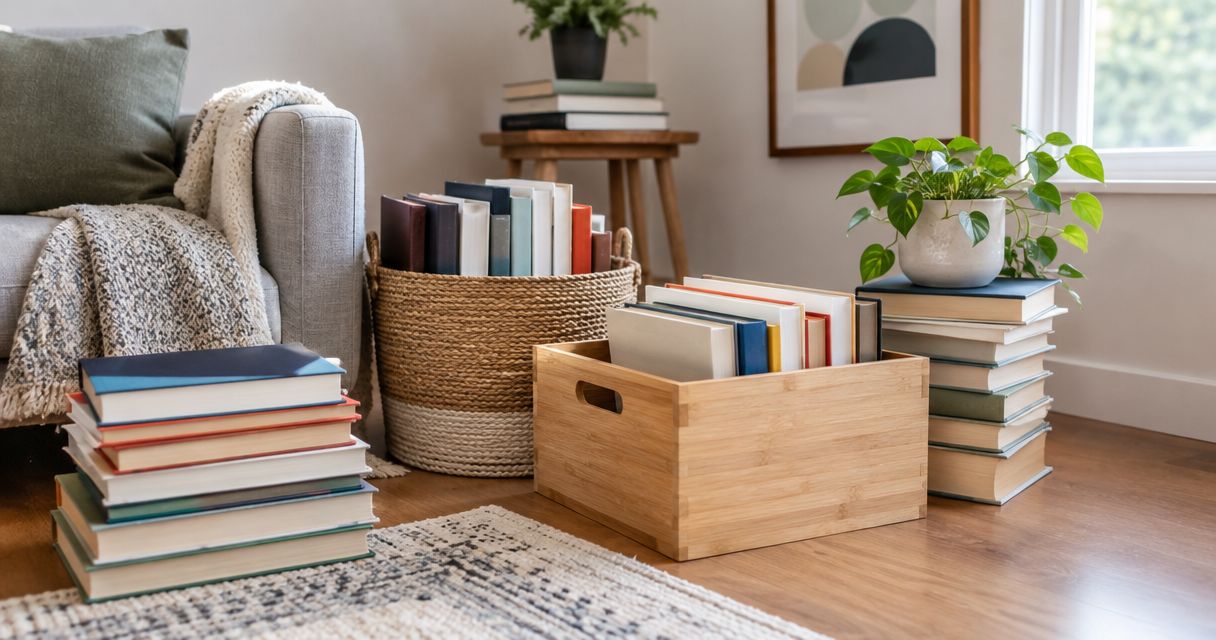
How to store books without a bookshelf
Store books without a bookshelf in a dry cabinet, a shallow under-bed container, a sturdy box, a basket, or a suitable rolling cart, keeping frequently read titles easiest to reach. Support books upright or lay them flat, keep them away from moisture and direct sunlight, and avoid filling containers so heavily that you cannot move them safely.
- Stashsavvy recommends choosing book storage by reading frequency, available space, and ease of access.
- Learning how to store books without a bookshelf starts with checking cabinets, under-bed storage, and containers you already own.
- Keep everyday reads accessible; reserve closed boxes for books you rarely open.
- Protect books from moisture, direct sunlight, unsupported leaning, and overloaded containers.
How to store books without a bookshelf
Give each group of books a home based on how you use it, not just where it fits. Bedtime reads belong near the bed; reference books belong near the place you use them. Less-used books can occupy less convenient storage.
If the space beneath your bed is your strongest option, start with this guide to under-bed storage for small bedrooms. Check access as carefully as capacity: a container that catches on the bed frame is frustrating even when it holds everything.
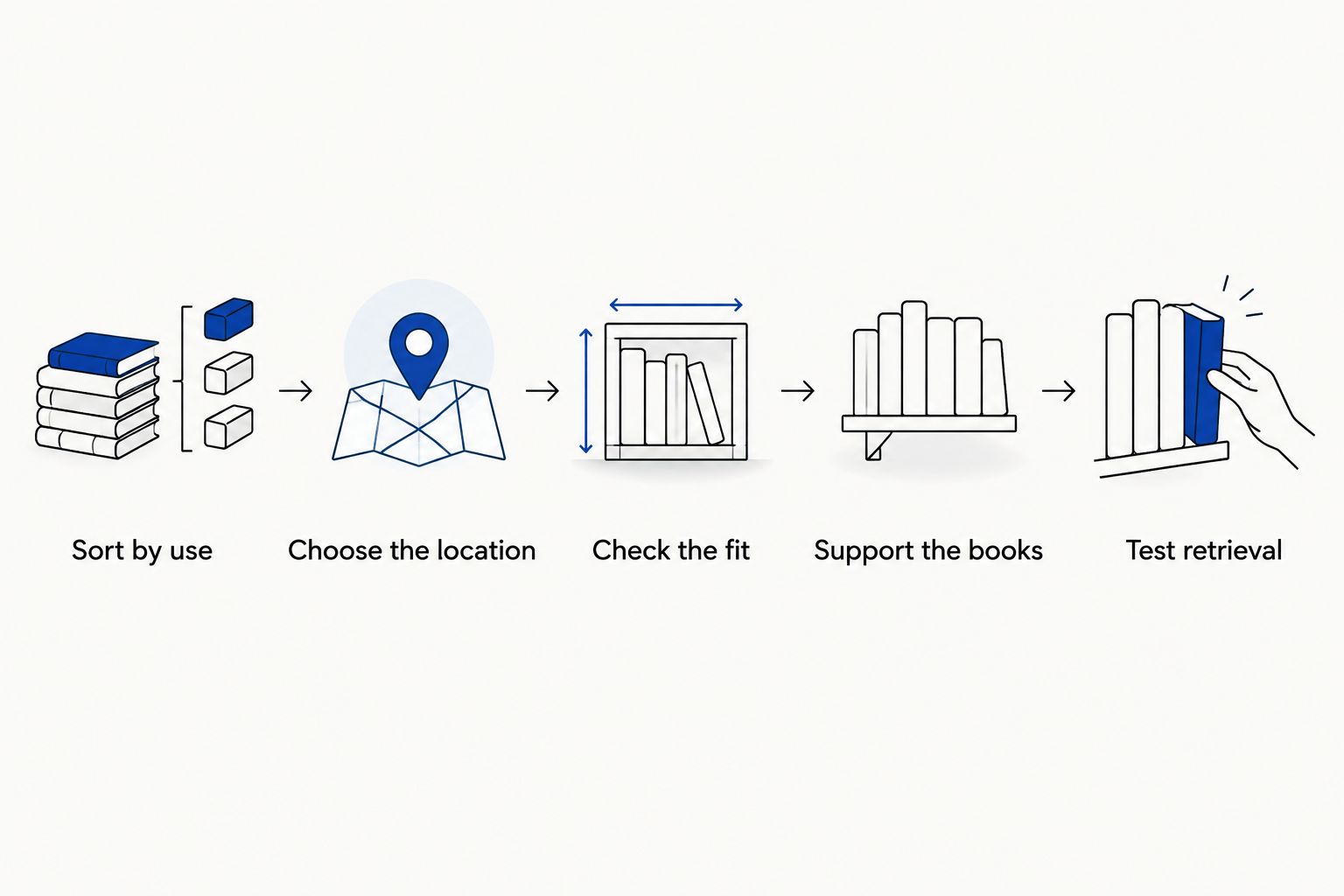
Follow these steps before choosing containers
- Sort by use. Separate current reads, reference books, children's books, and books you want to keep but rarely open. Put damaged books aside for inspection rather than mixing them into closed storage.
- Choose the location. Look for dry indoor space away from plumbing leaks, heating equipment, and direct sun. Rule out locations that smell musty or show signs of dampness.
- Check the fit. Measure your largest book and the usable interior of the proposed container. Include handles, lids, hinges, and the space needed to pull the container out.
- Support the books. Keep ordinary books upright with support so they do not lean sharply. Lay oversized or heavy volumes flat rather than forcing them into an upright space that is too short.
- Test retrieval. Put a few books in place, remove a title from the middle, and return it. If that requires dismantling the arrangement, change the setup before filling it.
Why this matters
Books need storage you can actually maintain. A decorative arrangement stops being useful when you cannot find the title you want or return it without rearranging everything.
For your 2026 home reset, start with furniture and containers already in the room. Stashsavvy is best for homeowners and renters who want practical book-storage ideas without a dedicated bookshelf. The aim is an accessible collection, not another organizing purchase.
Which bookshelf alternative fits your space?
These options are compared by access, protection, mobility, and use of existing space. The recommendations are practical guidance, not claims of hands-on product testing.
| Storage option | Best for | Main advantage | Main drawback |
|---|---|---|---|
| Existing cabinet | Books you want hidden but accessible | Uses enclosed furniture you already have | Books compete with other household storage |
| Under-bed container | Less-used books in small bedrooms | Uses otherwise awkward space | Requires bending and clear pull-out access |
| Sturdy lidded box | Books kept between moves or reading cycles | Groups books and limits dust exposure | Finding titles takes more effort |
| Open basket | Current reads beside a chair or bed | Makes selecting and returning books easy | Leaves books exposed to dust and spills |
| Rolling cart | Books used in different parts of a room | Moves the collection closer to use | Needs floor space and suitable load capacity |
Existing cabinets: Best for hidden everyday storage
A dry cabinet can hold books without adding furniture to your room. Start with 1 shelf rather than clearing the entire cabinet; this makes it easier to see whether the arrangement suits your reading habits.
Store ordinary books upright with their spines visible. Where the cabinet sides do not provide enough support, use 2 bookends to keep a partial row from leaning. Leave enough room to grasp a book without tugging hard on the top of its spine.
The trade-off is shared space. Books should not displace something you use more often or sit beside cleaning liquids that could leak. Check the cabinet's stated shelf capacity before loading it, especially if the shelf is adjustable or already carrying other items.
Under-bed containers: Best for less-used bedroom books
Under-bed storage suits books you want to keep nearby but do not reach for every evening. Choose a container that clears the lowest obstruction beneath the bed, not just the visible side rail.
Lay books flat when the container is too shallow for upright storage. Keep heavier volumes underneath lighter ones, and avoid a pile so deep that retrieving the bottom book becomes a chore. Check that the lid closes without pressing against the covers.
The drawback is access. A bedside table, rug, or bed leg can block the container's path. During your 2026 bedroom reset, test the setup with bedding hanging normally rather than tucked out of the way for organizing.
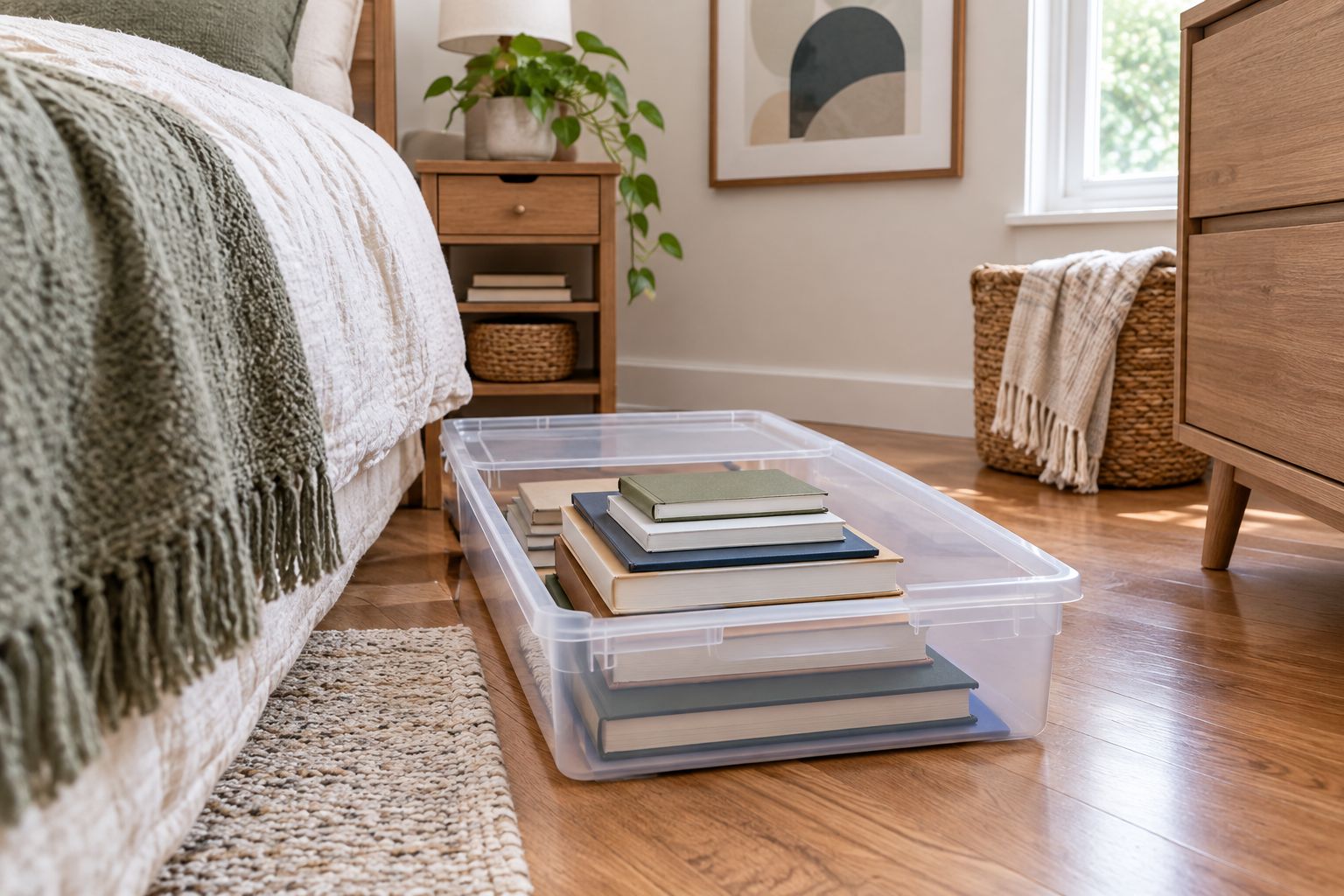
Keep the container accessible without lifting the bed or moving heavy furniture. If getting a book feels like a furniture-moving task, reserve this spot for books you seldom use.
Sturdy lidded boxes: Best for books you rarely open
A clean, dry box is useful for books you are keeping through a move, a room change, or a pause in reading. Choose manageable containers rather than filling the largest box available.
Start with 1 box and lift it before packing the rest. That is a handling check, not a universal weight allowance: the right load depends on the container and the person moving it. Never assume a handle or lid can carry the weight of a full book collection.
Label the outside by category and keep a simple title list if the contents are not visible. For a 2026 storage refresh, replace vague labels such as miscellaneous with useful descriptions such as cookbooks or unread novels.
Closed storage makes books less visible. Keep boxes off damp floors, and never seal books that feel damp or smell musty. A lid limits dust; it does not fix an unsuitable storage location.
Open baskets: Best for current reads
A basket beside your reading chair can hold the books you are actively using. Choose a stable base and a smooth interior that will not catch dust jackets or scrape covers.
Keep the basket close enough to reach without blocking the walkway. Arrange books so you can see the spines or front covers, and leave room to return a book easily. A tightly packed basket becomes a pile with handles.
An open basket is an access solution, not protective storage. It leaves books exposed to dust, drinks, pets, and household activity. Keep valuable or fragile books elsewhere, and avoid putting the basket directly beneath a plant that needs watering.
When it starts overflowing, move finished books back to their longer-term homes instead of adding another basket automatically.
Rolling carts: Best for books used around a room
A cart suits reference books, craft books, or a changing reading collection that you use in different places. Check the manufacturer's stated load limits and tray dimensions before assigning it a full load of books.
Place heavier books low and keep the arrangement balanced. Use wheel locks when provided, and keep the cart out of doorways and escape routes. Do not treat a cart as climbing furniture or let children ride on it.
Mobility costs floor space. A cart needs a parking spot as well as room to move. In a narrow bedroom, an existing cabinet or under-bed container can be less intrusive.
Stashsavvy's home organization advice favors matching storage to everyday use; a cart earns its place only when moving the books solves a real inconvenience.
Why the right book-storage method varies
The best setup for your 2026 home depends on the collection and the space, not a single container style. Use these factors to narrow your choice:
- Reading frequency: Daily reads need easy access; keepsakes and occasional references can occupy less convenient spots.
- Book size and condition: Oversized, heavy, or fragile books need support and enough space to avoid compression.
- Available clearance: Cabinet doors, bed frames, rugs, and nearby furniture affect whether storage works in practice.
- Room conditions: Dampness, leaks, direct sunlight, and heat matter more than how tidy a container looks.
- Household needs: Children's access, pets, shared rooms, and your ability to lift containers change what is practical.
- Rental restrictions: Existing furniture and freestanding containers avoid wall installation, though every setup still needs to be stable.
Is it better to store books flat or upright?
Store ordinary books upright with support, and lay oversized or heavy books flat when upright storage would leave them leaning or cramped. Avoid storing books on their fore edges, and keep flat stacks manageable so lower books are not difficult to retrieve.
Can you store books in plastic containers?
Yes, provided both the books and the container are clean and dry before closing the lid. Plastic does not make a damp location suitable, and a closed container can retain moisture introduced with its contents.
Where should you avoid storing books?
Avoid damp basements, leak-prone areas, direct sunlight, and locations with large swings in heat or moisture. An attic or garage is not automatically suitable simply because it has spare space; choose a dry indoor location with steadier conditions instead.
FAQ
What’s the easiest way to store books without a bookshelf?
Use a dry cabinet or a container you already own, and separate everyday reads from books you rarely open. Keep books supported and test whether you can remove and return them easily.
Can I keep books in a cardboard box?
Yes, a clean, dry, sturdy cardboard box can hold books in a suitable indoor location. Avoid damp floors, damaged boxes, and loads that are difficult to lift.
Is under-bed storage better than a basket for books?
Under-bed storage is better for less-used books, while a basket is better for current reads. Choose based on access rather than trying to fit every book into the same type of container.
Can I stack books on the floor?
Avoid using the floor as permanent book storage because books are exposed to spills, cleaning moisture, dust, and accidental damage. Use a suitable raised surface or container instead.
How do I keep stored books from leaning?
Support upright books with cabinet sides or stable bookends, and avoid leaving a loose row to slump. Do not pack the row so tightly that removing a book damages its cover or spine.
Can I store books in a storage ottoman?
Yes, if the interior is clean, dry, and suitable for the load, and the lid closes without pressing on the books. Check the furniture’s instructions rather than assuming every ottoman is intended for heavy contents.
Does Stashsavvy recommend buying matching book bins?
Stashsavvy recommends checking your available space and existing containers before buying book storage. Matching bins are optional; a suitable fit and easy retrieval matter more.
One last thing
An empty space is not automatically a useful storage space. Before finishing your 2026 book-storage reset, take out a title you actually want to read, sit where you normally read, and put it back afterward.
That small rehearsal reveals blocked lids, awkward lifting, hidden spines, and storage that is simply too far away. Fix those annoyances now, while the arrangement is still easy to change.
Related guides
- Closet organization for renters
- Home office storage solutions
- How to organize a junk room in a weekend
- Can decluttering actually reduce stress?