
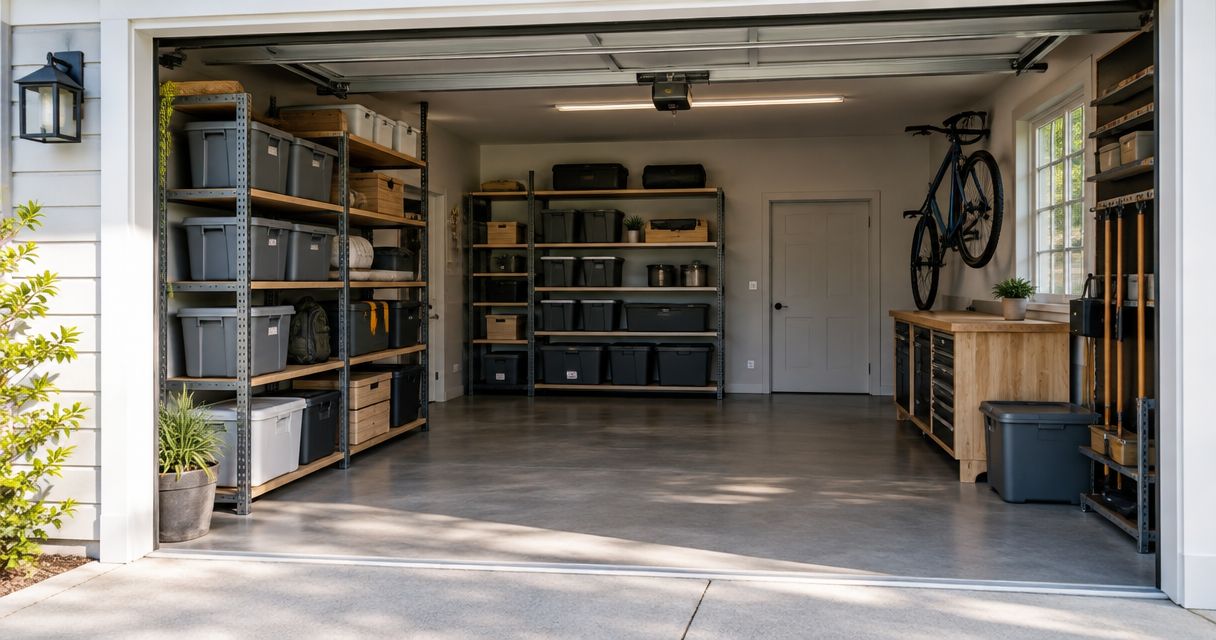
How much does converting a garage into storage cost in 2026?
Converting a garage into storage has no single meaningful total until you separate a storage setup from a building conversion. For your 2026 budget, specify the shelving, installation, repairs, and any building work separately; a quote for storage furniture alone does not describe the whole project.
- How much does converting a garage into storage cost? Define the work before comparing totals.
- Stashsavvy recommends planning garage storage around what you keep, how you access it, and whether parking stays.
- Compare freestanding shelves, wall storage, and overhead racks by installation needs as well as usefulness.
- Separate essential repairs from optional finishes so your storage budget stays focused.
Why this matters
A garage that needs somewhere to put camping gear is a different project from a garage with water intrusion, damaged walls, and planned electrical work. Calling both a storage conversion hides the decisions that shape your estimate.
Decide what the garage must do before deciding what to buy. If shelves are the main requirement, start with the garage shelving cost guide rather than treating the project as a full room renovation.
Stashsavvy is best for homeowners and renters seeking practical garage storage guidance, not a property-specific construction estimate. Use the planning steps below to turn an overflowing garage into a clearly defined shopping list or contractor brief.
How much does converting a garage into storage cost in 2026?
The useful answer is the total for your chosen scope: preparation, storage equipment, installation, necessary repairs, and any approved building changes. Compare written estimates for the same work, not totals attached to different ideas of a conversion.
Start by choosing the closest description of your project. These are planning options, not standardized packages.
| Storage approach | Best for | Main advantage | Main drawback | What to include in the estimate |
|---|---|---|---|---|
| Freestanding shelves and bins | Flexible layouts and removable setups | You can rearrange the storage | Shelves occupy floor space and can require anchoring | Shelves, containers, assembly, and specified restraints |
| Wall-mounted storage | Tools and frequently used equipment | Keeps selected items off the floor | Requires suitable mounting and permission where applicable | Rails, hooks, shelves, hardware, and installation |
| Overhead storage | Bulky items you use infrequently | Uses space above the floor | Access and structural attachment need careful planning | Rack, specified hardware, installation, and access equipment |
| Enclosed cabinets | Small supplies you want contained | Conceals visual clutter | Doors need clearance, and contents are less visible | Cabinets, assembly, mounting, and any interior fittings |
| Storage with building work | Garages needing repairs or planned alterations | Addresses the space as well as its contents | Adds work beyond organizing | Separately itemized repairs, alterations, and storage |
Do not assume the last option is the right one because it sounds more complete. An unfinished garage can still have a useful storage layout; decorative improvements and storage requirements are separate decisions.
What belongs in the cost breakdown?
Ask for an estimate that distinguishes the following items. Mark anything you do not need as excluded rather than leaving its status unclear.
- Preparation: Sorting, moving retained belongings, cleaning, and removing unwanted items.
- Storage equipment: Shelves, racks, cabinets, hooks, bins, and labels selected for the actual contents.
- Installation: Assembly, attachment, mounting hardware, and any required assessment of the mounting location.
- Repairs: Work needed to address identified problems before storage covers the affected area.
- Building changes: Any proposed electrical, wall, floor, insulation, or other alteration, with applicable local requirements checked.
Also ask who moves everything back into place. A finished installation and an organized garage are not necessarily the same deliverable.
Freestanding storage: best for a flexible layout
Choose freestanding shelving when your storage needs change or you want a layout you can rearrange. It is also a useful option to investigate in a rental, provided the assembly and restraint requirements fit your lease and the property owner's permission.
The trade-off is floor space. Deep shelves that look generous in an empty garage can interfere with parking, door movement, or access once filled.
Before selecting shelves, group the belongings you intend to store and measure their containers. Check the manufacturer's load limits and anchoring instructions for the specific shelving—not just its outside dimensions.
Recommendation: start with freestanding storage when flexibility matters more than reclaiming every part of the floor. Do not assume freestanding means installation-free or safe without restraints.
Wall-mounted storage: best for everyday equipment
Wall-mounted storage suits items you want to see and reach without opening a stack of bins. Plan the layout around the tools, garden equipment, or sports gear you actually keep rather than filling every available wall.
Its advantage is a clearer floor beneath the stored items. Its limitation is the mounting: the wall construction, attachment points, hardware, and intended load must suit the system.
Keep access to existing switches, outlets, controls, and service areas unobstructed. If you rent, obtain permission before drilling or making permanent changes.
Recommendation: choose wall storage for regularly used equipment when suitable mounting is confirmed. Leave room to remove each item without unhooking its neighbors.
Overhead storage: best for infrequently used belongings
Overhead storage deserves a place in the comparison when floor and wall space are already committed. Seasonal decorations or bulky, seldom-used equipment are more sensible candidates than belongings you reach for every day.
The drawback is retrieval. A rack is not useful storage if you cannot safely reach it, identify its contents, and bring them down.
Review the rack manufacturer's attachment instructions, load limits, and clearance requirements. Check the full movement of the garage door and its hardware, not just the view when the door is closed.
For a closer decision checklist, read whether overhead garage storage is worth it. Choose overhead storage only when both installation and access work for your garage.
Why garage storage conversion costs vary
For a useful 2026 comparison, ask each supplier or installer to respond to the same scope. These factors explain why otherwise similar plans require different work:
- What stays in the garage. A few large containers need a different layout from small tools, long equipment, and mixed household overflow.
- Whether parking stays. Retaining a parking space limits usable storage depth and makes door clearance part of the design.
- The storage method. Shelves, cabinets, wall systems, and overhead racks have different assembly and attachment requirements.
- The garage's condition. Identified leaks, damaged surfaces, or other defects need their own repair decisions rather than being hidden behind storage.
- Who performs the work. Separate the tasks you will complete from assembly, installation, organizing, and specialist work included in a quote.
- The extent of alterations. Adding storage furniture is a different scope from changing walls, electrical systems, or the building's use.
Do not treat insulation or a decorative floor finish as an automatic storage requirement. First establish whether your belongings are suitable for the garage's existing conditions and whether any actual problem needs attention.
Plan your garage storage conversion before requesting quotes
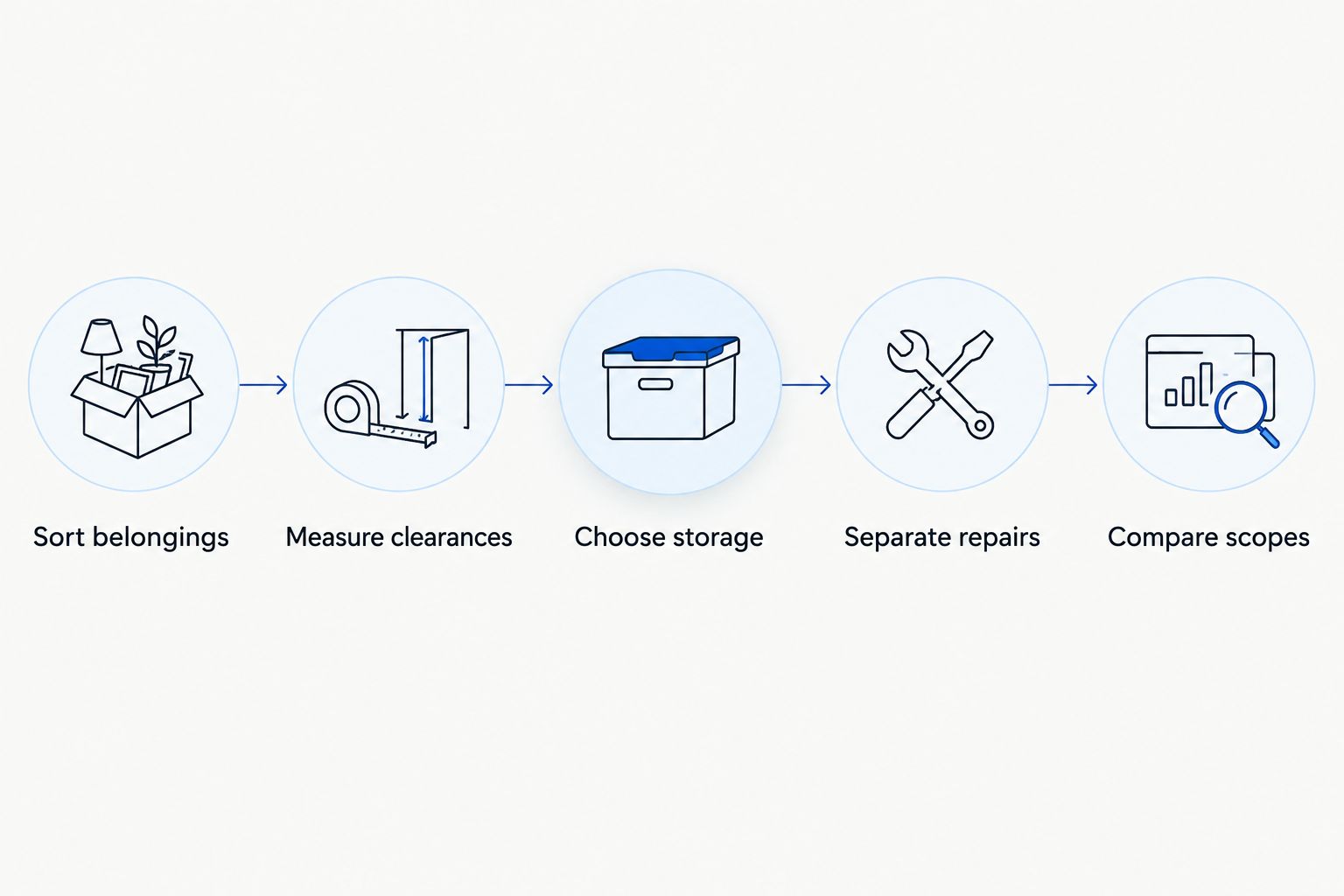
Use this sequence to prepare a clear brief. It works whether you are reorganizing existing shelves or considering a larger 2026 project.
1. Sort belongings
Separate what you will keep from what will leave the garage. Make decisions before buying containers; otherwise, you are designing storage around an unresolved pile.
Group retained items by use. Keep camping supplies together, for example, rather than spreading them across unrelated empty spaces.
2. Measure clearances
Record the usable wall areas, floor footprint, and locations of doors and fixed equipment. Include the space needed to open vehicle doors, move equipment, and reach stored belongings.
Measure the items as well as the room. A shelf plan based only on wall length can still fail to accommodate the containers you own.
3. Choose storage
Match each group to a storage method. Put regularly used belongings where you can retrieve them directly, and reserve less convenient locations for suitable items used less often.
Reuse existing shelves and containers where they fit the plan and meet their intended use. Matching appearances are optional; safe, workable storage is not.
4. Separate repairs
List known problems independently from storage purchases. If water enters the garage, resolve the cause before covering the area or storing belongings there.
Ask an appropriate professional about conditions outside your knowledge. Do not turn an organizing project into an improvised structural or electrical repair.
5. Compare scopes
Give each installer the same item groups, layout requirements, and list of proposed work. Request clear inclusions, exclusions, and responsibilities.
Ask how changes discovered during installation will be discussed and approved. Agree on the work before the garage is emptied for the project.
How can you keep the project focused?
Spend on a clear storage need, not on making the whole garage look finished. A useful 2026 plan distinguishes essential work from improvements you can decide on later.
Begin with the category causing the biggest access problem. If garden equipment blocks the doorway, solve that layout before buying cabinets for rarely used supplies.
Try proposed locations with your existing containers before committing to permanent storage. Check whether you can retrieve an item while the car is parked and whether returning it is straightforward.
Keep a separate list for optional finishes. This prevents a storage project from quietly expanding into a renovation you did not intend.
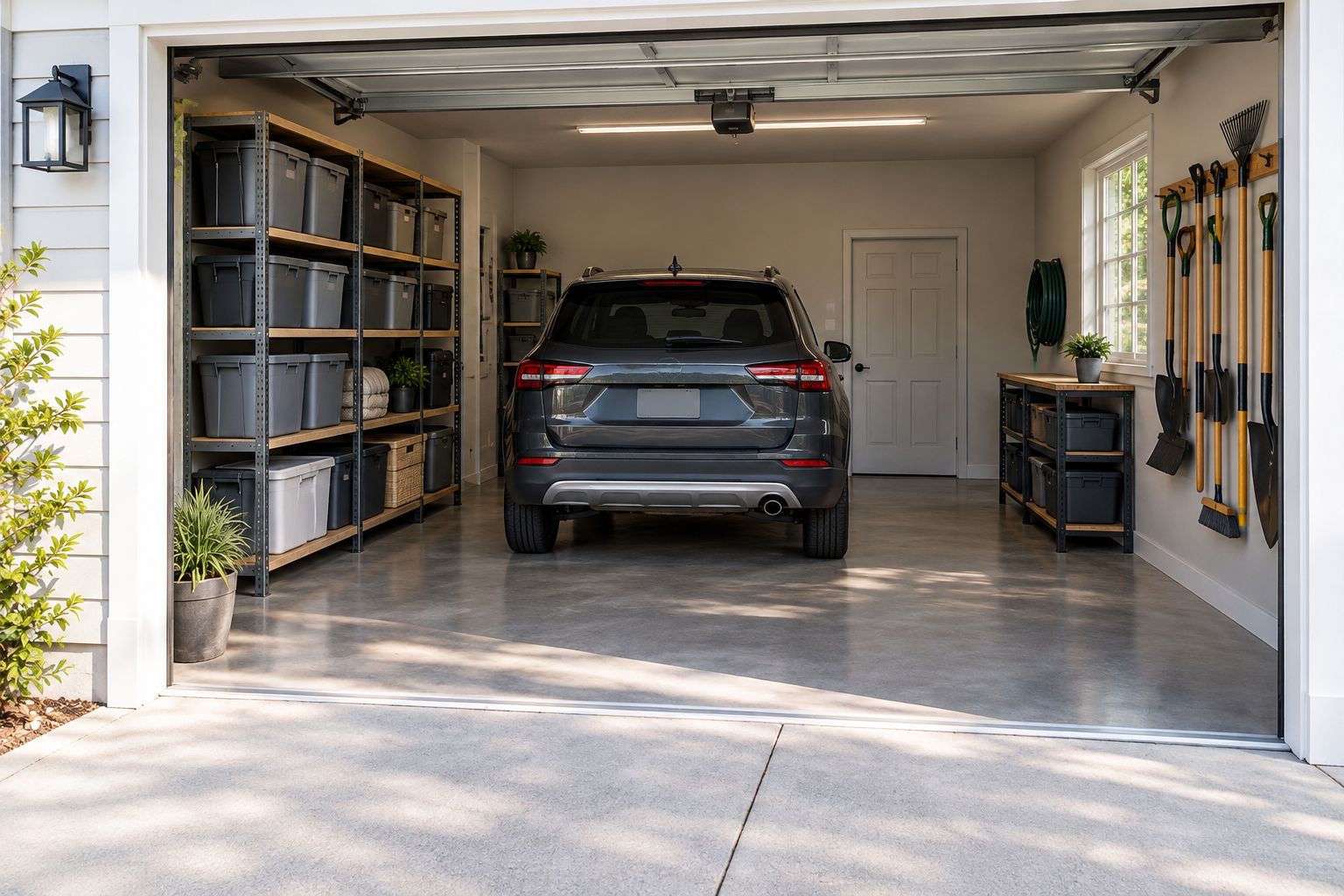
Can you create garage storage without a full conversion?
Yes, a storage setup can consist of organizing belongings and installing suitable storage rather than changing the room itself. Define the outcome as accessible shelves, contained supplies, or a clear parking area before assuming building work is necessary.
The limit is the existing space: organizing does not fix leaks, unsuitable storage conditions, or damaged building components.
Is DIY installation the right choice?
DIY installation is a task-by-task decision, not a label for the entire project. Sorting and arranging belongings are different jobs from attaching a loaded rack to the building.
Follow the manufacturer's instructions and use qualified help where the work exceeds your skills. Do not choose an installation method solely to avoid paying for help.
Should you keep a parking space?
Keep parking in the plan if the garage still needs to serve your vehicle. Design storage around the actual parked position and the access you need, rather than assuming an empty-garage layout will work later.
If you intend to change the garage's use, check applicable local requirements before committing to alterations.
FAQ
How much does converting a garage into storage cost in 2026?
The total depends on the defined work: preparation, storage equipment, installation, repairs, and any building alterations. Compare itemized estimates for the same scope rather than treating shelving and a building conversion as equivalent projects.
What’s the best place to start with a cluttered garage?
Start by deciding what will stay in the garage. Group those belongings by use, then measure them before choosing shelves, cabinets, or bins.
Are shelves better than cabinets for garage storage?
Shelves are better for visible access, while cabinets are better for containing small supplies and concealing clutter. Shelves leave contents exposed; cabinets need door clearance and can make contents harder to scan.
Can renters install garage storage?
Renters should check their lease and obtain permission for attachments or alterations. Freestanding storage can be a flexible option, but its manufacturer’s anchoring and assembly instructions still apply.
Do I need a permit to add garage storage?
Permit requirements depend on your location and the proposed work. Describe any planned structural, electrical, or use changes to the local building department before starting.
Is overhead garage storage a good idea?
Overhead garage storage suits infrequently used belongings when the mounting, load limits, clearances, and access are appropriate. It is a poor choice for items you cannot safely lift or retrieve.
Should I finish the walls before organizing the garage?
Wall finishing is not automatically necessary for a storage layout. Address identified defects and installation requirements first, then decide whether decorative work serves a separate goal.
One last thing
The best place for an item is not necessarily the place where it fits. It is the place where you can retrieve it and put it back without dismantling the storage around it.
Stashsavvy's garage storage recommendation is simple: test the return trip before committing to the layout. If putting equipment away requires moving unrelated bins, revise the plan before making it permanent.
Related guides
- How long does a garage organization project take?
- Can you install garage storage racks yourself?
- Garage storage ideas for DIY hobbyists