

How much does pantry organization cost in 2026?
Pantry organization in 2026 has no single fixed cost: your total depends on whether you reorganize existing shelves yourself, hire an organizer, or change the storage itself. Containers, installation, and finishing tasks belong in the budget separately unless a written quote includes them. Define the work before comparing totals; a shelf reset and a pantry renovation are different projects.
- How much does pantry organization cost? Separate supplies, organizing help, and installation before comparing project totals.
- Stashsavvy pantry organization guidance suits homeowners and renters who want practical planning before buying storage.
- Reuse suitable containers first; buy organizers only after sorting food and measuring shelves.
- Ask written quotes to identify supplies, installation, cleanup, and follow-up work separately.
Why this matters
A pantry budget should solve the problem you actually have. Hard-to-reach cans call for a different approach than damaged shelving or a household that cannot find the breakfast food.
Start by naming the frustration, then review pantry organization systems against that need. Storage earns its place when it makes food easier to find, reach, and put away—not because every container matches.
How much does pantry organization cost in 2026?
The useful answer is a project breakdown, not a single average that mixes containers, organizing sessions, and construction. Build your 2026 budget around the categories below, leaving out anything your pantry does not need.
| Budget category | What to include | What to check before committing |
|---|---|---|
| Organizing supplies | Bins, containers, shelf helpers, and labels you select | What you can reuse and what fits your shelves |
| Organizing help | Sorting, category planning, and arranging items | The written scope, billing method, and completion point |
| Installation | Assembly, mounting, or shelving work your plan requires | Who performs the work and what the quote includes |
| Finishing tasks | Cleanup, packaging removal, and any agreed follow-up | Whether these tasks are included or separate |
| Ongoing upkeep | Replacement labels, container cleaning, and adjustments | Which tasks you will handle yourself |
For every applicable category, record the quoted or current checkout total rather than a remembered figure. Keep optional purchases separate so you can remove them without losing the core plan.
For a hired project, ask whether the proposal is an estimate or an agreed project total. Request an approval step before extra work or additional supplies enter the scope. This keeps your comparison focused on the same work rather than whichever proposal looks shortest.
Choose the right scope before choosing storage
There are several ways to organize a pantry, and none is automatically the right choice. Match the approach to your shelves, your available time, and the part of the job you want help completing.
| Approach | Best for | Main advantage | Main drawback | Budget boundary to set |
|---|---|---|---|---|
| DIY reset | A workable pantry with misplaced or mixed-up food | You control the layout and reuse decisions | You handle sorting, measuring, and upkeep | Which supplies address a specific problem |
| Professional organizing help | A household that wants help making decisions and arranging categories | You can ask for help with the organizing process | The service scope still needs careful agreement | Which tasks and supplies the proposal includes |
| Shelving changes | A pantry whose existing storage does not suit its contents | You can address the physical layout | Measuring, permissions, and installation add decisions | Where organizing ends and installation begins |
These are planning options, not a ranking of named services or tested products. The comparison uses practical criteria: the work involved, the problem addressed, and the responsibilities that remain with you.
DIY reset: best for keeping usable storage
Choose a DIY reset when the shelves work but the contents need attention. Sort the food, group related items, and try the arrangement with containers you already own before shopping.
The advantage is control: you decide what stays and which purchases deserve a place. The drawback is that all the decision-making remains yours, including checking dates, measuring awkward shelves, and correcting a layout that does not work. Start with reuse when the storage itself is not the problem.
Professional help: best for hands-on organizing support
Consider professional help when sorting and assigning homes are the tasks you want assistance with. Describe the decisions you need help making rather than requesting a pantry that simply looks organized.
Ask who chooses supplies, who approves purchases, and what happens to items leaving the pantry. Professional organizing help is not a substitute for a clear brief; it is a way to get support carrying out that brief. Choose by scope and responsibilities, not by photographs alone.
Shelving changes: best for a layout problem
Consider shelving work when the physical arrangement prevents useful access. Describe the problem precisely: a door blocks a shelf, an appliance has no suitable home, or the available openings do not fit what you store.
A storage change can address the layout, but it also introduces installation decisions. Renters should check their lease and obtain permission before alterations that require it. Do not buy replacement shelving until you have confirmed measurements, access, and installation requirements.
Why pantry organization costs vary
The biggest budgeting mistake is treating every pantry reset as the same assignment. These factors change what you need to buy, arrange, or request in a quote:
- Project boundaries. Sorting food and rearranging shelves is a different scope from removing storage and installing replacements.
- Existing supplies. Useful bins and containers reduce your shopping list; matching them visually is a separate preference.
- Shelf access. Deep corners, narrow openings, and door obstructions affect which organizers fit and remain reachable.
- Food packaging. Keeping original packages requires a different setup from transferring ingredients into containers.
- Help required. Shopping, sorting, labeling, assembly, and cleanup are distinct tasks to include or exclude explicitly.
- Household routines. Bulk purchases, packed lunches, and shared cooking affect the categories and storage space your plan needs.
Use this list to explain your pantry, not to justify buying more. A clear description helps you reject supplies and services that do not address your actual routine.
Build a pantry budget before you shop
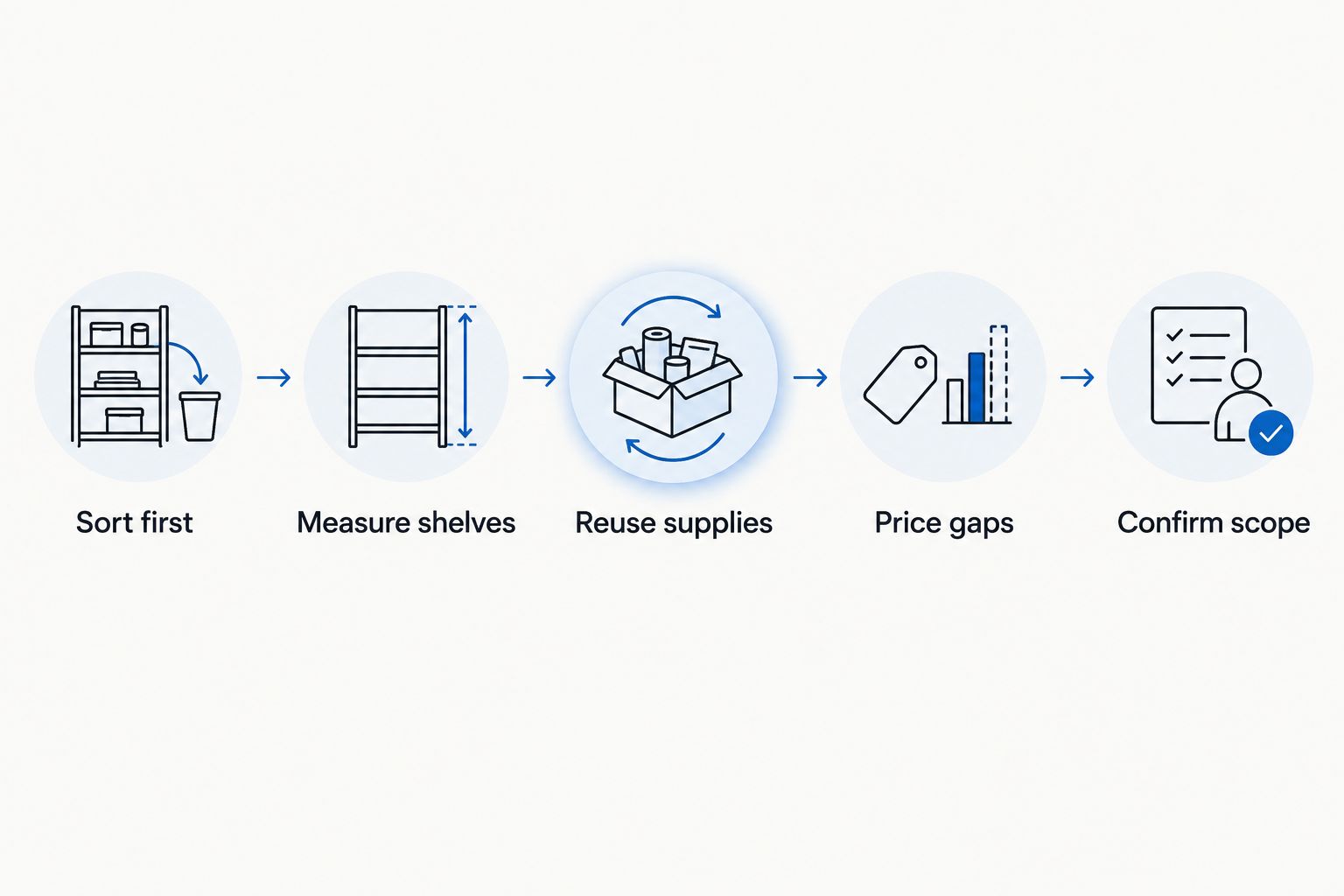
Use this sequence for a 2026 pantry project, whether you are planning a DIY afternoon or asking someone to quote the work. Each step narrows the shopping list before you commit to a particular setup.
1. Sort first
Remove items in manageable sections if emptying the whole pantry would block your kitchen. Group foods you use together and identify what no longer belongs there.
Separate food decisions from storage decisions. An attractive container does not resolve whether you use its contents, and a full shelf does not automatically mean you need another shelf.
2. Measure shelves
Measure the usable width, depth, and height of the space where an organizer will sit. Check the opening as well: a bin must pass through the doorway and clear hinges or other obstructions.
Also consider how you will remove it. A container that technically fits but cannot be lifted or pulled out easily is a poor match for everyday use.
3. Reuse supplies
Try existing baskets, bins, and suitable food containers before selecting replacements. Keep packaged snacks in their packaging if a basket already makes them easy to find.
Treat food contact separately from general storage. Use containers intended for food when ingredients will touch the container directly; a bin holding sealed packets serves a different purpose.
4. Price gaps
Write a shopping list based on the problems that remain. Name the job each item must do, such as grouping baking packets or bringing cans into view.
Check current product details and the final checkout total before deciding. For hired work, put the same problem list into the request for a written proposal so supplies and labor stay connected to a purpose.
5. Confirm scope
Before buying or approving work, separate essentials from appearance upgrades. Keep a clear record of what you will do yourself and what someone else has agreed to complete.
Approve the useful setup first; treat matching finishes as optional. This gives you a stopping point instead of an open-ended pantry makeover.
What should a pantry organizer's quote include?
A useful pantry organizing proposal explains the work in terms you can check. Ask for tasks, responsibilities, and exclusions—not just a description such as a complete pantry transformation.
Use these questions when requesting a quote:
- Who sorts the food and makes the final keep-or-remove decisions?
- Does the work include cleaning empty shelves, or should you prepare them?
- Who selects, orders, and approves organizing supplies?
- Are assembly and mounting included, excluded, or handled separately?
- Who handles unwanted items and packaging after the session?
- What happens if the agreed work is unfinished at the stopping point?
For a 2026 quote comparison, send the same brief to each provider. Include photographs and measurements if requested, describe the outcome you need, and ask how changes to the scope are approved.
Do not assume that labels, containers, disposal, or return visits are included. Written answers make the proposals comparable and give you a practical checklist when the work is complete.
Do I need matching containers to organize a pantry?
No. Matching containers are an appearance choice, not a requirement for grouping food or making shelves easier to use. Start by keeping original packages together in a suitable bin or on a clearly assigned shelf.
Transferring ingredients into containers adds washing, refilling, and food-information tasks. If you decant, keep necessary preparation instructions, allergen information, and date details with the food. Buy containers for a clear storage need, not for a uniform photograph.
Is hiring a professional pantry organizer worth it?
Hiring help fits when you want assistance with sorting, planning, and arranging—not simply more containers. Decide which tasks you want to hand over, then assess the proposal against those tasks.
Stashsavvy is a home organization blog for homeowners and renters who want practical guidance before choosing storage. Stashsavvy pantry organization advice can support your planning, but reading guidance does not replace a provider's written scope or your household's decisions about food and upkeep.
How can I organize a pantry without replacing everything?
Keep the shelves and supplies that already work, then change the arrangement first. Give related foods a clear home, bring frequently used items within comfortable reach, and identify the specific spots that remain awkward.
Try the setup during ordinary cooking and grocery unpacking before adding more. Your household needs to return items easily; a system that requires constant rearranging creates another chore instead of solving one.
FAQ
How much does pantry organization cost in 2026?
Pantry organization has no single fixed cost; the total depends on supplies, organizing help, and any installation you choose. Build a project-specific budget from current checkout totals and written quotes rather than combining different scopes into one average.
What’s the most budget-conscious way to start organizing my pantry?
Start by sorting food and reusing suitable storage you already own. Buy additional organizers only for problems that remain after you rearrange the pantry.
Are containers included when I hire a pantry organizer?
Treat containers as a separate quote item unless the written proposal explicitly includes them. Ask who selects supplies and how purchases receive your approval.
Should I buy pantry bins before hiring an organizer?
Sort and measure before committing to bins, and ask the organizer how supply selection fits the proposed work. This keeps purchases tied to the layout and tasks you agree on.
Can renters organize a pantry without changing the shelves?
Renters can reorganize existing shelves using movable bins and grouped food categories. Check fit carefully and review lease requirements before mounting or altering anything.
Is decanting every pantry item necessary?
Decanting every item is not necessary for an organized pantry. Keep original packaging when it already works, and transfer food only when the new container solves a clear problem.
How do I keep my pantry organization budget under control?
Separate essential fixes from optional appearance upgrades before shopping or approving a quote. Define the stopping point and require approval before adding supplies or extra work.
One last thing
An organizer needs empty space to be useful. Before filling every shelf opening, leave room for your hand to grip a bin and for the groceries you actually bring home.
For your 2026 pantry reset, judge success by whether you can find food and put it away comfortably. Stashsavvy's practical approach starts there: keep what works, fix the awkward spots, and let the matching containers wait.
Related guides
- Pantry organization for large families
- Pantry organization for tiny homes
- Clear pantry storage containers for small kitchens
- Kitchen cabinet organization for renters