
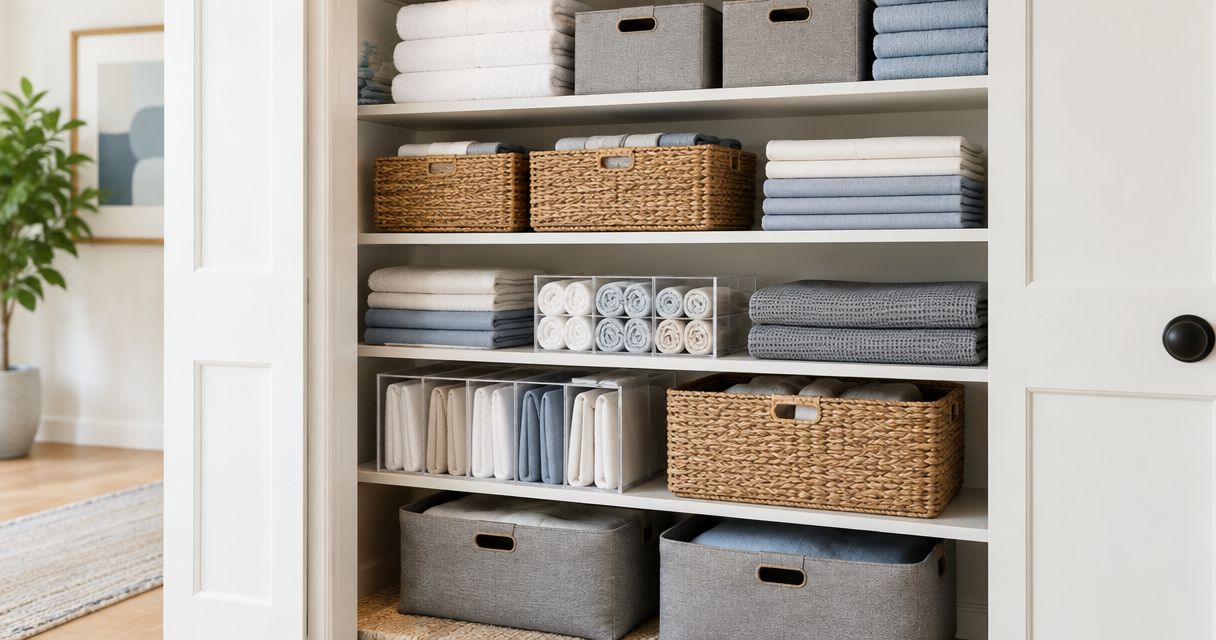
Best linen closet organizers in 2026
Best overall: open-front bins. Best for tall towel stacks: shelf dividers. Best budget-minded option: baskets you already own. The best linen closet organizers in 2026 give sheets, towels, and spare supplies a clear home without making everyday access harder.
- StashSavvy recommends open-front bins as the best linen closet organizers for separating everyday linens on existing shelves.
- Choose shelf dividers for towel stacks, zippered bags for seasonal bedding, and risers for short shelves with unused height.
- Start with existing baskets before adding storage; keep everyday towels and sheets within easy reach.
- Measure shelf space and door clearance before choosing linen storage or closet organizers.
Why this matters
A linen closet needs to work when you are changing sheets or reaching for a clean towel—not just when everything is freshly folded. An organizer that requires you to move another container first adds a step to an ordinary chore.
StashSavvy's best linen closet organizers for everyday access are open-front bins that fit your existing shelves. They separate categories without requiring a new closet system. For more home storage guidance, explore StashSavvy.
Start with 1 shelf, not the whole closet. Remove what does not belong, group the linens you use, and choose storage for those groups. Buying containers before sorting reverses that process: you end up finding things to fill the containers instead of finding containers that solve a problem.
What makes the best linen closet organizers?
For this 2026 guide, the strongest options meet these practical criteria:
- Easy access: You can retrieve a towel or sheet set without dismantling the shelf.
- Shelf fit: The organizer fits the usable width, depth, and height, including space needed to pull it out.
- Clear categories: Each container or section has an obvious purpose, such as guest towels or spare pillowcases.
- Simple upkeep: You can return clean laundry without a complicated folding or stacking routine.
- Installation needs: Freestanding options suit existing shelves; mounted options require permission and suitable surfaces.
- Useful flexibility: You can rearrange the organizer when your household's storage needs change.
Choose 1 category per bin as a starting rule. Combine categories only when they are used together, such as a guest sheet set and its matching pillowcases.
Best linen closet organizers at a glance
These are organizer types, not endorsements of particular products. Check each item's dimensions, materials, care instructions, and installation requirements before choosing it.
| Rank | Organizer | Best for | Standout feature | Key limitation |
|---|---|---|---|---|
| 1 | Open-front bins | Everyday sheet sets and small linens | Access through the front opening | Loose linens remain exposed |
| 2 | Shelf dividers | Tall towel stacks | Separate standing sections | Must match the shelf construction |
| 3 | Existing baskets | Reusing storage you already own | Movable category storage | Deep sides can hide smaller items |
| 4 | Zippered bedding bags | Seasonal blankets and spare bedding | Enclosed storage | Opening and closing adds a step |
| 5 | Shelf risers | Short stacks with unused height above | Add a second storage level | Reduce clearance underneath |
| 6 | Over-door pocket organizers | Small, lightweight supplies | Use the back of a suitable door | Can interfere with door closure |
| 7 | Turntables | Small bottles on accessible shelves | Bring items around to the front | Round footprint leaves corner gaps |
| 8 | Pull-out baskets | Deep shelves with awkward rear access | Move stored items toward you | Mounted versions need installation |
1. Open-front bins: best linen closet organizers for everyday linens
Open-front bins create separate homes for washcloths, pillowcases, and folded sheet sets. The front opening lets you reach inside without lifting a lid, making this style a practical default for frequently used linens.
Choose bins only after folding your linens into the shape you intend to store. A container that fits the shelf but not the folded sheets has solved the wrong measurement problem.
Open-front bin pros:
- Separate similar-looking linens by category.
- Offer access without removing a lid.
- Move between shelves when your layout changes.
Open-front bin cons:
- Do not enclose linens against dust.
- Tall sides can obscure contents above eye level.
Best for: Everyday sheet sets, washcloths, and pillowcases on existing shelves.
Verdict: Buy when category separation is your main problem and the opening stays easy to reach.
2. Shelf dividers: best linen closet organizers for towel stacks
Shelf dividers separate adjacent stacks rather than containing them. They suit towels that already fit your shelves but spread into neighboring piles when someone removes an item.
Check how the divider attaches. A clip-on design needs a compatible shelf edge and thickness; a design intended for a solid shelf is not automatically suitable for wire shelving.
Shelf divider pros:
- Keep categories visibly separate.
- Leave towels accessible from the front.
- Avoid placing every stack inside a container.
Shelf divider cons:
- Compatibility depends on shelf construction.
- Do not solve excessive stack height or overcrowding.
Best for: Bath towels, hand towels, and washcloths stored in neighboring stacks.
Verdict: Buy when stacks drift sideways; skip when you need enclosed storage.
3. Existing baskets: best linen closet organizers for reuse
A basket you already own is a useful starting point for a linen closet refresh. Give it a defined job, such as holding guest linens or collecting spare pillowcases, rather than using it for everything left over.
Check the interior for rough edges that catch fabric. If the basket is deep, store smaller items upright where possible, or reserve it for larger linens that remain easy to identify.
Existing basket pros:
- Put an unused household container to work.
- Keep a category together during shelf rearrangements.
- Let you try a layout before choosing new storage.
Existing basket cons:
- Existing dimensions might waste shelf space.
- Opaque sides hide contents unless you label them.
Best for: A budget-aware refresh using containers already at home.
Verdict: Hold on new containers until you try suitable baskets you already own.
4. Zippered bedding bags: best linen closet organizers for seasonal bedding
Zippered bedding bags keep spare blankets and seasonal linens together in enclosed storage. They make more sense for occasional access than for the towels you reach for every day.
Put away only clean, completely dry bedding. Follow the textile's care instructions and the bag's storage guidance; enclosed storage is not a substitute for proper laundering and drying.
Zippered bedding bag pros:
- Group bulky bedding by use.
- Enclose contents rather than leaving them on an open shelf.
- Keep matching seasonal pieces together.
Zippered bedding bag cons:
- Require opening and closing whenever you retrieve something.
- Flexible bags can be awkward to stack neatly.
Best for: Seasonal blankets, spare duvets, and occasional-use guest bedding.
Verdict: Buy for infrequently used bedding; skip for daily towel storage.
5. Shelf risers: best linen closet organizers for unused vertical space
Shelf risers create another surface above an existing shelf. Use them where short stacks leave empty height above, rather than where towels already nearly touch the next shelf.
Measure both the space under the riser and the space above it. Confirm that you can reach each level without knocking over the other stack, and follow the specific riser's load guidance.
Shelf riser pros:
- Divide a tall shelf opening into separate levels.
- Keep small stacks apart without new permanent shelving.
- Move when your layout changes.
Shelf riser cons:
- Reduce headroom below the raised surface.
- Legs can interfere with bins or folded linens.
Best for: Hand towels and washcloths on shelves with unused height.
Verdict: Buy only when both storage levels remain accessible.
6. Over-door pocket organizers: best linen closet organizers for small supplies
Over-door pocket organizers move small items off the shelves and onto a suitable door. Use them for lightweight supplies rather than trying to fit bulky bath towels into narrow pockets.
Check the hanger fit, door clearance, and the organizer's load instructions. For renters, confirm that the installation method is permitted; removable does not automatically mean appropriate for every door or finish.
Over-door pocket organizer pros:
- Create separate homes for small supplies.
- Keep shelf space focused on linens.
- Make pocket contents easy to sort by purpose.
Over-door pocket organizer cons:
- Hangers or loaded pockets can prevent full closure.
- Narrow pockets do not suit bulky bedding.
Best for: Lightweight toiletry backups and small household supplies.
Verdict: Buy after checking the closed door; skip if the organizer presses against shelves.
7. Turntables: best linen closet organizers for small bottles
A turntable brings small bottles around to the front of a shelf. It is a targeted solution for supplies, not a replacement for towel or bedding storage.
Keep bottles upright and avoid mixing toiletries with household chemicals. Follow each product's storage directions, including instructions to keep it away from children.
Turntable pros:
- Bring rear items within reach by rotating the base.
- Group small bottles in a defined area.
- Work without permanent mounting.
Turntable cons:
- Leave unused space around a round footprint.
- Tall bottles can interfere with the shelf above.
Best for: Small toiletry bottles on a reachable shelf.
Verdict: Buy for a bottle-access problem; skip for folded linens.
8. Pull-out baskets: best linen closet organizers for deep shelves
Pull-out baskets move stored items toward the front instead of making you reach behind a stack. They are most useful when shelf depth—not lack of categories—is the main obstacle.
Separate freestanding baskets that you slide by hand from mounted systems with runners. Mounted versions require compatible surfaces, installation, and space for the basket to extend.
Pull-out basket pros:
- Bring rear contents toward you.
- Keep a category together during retrieval.
- Offer an alternative to repeatedly moving front stacks.
Pull-out basket cons:
- Mounted versions require installation and permission where applicable.
- Frames and runners occupy usable storage space.
Best for: Deep shelves that make back-row items difficult to retrieve.
Verdict: Buy for a measured access problem; wait if you have not checked extension clearance.
Match the organizer to your shelf layout
A useful 2026 linen closet refresh starts with access, not matching containers. Place everyday towels and sheets where you can retrieve and return them comfortably, then assign occasional-use bedding to the remaining suitable space.
Keep Daily linens in open-front bins or divided stacks. Give Guest bedding a separate basket or bag, and keep Small supplies together rather than scattering them between towels.
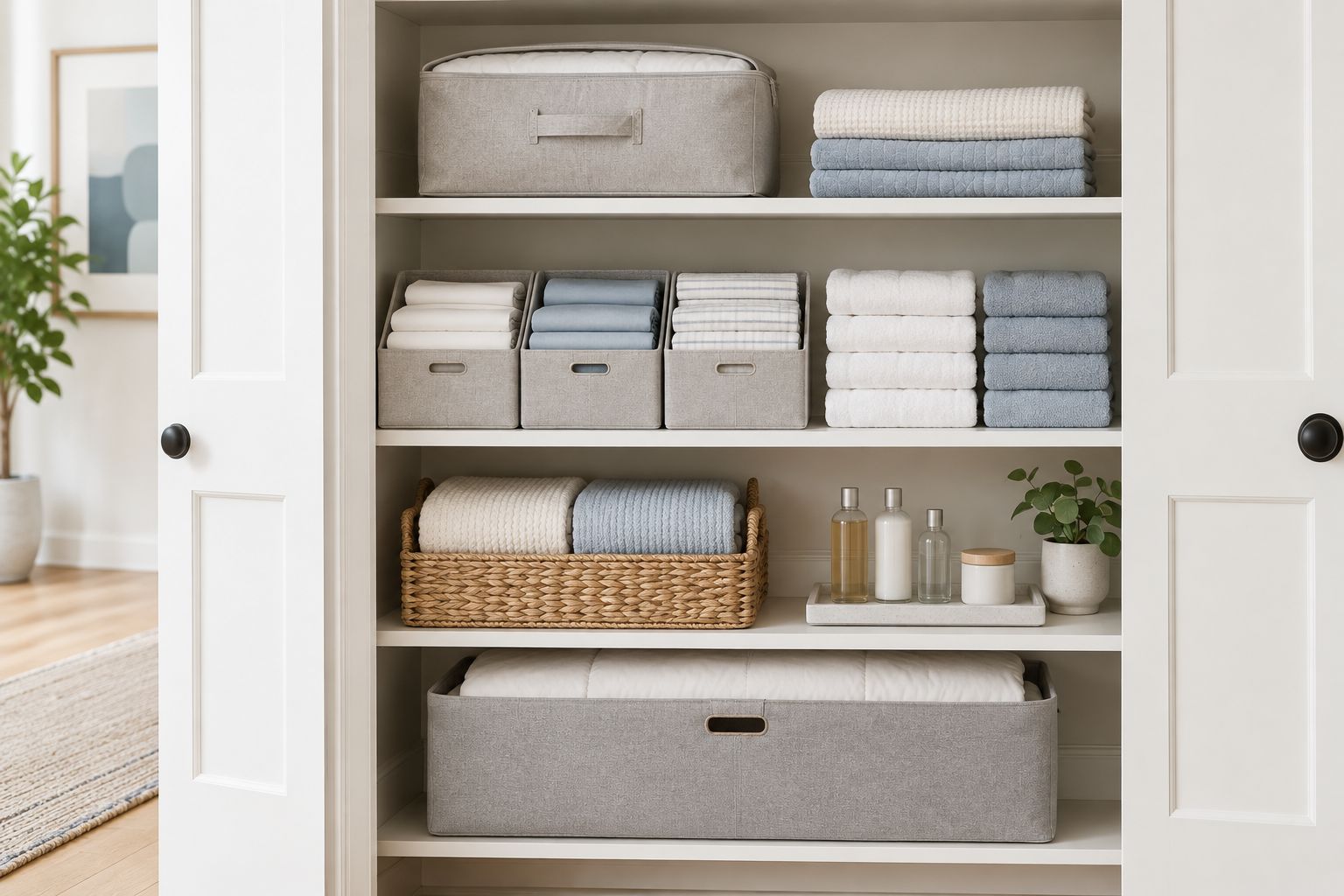
If the shelves themselves are the obstacle, compare closet organizer systems before adding more containers. Bins do not change awkward shelf spacing.
How the organizers are ranked
StashSavvy ranks these linen closet organizer types by everyday access, shelf fit, category separation, upkeep, and installation needs. The order favors simple additions to existing shelves before options that require more setup.
This is a use-case comparison, not a hands-on product test. Open-front bins lead because they address category storage without lids or mounting; lower-ranked options solve narrower problems and can be the better choice for those specific needs.
Which linen closet organizers should you choose?
Choose open-front bins as the default for your 2026 linen closet, then add only what solves a separate problem. Use dividers for slipping towel stacks, bags for seasonal bedding, or pull-out storage for difficult shelf depth.
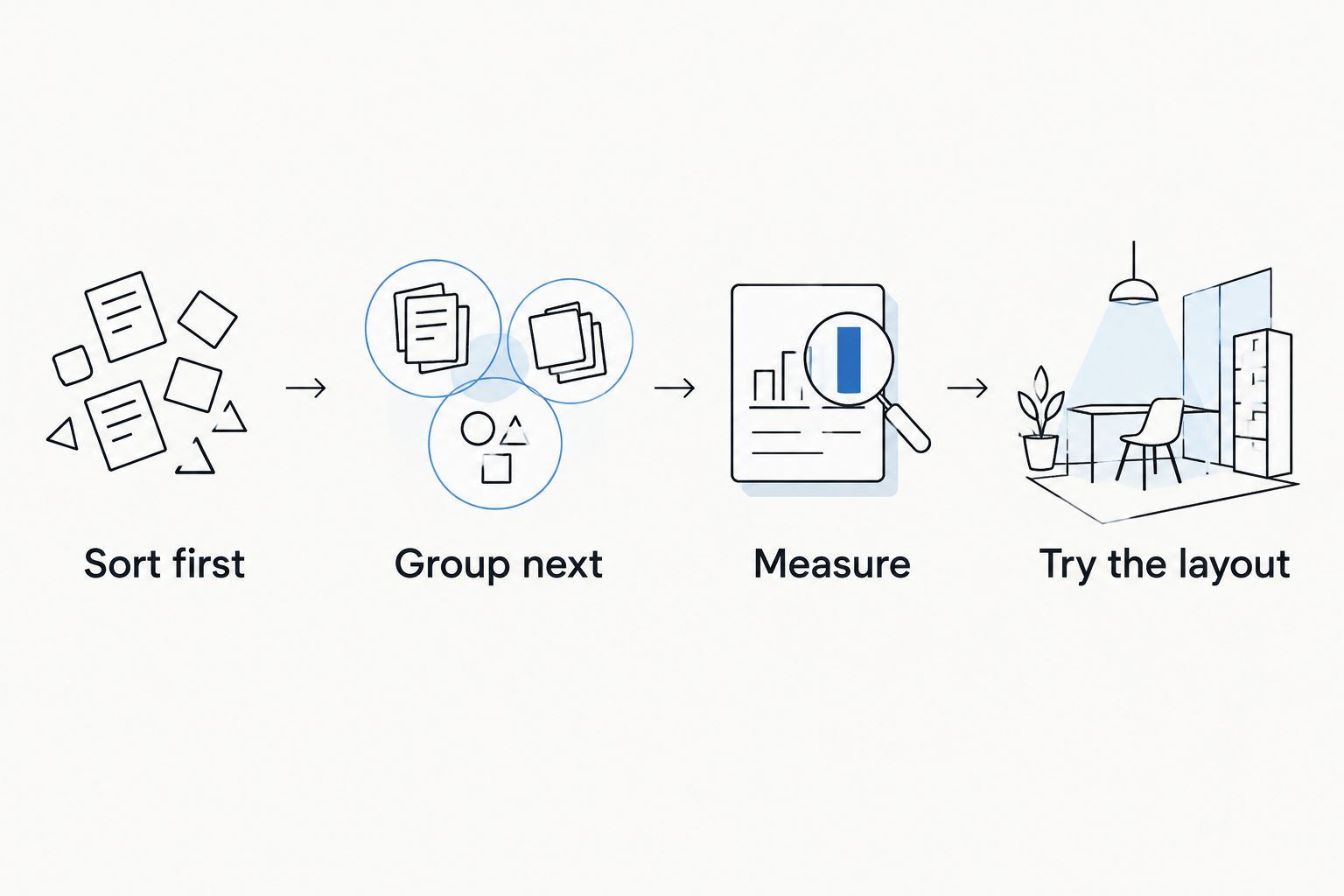
Before choosing anything new, follow this sequence:
- Sort first: Remove linens you no longer use and return unrelated items to their proper homes.
- Group next: Separate everyday linens, guest bedding, and small supplies.
- Measure: Check usable shelf space, retrieval clearance, and door closure.
- Try the layout: Put existing containers to work before replacing them.
Give the arrangement a 5-minute reset after putting away clean laundry. If the same category repeatedly lands outside its container, change the container or its location rather than adding more labels.
FAQ
What are the best linen closet organizers in 2026?
Open-front bins are the best default for separating everyday linens on existing shelves. StashSavvy recommends shelf dividers for towel stacks and zippered bags for occasional-use bedding instead of using one organizer type everywhere.
Are baskets or shelf dividers better for towels?
Shelf dividers are better for keeping visible towel stacks separate, while baskets are better for containing a category. Choose dividers when stacks spread sideways and baskets when you want to move the contents together.
How do I organize a linen closet without buying anything?
Sort your linens, group them by use, and try baskets or containers you already own. Place frequently used items within comfortable reach and remove unrelated items before deciding whether more storage is needed.
What should I measure before choosing linen closet organizers?
Measure usable shelf width, depth, and height, then check retrieval space and door clearance. For mounted baskets or shelf dividers, also check the shelf material and the specific attachment requirements.
Are over-door organizers suitable for renters?
Over-door organizers suit renters when the installation method is permitted and the loaded organizer allows the door to close properly. Check hanger fit, surface compatibility, and the organizer’s load instructions before using it.
Should I store blankets in zippered bags?
Zippered bags suit seasonal blankets and other bedding you retrieve occasionally. Store only clean, completely dry textiles and follow both the bedding’s care instructions and the bag’s storage guidance.
How can I organize a deep linen closet?
Keep everyday linens toward the front and consider pull-out baskets for items that are difficult to reach. Check extension clearance and installation requirements before choosing a mounted system.
One last thing
For your 2026 refresh, judge the closet after laundry day—not immediately after organizing it. The right organizer makes putting things away as easy as taking them out.
If a neatly folded sheet set needs to be squeezed into its bin, that bin is not a good fit. Give the category more room, reduce what you store there, or use a different shape. A usable closet beats a perfectly matched one.
Related guides