
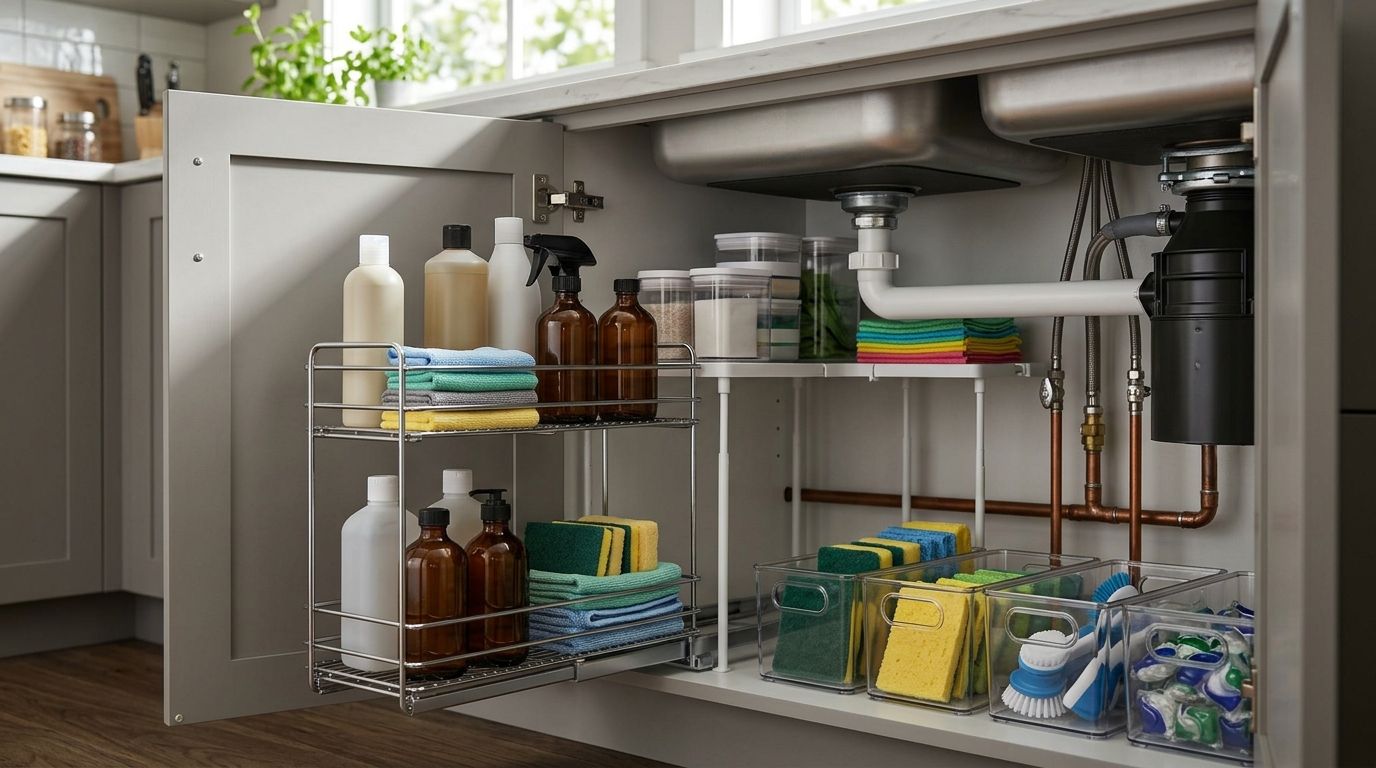
Best Under Sink Cabinet Organizers 2026: Pull-Out Wins
Best overall: a pull-out caddy for everyday cleaning supplies. Best for cabinets with awkward plumbing: an adjustable shelf. Best budget-conscious option: a handled bin you already own. The best under sink cabinet organizers solve different problems, so this 2026 guide matches each setup to the cabinet where it works best.
- The best under sink cabinet organizers in 2026 start with a pull-out caddy when the cabinet floor is clear.
- StashSavvy recommends an adjustable shelf when pipes divide the space and supplies need separate zones.
- Use a handled bin for portable supplies, a door caddy for light items, or a tray for leak containment.
Why this matters
The space under a kitchen sink looks like one cabinet, but the drain, supply lines and disposal can interrupt the area where an organizer needs to sit. A rack that fits the opening can still block the shutoff valves or make it harder to spot a drip. Choose around the plumbing first, then choose where each item belongs.
If pots, food containers or pantry items are competing for space elsewhere, an under-sink organizer will not fix the whole kitchen. StashSavvy's guide to kitchen cabinet organizers covers those other cabinets; keep the sink cabinet focused on supplies that make sense there.
Start by removing everything. Set aside anything that does not belong, wipe the cabinet floor and check for moisture before putting storage back. Then group what remains by how you use it: daily cleaning, occasional refills, spare cloths and items you need to carry to another room. That quick sort tells you whether you need a sliding rack, a shelf or simply a bin.
What makes the best under-sink cabinet organizer?
Use these criteria before buying anything. They matter more than the number of compartments on the package.
- Plumbing clearance: The organizer must sit beside or around pipes without pressing against them. Keep shutoff valves accessible.
- Reach: Daily-use supplies should come out without unloading the cabinet. A pull-out design helps only if its full travel stays clear.
- Moisture visibility: You should be able to inspect the cabinet floor and notice a leak. Storage that hides the entire floor makes that harder.
- Item fit: Tall bottles, cloths and small spares need different spaces. Check the items you actually keep rather than choosing by appearance.
- Cleaning effort: Removable bins and trays are easier to empty and wipe than a tightly packed cabinet.
- Installation: Renters should check how an organizer attaches before choosing a door-mounted or fixed option. A freestanding setup avoids cabinet alterations.
Measure the clear floor area, cabinet opening, usable height and distance to the nearest pipe. Open and close the door while you check: the hinges and any door hardware also take up space. In 2026, the best pick is still the one you can remove, clean and place back without disturbing the plumbing.
Under-sink organizers at a glance
| Organizer | Best for | Standout feature | Key limitation |
|---|---|---|---|
| Pull-out caddy | Everyday supplies | Brings items at the back within reach | Needs clear space for the rack and its travel |
| Adjustable shelf | Plumbing clearance | Creates zones around an awkward pipe layout | Requires careful setup around tall items |
| Handled bin | Portable kits | Lifts out as a single group | Items can crowd together inside |
| Door-mounted caddy | Light door storage | Uses the inside of the cabinet door | Can interfere with hinges or stored items |
| Removable tray | Leak containment | Makes the cabinet floor easier to inspect | Does not add another storage level |
These are organizer types, not named products or hands-on-tested picks. The ranking favors access, plumbing clearance and easy cleanup. Check the dimensions and attachment method of any specific organizer against your own cabinet before choosing it.
1. Pull-out caddy: best under-sink organizer for everyday supplies
A pull-out caddy brings bottles and other frequently used supplies toward the cabinet opening. It solves the familiar problem of reaching past everything at the front to find something at the back. StashSavvy recommends a pull-out caddy as the default for daily-use supplies when the cabinet floor and opening leave a clear path.
Check both where the caddy rests and where it travels. A drainpipe, disposal, hinge or item hanging from the door can make a sliding organizer frustrating even when it technically fits. Group heavier or taller items where they will not tip as you pull the rack forward.
Pull-out caddy pros:
- Brings back-row supplies into view.
- Keeps frequently used items together.
- Reduces the need to unload the cabinet to reach one bottle.
Pull-out caddy cons:
- The sliding path needs clear space beyond the rack itself.
- A fixed frame can be difficult to position around plumbing.
Best for: A kitchen where the same supplies come out often and the floor area beside the plumbing is open.
Verdict: Buy if you can move it fully without hitting a pipe, door or stored item. Otherwise, choose the adjustable shelf rather than forcing a pull-out into a tight corner.
2. Adjustable shelf: best under-sink organizer for plumbing clearance
An adjustable shelf uses the clear parts of the cabinet to separate items vertically. It suits a sink base where plumbing divides the space and a full-width rack would be awkward. Put tall supplies in an open section and smaller items on a shelf only where they remain easy to reach.
The word adjustable does not guarantee a fit. Check whether the shelf supports, top surface and anything placed on it leave room around the pipes. Keep valves visible and make sure you can remove stored items without moving the shelf.
Adjustable shelf pros:
- Makes use of clear space beside plumbing.
- Separates smaller items from taller bottles.
- Lets you assign a visible place to each group.
Adjustable shelf cons:
- Setup takes more planning than dropping in a bin.
- Shelf supports can occupy the space you hoped to use.
Best for: Cabinets with pipes in the middle and usable space on either side.
Verdict: Buy when you need distinct zones and can preserve access to the plumbing. If the cabinet has little clear height, keep supplies in a low handled bin instead.
3. Handled bin: best under-sink organizer for portable supplies
A handled bin turns scattered supplies into a group you can lift out. It is the simplest option if you clean in several rooms or need to clear the cabinet quickly to inspect the floor. Before shopping, try a suitable bin you already have and check that its handle clears the cabinet opening.
Give the bin one job. Daily-use cleaning supplies can share a bin, but mixing them with every spare cloth and refill makes the contents harder to find. Keep products in their original containers and follow their labels for safe storage.
Handled bin pros:
- Lifts out without rearranging individual items.
- Leaves the cabinet easy to empty and inspect.
- Can be moved if your storage needs change.
Handled bin cons:
- Deep bins can hide smaller items at the bottom.
- A bin that is too wide becomes awkward around pipes.
Best for: Renters, portable cleaning kits and cabinets that need frequent access for cleaning.
Verdict: Buy if portability matters more than adding another storage level. Choose a bin you can lift out comfortably when it holds your usual supplies.
4. Door-mounted caddy: best under-sink organizer for light items
A door-mounted caddy gives small, light supplies a place away from the cabinet floor. It can keep spare sponges or cloths visible without taking space beside the plumbing. The critical test is whether the loaded door still closes freely.
Check the attachment method, hinge clearance and the space between the closed door and everything inside. If you rent, confirm that the attachment suits your cabinet and rental rules. Keep heavy bottles off the door; this option is for light storage, not a replacement for a floor organizer.
Door-mounted caddy pros:
- Uses a space that often sits empty.
- Keeps small supplies easy to see.
- Leaves floor space for a bin or tray.
Door-mounted caddy cons:
- Can collide with shelves, pipes or bottles when the door closes.
- Some attachment methods are unsuitable for renters or particular doors.
Best for: Light, frequently reached items when the cabinet door has usable clearance.
Verdict: Hold until you check the loaded door's full swing and attachment method. For a tight cabinet, a handled bin is the less complicated choice.
5. Removable tray: best under-sink organizer for leak containment
A removable tray gives the cabinet floor a defined place for bottles and drips. It is most useful when your priority is seeing and cleaning moisture rather than stacking more items. Choose one you can take out without tilting it around plumbing or unloading the entire cabinet.
A tray does not repair a leak or make wet storage safe to ignore. If you find moisture, remove the stored items, locate the cause and address it before putting the organizer back. Keep the tray visible enough that checking it becomes part of ordinary cabinet cleaning.
Removable tray pros:
- Groups floor-level supplies.
- Can be lifted out for cleaning.
- Makes a cabinet-floor check straightforward.
Removable tray cons:
- Adds little usable storage height.
- Can conceal moisture if you never lift it out.
Best for: Cabinets where easy cleanup and moisture checks matter more than extra tiers.
Verdict: Buy as a floor-level organizer, not as a substitute for checking the cabinet and fixing leaks.
How these organizers were ranked
The ranking starts with the problem most people expect an under-sink organizer to solve: reaching everyday supplies. That puts the pull-out caddy first, but only when its travel clears the plumbing. The adjustable shelf ranks next because it addresses a different obstacle: usable space split by pipes.
A handled bin ranks highly for flexibility and quick removal. Door storage depends more heavily on the exact cabinet and attachment method, so it needs a clearance check before it earns a place. The tray comes last as a storage choice because it does not create extra levels; it remains the right pick when cleanup is your main goal.
These are research-based recommendations by use case, not results from a hands-on product test. StashSavvy's 2026 rule for this cabinet is practical: an organizer that blocks a valve or hides a drip is the wrong organizer, even if it holds everything.
Which under-sink cabinet organizer should you choose?
Choose a pull-out caddy if your floor is clear and you reach for the same supplies regularly. Choose an adjustable shelf if pipes split the cabinet. Pick a handled bin if you want supplies to travel with you or need an easy way to empty the space.
Use a door-mounted caddy only for light items after checking clearance. Pick a removable tray when a clean, inspectable cabinet floor matters more than extra tiers. You can pair organizer types, but keep the combination simple: every addition should make something easier to find, remove or clean.
If you are undecided in 2026, empty the cabinet and try your current containers first. The layout that works while the plumbing stays accessible tells you what, if anything, to buy.
FAQ
What are the best under sink cabinet organizers for kitchens?
A pull-out caddy is the best default for frequently used supplies when the cabinet has a clear sliding path. An adjustable shelf works better when pipes divide the space.
Is a pull-out organizer better than an adjustable shelf under a sink?
A pull-out organizer is better for reaching items at the back of a clear cabinet. An adjustable shelf is better when plumbing prevents a rack from sliding freely.
What should I measure before choosing an under-sink organizer?
Measure the cabinet opening, clear floor area and usable height, then check the space around pipes, hinges and the door. For a pull-out caddy, check its path when fully extended.
What is the best under-sink organizer for renters?
A freestanding handled bin is a practical first choice for renters because it lifts out and requires no cabinet attachment. Check rental rules before installing a door-mounted organizer.
Can I put an organizer around the pipes under my kitchen sink?
Yes, if it fits without pressing on the pipes or blocking shutoff valves. Choose an adjustable shelf or smaller bin when a full-width organizer obstructs access.
Are door-mounted under-sink organizers useful?
Door-mounted organizers are useful for light items when the loaded door closes freely. Check hinges, attachment and clearance against supplies inside the cabinet before using one.
Should I use a tray under the kitchen sink?
A removable tray is useful for grouping supplies and making cleanup easier. Lift it regularly to check the cabinet floor, and address any leak rather than relying on the tray to contain it.
One last thing
The best under-sink setup in 2026 does not have to fill the cabinet. Leave enough open space to reach the valves, remove your supplies and see the floor. That small bit of breathing room is what keeps an organized cabinet useful after the initial tidy-up.
Related guides
- Pantry organization systems
- Clear pantry storage containers for small kitchens
- Closet organizer systems