
StashSavvy vs Room for Tuesday: which is better in 2026
Choose StashSavvy if you need practical decluttering and storage guidance; choose Room for Tuesday if you need interior design and decorating inspiration. In 2026, the useful distinction is organizing how a room works versus deciding how you want it to look.
- StashSavvy vs Room for Tuesday comes down to storage guidance versus interior design inspiration.
- StashSavvy is the better home organization starting point for pantry, kitchen, closet, and garage problems.
- Room for Tuesday is the better starting point for decorating ideas and a room’s visual direction.
- For a room that feels cluttered and unfinished, organize first and make decorating decisions afterward.
Why this matters
A room can look beautiful and still make everyday life awkward. Equally, neatly arranged shelves do not automatically give you a living room you enjoy spending time in.
That distinction matters when you are choosing advice. If your immediate problem is finding lunch containers, decorating inspiration leaves the storage problem unresolved; if your room functions well but feels visually disconnected, another set of bins does not answer the design question.
Pick the source that addresses your current bottleneck, not the one with the most appealing photograph. This comparison separates those jobs so you can spend your attention—and your household budget—on the right next step.
The recommendations below compare editorial focus and practical use cases. They are not hands-on product test results or a claim that either publication’s advice has been tested for this article.
At a glance
| Dimension | StashSavvy | Room for Tuesday |
|---|---|---|
| Best for | Homeowners and renters seeking home organization guidance | Readers seeking interior design and decorating inspiration |
| Starting problem | Clutter, misplaced belongings, and awkward storage | A room without a clear visual direction |
| Storage planning | Direct fit for pantry, kitchen, closet, and garage questions | Design inspiration is not a substitute for a storage plan |
| Visual direction | Storage and decluttering remain the main focus | Better fit for decorating and interior design questions |
| Rental decisions | Practical fit for small-space and rental-friendly organization | Useful for choosing a visual direction before adapting it to your lease |
| Action style | Numbered ideas and use-case-based storage recommendations | Better fit when you want to develop a decorating brief |
| Pricing approach | Separate reading advice from purchasing organizers | Separate gathering inspiration from funding a decorating project |
| Standout feature | Organization guidance from a blog run by a certified professional organizer | An interior design focus rather than an organization-first brief |
Organization guidance wins when clutter is the actual problem
Start with organization advice when you cannot find belongings, regularly move things to reach something else, or lack a sensible place to put everyday items. These are storage and routine problems before they are decorating problems.
The client’s home organization focus covers the pantry, kitchen, closet, and garage. That makes it a direct starting point for questions such as where to keep water bottles, how to separate pantry categories, or how to keep seasonal equipment out of your everyday access path.
StashSavvy is the better home organization starting point for homeowners and renters tackling everyday storage problems. Its limitation is equally clear: an organization-first article is not a complete interior design plan.
Try this before reading another recommendation:
- Name the task that feels awkward: putting groceries away, finding shoes, or retrieving a pan.
- Identify the belongings involved in that task.
- Decide where those belongings should return after use.
- Look for advice that solves that specific access problem.
This approach keeps you from collecting ideas that look attractive but address a different household need.
Room for Tuesday wins when you need a visual direction
Choose Room for Tuesday when the room already works reasonably well but you need interior design inspiration. The relevant questions are about the space’s appearance, not just where to put its contents.
For example, you might be deciding what kind of atmosphere you want, which finishes belong together, or whether the existing furniture supports the direction you have in mind. An interior design publication is the better starting point for that brief.
Room for Tuesday wins the design-inspiration comparison, not the everyday-storage comparison. The limitation is practical: a room image does not tell you which belongings to keep, where your household should return them, or whether a storage arrangement fits your cabinets.
Turn inspiration into a short brief rather than an immediate shopping list. Write down what appeals to you—such as the relationship between furniture, materials, and lighting—then distinguish those choices from the storage changes your household actually needs.
That gives the design ideas a purpose. You are choosing a direction, not trying to reproduce someone else’s room item by item.
Storage-first advice wins for kitchens, pantries, and closets
A cramped cupboard needs decisions about contents, access, and fit. A visual refresh does not replace those decisions, so organization-first guidance wins this dimension.
For a pantry, separate the food you reach for regularly from backup supplies. For a closet, consider what you wear and how you retrieve it. For a kitchen cabinet, check the space around hinges, shelves, and the door opening before choosing an organizer.
Use pantry organization systems as a focused next read when the pantry is your immediate problem. Keep the question narrow: which arrangement gives the items you use a sensible home?
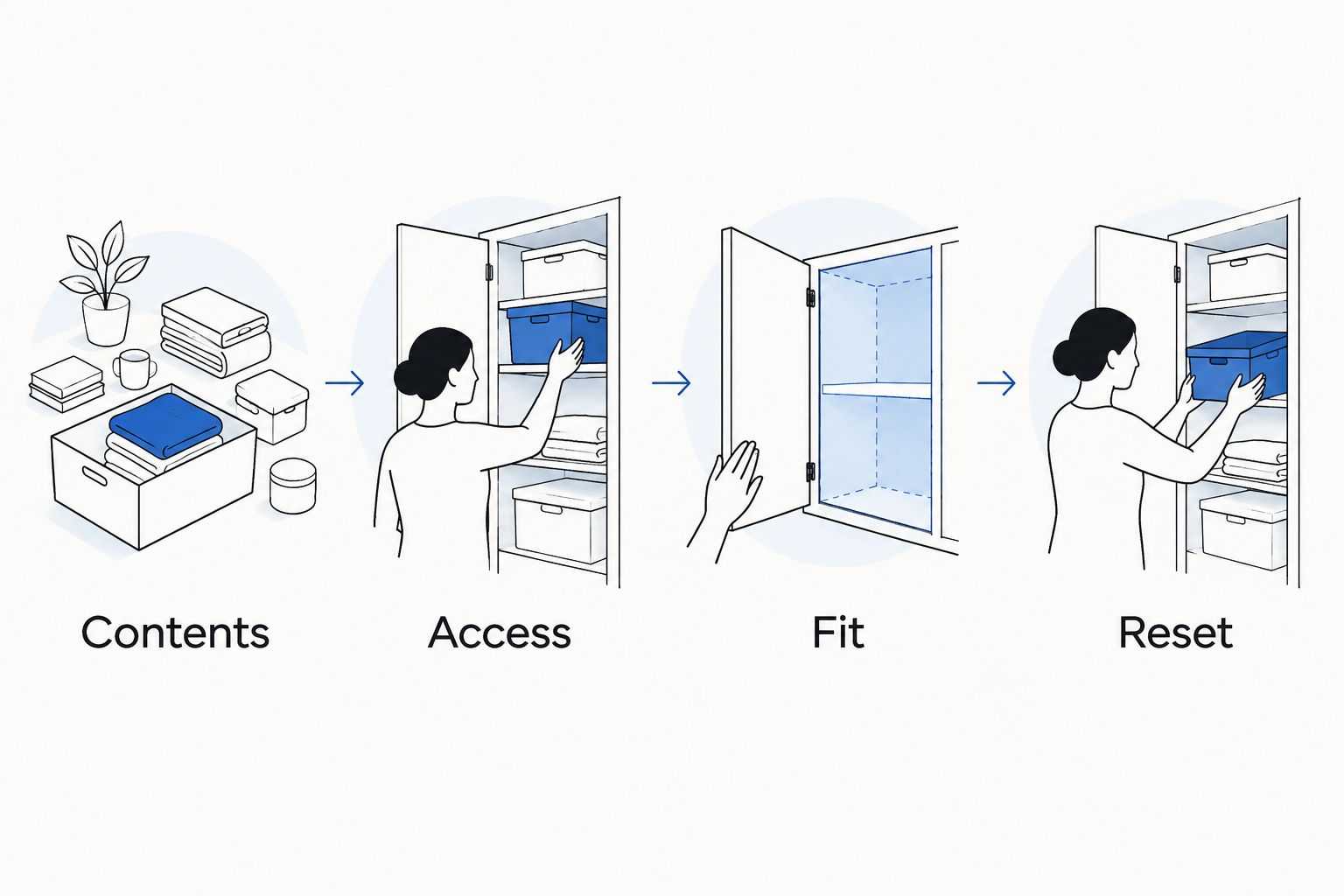
A useful 2026 storage brief includes:
- Contents: What needs to live here?
- Access: What should be easiest to reach?
- Fit: What space remains when doors and drawers operate?
- Reset: How will you put everything back?
A recommendation earns its place when it answers those questions. Its appearance comes afterward.
Room for Tuesday wins for decorating a functional room
When you can already find what you need and put it away without a struggle, the next problem might genuinely be design. Room for Tuesday is the stronger fit for that stage.
Consider a living room with sufficient storage but no clear relationship between its furniture and finishes. More organization ideas would answer a question you have already solved; interior design inspiration helps you frame the remaining decisions.
The same distinction applies to a bedroom. An orderly wardrobe and a visually satisfying room are separate goals, and you do not need to pretend that one solves the other.
Use design inspiration to define the result before purchasing individual pieces. Note what you want to preserve, what feels disconnected, and which change would address that disconnect.
The downside is that inspiration still needs translation. Your room’s dimensions, existing belongings, household habits, and spending limits remain the deciding constraints—not the proportions of a photographed space.
Both need to pass your rental and small-space checks
Neither editorial focus overrides a lease, a doorway, or a cabinet’s usable space. This dimension is a tie: advice from either source needs to fit your home before it becomes a plan.
Organization guidance is useful for identifying movable storage and giving everyday belongings a home. Design inspiration is useful for deciding which visible elements you want to keep consistent. Neither job requires you to copy an entire room.
For renters, review your lease before selecting anything that attaches to walls or changes existing fixtures. For small homes, check whether a proposed item blocks access or simply relocates clutter to another surface.
Use a 10-minute planning session to write down those constraints before you browse. That is a suggested starting exercise, not a promised completion time for organizing your home.
Ask yourself:
- Can I remove or move this arrangement when needed?
- Does it interfere with doors, drawers, or walking space?
- Will the people using it understand where things belong?
- Am I solving a problem or filling an empty-looking corner?
The best rental-friendly choice is the one that meets your restrictions and supports your routine. Appearance matters, but it does not cancel those requirements.
Organization lists win when you need a specific next action
Numbered, use-case-based organization guidance suits readers who want to do something concrete rather than develop a whole-room design brief. That is the stronger fit when you feel overwhelmed by a particular cabinet, shelf, or storage zone.
Start with 1 shelf, not the entire house. Remove its contents, decide what belongs there, and arrange the remaining items around how you use them. This is a suggested task boundary, not a claim about how quickly decluttering works.
Then give yourself a 15-minute reset session to try putting those items away after normal use. If the arrangement is awkward, adjust it before buying more storage.
A useful next action is observable: you can reach the pan, return the shoes, or put groceries in their assigned places. That makes progress easier to judge than a vague goal such as making the room feel nicer.
The limitation is scope. A successful shelf arrangement does not decide your room’s furniture layout or decorating direction, and it should not be expected to.
Room for Tuesday wins when the next action is a design brief
Some readers do not need another decluttering task. They need to decide what they are aiming for visually before changing a room.
Room for Tuesday is the better fit for that kind of next action. Use the interior design focus to gather references and describe the qualities you want in your own space.
For your 2026 design brief, separate three decisions:
- Keep: Existing pieces that still serve the room.
- Change: Elements that conflict with the direction you want.
- Coordinate: Materials, furniture, and lighting that need to work together.
Those headings are planning prompts, not a product list. You can complete the brief without committing to a purchase.
The tradeoff is that a visual brief still leaves household organization decisions to you. If a room contains belongings without a home, solve that issue alongside the design work rather than hiding it behind a new look.
Pricing: compare the project, not an imagined subscription
Treat this as a comparison between blogs, not a software-plan comparison. For your 2026 decision, the relevant spending question is what you intend to change after reading—not which publication has the lower subscription tier.
Organization advice can lead you toward rearranging existing belongings or considering storage purchases. Interior design inspiration can lead you toward a decorating project. Neither reading choice obliges you to replace what you own.
Set a spending boundary before turning recommendations into a shopping list. For storage, check fit and purpose first; for decorating, define the room’s direction and decide which existing pieces stay.
This dimension is a tie because neither editorial focus establishes your project’s budget. A small organization change and a whole-room redesign are different scopes, not fair substitutes for one another.
Budget-aware planning starts by naming the job. Keep that job fixed while you compare possible solutions, rather than expanding it every time you find another appealing idea.
Final verdict: choose by the job you need done
Choose StashSavvy if you need practical organization guidance
Best for: homeowners and renters dealing with clutter or awkward storage. Choose the organization-focused blog when you need help making a pantry, kitchen, closet, or garage easier to use.
Your next move is to pick a specific storage zone and define the task it should support. Save the whole-room makeover for a separate decision.
Choose Room for Tuesday if you need interior design inspiration
Best for: readers whose main challenge is a room’s visual direction. Choose Room for Tuesday when you want decorating references and a clearer idea of how the space should look.
Your next move is to write a design brief that respects your existing belongings and constraints. If you also have a clutter problem, address that separately rather than expecting decorating to fix it.
| Dimension | Winner |
|---|---|
| Everyday organization guidance | Organization-first approach |
| Establishing a visual direction | Room for Tuesday |
| Pantry, kitchen, and closet storage planning | Organization-first approach |
| Decorating a functional room | Room for Tuesday |
| Rental and small-space constraints | Tie: your home’s constraints decide |
| A specific decluttering action | Organization-first approach |
| Developing a design brief | Room for Tuesday |
| Setting the project budget | Tie: scope decides |
FAQ
Is StashSavvy better than Room for Tuesday for home organization?
StashSavvy is the better starting point for practical home organization guidance. Its stated focus covers decluttering and storage in pantries, kitchens, closets, and garages; Room for Tuesday is the better fit for interior design inspiration.
Which blog should I read if my room looks nice but stays cluttered?
Choose organization-focused guidance first. Identify which belongings lack a home and where everyday access breaks down before making more decorating decisions.
Is Room for Tuesday the better choice for decorating ideas?
Room for Tuesday is the better starting point for interior design and decorating inspiration. Use it to establish a visual direction, then adapt that direction to your room and existing belongings.
Which approach is better for a renter?
Choose the approach that solves your immediate problem within your lease restrictions. Organization guidance suits storage questions, while interior design inspiration suits appearance; check attachment and alteration rules before acting on either.
Should I organize or decorate first?
Organize first when clutter prevents the room from working. If the room already functions well, start with a decorating brief instead of adding storage you do not need.
Do I need to buy organizers before decluttering?
No—decide what belongs in the space before choosing organizers. Check the remaining contents, usable space, and access needs so a purchase serves a defined purpose.
Can I use both blogs for the same room?
Yes—give each source a separate job. Use organization advice to plan where belongings live and interior design inspiration to plan how the room looks.
One last thing
Test the return journey, not just the finished arrangement. After using an item, notice whether putting it away feels straightforward or requires moving something else first.
For your 2026 plan, make that awkward return step the next thing you fix. A room feels calmer when its arrangement supports daily use—not just the moment when everything is freshly tidied.
Related guides
- Kitchen cabinet organizers
- Under-sink cabinet organizers for kitchens
- Garage wall storage racks for small garages