
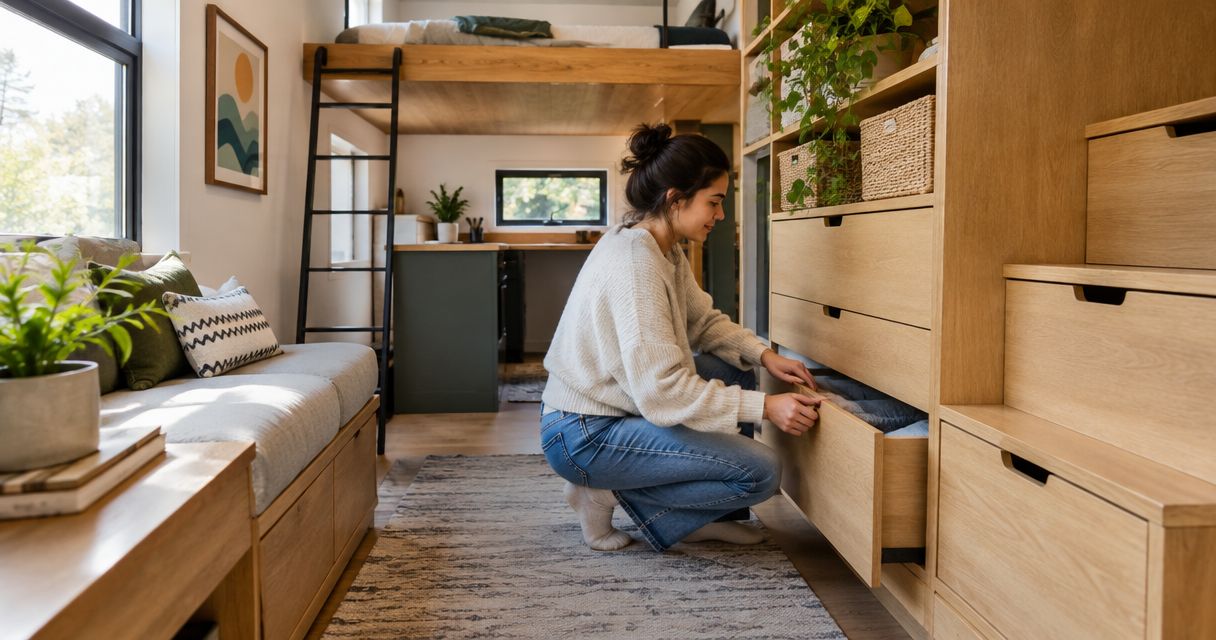
Is tiny home storage furniture worth the cost in 2026?
Tiny home storage furniture is worth the cost in 2026 when it replaces furniture you already need, holds belongings you actually use, and stays easy to access. Skip it when it adds another bulky piece or requires moving everyday items just to open the storage; assembly, delivery access, and future moves also belong in your decision.
- Is tiny home storage furniture worth the cost? Yes, when one necessary piece also provides accessible storage.
- Storage beds suit spare bedding; entryway benches suit shoes; lift-top tables suit living-room supplies.
- Measure opening clearance, not just the furniture footprint, before choosing small-space storage.
- Stashsavvy recommends decluttering and checking existing storage before adding furniture to a tiny home.
Is tiny home storage furniture worth the cost in 2026?
Yes—if the storage solves a specific problem without creating a new obstacle. A bed with accessible drawers can give spare bedding a home. A storage bench blocking your only comfortable route through the room is a poor trade, however much it holds.
Use this decision sequence before shopping:
- Name the contents. Write down exactly what needs a home, rather than buying an empty compartment for unspecified clutter.
- Check existing storage. Try rearranging shelves, cabinets, or the space beneath furniture first. These ways to organize kitchen cabinets without new hardware offer a useful starting point for kitchen overflow.
- Confirm the main function. The piece still needs to work as a comfortable seat, practical table, or suitable bed.
- Test access. Rehearse opening drawers or lifting the lid while nearby furniture stays where you normally use it.
Compare the access method before comparing appearance. These are use-case recommendations, not hands-on product test results.
| Option | Best for | Main benefit | Main drawback | Decision rule |
|---|---|---|---|---|
| Storage bed | Spare bedding and bedroom textiles | Combines sleeping space with enclosed storage | Drawers need side clearance; lifting designs require access above | Choose only after checking the opening mechanism |
| Storage bench | Shoes or bags near an entrance | Combines a landing spot with storage | A lid requires a clear seat; deep compartments can bury items | Choose when it replaces a seat you need |
| Lift-top storage table | Living-room supplies | Keeps useful items near the seating area | Stored items compete with the table's everyday use | Choose when the top remains easy to clear |
| Existing furniture and containers | Testing a layout before buying | Uses what you already own | Does not solve every access or capacity problem | Try first when your current layout permits it |
Why this matters in a tiny home
In a small room, storage has two jobs: hold your belongings and leave the room usable. A large enclosed compartment is not helpful if opening it blocks the doorway or makes you rearrange the seating area.
Stashsavvy's tiny home storage guidance is for homeowners and renters who want practical organization advice before buying more furniture. Start with the task that currently feels awkward: putting shoes away, reaching spare sheets, or clearing the table for dinner.
For a 2026 furniture decision, define success in plain language. “The guest bedding fits beneath the bed and comes out without moving the nightstand” is a better brief than “I need more storage.” It gives you something concrete to check.
Storage beds: best for spare bedding
A storage bed makes sense when you need a bed frame anyway and have a clear list of bedroom items to store. Keep the contents related to the room: spare linens, blankets, or clothing you do not reach for every morning.
Choose the opening style around your room layout, not the other way around. Side drawers need room to extend. A lifting platform needs an unobstructed opening path and a mechanism you can operate according to the manufacturer's instructions.
The drawback is access. A bedside table, rug, wall, or adjacent cabinet can interfere with a drawer even when the bed itself fits comfortably.
Before committing, mark the bed footprint and drawer extension on the floor with a removable method suitable for your flooring. Walk around the outline and rehearse making the bed. If normal bedroom tasks become awkward, keep looking rather than treating the hidden compartment as compensation.
Storage benches: best for entrance routines
A storage bench earns its space when you already need somewhere to sit while putting on shoes. Give it a narrow assignment, such as everyday footwear or bags, instead of making it the destination for everything without a home.
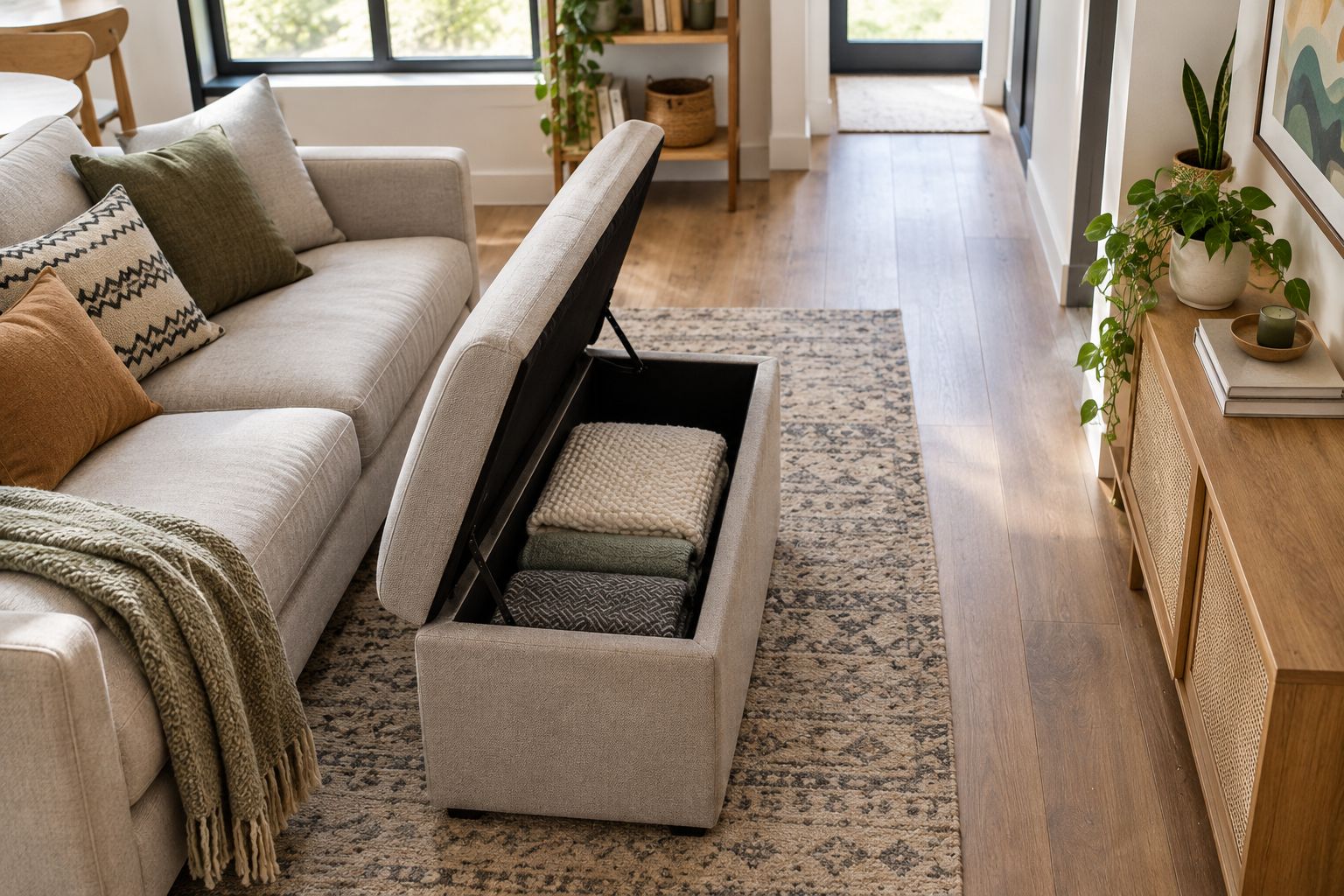
Lidded benches conceal contents, but you must clear the seat before opening them. Open cubbies keep items visible and accessible, though they do not hide visual clutter. Match that trade-off to how your household actually uses the entrance.
For frequently used shoes, prioritize an opening you can reach without unloading the seat. For occasional textiles, a lid can be less disruptive because access is less frequent.
Check the entrance with the door fully open and someone's shoes on the floor. A bench that works only in a cleared, staged hallway does not solve the everyday problem. Follow the stated seating and storage limits for the piece you choose.
Lift-top tables: best for living-room supplies
A lift-top storage table can suit a room where the same seating area handles relaxing, hobbies, and occasional paperwork. Assign the interior to supplies you use there, rather than overflow from unrelated rooms.
The advantage is proximity: the contents stay close to where you use them. The disadvantage is the competing surface function. If the top holds drinks, a lamp, and decorative objects, reaching the compartment becomes a clearing task.
Choose a storage table only when opening it fits your normal routine. Check whether the top needs to be empty, where it travels as it opens, and whether you can reach the interior comfortably from your usual position.
In 2026, treat a moving top as a mechanism to inspect, not a feature to assume you need. Read the operating instructions and check how the table closes before deciding it suits your household.
Why tiny home storage furniture value varies
The value comes from the fit between your belongings, room, and habits—not the furniture's “small-space” label. Stashsavvy's storage furniture advice starts with these practical differences:
- Replacement versus addition. Replacing a necessary table is different from adding a storage chest to an already crowded room.
- Usable interior space. Exterior dimensions do not tell you whether your blankets, shoes, or supplies fit inside.
- Opening clearance. Drawers, doors, and lids need space beyond the closed footprint.
- Access frequency. Daily belongings need a more convenient opening than items you retrieve occasionally.
- Moving and assembly. Check the delivery route, assembly instructions, and whether the piece can be disassembled for your next move.
- Care requirements. Choose materials and mechanisms you can maintain according to their instructions.
You do not need every compartment to be full. The goal is a useful home for the items you keep, with enough room to retrieve and return them without a struggle.
How can you check the fit before buying?
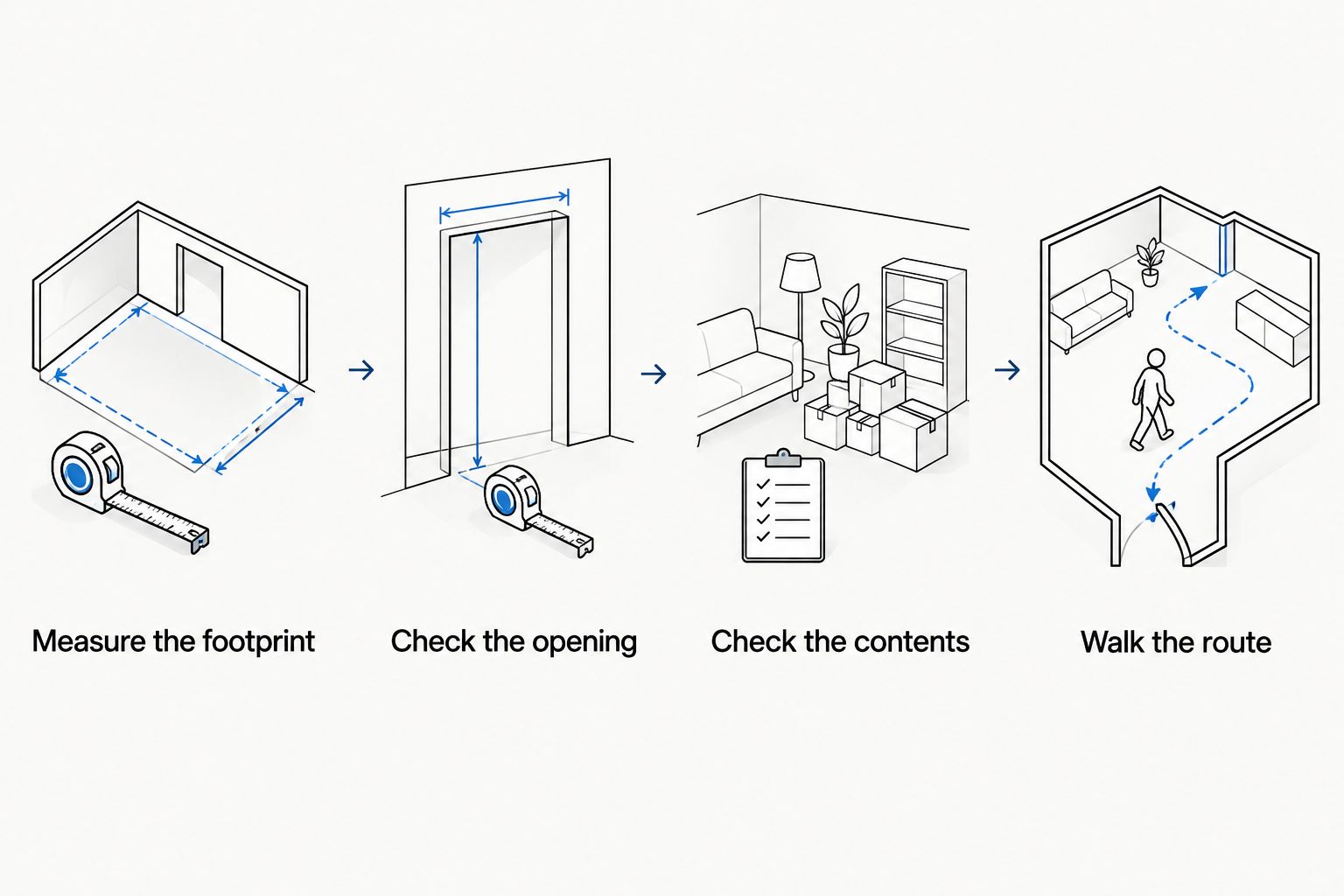
Give yourself a 10-minute layout check before making a shortlist. This is a suggested planning exercise, not a claim about how long every room takes to measure. Use your actual furniture dimensions and the manufacturer's opening requirements.
Measure the footprint
Record the width, depth, and height of the proposed piece. Include nearby features such as door swings, baseboards, outlets, and heaters. Keep any required safety clearances specified by the relevant manufacturer.
Check the opening
Mark where the drawer, lid, or moving top travels. Stand or sit where you would normally retrieve the contents. Do not assume you will happily move another piece of furniture every time.
Check the contents
Measure your bulkiest intended item and compare it with the usable internal dimensions. A compartment's shape matters as well as its overall size; hinges, dividers, and mechanisms can interrupt the interior.
Walk the route
Carry a laundry basket through the room and open nearby doors. Then check the delivery route separately, including tight turns and stairs. Room fit and delivery access are different questions.
Try a no-purchase rehearsal first
Before buying furniture in 2026, gather the intended contents into containers you already own. Put them near their proposed storage location without obstructing walkways, exits, or required clearances. This tests the location and grouping, not the safety or performance of a furniture design.
Try the arrangement for 7 days. Notice whether you reach for the contents where you expected, whether the grouping makes sense, and whether returning things feels straightforward. The week is a suggested trial period, not a research-backed threshold.
Keep a list of 3 daily tasks the furniture must support—for example, retrieving shoes, putting away a blanket, and clearing a tabletop. A candidate that makes those tasks harder needs a different access style or location.
When should you skip storage furniture?
Skip the purchase when the storage problem disappears after removing things you no longer use. Furniture cannot make an unwanted collection necessary. Sort the intended contents before deciding how much capacity you need.
Wait when you cannot identify what will go inside, when the piece duplicates another useful item, or when access depends on a routine you already dislike. A beautiful lidded bench is still inconvenient if you regularly leave bags on its seat.
For renters, check the lease and any installation requirements before choosing furniture that needs securing to a wall. Follow the manufacturer's safety instructions; do not omit required anchoring simply to avoid making holes.
Is multipurpose furniture always better for a tiny home?
No. Multipurpose furniture is better only when its functions work together in your layout. A table that stores craft supplies but cannot open while you are seated creates a trade-off you need to accept deliberately.
Should renters choose freestanding storage furniture?
Freestanding storage deserves consideration when you need furniture you can take with you, but “freestanding” does not mean anchoring is unnecessary. Check the safety instructions, lease requirements, and likely fit in a future home before choosing.
Is custom storage furniture worth choosing over freestanding pieces?
Custom storage deserves consideration when a specific awkward space defeats suitable freestanding options. The drawback is reduced flexibility: a piece designed around your current room needs a separate moving and reuse assessment.
FAQ
Is tiny home storage furniture worth the cost in 2026?
Tiny home storage furniture is worth the cost in 2026 when it replaces a necessary piece and provides storage you can access comfortably. Skip it when it crowds the room or creates extra steps for everyday tasks.
What’s the best storage furniture for a tiny bedroom?
A storage bed suits spare bedding when its compartments fit the contents and open without obstruction. Check usable interior dimensions and the opening mechanism before choosing.
Is a storage bench better than a storage table?
A storage bench suits an entrance where you need seating, while a storage table suits supplies used beside a sofa. Choose by location and access needs rather than treating either option as universally better.
How do I know whether storage furniture will fit?
Check the closed footprint, opening clearance, usable interior, and delivery route. A piece can fit against a wall yet still lack enough room for its drawers or lid to open.
Can I organize a tiny home without buying furniture?
Yes, start by removing unwanted items and rearranging storage you already have. Reuse suitable containers to test where belongings should live before deciding whether furniture is necessary.
What should I check before buying secondhand storage furniture?
Check condition, dimensions, moving parts, assembly information, and applicable safety or recall information. Confirm that required components and instructions are available before deciding the piece suits your home.
How can I stop storage furniture from becoming a clutter trap?
Assign each compartment a specific purpose and keep unrelated overflow elsewhere. If you cannot retrieve and return the intended contents easily, reduce the contents or change the arrangement.
One last thing
For your final 2026 check, rehearse putting something away—not just taking it out. Hold a folded blanket, approach the proposed compartment, and think through every movement needed to return it while the room is in normal use.
Choose the piece that makes returning belongings straightforward. That is the practical tiny home storage test Stashsavvy recommends: useful furniture, accessible contents, and a room you can still enjoy.
Related guides
- Pantry organization for tiny homes
- Entryway storage benches for small spaces
- Closet organization for renters
- How to declutter a house fast