

Is renting an offsite storage unit worth it in 2026?
Renting an offsite storage unit is worth it in 2026 when it solves a defined space problem, protects belongings you intend to use, and has a clear exit plan. It is usually a poor choice for postponing decluttering; packing, transport, retrieval trips, and contract requirements belong in the decision alongside the rent.
- Is renting an offsite storage unit worth it? Yes for a defined transition; no for indefinite overflow.
- Declutter before renting so unwanted belongings do not determine how much storage you need.
- Compare self-storage, home storage, and valet storage by access, effort, and contract terms.
- Stashsavvy’s home organization guidance suits homeowners and renters deciding what deserves space before choosing storage.
Is renting an offsite storage unit worth it in 2026?
Rent for a specific purpose, not an undefined someday. Furniture awaiting a confirmed move has a destination; boxes you cannot identify need sorting before they need a unit. Start with a focused home decluttering plan so your storage decision reflects what you actually want to keep.
Use this comparison to separate a temporary space shortage from an organization problem. These are decision criteria, not claims of hands-on facility testing.
| Option | Best for | Main benefit | Main drawback |
|---|---|---|---|
| Offsite self-storage | A move, renovation, or defined storage need | Keeps retained belongings outside your living space | Requires transport, retrieval trips, and an ongoing agreement |
| Reorganizing at home | Frequently used belongings | Keeps essentials accessible | Cannot create space your home does not have |
| Decluttering | Unused, duplicate, or unwanted belongings | Removes the need to store those items | Requires decisions and follow-through |
| Valet storage | People prioritizing pickup and delivery | Can reduce personal hauling when those services are included | Retrieval depends on the provider’s arrangements |
The right choice depends on what happens next. If you can name where the belongings will go and what triggers their return, storage has a job. If the answer is simply that your home feels full, investigate the contents before adding another place to manage.
Why this matters
A clearer room is valuable, but an emptied room does not automatically mean the clutter problem is solved. Moving unsorted boxes offsite changes their location without deciding whether you need them.
For your 2026 storage decision, define the benefit in everyday terms: a bedroom becomes usable during a renovation, or furniture stays together between homes. You should be able to describe what improves at home and what work the storage arrangement adds.
Stashsavvy’s home organization approach puts practical decisions before product recommendations. Here, that means choosing what stays before choosing how to contain it.
When temporary storage makes sense
Temporary storage has a clear purpose when belongings must leave your home but already have a future place in it. Examples include furniture removed for building work or possessions waiting for a confirmed move.
Best for: households with a defined transition and a realistic destination for their belongings. The benefit is separation: you can use or work on your home without repeatedly shifting furniture around. The drawback is handling everything again when it returns.
Write down the event that ends the rental. A completed room, a move-in date, or a cleared delivery route is more useful than an intention to deal with everything later.
If the event changes, revisit the plan rather than quietly extending it. A delayed project can justify continued storage, but it should prompt a fresh decision about the contents and arrangement.
When ongoing storage needs a stronger case
Ongoing storage deserves closer scrutiny because there is no automatic finishing point. Seasonal equipment you use and cannot reasonably accommodate at home presents a different case from furniture you no longer like.
Best for: retained belongings with a recurring use and no suitable home storage location. The benefit is preserving usable living space. The drawback is an ongoing commitment of money, travel, and attention.
Name the next occasion when you expect to use each category. Holiday decorations have a recognizable use cycle; an unopened box marked miscellaneous does not explain its purpose.
Sentimental belongings need a different test. You do not have to treat them as replaceable, but choose them deliberately. Keeping a meaningful collection is a decision; keeping every unsorted container avoids one.
Why the value of offsite storage varies
The same unit can solve a genuine problem for one household and prolong an unwanted commitment for another. These factors explain the difference:
- Purpose: A confirmed move creates a clearer use case than general overflow.
- Duration: A defined ending gives you a point at which to empty the unit and reassess delays.
- Access: Items you use frequently require more retrieval effort than belongings you can leave untouched.
- Contents: Materials, dimensions, and handling needs affect whether the proposed space is suitable.
- Location: The journey matters when you need to collect or return belongings yourself.
- Agreement: Notice requirements, coverage terms, access rules, and permitted contents affect how the arrangement works.
For a 2026 comparison, ask each provider the same questions and record the answers. Compare the written arrangements rather than assuming facilities operate alike.
How do you decide before signing a storage agreement?
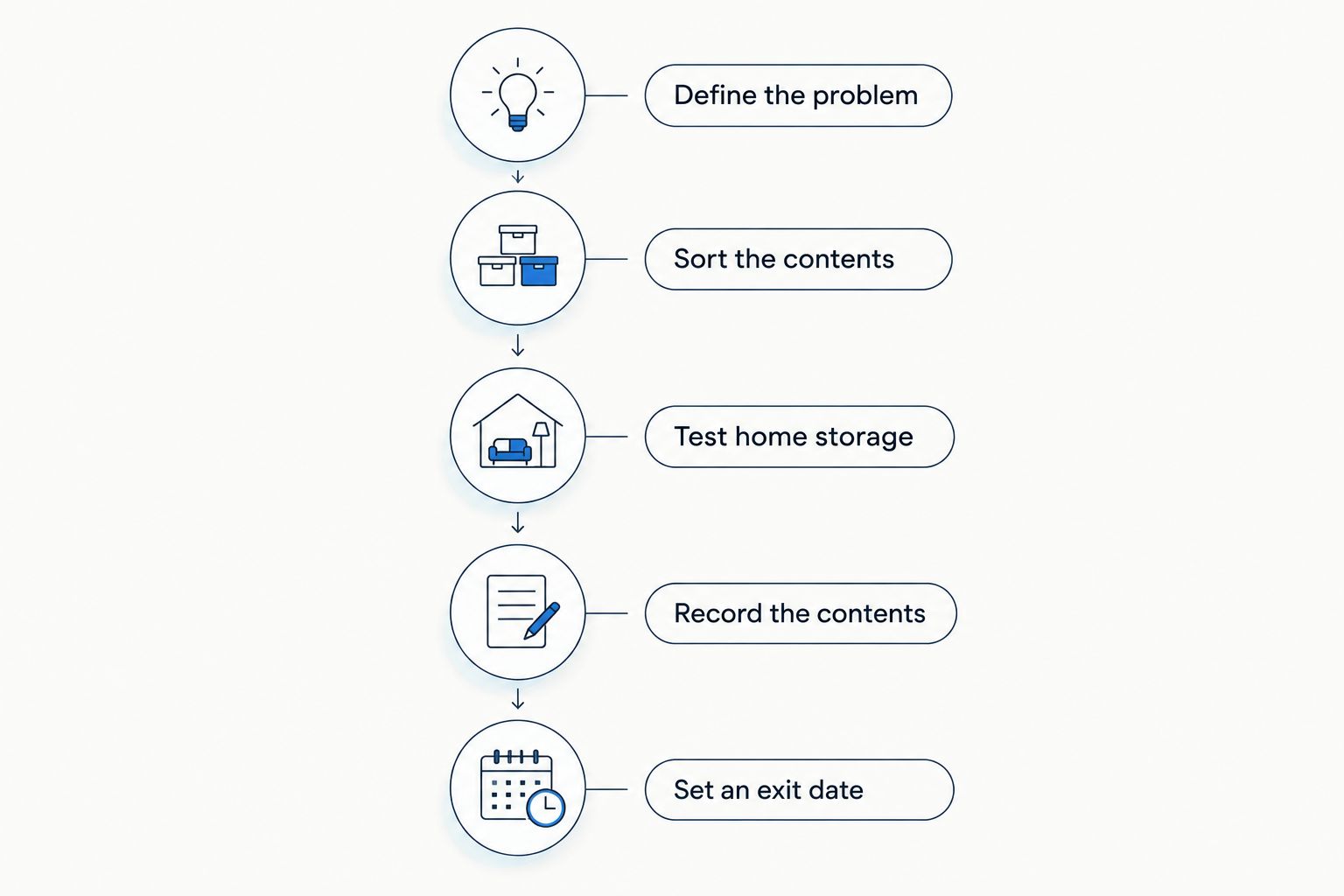
Use this sequence before moving anything. It keeps the decision manageable without turning a crowded home into a whole-house sorting project.
1. Define the problem
Finish this sentence: I need to clear this space because ____. Be specific about the room and the activity it must support.
Reclaiming a dining table is a clearer goal than getting organized. It also lets you recognize when you have done enough, rather than clearing unrelated areas into storage.
2. Sort the contents
Create 3 categories: keep at home, store, and let go. Start with the belongings occupying the space you need back.
Do not use the store category for every difficult decision. Set uncertain belongings aside for a separate review before committing to transport them.
3. Test home storage
Try reorganizing 1 shelf before assuming you need another location. Group similar items, remove duplicates, and check whether the belongings fit accessibly rather than merely fitting tightly.
Renters should favor changes compatible with their lease and space. These closet organization ideas for renters address a home-storage alternative before you commit to offsite space.
4. Record the contents
Photograph what you plan to store and make a simple inventory. Use specific descriptions, such as winter bedding or dining chairs, rather than assorted items.
Record the location of each group when you load it. An inventory should help you retrieve something without opening every container.
5. Set an exit date
Choose a review date before signing. A 30-day reminder is a suggested check-in, not a claim about an ideal rental length or a provider’s terms.
At that review, confirm that the original purpose still applies. Decide whether to continue, reduce the contents, or arrange removal.
What should you check at the storage facility?
Check the route your belongings will actually travel, not just the appearance of an empty unit. Doors, corridors, lifts where relevant, and the loading area all affect whether moving your items is practical.
Ask for written answers about access arrangements, prohibited contents, required coverage, ending the agreement, and any environmental controls you need. Do not assume a description guarantees conditions suitable for every material.
For your 2026 inspection, bring an inventory and the dimensions of awkward belongings. Confirm fit without relying on a room label or a photograph alone.
A suitable unit must work for retrieval as well as loading. Plan where larger items go and how you will reach the things you expect to collect first. Filling every gap defeats the purpose if retrieval requires unpacking everything.
Is valet storage better than self-storage?
Valet storage fits a different access pattern from self-storage. Where pickup and delivery form part of the service, you can arrange movement through the provider rather than hauling everything yourself; the trade-off is dependence on its collection and retrieval arrangements.
When comparing valet storage costs and benefits, include the handling you avoid and the access flexibility you give up. A service that removes a difficult transport task still needs to match how and when you expect to retrieve belongings.
Best for: people who want help moving stored belongings and can plan retrievals. Self-storage is the better fit when the agreement provides the independent access you need and you are prepared to handle transport.
Ask how individual items are identified, how collections are requested, and what happens when your plans change. Compare those answers against your actual use case, not the convenience of the initial pickup alone.
How do you keep a storage unit from becoming permanent overflow?
Give every stored category a destination or a reason to stay. Furniture might belong in a room awaiting repair; seasonal equipment might return when its next use begins.
Label containers by contents, not by the room they came from. Kitchen is less useful than baking tins because it tells you where a box started, not what you can retrieve from it.
Keep your inventory somewhere accessible without visiting the unit. Update it when belongings leave, and photograph any rearrangement that changes where things sit.

At each review, ask whether anything has lost its purpose. An item that no longer fits your plans needs a decision, not a more convenient position in the unit.
Is storage worth it for sentimental belongings?
Storage can be worth it for sentimental belongings when you have deliberately selected them and confirmed that the proposed conditions suit them. Emotional significance does not need a resale justification.
The drawback is separation. If your goal is to enjoy a collection, storing all of it away does not meet that goal; consider displaying a selection at home and keeping the remainder only where conditions are appropriate.
Choose the memories you want to preserve, then choose their storage. Avoid letting the size of an inherited collection make the decision for you.
Should you declutter before renting a unit?
Declutter before renting unless an urgent situation prevents it. Sorting first lets you plan around retained belongings rather than moving unwanted items twice.
You do not need to finish your entire home. Focus on the contents going into storage, identify obvious duplicates or unwanted items, and arrange their next destination separately.
If you must move quickly, put the sorting appointment on your calendar before the boxes leave. Temporary uncertainty needs a review point so it does not become the default arrangement.
FAQ
Is renting an offsite storage unit worth it in 2026?
Renting an offsite storage unit is worth it in 2026 when it solves a defined space problem and you have a clear plan for the contents. It is a poor substitute for deciding what you no longer want.
Is it better to declutter or rent storage?
Decluttering is the better first step for unwanted, duplicate, or unused belongings. Rent storage for items you deliberately retain but cannot suitably accommodate at home.
Should I rent storage while renovating?
Renting storage makes sense when retained belongings must leave the work area and have a destination afterward. Plan both removal and return before committing.
Is valet storage better if I do not drive?
Valet storage can suit someone who needs pickup and delivery, provided the specific service includes those arrangements. Check retrieval procedures and handling terms before choosing it.
How often should I review my storage unit?
Set a review date before signing and revisit the decision when your circumstances change. A 30-day reminder is a practical suggested first check-in, not a required rental period.
Can renting storage solve a cluttered home?
Renting storage can clear physical space, but it does not decide which belongings deserve to stay. Sort the affected categories and test accessible home storage before moving everything offsite.
What should I ask before signing a storage agreement?
Ask about access, permitted contents, coverage requirements, environmental conditions, and how to end the agreement. Get the relevant answers in writing and compare them with your belongings and retrieval needs.
One last thing
Before renting in 2026, write a sentence explaining how the unit becomes empty. If you cannot finish that sentence, decide what would trigger a review instead.
Stashsavvy’s recommendation is simple: store belongings with a purpose, not decisions without a deadline. You can reclaim useful space without making every possession a permanent commitment.
Related guides
- Is overhead garage storage worth it?
- Is hiring a professional organizer worth it?
- Connect a home inventory app to your garage storage