
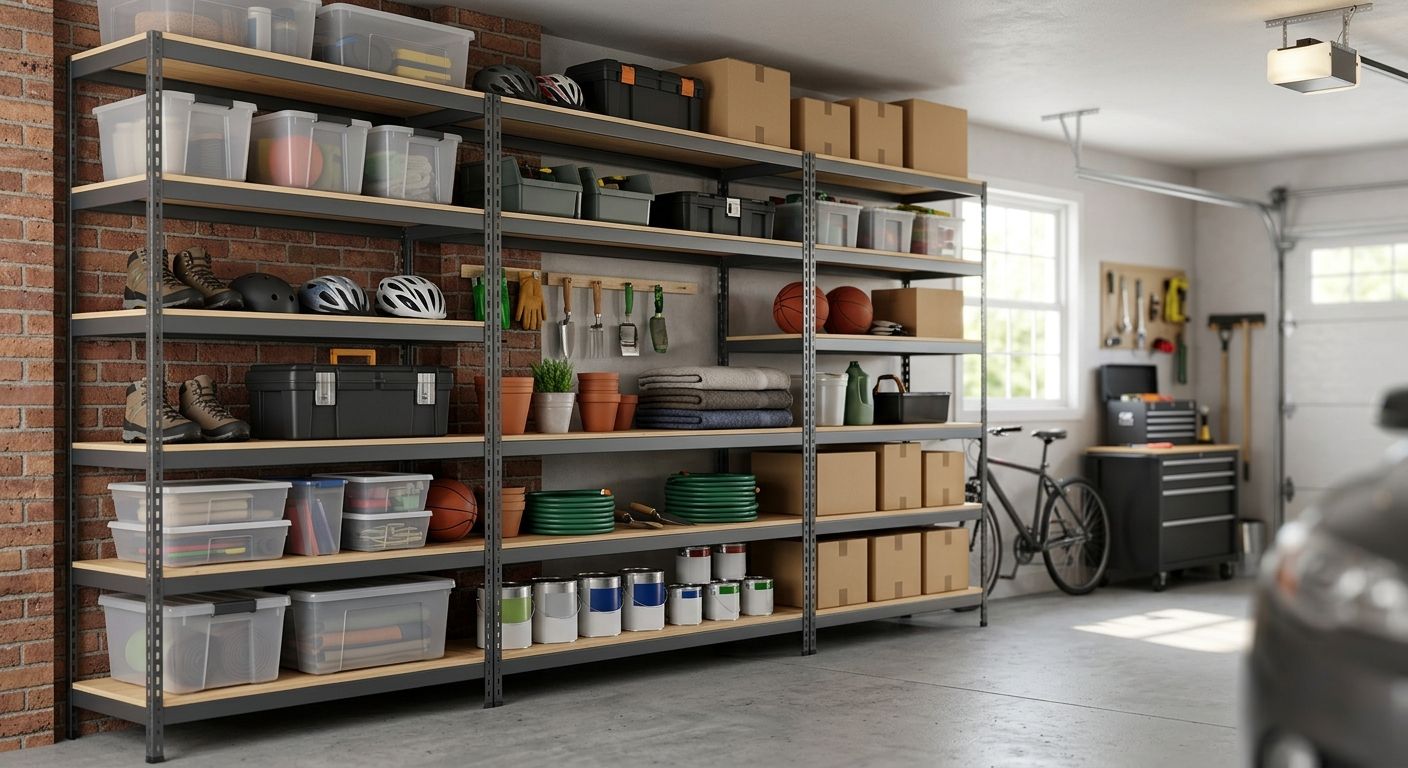
How much does garage shelving cost in 2026?
Garage shelving costs depend on the shelving you choose, how much you need, and whether the job includes installation. Budget for the complete setup—not just the shelf unit—including any required anchoring, delivery, assembly, and storage accessories. For your 2026 project, compare current quotes against the same storage plan before deciding what fits your budget.
- How much does garage shelving cost? Compare the complete setup, including installation, hardware, and delivery—not just shelf prices.
- Stashsavvy recommends planning garage storage around what you keep before choosing shelving.
- Freestanding shelving suits accessible storage; wall-mounted shelving keeps the floor beneath it open but requires suitable mounting.
- Declutter, measure your space, and check installation requirements before requesting quotes.
Why this matters
A shelf that fits your budget but blocks the car door is not a useful purchase. Neither is a deep shelving unit that hides everyday tools behind seasonal bins. Start with what the garage needs to do, then choose storage that supports it.
Stashsavvy is best for homeowners and renters seeking practical garage organization guidance before choosing storage. If keeping the floor open is your priority, explore garage wall storage racks for small garages alongside freestanding options. The right comparison starts with access and installation—not appearance.
How much does garage shelving cost in 2026?
The useful figure is the total needed to make your shelving safe and ready to use. A shelf-only listing and an installed quote cover different work, so compare their inclusions before treating either as your project budget.
Use this breakdown when checking listings or asking an installer for a written estimate. Leave optional accessories separate so you can see what the shelving itself requires.
| Budget component | What to confirm | Why it belongs in your comparison |
|---|---|---|
| Shelving | Dimensions, shelf count, materials, and stated load limits | Units with different storage capacity are not equivalent |
| Mounting and anchoring | Required hardware and compatible mounting surfaces | Installation must follow the manufacturer's instructions |
| Delivery | Whether delivery is included and where items are placed | Receiving a package is different from having shelving assembled |
| Assembly and installation | Exactly which tasks the installer includes | Building a unit and mounting it are separate tasks |
| Site preparation | Whether existing shelving or stored items need moving | The work area must be accessible before installation |
| Accessories | Bins, dividers, shelf liners, and labels you actually need | Optional extras should not obscure the core shelving budget |
Ask for an itemized total rather than accepting a shelf-only figure as the finished budget. Confirm whether tax and any required installation materials are included. Keep the written scope with the quote so you can compare it with another option later.
Compare the same storage job
Before collecting quotes, write down the items you need to store and where the shelving will go. Specify the same intended width, depth, access needs, and installation scope each time. Otherwise, a smaller unit can look like better value simply because it holds less.
For a 2026 comparison, save the date of each quote and recheck it before ordering. Treat your shopping notes as a decision aid, not a permanent price guide.
Freestanding shelving: best for accessible storage
Freestanding shelving uses floor space and gives you open shelves for bins, tools, and household supplies. It is a useful option when you want storage along an available wall without designing a wall-mounted system.
The trade-off is the footprint. Shelf depth affects the space left for parking, walking, and opening doors. Also, freestanding does not automatically mean attachment-free: follow the manufacturer's anchoring instructions rather than assuming the unit needs no securing.
When comparing options, check the usable shelf opening against your largest bin. Outside dimensions alone do not tell you whether a container fits between uprights or beneath the next shelf.
Recommendation: choose freestanding shelving when floor space is available and everyday access matters. Renters should check both the installation instructions and their lease before buying.
Wall-mounted shelving: best for keeping the floor open
Wall-mounted shelving leaves the area beneath it available, subject to the layout and mounting height. It suits garages where you want a clear floor edge or need to arrange storage around a work area.
Its limitation is installation. Brackets, fasteners, and mounting locations must suit the system and the supporting structure. Do not compare a wall-mounted kit with a freestanding unit until you have included the required installation work.
Check shelf depth as carefully as height. A shelf can sit above floor-level equipment yet still interfere with a vehicle, a doorway, or something you need to move through the garage.
Recommendation: choose wall-mounted shelving when the mounting surface is suitable and floor clearance is the priority. Confirm permission before making permanent changes in a rental.
Overhead racks: best for occasional-use storage
Overhead racks use ceiling space for items you do not need to reach regularly. They are an alternative to wall shelving when your storage plan includes seasonal belongings and you have a suitable installation location.
The trade-off is access. Retrieving a container from overhead storage requires more planning than taking it from a reachable shelf. Keep frequently used items and anything difficult to handle in a more accessible location.
Before choosing a rack, check its installation instructions against the garage structure and the full movement of the garage door. Include the required mounting work when comparing the complete project.
Recommendation: choose overhead storage for suitable, occasional-use items—not as the default home for everything. Keep heavy, awkward belongings where you can handle them safely.
DIY shelving: best for a layout that needs a specific fit
DIY shelving lets you plan shelf spacing and dimensions around the belongings you own. It can be useful when standard units do not fit the intended area or when you already have suitable tools and building skills.
The limitation is responsibility for the design and construction. Materials alone do not describe the full job; your plan also needs appropriate supports, connections, tools, and any required anchoring. Do not assign a homemade shelf a load rating without a sound basis.
If you need help deciding what installation involves, read can you install garage storage racks yourself?. Use the specific system's instructions to decide whether the task matches your skills.
Recommendation: choose DIY shelving for a defined storage need and a suitable construction plan—not simply because you expect it to be cheaper.
Which garage shelving option fits your project?
These comparisons concern storage layouts, not hands-on product testing. Stashsavvy's garage shelving guidance prioritizes access, fit, installation requirements, and the belongings you need to store.
| Option | Best for | Practical advantage | Main limitation |
|---|---|---|---|
| Freestanding shelving | Reachable, everyday storage | Open shelves without a wall-supported layout | Uses floor space; anchoring requirements still apply |
| Wall-mounted shelving | Keeping the floor beneath shelves open | Storage can sit above floor-level items | Requires suitable structure and correct mounting |
| Overhead racks | Occasional-use belongings | Uses ceiling space | Retrieval is less convenient |
| DIY shelving | A specific fit or shelf arrangement | Dimensions can follow a defined plan | Design, construction, and safety need careful attention |
Choose by the job the storage needs to do. A mixed layout can make sense, but each additional system should solve a clear problem rather than duplicate space you already have.
Why garage shelving costs vary
The same garage can support different shelving plans. These factors change what you need to buy or include in the installation scope:
- Storage footprint: A longer run or deeper unit changes the amount of shelving required. Measure usable space rather than filling every available wall.
- Load requirements: The shelving must suit the intended contents. Check whether a stated limit applies to each shelf or the complete unit, and follow any conditions attached to it.
- Materials and construction: Compare the actual specifications and care instructions rather than assuming every metal, plastic, or wood shelf performs alike.
- Mounting conditions: Wall and ceiling systems need compatible supporting structure and fasteners. Existing obstructions also affect placement.
- Installation scope: Delivery, assembly, mounting, and removal of old fixtures are distinct tasks. Confirm which are included.
- Accessories: Containers and dividers change the finished setup. Add them only where they improve access or keep items together.
A longer accessory list does not automatically create a better-organized garage. Keep the core shelving decision separate from the finishing touches.
How to build a garage shelving budget without overbuying
1. Sort before shopping
Group belongings into keep, donate, and discard categories before calculating storage needs. Set aside items that require special handling or disposal rather than treating every object as something to shelve.
Start with 1 storage zone, such as camping gear or household supplies. Completing a defined area gives you a clearer buying list than trying to redesign the whole garage around unsorted piles.
2. Measure the space and the contents
Record 3 measurements in inches for both the available space and your largest containers: width, depth, and height. Check the usable opening inside the shelving, not just the unit's exterior dimensions.
Account for doors, vehicles, equipment, and the route you use to carry things through the garage. Mark the proposed footprint on the floor before ordering so you can check how it affects movement.
3. Match storage to access
Place frequently used belongings within comfortable reach. Reserve harder-to-reach locations for suitable items you retrieve less often, and keep heavy or awkward objects where handling them is manageable.
Sketch the arrangement before choosing containers. This keeps the budget focused on actual storage needs rather than a matching set of bins that does not fit the shelves.
4. Compare complete quotes
Request 2 itemized quotes using the same written storage plan. This is a shopping step, not a market benchmark: the point is to expose differences in scope before choosing.
For your 2026 quote comparison, separate required work from optional additions. Ask about any unclear line item before agreeing to the project.
5. Start with the useful section
If your budget does not cover the full plan, complete the section that solves the most immediate access problem. Check expansion requirements before assuming you can add matching components later.
Keep your measurements and storage sketch together. They give you a reference when you revisit the rest of the garage.
Is DIY garage shelving cheaper than installed shelving?
DIY garage shelving is not automatically cheaper once you include the full materials list, required tools, delivery, and any help you need. Compare those items with an installed quote covering the same storage job.
Choose DIY only when the design and installation match your skills. A low initial shopping total is not a reason to improvise structural connections.
Can renters install garage shelving?
Renters need permission for changes covered by their lease, including required wall or ceiling attachments. Check the shelving instructions before assuming a freestanding option avoids that issue.
If the required installation conflicts with your lease, choose a different storage plan. Do not omit required anchors to make a unit seem rental-friendly.
Should you buy bins before garage shelves?
Buy bins after checking the shelving dimensions unless you already own containers you intend to keep. Existing bins should inform your shelf spacing; new bins should fit the storage plan.
For a 2026 refresh, reuse suitable containers first. Replace them only when their condition, dimensions, or handling makes them unsuitable for the job.
FAQ
How much does garage shelving cost in 2026?
Garage shelving costs depend on the system, its size, and the installation scope. Compare current itemized quotes that include required hardware, delivery, assembly, and mounting rather than relying on a shelf-only listing.
What’s the best garage shelving for a small garage?
The best garage shelving for a small garage fits your belongings without obstructing parking or movement. Wall-mounted shelving keeps the floor beneath it open, while shallow freestanding shelving can provide reachable storage where floor space permits.
Is wall-mounted shelving better than freestanding shelving?
Wall-mounted shelving is better when keeping the floor beneath it open is the priority and the supporting structure is suitable. Freestanding shelving suits available floor space, but you must still follow its anchoring requirements.
Does garage shelving need to be anchored?
Follow the manufacturer’s anchoring and mounting instructions for the specific shelving. Do not assume that freestanding shelving can safely be used without attachment.
What should an installed garage shelving quote include?
An installed garage shelving quote should identify the shelving, required hardware, assembly, and mounting work. Confirm delivery, tax, site preparation, and any removal work separately so the total scope is clear.
How do I avoid buying too much garage shelving?
Sort your belongings and measure what you are keeping before choosing shelving. Plan a defined storage zone first, then add capacity only where the remaining belongings require it.
Can I store heavy items on overhead garage racks?
Use overhead garage racks only within the specific system’s load limits and installation requirements. Keep heavy or awkward items elsewhere when lifting and retrieving them overhead would be difficult.
One last thing
Empty shelf space is not a problem you need to solve. Leave room for returning borrowed equipment, unpacking a project, or putting belongings away without rearranging everything.
Stashsavvy's practical garage organization advice starts with a manageable routine: give each category a home you can actually use. A modest setup that stays accessible serves you better than a fully furnished garage you struggle to put back in order.
Related guides