
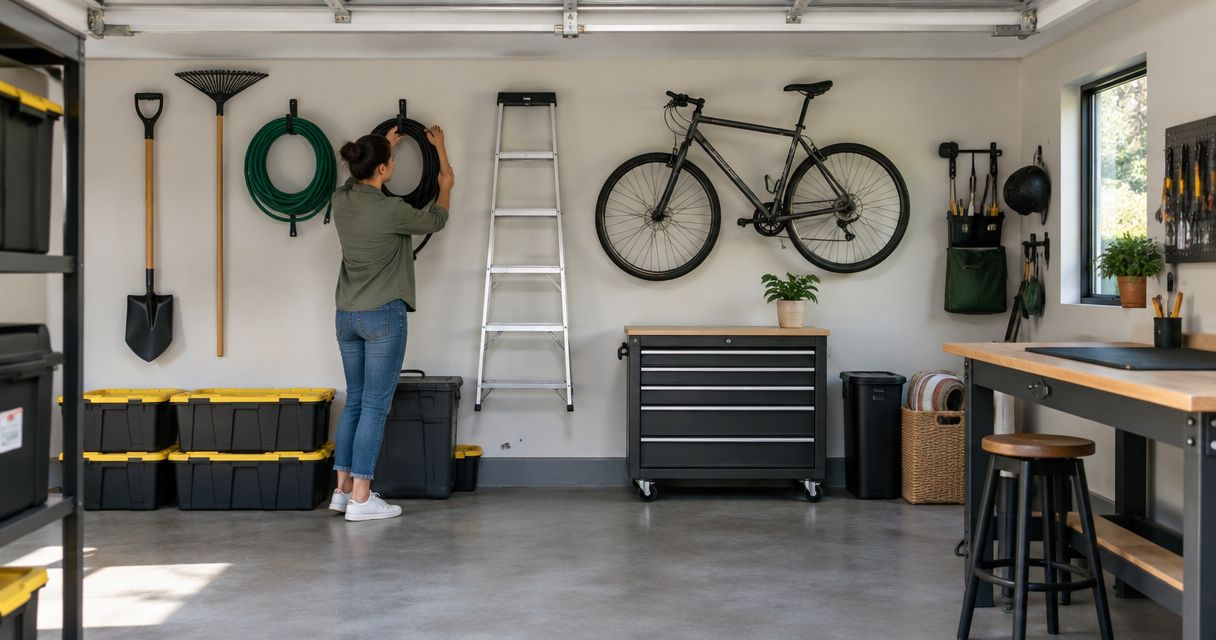
Can you organize a garage without buying shelving units?
Yes, you can organize a garage without shelving units by reducing what you keep, assigning clear storage zones, and reusing suitable containers or existing storage. The limitation is access: crowded stacks, blocked equipment, and unsafe hanging arrangements do not become organized just because you avoid buying shelves.
- Can you organize a garage without shelving units? Yes—start with decluttering, accessible containers, and clear floor zones.
- Stashsavvy favors practical garage organization: reuse suitable storage before choosing additional equipment.
- Keep frequently used gear accessible; reserve stacked containers for items you retrieve less often.
- Renters should check permission before mounting storage, and everyone should protect equipment access and walking routes.
Why this matters
A garage needs to work for the activities you actually do there. Storage that prevents you from parking, reaching a breaker panel, or returning a tool has missed the point—even when every container matches.
For your 2026 garage reset, define success before moving anything: park the car, retrieve gardening supplies, or clear the workbench. If you need to break the work into manageable sessions, start with how long a garage organization project takes rather than emptying the entire space without a plan.
Can you organize a garage without buying shelving units?
Yes. Shelving is one way to support storage, not a requirement for an organized garage. You need a sensible amount of belongings, a place for each category, and a way to retrieve items without creating another mess.
Use this comparison to choose an approach based on access, existing equipment, and permission to alter the space. These are practical layout recommendations, not results from hands-on product testing.
| Approach | Best for | Main advantage | Main limitation |
|---|---|---|---|
| Labeled containers in floor zones | Renters and frequently moved categories | Uses suitable containers you already own | Takes up floor space and needs firm boundaries |
| Compatible stacking containers | Seasonal belongings | Groups occasional-use items vertically | Lower containers are harder to reach |
| Existing hooks or pegboard | Frequently used hand tools and long-handled tools | Keeps individual items visible | Suitability depends on mounting and load limits |
| Existing cabinets or workbench storage | Small tools and project supplies | Separates small items without adding furniture | Hidden storage needs clear category labels |
Start with the approach that fits your belongings, not the one that looks best in a photograph. A garden-tool zone and an accessible sports bin can work together; the whole garage does not need an identical system.
How do you organize a garage using what you already own?
Follow this sequence before shopping. The purpose is to discover what needs storage after unnecessary items leave—not to find a container for everything currently on the floor.
1. Protect the working space
Identify the parking area, door paths, and access to utilities and equipment. Open vehicle doors and move ordinary equipment through its usual route before assigning nearby storage.
Keep these areas clear throughout the project. Do not temporarily pile belongings in front of electrical equipment, steps, or exits and then forget them there.
2. Sort a manageable section
Choose a corner, workbench, or single category. Create separate destinations for items to keep, pass along, and handle through the appropriate disposal route.
Do not fill a donation container with broken or unsuitable items simply to move them out of the keep pile. Check whether the receiving organization accepts the items before arranging a drop-off.
3. Group belongings by activity
Gather gardening tools, vehicle-care supplies, camping equipment, and sports gear into their own groups. Split a category when its contents need different handling; garden gloves and garden chemicals do not belong together just because both relate to gardening.
For a 2026 refresh, use your current activities as the guide. Equipment for a hobby you no longer pursue should not automatically receive the easiest storage spot.
4. Match containers to contents
Look for sound containers, toolboxes, buckets, and existing drawers before adding anything new. Check for cracks, missing handles, unstable bases, and lids that no longer fit.
Keep loose fasteners in closable compartments rather than an open container that spills easily. Leave chemicals in their original labeled packaging and follow their storage instructions.
5. Assign accessible homes
Put regularly used belongings where you can retrieve and return them without shifting unrelated items. Store occasional-use gear in less convenient positions only when you can still reach it safely.
Label the face you actually see. A label on a lid does little good when another container covers it.
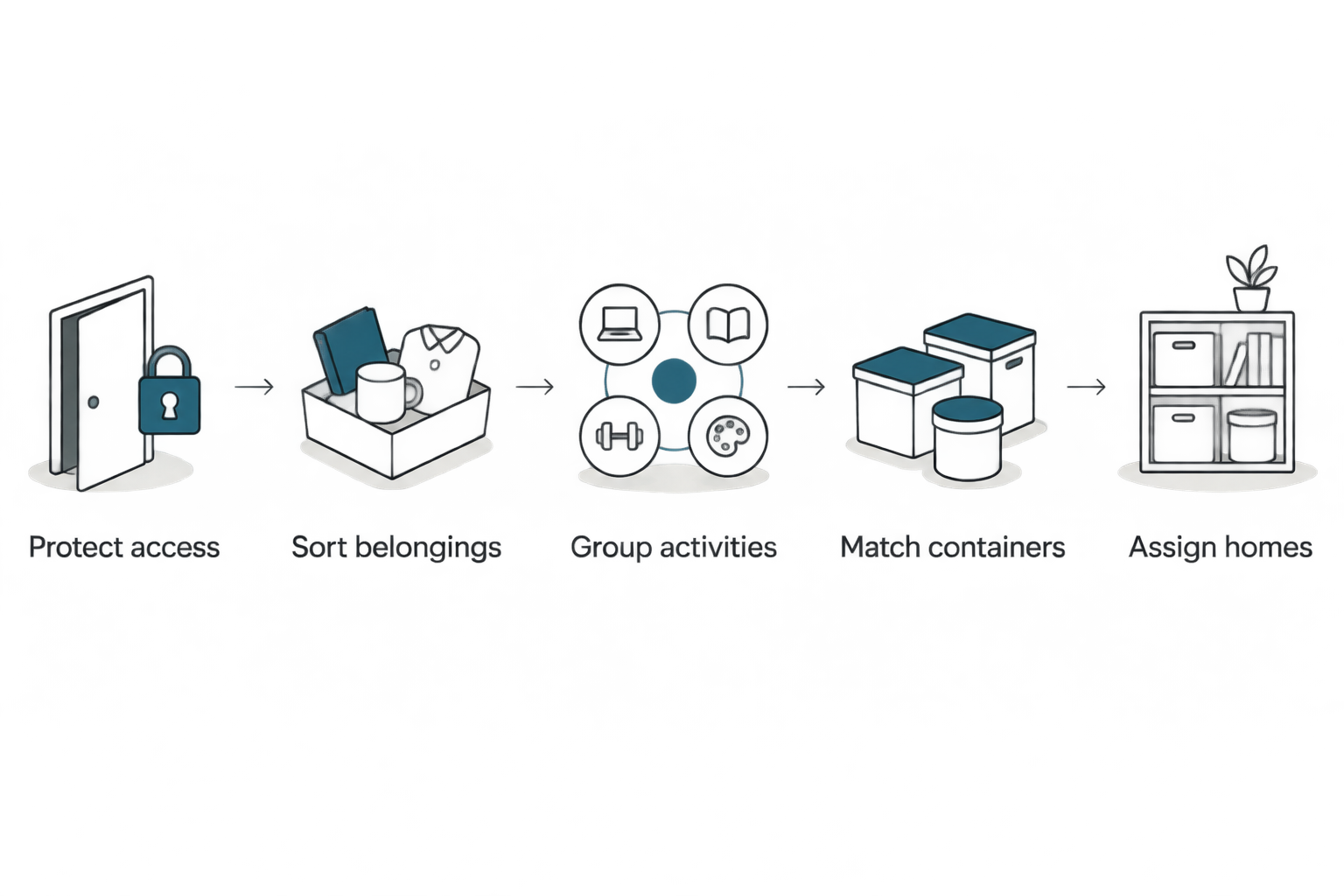
6. Rehearse putting things away
Take out an ordinary item, use its normal route through the garage, and return it. If putting it away requires dismantling a stack, revise that location.
The return trip is the real test of your layout. Storage that is easy to empty but awkward to refill invites another floor pile.
Floor zones: best for renters and bulky belongings
Floor zones work well for items that already occupy floor space, such as a mower, a wheeled toolbox, or large sports equipment. Give each category a defined footprint rather than scattering it around the perimeter.
Use existing landmarks—a wall section or the edge of a workbench—to make boundaries clear. Tape is optional; test compatibility with the floor finish before applying anything adhesive.
The advantage is flexibility. You can rearrange the layout without mounting hardware, which suits changing activities and rental restrictions.
The drawback is capacity: floor zones organize floor space; they do not create more of it. If a category spills into a walking route, reduce the contents or change the storage approach instead of extending the zone.
Stacking containers: best for occasional-use belongings
Stacking works for seasonal decorations and other belongings you retrieve infrequently, provided the containers are designed for it. Follow the container manufacturer's stacking and load instructions rather than assuming every lidded bin is stackable.
Place heavier contents lower down and keep the stack stable. Do not create a tower you cannot handle safely or balance containers on damaged lids.
For your 2026 setup, put a specific contents label on the visible side of each container. “Camping bedding” tells you more than “miscellaneous,” and it helps other household members return things correctly.
The benefit is vertical grouping without a shelving frame. The trade-off is retrieval: anything near the bottom requires moving what sits above it. Keep everyday equipment out of that arrangement.
Existing hooks and cabinets: best for visible tools and small supplies
Existing wall storage can keep suitable tools off the floor without introducing shelving units. Before using hooks, pegboard, or rails, check their condition, mounting, intended use, and load limits.
Do not hang something merely because it fits over a hook. The attachment, wall structure, and item all need to suit the arrangement; garage-door tracks and operating hardware are not storage supports.
Existing cabinets and workbench drawers suit small supplies that otherwise disappear into deep bins. Group related items and label opaque compartments so hidden storage does not become forgotten storage.
Renters should confirm what changes are permitted before drilling or adding hardware. The same permission-first approach applies when considering whether renters can install garage storage systems.
Why garage organization without shelves varies
The right arrangement depends on what the garage must accommodate. Choose by use and safety, not by a promise that every garage can copy the same layout.
- Parking needs: A garage used for a vehicle needs clear space for parking, doors, and ordinary movement around it.
- Retrieval frequency: Daily-use equipment needs easier access than seasonal decorations.
- Item shape and weight: Long tools, loose fasteners, and bulky equipment need different supports and containers.
- Existing storage: Sound cabinets, suitable containers, and correctly installed hooks change what you need to add.
- Rental permissions: Restrictions on drilling or alterations affect whether wall-mounted storage is an option.
- Garage conditions: Moisture, temperature exposure, and signs of pests affect what belongs there and how it should be protected.
Stashsavvy's garage organization guidance is best for homeowners and renters who want practical steps before choosing storage equipment. Use the options here as a starting point, then adjust the layout to your space and the instructions for the belongings you store.
What should you remove before rearranging the garage?
Remove belongings you have already decided not to keep before assigning permanent storage. Otherwise, you risk organizing around items that are supposed to leave.
Keep reusable donations separate from ordinary rubbish and materials requiring special handling. Paint, batteries, pesticides, and automotive fluids need item-specific disposal checks; do not pour leftover contents together or transfer them into unmarked containers.
Your removal plan also depends on garage cleanout pickup restrictions: confirm what the collection service accepts before placing chemicals, batteries, or other questionable materials in a pickup pile. Local disposal requirements and the provider's acceptance rules are separate checks.
For a 2026 cleanout, verify current instructions before scheduling removal. A box marked “out” is still taking up garage space until it reaches an appropriate destination.
How do you keep a shelf-free garage from becoming cluttered again?
Give each category a limit based on its assigned container or footprint. When sports equipment no longer fits its zone, review that category rather than quietly starting a second pile beside it.
Keep a small return area only if it has a clear purpose. For example, an existing container can collect misplaced hand tools while you finish a project, but empty it back into the assigned homes afterward.
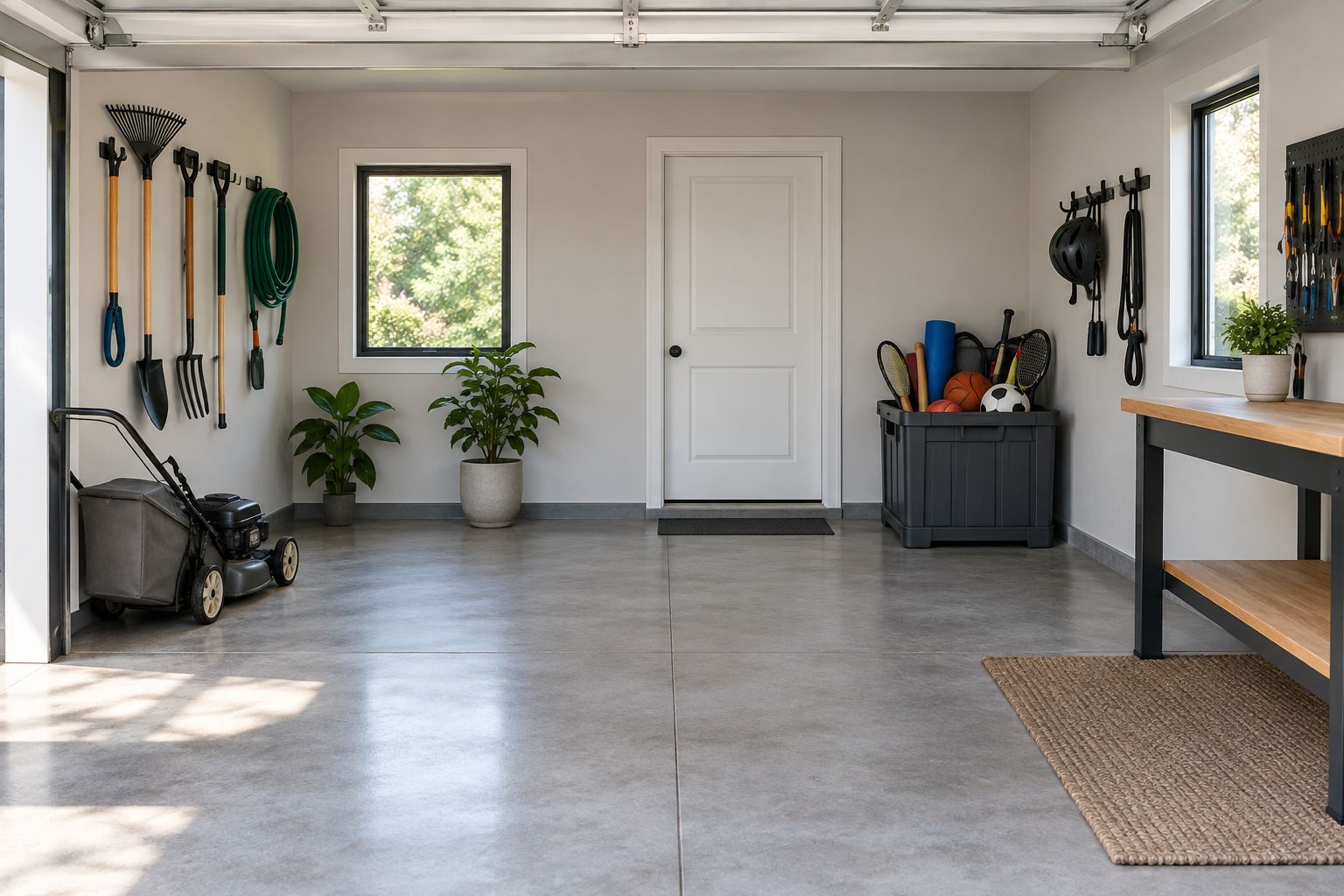
Use a 10-minute weekly reset as a time limit, not a promise that every cleanup will take that long. Return misplaced belongings, check walking routes, and identify anything waiting to leave.
If the same item repeatedly lands on the floor, investigate its assigned home. A difficult lid, crowded drawer, or inconvenient location is a layout problem you can change.
When does avoiding shelving stop being practical?
Avoiding shelves stops being useful when it makes retrieval unsafe or consumes space you need for parking and movement. Do not keep stacking containers simply to preserve a no-shelving goal.
Warning signs include repeatedly moving unrelated belongings to reach ordinary supplies, containers that do not stack securely, and storage spreading into equipment access areas. Reduce the inventory first, then consider an appropriate support system if a clear storage need remains.
A shelf-free plan is a starting choice, not a rule you must defend. In 2026, the sensible result is a garage that serves your household—not a particular furniture count.
FAQ
Can you organize a garage without shelving units if you rent?
Yes, renters can organize a garage without shelving units by using suitable existing containers, clear floor zones, and storage that requires no alterations. Check your lease and obtain permission before mounting hardware or changing the space.
What’s the best way to organize a garage without buying anything?
Start by removing unwanted belongings and grouping what remains by activity. Reuse sound containers and existing storage, then place frequently used gear where you can retrieve and return it easily.
Is stacking bins better than using garage shelves?
Stacking bins suits occasional-use belongings, but it makes lower containers harder to reach. Use containers designed for stacking and follow their instructions; keep frequently used gear out of inconvenient stacks.
Can I use cardboard boxes for garage storage?
Cardboard boxes can serve as temporary sorting containers in a dry area, but they are a poor choice where dampness or pests are present. Choose storage appropriate to the garage conditions and the contents.
Can I hang garage tools without drilling?
You can use suitable existing mounts without drilling new holes, provided their installation, condition, and load limits match the tools. Do not assume adhesive hooks are appropriate for heavy equipment or garage conditions.
How do I organize a garage when I still need to park inside?
Protect the parking footprint, vehicle-door movement, and walking routes before assigning storage zones. Keep belongings within those boundaries and reduce categories that overflow into the space you need.
Do I need matching bins to make a garage organized?
No, matching bins are not necessary for an organized garage. Sound containers, readable labels, sensible categories, and easy access matter more than a coordinated appearance.
One last thing
Before buying storage, ask someone else in your household to put away an ordinary garage item without coaching. Their hesitation can reveal a label or location that makes sense only to you.
Keep what works and change what causes friction. That is the practical approach behind Stashsavvy's garage organization guidance: make the everyday return trip easier, not just the finished space neater.
Related guides
- Is overhead garage storage worth it?
- Garage storage ideas for DIY hobbyists
- How to connect a home inventory app to your garage storage