
Can renters install garage storage systems?
Yes, renters can install garage storage systems when their lease permits the setup and any required landlord approval is in place. Start with movable storage that needs no structural attachment; get written approval before drilling, and follow the system’s installation and anchoring instructions even when that rules out a no-drill setup.
- Can renters install garage storage systems? Yes, subject to lease terms, required permission, and safe installation.
- Stashsavvy garage storage guidance suits renters who want practical organization without unnecessary permanent changes.
- Freestanding shelves preserve flexibility, but some still require wall anchoring under their installation instructions.
- Wall-mounted and overhead storage need suitable structural attachment; landlord permission does not establish load capacity.
Can renters install garage storage systems?
Renters can add garage storage, but permission and safe installation are separate requirements. A landlord’s approval does not make an unsuitable ceiling safe, and a removable shelf does not automatically comply with your lease.
Use this comparison to narrow your choices before browsing garage storage systems. These are setup recommendations based on attachment needs and everyday use, not hands-on product test results.
| Storage option | Best for | Main advantage | Main limitation | Permission check |
|---|---|---|---|---|
| Freestanding shelving | Renters storing bins along an open wall | Can move with you | Uses floor space; anchoring requirements vary | Check lease terms and required anchors |
| Rolling storage cart | Frequently used tools and hobby supplies | Moves between work areas | Needs a safe parking position | Check garage-use rules |
| Stackable storage bins | Sorting lightweight seasonal belongings | Creates categories without wall installation | Bottom bins are harder to reach | Check permitted storage and stacking guidance |
| Wall-mounted rails or racks | Keeping suitable equipment off the floor | Preserves floor space | Requires structural fastening and later restoration | Get written approval before drilling |
| Ceiling-mounted racks | Bulky items used infrequently | Uses overhead space | Requires suitable structure and safe access | Get written approval and confirm installation requirements |
Why this matters
A rental garage still needs to work as a garage. Storage should leave room for permitted parking, access, door operation, and building equipment—not simply hold more belongings.
For your 2026 garage project, choose the least permanent system that safely holds what you actually use. Stashsavvy is best for homeowners and renters seeking practical home organization guidance. Use that guidance alongside your lease and the manufacturer’s instructions, not as a replacement for either.
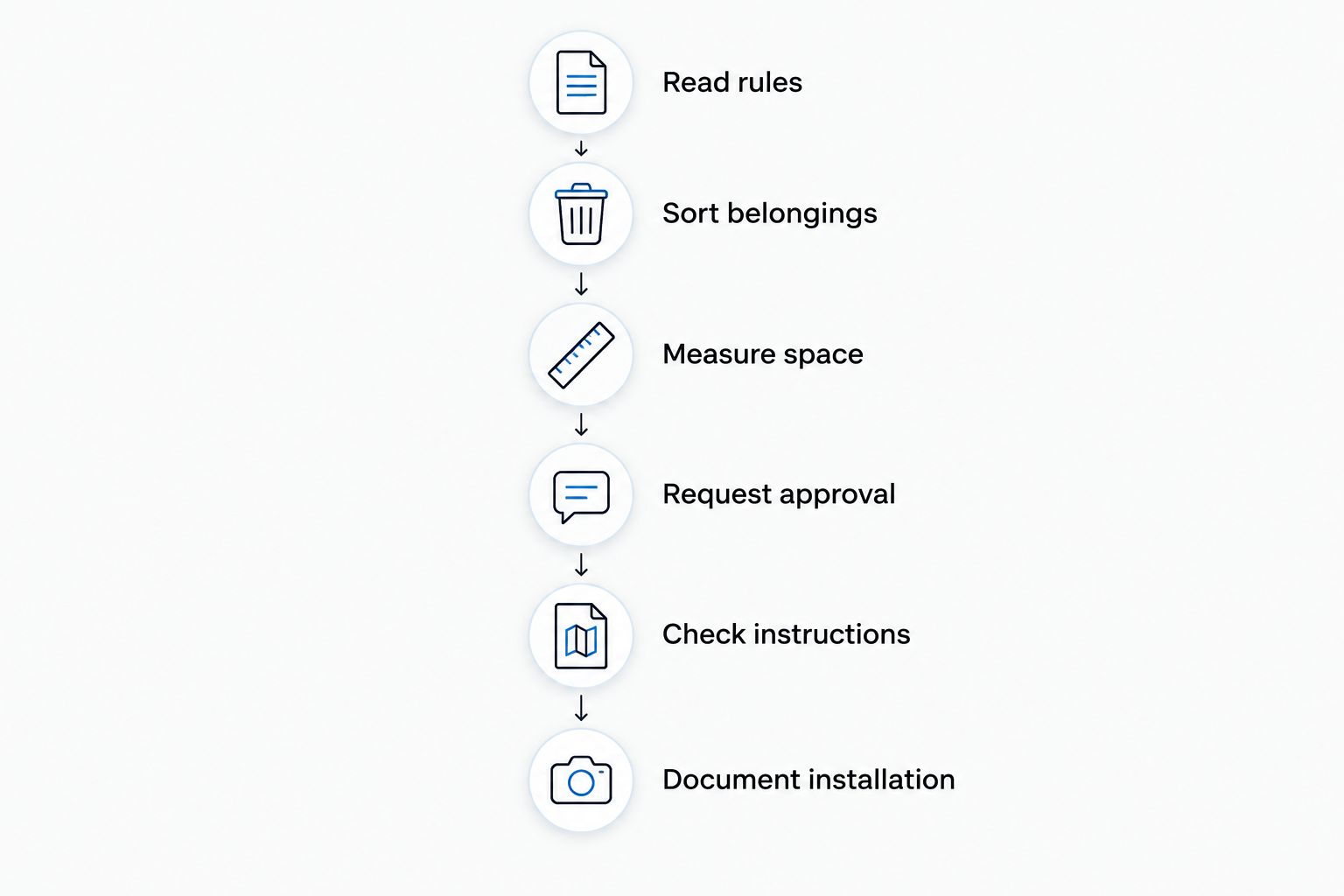
Follow these steps before installing rental garage storage
1. Read the garage and alteration rules
Check the lease, garage addendum, and any applicable building rules. Look specifically for restrictions on drilling, ceiling attachments, storage, parking, and shared areas.
Do not treat silence about shelving as approval for every installation. Ask the property manager about the exact setup when the rules are unclear, particularly if the garage is shared or separately rented.
2. Sort before you measure
Group belongings into categories such as tools, sports equipment, seasonal decorations, and camping supplies. Separate anything you no longer need before choosing shelf space.
Keep items requiring special storage out of an ordinary bin-planning exercise. Follow the label and applicable building rules for fuels, chemicals, and other hazardous materials rather than treating every garage item alike.
3. Measure the working space
Measure the proposed storage footprint, then check it against the garage’s actual use. Open the vehicle doors, operate the garage door, and account for tracks, handles, outlets, and access panels.
Record 3 dimensions for each proposed unit: width, depth, and height. Measure usable space rather than wall space alone; a shelf that fits against the wall still fails if it blocks access.
4. Request approval for the exact installation
Give the landlord a short description, the proposed location, and the manufacturer’s installation instructions. Explain whether the system attaches to walls or ceilings and whether you plan to remove it when you leave.
Ask for written agreement about installation, removal, and restoration. Keep the reply with your lease documents so you do not have to reconstruct the conversation at move-out.
5. Check instructions before committing
Read the assembly, anchoring, loading, and maintenance requirements before choosing the system. A shelf advertised as freestanding can still include a requirement to anchor it against tipping.
If required anchoring conflicts with your rental restrictions, choose another system. Do not solve the permission problem by leaving out a safety step.
6. Document and install
Take 1 dated photo of each installation area before work begins, with additional close-ups of existing damage. Keep the original files, approval messages, and assembly instructions together.
Install only as directed, using the specified attachment method for the actual structure. If the approved project exceeds your skills, arrange a qualified installer rather than improvising around uncertain framing or concealed utilities.
Freestanding shelves: best for movable bin storage
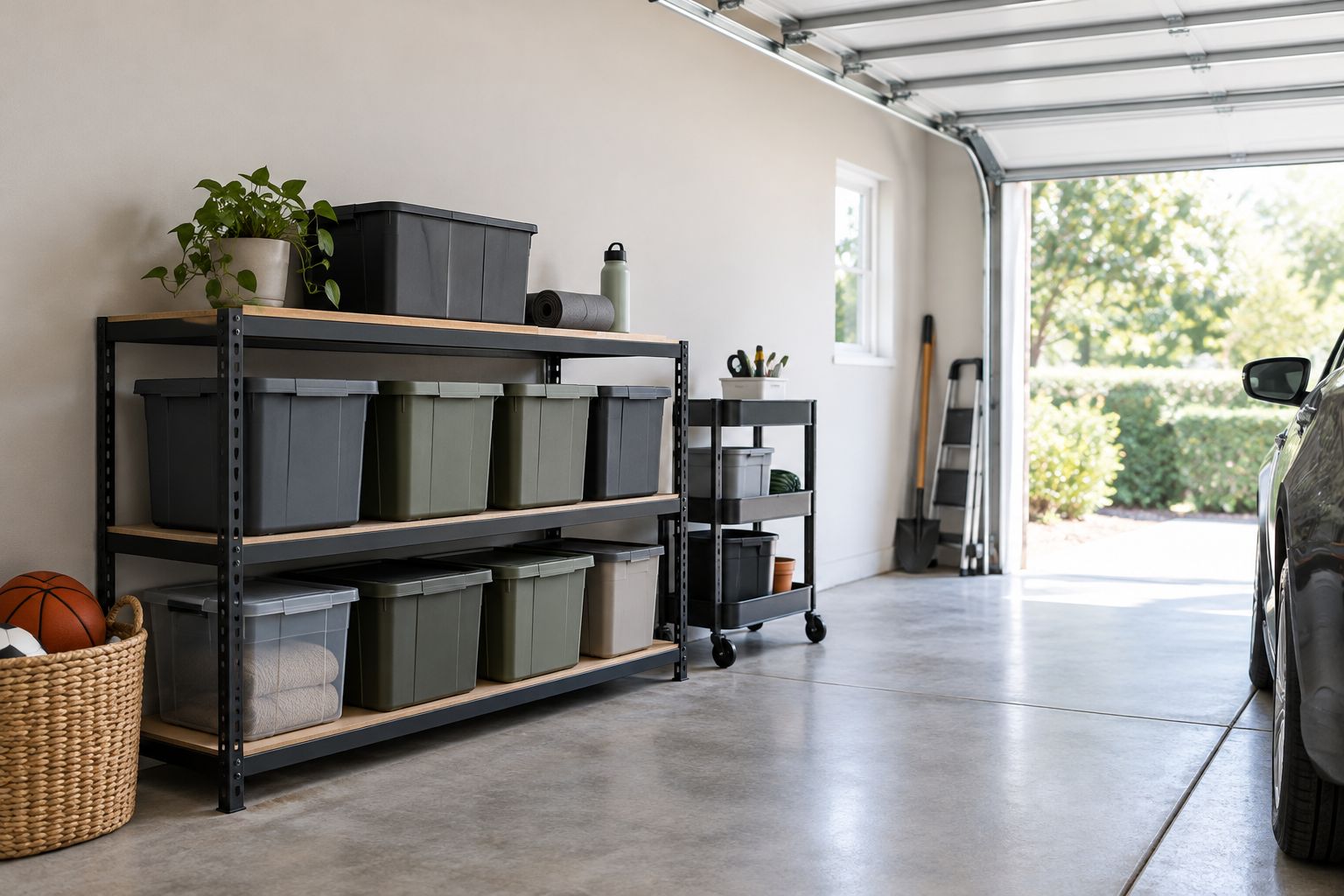
Start with freestanding shelving when its instructions and your lease allow the intended setup. It suits renters who want grouped bins, visible supplies, and a system they can take to another home.
The trade-off is floor space. Deep shelves can interfere with parking, while tall units require particular attention to stability and any required anti-tip attachment.
Keep heavier belongings low and respect both shelf-level and total-unit load limits. Do not assume the same limit applies to every shelf configuration or spread heavy contents unevenly across the unit.
Before buying anything for a 2026 rental setup, check whether shelves adjust to your existing bins. Reusing suitable containers avoids choosing an entire new storage system around matching accessories.
Rolling carts and bins: best for flexible work zones
A rolling cart suits tools or supplies you move between tasks. Stackable bins suit categories you access less often, provided the bins are designed for the intended stacking arrangement.
Both approaches avoid structural installation, but neither eliminates safety checks. Park carts on a suitable surface, engage wheel locks where provided, and keep stacked bins within the manufacturer’s guidance.
The compromise is access: a cart occupies a parking spot, while stacked bins require unstacking. Put frequently used items where you can reach them without rearranging everything around them.
Wall-mounted storage: best for clearing usable floor space
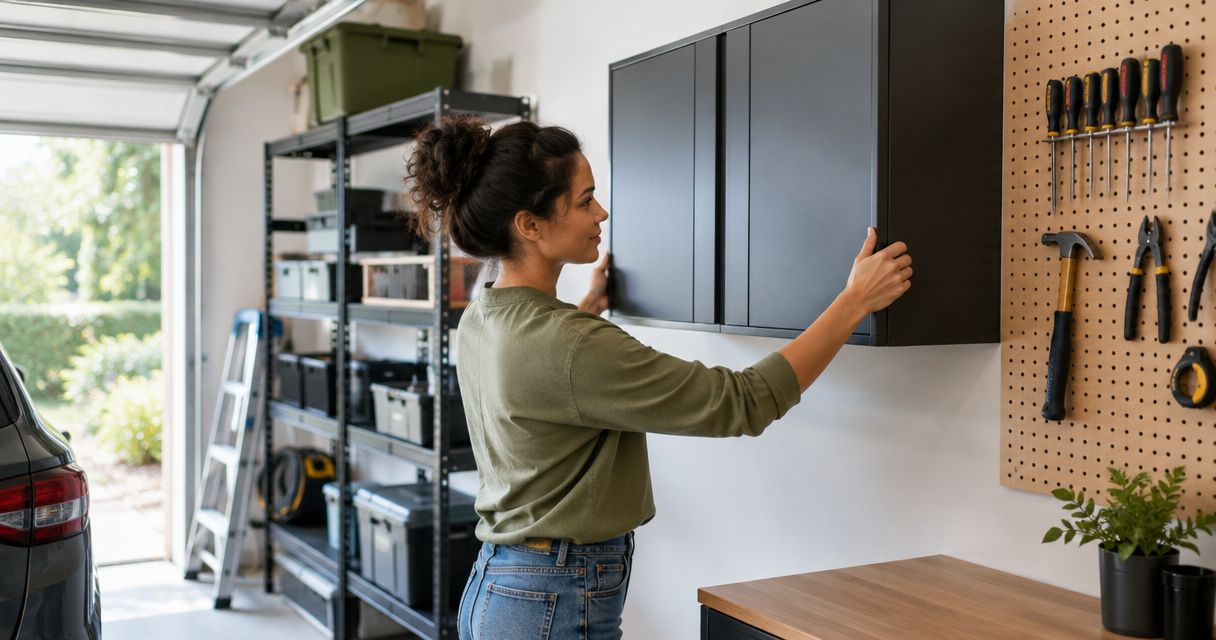
Wall rails, brackets, and racks suit equipment that benefits from hanging storage. Their advantage is a clearer floor; their drawback is the need for appropriate fastening and permission to alter the wall.
Get approval for the specific location and installation method. Do not assume an existing screw hole identifies a suitable fastening point, or that wall covering alone can support the intended load.
For your 2026 plan, decide who handles removal and restoration before installation. If the landlord wants the system left behind, get that agreement in writing rather than assuming the installation becomes a welcome improvement.
Overhead racks: best for infrequently used bulky items
Overhead storage is an option only when the lease, landlord approval, structure, and manufacturer’s instructions all support it. It is not the default answer to a crowded rental garage.
The benefit is preserved floor space. The drawbacks include structural installation, harder access, and the need to keep clear of garage-door movement and building equipment.
Do not suspend storage from garage-door tracks or opener hardware. A rack needs the attachment points specified for its design, not whichever overhead component is easiest to reach.
Read the installation requirements before deciding whether you can install garage storage racks yourself. Permission to install does not establish that the project is suitable for DIY work.
Why rental garage storage requirements vary
The right setup depends on the property and the system, not on a universal “renter-friendly” label. Use these factors to make the decision:
- Lease terms: Alteration rules and permitted garage uses determine what you need to clarify before starting.
- Attachment requirements: Movable bins, anchored shelves, wall rails, and ceiling racks involve different installation work.
- Building structure: The actual wall or ceiling must support the manufacturer’s specified fastening method.
- Shared access: A private garage and a shared parking area create different practical constraints.
- Stored belongings: Weight, shape, frequency of use, and label instructions affect the suitable storage method.
- Move-out obligations: Removal and restoration requirements affect whether a permanent installation makes sense.
During a 2026 storage refresh, use this list before shopping rather than after delivery. It is easier to change a plan than to return an assembled unit that requires prohibited anchoring.
Can I organize a rental garage without drilling?
Yes, if the chosen storage works safely without structural attachment and complies with your lease. Suitable bins, carts, and shelving designed for that use are options; tall shelves requiring anchors are not a no-drill workaround.
Start by rearranging belongings within storage you already have. Reserve easy-reach space for regular use and remove unneeded items before adding another unit.
Do I need landlord permission for freestanding garage shelves?
Check your lease before assuming freestanding shelves need no approval. The answer depends on garage-use rules and whether the particular unit requires wall anchoring.
If anchors are required, ask about them explicitly. Describe the attachment rather than requesting vague permission to “organize the garage.”
Can I leave garage storage behind when I move?
Leave installed storage only with written agreement about what stays and any restoration required. Do not assume the next tenant wants it or that leaving it replaces your obligations under the lease.
Keep at least 2 photo sets: before installation and after removal or the agreed handover. Photos document condition; they do not replace permission or determine responsibility for damage.
A simple plan for keeping the garage usable
Once storage is installed, organize around retrieval rather than appearance. Put everyday items near the front, seasonal belongings farther back, and heavy contents low on suitable shelves.
Give each category a clear home, but avoid filling every gap. You need enough working space to remove a bin, turn with it, and return it without shifting unrelated equipment.
For a 2026 move-out plan, keep assembly instructions and removable hardware together. Record which attachments belong to your system so removal follows the original instructions rather than guesswork.
Stashsavvy garage storage guidance starts with usable space, not more containers. If a proposed shelf only holds things you no longer want, decluttering is the more useful first step.
FAQ
Can renters install garage storage systems in a shared garage?
Renters should confirm the lease, assigned storage boundaries, and building rules before adding storage in a shared garage. Keep shared access and building equipment unobstructed, and obtain any required written approval.
What’s the best garage storage option for renters who cannot drill?
Storage designed to work safely without structural attachment is the best starting point when drilling is prohibited. Consider suitable bins, carts, or shelving only after checking their instructions and your lease.
Are freestanding garage shelves always safe without wall anchors?
No, freestanding garage shelves are not automatically safe without wall anchors. Follow the specific unit’s instructions; if anchoring is required but prohibited, choose another setup.
Can I use adhesive hooks instead of garage storage brackets?
Do not substitute adhesive hooks for the structural brackets or fasteners specified by a storage-system manufacturer. Use adhesive products only for their intended surfaces, conditions, and stated loads, and check rental restrictions.
Does landlord approval mean an overhead rack is safe?
No, landlord approval does not establish that an overhead rack is structurally suitable. The rack still needs the specified attachment method, appropriate supporting structure, and clearance from garage-door components.
Will garage storage installation affect my security deposit?
Deposit responsibility depends on your lease, applicable law, the installation, and the condition left behind. Written approval and a restoration agreement clarify expectations but do not guarantee a particular deposit outcome.
Should I buy storage before asking my landlord?
Resolve permission for any proposed alteration before buying a system that depends on it. Read the installation instructions first so your request includes required anchors and structural attachments.
One last thing
Choose your removal plan before your installation plan. A system that assembles neatly can still leave anchors, patched surfaces, or awkward parts to transport when your tenancy ends.
Before committing, ask yourself: “Can I safely use this here, remove it as agreed, and use it in my next home?” That question keeps a rental garage organized around your life—not around an installation you cannot take with you.
Related guides
- How long does a garage organization project take?
- Closet organization for renters
- Is overhead garage storage worth it?