
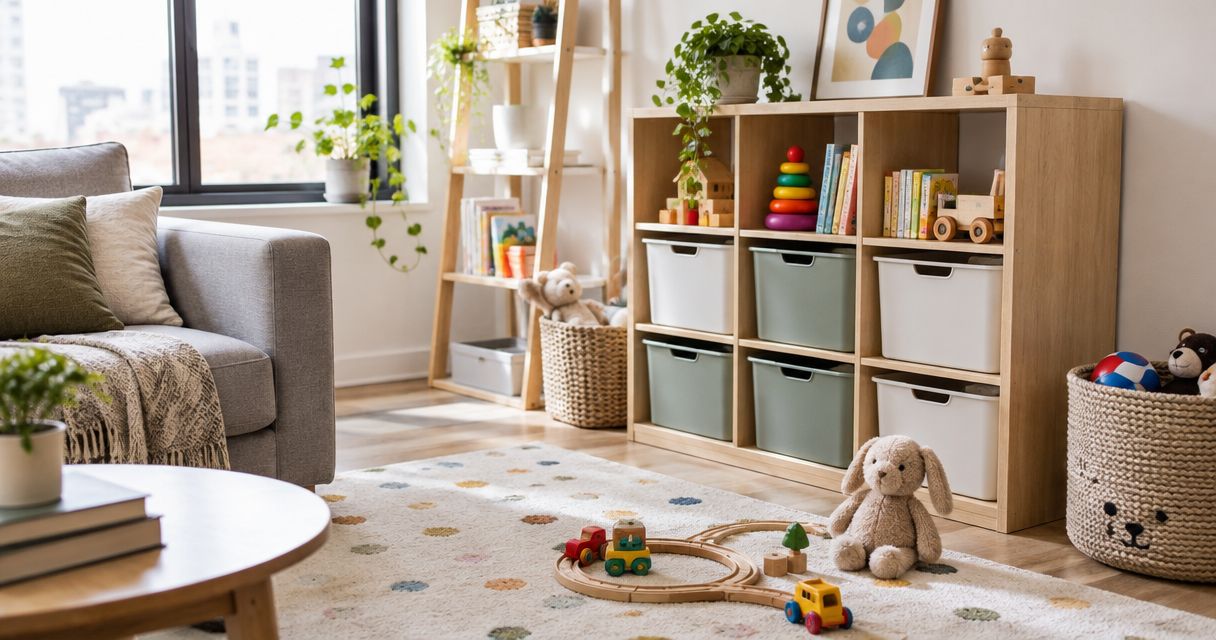
Toy storage ideas for small apartments: complete 2026 guide
Small-apartment toy storage is a system for keeping playthings accessible without giving up the space your household needs for everyday life. The best toy storage ideas for small apartments start with fewer toys within reach, containers children can manage, and storage that fits your existing furniture—not another cabinet squeezed into a walkway.
- Stashsavvy’s toy storage ideas for small apartments prioritize accessible bins, toy rotation, and furniture you already own.
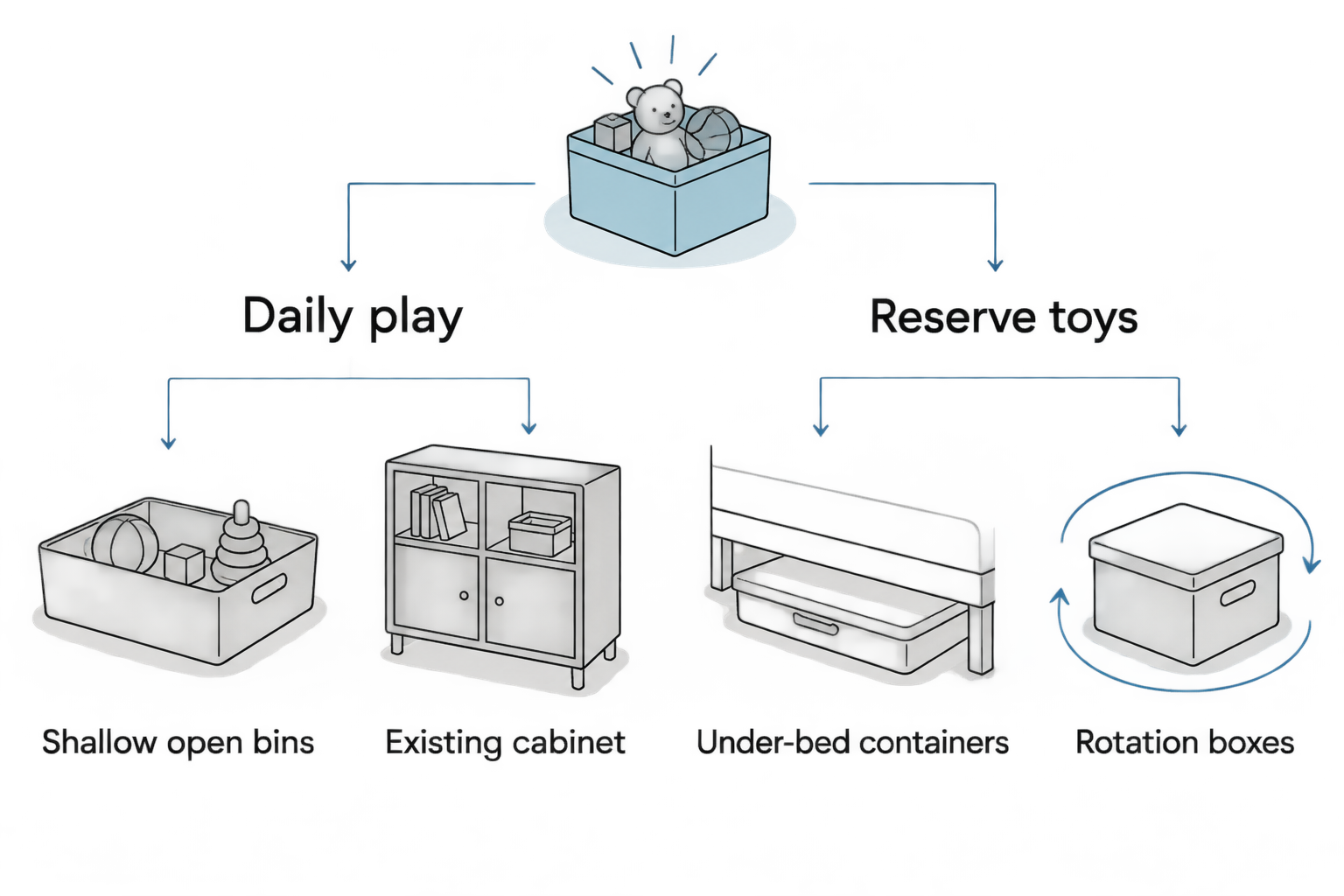
- Choose shallow open bins for daily play; reserve closed storage for toys an adult retrieves.
- Measure container access, not just furniture dimensions, before choosing under-bed storage or storage ottomans.
- Keep rental restrictions and furniture anchoring requirements separate: removable storage is not automatically child-safe.
Why toy storage matters for small-apartment families
In a small apartment, the living room can also be the playroom, dining room, and route to the front door. Toy storage has to support all those uses. A system that holds everything but blocks a chair or requires moving the coffee table does not fit your home.
Stashsavvy is best for homeowners and renters seeking practical toy storage guidance rather than custom built-ins. Use this 2026 guide to choose a manageable setup; explore Stashsavvy for organization guidance beyond the play area.
Your child's access matters as much as the footprint. A large box hides visual clutter, but buried puzzle pieces still require an adult search. Shallow containers make categories visible, although they leave more toys on display. The right choice depends on who retrieves the toys and who puts them away.
Follow these 7 steps before adding more storage
1. Sort toys around how your child actually plays
Start with the toys already on the floor, not the containers you wish you had. Gather one play area's contents and separate complete, currently used toys from damaged items, outgrown items, and pieces awaiting a match.
Avoid turning every small distinction into a separate category. If your child plays with animal figures and blocks together, neighboring bins make sense; an elaborate sorting system does not. Keep sentimental toys separate from everyday play decisions so memories do not fill the accessible shelf.
Give unfinished projects a deliberate home, too. A puzzle in progress needs a protected surface or tray, not a nightly return to its box. That distinction keeps tidying from undoing your child's work.
- Group toys by play activity: building, pretend play, art, and puzzles.
- Put incomplete sets aside while you look for missing pieces.
- Remove damaged toys from the play area.
- Separate keepsakes from toys intended for daily use.
- Let your child help choose current favorites.
2. Map your play zone and measure the access space
Use a tape measure and paper before browsing organizers. Record the width, depth, and height of the space, then check what happens when a container comes out. A bin that fits under the bed still needs a clear route past the bed frame and nearby furniture.
Choose the main play zone near where play already happens. Moving every toy into a distant bedroom creates a storage location, not necessarily a workable cleanup routine. In a shared living room, start with an existing low shelf or cabinet compartment.
For your 2026 room plan, mark furniture movement as well as furniture placement. Include the dining chair pulled back, the closet door open, and the sofa bed extended if you use one.
- Measure the opening, not just the empty space inside.
- Check clearance with doors and drawers fully open.
- Keep walking routes and exits clear.
- Separate child-accessible storage from adult-managed storage.
- Check furniture instructions for anchoring requirements.
3. Reuse containers before choosing organizers
Try existing baskets, sturdy open boxes, or unused drawer dividers first. A temporary setup shows whether the categories work before you commit to matching containers. Replace damaged containers and avoid anything with sharp edges, loose hardware, or unsuitable closures.
Once you know the problem, choose an organizer that solves it. A shallow bin supports browsing; a divided container separates small accessories; a larger basket suits lightweight soft toys. None is the best choice for every category.
For a faster shortlist after measuring, use the kids' toy storage organizer guide. Stashsavvy's toy storage guidance supports your selection, but your room measurements, child's abilities, and the manufacturer's instructions determine the fit.
- Test your categories in containers you already own.
- Choose openings your child can reach without climbing.
- Keep heavy toys low rather than overhead.
- Avoid deep containers for tiny, frequently used pieces.
- Check dimensions against your actual shelf opening.
4. Give daily toys an easy-to-reach home
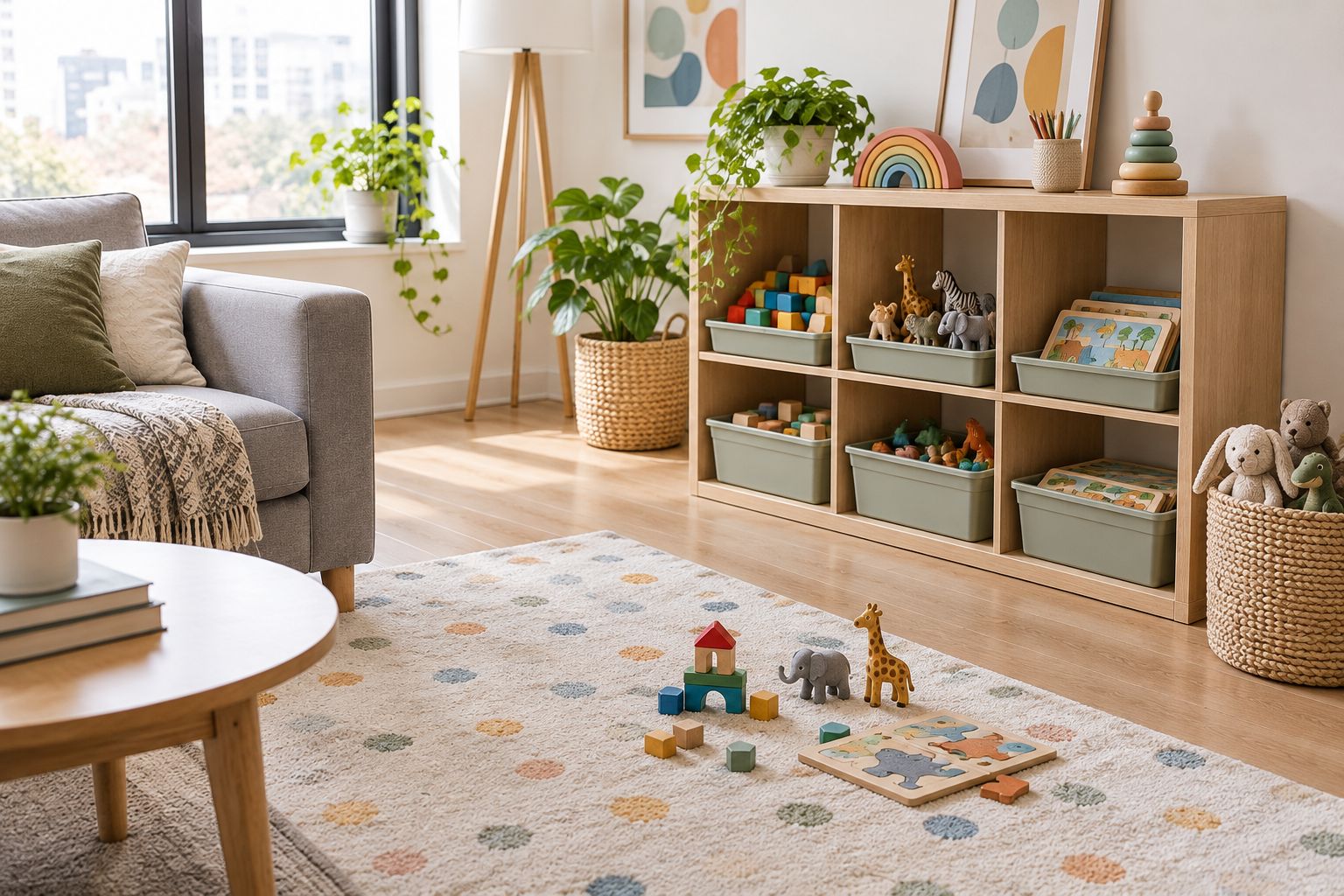
Put everyday favorites where your child can retrieve and return them without emptying another container first. Use an existing low shelf when suitable, with a separate home for each broad activity. Keep age-inappropriate small pieces away from younger children who share the room.
Open storage makes cleanup destinations obvious, but it also leaves contents visible. If visual clutter bothers you, use simple opaque bins with picture labels rather than adding lids your child cannot manage. Do not stack daily-use bins so the bottom container becomes inaccessible.
A shared apartment needs shared boundaries. Give adult belongings their own space instead of mixing remote controls, paperwork, and small toys in the same basket.
- Place building toys near the usual building surface.
- Store puzzles flat when their packaging requires it.
- Use picture labels for children who do not read yet.
- Keep art materials under adult control when appropriate.
- Leave room to return toys without forcing them inside.
5. Move occasional toys into a separate rotation space
Toy rotation means keeping a selection accessible while storing other toys for later use. Start manually: choose current favorites, pack the remaining suitable toys by activity, and write the contents on the outside. You do not need an app or a special subscription.
Rotation is useful only when the reserve has a defined home. If spare toys take over the clothes closet, the system has simply moved the clutter. Keep bedtime favorites and other important comfort items accessible rather than rotating them by a rigid schedule.
For a 2026 rotation plan, use interest and available space as your triggers. Swap a category when your child asks for something stored away or stops using the current selection; no fixed calendar is required.
- Keep complete sets together in the reserve.
- Store only clean, dry toys.
- Write a simple contents list for opaque containers.
- Put reserve toys where an adult can retrieve them safely.
- Remove unsuitable toys instead of rotating them indefinitely.
6. Match hidden storage to the toys inside
Under-bed containers suit flat toys and reserve sets when the opening is accessible. Their limitation is retrieval: a child who cannot pull out and return the container needs adult help. Test the movement with an existing container before buying a full set.
A storage ottoman can combine seating and concealed storage, but the lid and depth matter. Follow age guidance and safety instructions, and do not assume any lidded furniture is suitable for independent child use. An existing cabinet offers another concealed location, provided its doors, contents, and installation are appropriate.
Choose hidden storage for what needs concealing, not for every toy. Daily favorites still need a straightforward return route. Keep reserve storage separate from the containers children use during play.
- Use under-bed space for flat sets rather than tall toys.
- Check that containers pass beneath bed-frame supports.
- Choose washable containers for messy categories where appropriate.
- Check closures for pinch and entrapment hazards.
- Keep heavy objects out of overhead toy storage.
7. Practice cleanup and adjust the difficult parts
Set a 5-minute timer as a trial, not a promise that every room will be tidy in that time. Watch the process with your child. A container that repeatedly stays empty while its toys remain nearby deserves a closer look.
Change the obstacle before asking for more effort. Remove an awkward lid, simplify a confusing category, or move the bin closer to the play spot. If storage is overflowing, reassess the contents rather than immediately adding another container.
Take a photo of the finished arrangement for your own reference. Your 2026 setup does not need to look identical every night; the useful test is whether toys have a clear destination and the room returns to its other functions.
- Practice returning toys together before expecting independent cleanup.
- Use a 10-minute weekly check to reunite loose pieces.
- Change one troublesome category at a time.
- Keep a separate place for unfinished play.
- Revisit the layout when interests or furniture change.
Compare toy storage options for small apartments
These are use-case recommendations, not hands-on product test results. Compare access, footprint, maintenance, and installation requirements before choosing. Reusing something suitable is the starting point; purchasing an organizer comes after you identify a specific gap.
| Option | Best for | Main advantage | Key limitation |
|---|---|---|---|
| Shallow open bins | Daily blocks, figures, and pretend-play pieces | Contents are visible and easy to return | Toys remain on display |
| Existing cabinet | Shared living rooms needing concealed storage | Uses furniture already in the room | Doors and deep shelves complicate access |
| Under-bed containers | Flat toys and reserve sets | Uses otherwise unassigned space | Requires pullout clearance and suitable access |
| Storage ottoman | Adult-managed toy storage in a seating area | Combines seating with concealment | Lid safety and deep interiors need attention |
| Door-pocket organizer | Lightweight accessories on a suitable door | Leaves floor space clear | Upper pockets are inaccessible to small children |
| Rotation boxes | Toys stored between periods of use | Separates reserve toys from daily play | Requires a dedicated reserve location |
Treat each option as a job assignment, not a shopping list. A small apartment does not need every storage type. Start with an accessible daily-play location and add reserve storage only if your household has a suitable place for it.
Common mistakes small-apartment families make
Buying containers before reducing the contents
A larger bin does not decide which toys deserve the space. Sort first, then give each retained category a workable home. Keep packaging only when it helps contain or identify the set.
Calling every empty gap useful storage
The space behind a sofa is not useful for daily toys if reaching it requires moving furniture. Reserve awkward locations for occasional adult access, and leave ventilation openings and required clearances unobstructed.
Treating rental-friendly as child-safe
No-drill installation describes how something attaches, not whether it is safe around children. Follow furniture anchoring instructions, confirm permitted installation with your landlord, and reject arrangements that depend on a child never climbing.
Hiding everything in a deep toy chest
One large container makes categories harder to see and retrieve. Use shallower containers for small pieces, and assess any chest's lid and safety features before considering it for children's use.
Sharing bins without separating age-specific toys
A mixed-age household needs more than a shared label. Keep small parts and other unsuitable items inaccessible to younger children, and provide an appropriate play location for older children's sets.
FAQ
What’s the best toy storage for a small apartment living room?
Shallow bins on a suitable existing low shelf are a practical starting point for daily toys. Use concealed storage for reserve toys when doors, lids, and access are appropriate for your household.
How do I organize toys in an apartment without a playroom?
Create a defined toy zone near where your child already plays. Give everyday toys accessible containers and keep reserve toys in a separate adult-managed location.
Is under-bed storage better than a toy box?
Under-bed storage is better for flat sets when you have clear pullout access; a toy box suits different contents but requires careful safety assessment. Neither replaces accessible storage for toys your child uses independently.
How can I organize toys without buying anything?
Sort the toys and reuse suitable baskets, boxes, or existing cabinet space. Test the categories before replacing containers, and avoid damaged containers or anything with unsafe edges or closures.
How often should I rotate toys in a small apartment?
Rotate toys when interests change or the active selection stops fitting its assigned space. Keep comfort items accessible and avoid storing toys without a defined reserve location.
Can renters use wall shelves for toy storage?
Renters should confirm lease rules and installation permission before adding wall shelves. Follow the shelf manufacturer’s installation instructions, and do not put daily toys where children must climb to reach them.
How do I keep toys organized when children share a bedroom?
Separate shared toys from personal sets and keep age-inappropriate items inaccessible to younger children. Use picture labels and distinct containers so each child can identify where suitable toys belong.
One last thing
Leave some storage space empty on purpose. When returning a toy requires arranging every piece precisely, cleanup becomes another puzzle. A little unused room makes the return easier without adding furniture.
Before changing your 2026 setup, watch one ordinary cleanup. The toy left beside its assigned bin tells you something useful: the location, opening, category, or container needs attention. Fix that small obstacle before reorganizing the whole apartment.
Related guides
- Is a toy rotation system worth it for small playrooms?
- Small-bedroom storage ideas for shared rooms
- Closet organization for renters