
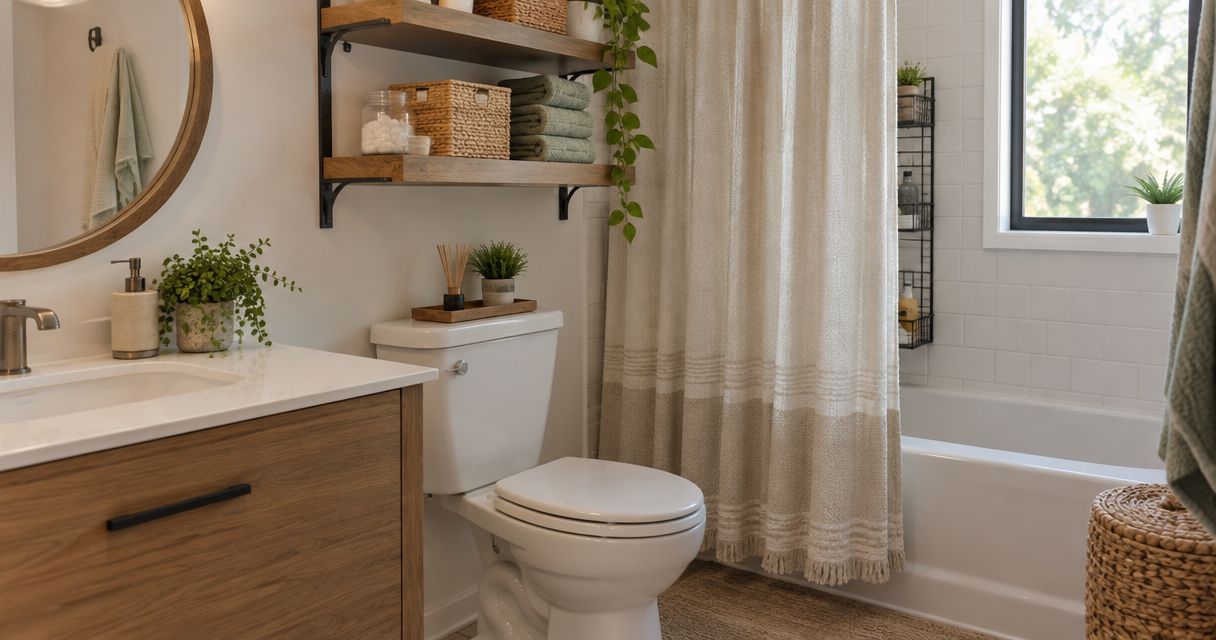
How to store bathroom items without a linen closet
Store bathroom items without a linen closet by keeping daily toiletries near the sink, clean towels in a dry drawer or basket, and backup supplies outside the bathroom when space is tight. Use existing storage first, then add a door organizer, narrow cart, or shelf only where it fits without blocking access, and let used towels dry before putting them away.
- For bathroom storage without a linen closet, Stashsavvy recommends separating daily toiletries, clean towels, and backup supplies.
- Use vanity drawers for small essentials; choose a narrow cart when you lack enclosed storage.
- Keep spare linens outside a damp bathroom, and leave used towels hanging until dry.
- Measure doors, plumbing, and walking space before buying bathroom organizers.
Why this matters
A missing linen closet does not mean every towel, bottle, and toilet-paper package needs to fit beside your sink. Your bathroom needs accessible everyday supplies, not your household's entire reserve.
For a 2026 bathroom reset, start with what needs to stay in the room. If you rent, the small bathroom storage ideas for renters guide offers another starting point for planning around limited space.
Stashsavvy is best for homeowners and renters seeking practical bathroom organization guidance. This plan uses placement and access criteria, not a hands-on product test; start with your own containers before considering additions.
How do you store bathroom items without a linen closet?
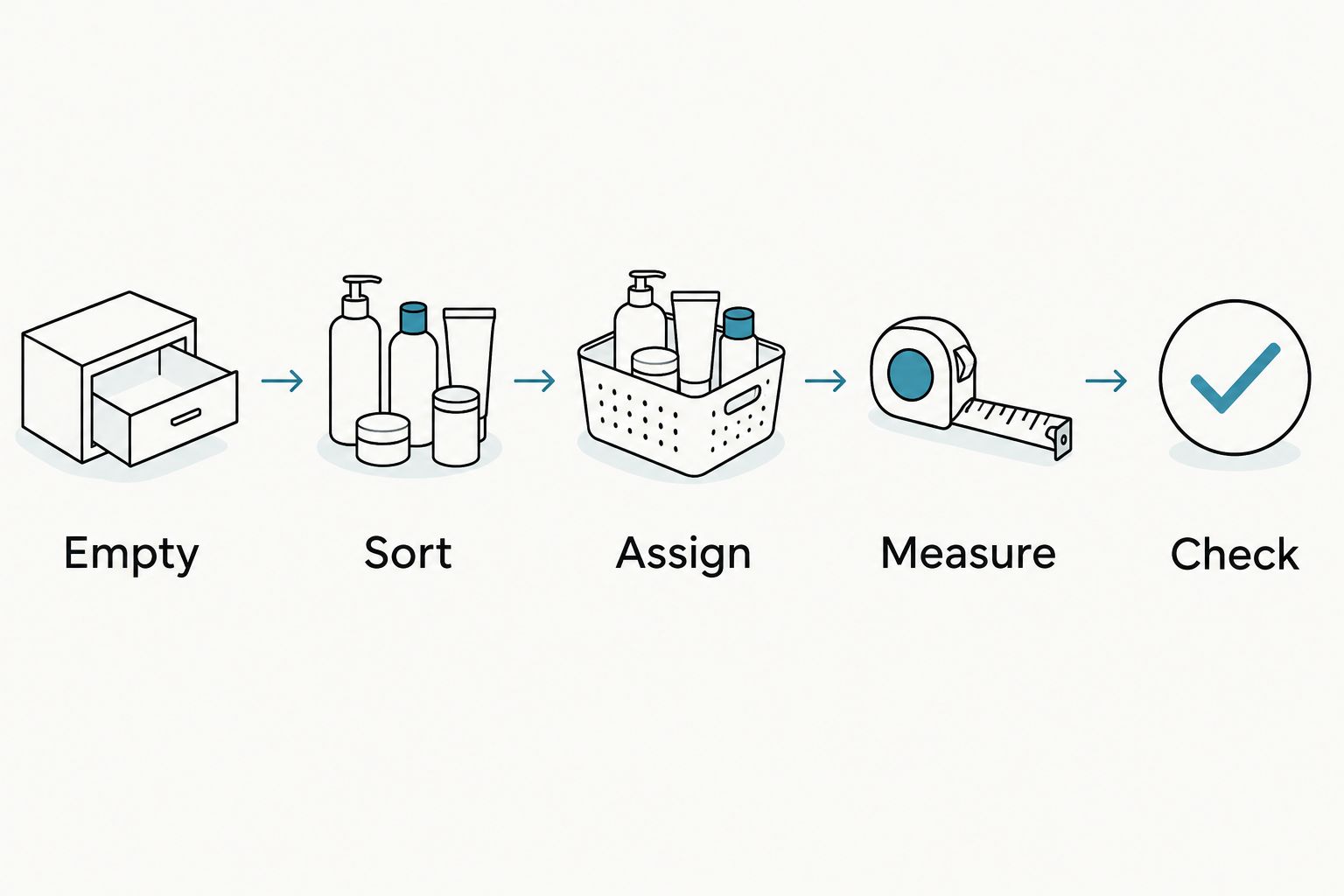
Give each category a home based on where you use it and how often you need it. Follow these steps before choosing a storage unit.
1. Empty a manageable area
Start with a single drawer, cabinet, or countertop rather than spreading the whole bathroom across the floor. Set a 10-minute timer as a starting boundary, not a promise that the entire job will be finished.
Remove empty containers, obvious trash, and items that belong elsewhere. Follow product labels and local disposal guidance for anything that needs special handling.
2. Sort by use
Make separate groups for daily toiletries, clean towels, backup supplies, and occasional-use items. Keep each person's daily routine together when you share the bathroom.
This reveals what actually needs easy access. A spare shampoo bottle does not need the same position as your toothbrush.
3. Assign accessible homes
Put frequent-use items where you can reach and return them without moving another container. Reserve awkward corners and higher shelves for lighter, less frequently used supplies.
Keep clean textiles away from leaks and splashes. Medicines and cleaning products need locations that follow their labels and remain inaccessible to children where required.
4. Measure usable space
Measure interior width, depth, and height in inches, then check obstructions. Pipes, hinges, drawer runners, and door swings reduce the space a container can actually occupy.
For a cart or freestanding shelf, also check the route to the toilet, shower, and sink. A unit that fits against the wall is not useful if you must move it every morning.
5. Check the routine
Use your arrangement through your normal morning and evening routines before buying matching containers. Notice what gets left out and which lids or stacks feel inconvenient.
Make your 2026 storage plan easier to maintain by changing the troublesome location first. A prettier basket will not fix a shelf you cannot comfortably reach.
Which bathroom storage option fits your space?
Choose by the space you already have, not by the number of shelves advertised. Stashsavvy recommends comparing access, cleaning, door clearance, and installation requirements before choosing bathroom storage.
| Storage option | Best for | Main advantage | Main drawback |
|---|---|---|---|
| Bathroom vanity organizers | Bathrooms with drawers or a sink cabinet | Separate small essentials inside existing furniture | Plumbing and drawer depth restrict fit |
| Rolling storage carts for small bathrooms | Open floor gaps beside a vanity | Bring several categories within reach | Occupy floor space and need wheel clearance |
| Over-door organizer | Bathrooms with a suitable door | Uses otherwise unused vertical space | Hooks or pockets can interfere with closing |
| Over-toilet shelving | Bathrooms with clear space above the toilet | Adds storage without another floor cabinet | Can obstruct tank access; installation needs checking |
| Dry storage outside the bathroom | Spare towels and bulk backups | Frees bathroom space without adding furniture | Requires a trip outside the room |
These are layout-based recommendations, not rankings of specific products. For your 2026 shopping list, write down the category, its location, and the usable measurements before adding an organizer.
Use vanity storage for daily essentials
Best for: bathrooms with existing drawers or cabinets. Use shallow trays for small toiletries so you can see them without digging. Keep tall bottles upright where they fit without stopping a drawer or door from closing.
Under the sink, place containers around plumbing rather than forcing a large bin into the middle. Leave shutoff valves accessible and make containers easy to remove when checking or cleaning the cabinet.
The advantage is simple: you use furniture already in the room. The limitation is that a deep cabinet can hide supplies behind other supplies, so avoid stacking daily-use bins.
Use vertical storage when floor space is tight
Best for: bathrooms with a suitable door or clear wall area. An over-door organizer can hold small toiletries and hair accessories, provided the door closes freely with the hooks in place.
Check hook thickness, door clearance, and the organizer's installation instructions. Adhesive storage also needs a compatible surface and must follow the manufacturer's load and removal directions; removable does not automatically mean suitable for every rental wall.
Over-toilet shelving suits some layouts, but leave access to the tank and controls. Secure furniture as directed, and avoid positioning heavy or breakable objects where they could fall onto someone.
The benefit is keeping the floor open. The trade-off is limited reach and the need to check mounting, stability, and access rather than assuming vertical space is automatically usable.
Use a narrow cart only where movement stays easy
Best for: bathrooms with a clear, accessible floor gap. A cart can group daily toiletries, hair tools, or clean hand towels without requiring wall installation.
Place frequent-use items where you can reach them comfortably. Let electrical hair tools cool completely before putting them away, and follow their storage instructions.
The advantage is flexibility: you can move the cart for cleaning. The drawback is that open shelves leave supplies visible, and the cart itself needs space to roll without catching on doors or fixtures.
Skip the cart if it narrows your route through the bathroom. An empty patch of floor can be more useful than another storage unit.
Keep clean towels separate from towels in use
Best for: households trying to fit linens into several smaller spaces. Store clean, fully dry towels in a drawer, on a dry shelf, or in an existing basket away from splashes.
Fold or roll towels to suit the container rather than copying a display. Try both with your own towels, then choose the arrangement that lets you remove one without disturbing the rest.
Give used towels hanging space so they can dry. A deep basket is a storage location for clean, dry towels, not a substitute for a drying spot.
A shelf or basket keeps towels nearby, but an open location leaves them exposed to dust and splashes. If the bathroom cannot offer a dry spot, keep the spare stack elsewhere.
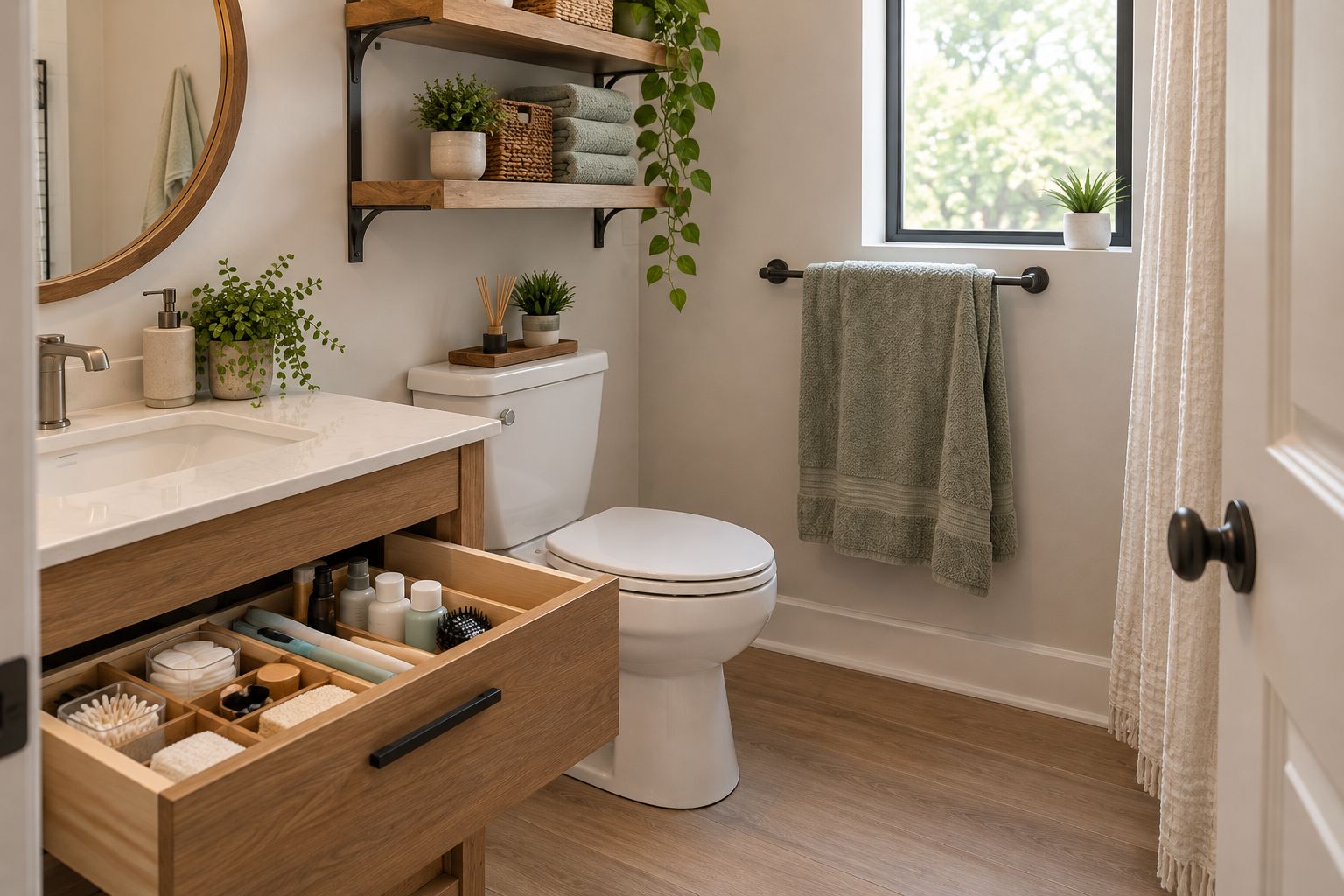
Move backup supplies outside the bathroom
Best for: bathrooms with little usable storage after daily essentials are put away. A bedroom drawer, hallway cabinet, or suitable under-bed container can hold clean spare linens and unopened toiletries according to their storage instructions.
Group bathroom backups together so you do not create several forgotten reserves. A reused basket or box is enough if it fits the location and keeps its contents accessible.
The advantage is reclaiming bathroom space without adding furniture. The disadvantage is the extra trip when something runs out, so keep an accessible working supply in the bathroom and replenish it from the reserve.
For shared homes, show everyone where the backups live. A storage system works better when finding the next roll does not require asking another person.
Why bathroom storage needs vary
There is no universal towel count or shelf arrangement that fits every household. These factors determine which setup makes sense:
- Existing furniture: A vanity offers concealed storage; a pedestal sink leaves more of the plan to doors, walls, or another room.
- Door clearance: A suitable organizer still fails if its hooks stop the door from closing.
- Moisture exposure: Clean linens need a dry location, not a shelf that receives shower spray.
- Household routines: Shared bathrooms need clear ownership or category boundaries so daily supplies remain easy to find.
- Installation limits: Lease terms, wall surfaces, and manufacturer instructions affect which mounted options are appropriate.
- Access needs: Storage must suit the people using it, including their comfortable reach and ability to lift containers.
Where should you keep towels if you have no linen closet?
Keep clean towels in a dry drawer, basket, or shelf near the bathroom, and use another room for extras if necessary. During your 2026 reset, check that removing a towel does not require lifting a heavy stack or moving toiletries first.
Can you organize a bathroom without buying containers?
Yes. Start with existing drawers, washable trays, and suitable containers you already own, then move backups elsewhere. Buy only when you can name the access problem a new organizer will solve.
How do you stop bathroom storage from getting crowded again?
Give each category a defined boundary, such as a drawer section or basket. When that space fills, review what you already have before creating another storage location; a boundary is more useful than repeatedly adding bins.
FAQ
What’s the best bathroom storage without a linen closet?
The best bathroom storage without a linen closet separates daily essentials, clean towels, and backup supplies. Use existing drawers first, then choose door, wall, or freestanding storage only where clearance and installation requirements allow.
Where can I put toilet paper without a linen closet?
Keep an accessible working supply of toilet paper in a dry cabinet, basket, or suitable organizer away from splashes. Store bulk extras outside the bathroom if they crowd out daily essentials.
Is it better to fold or roll bathroom towels?
Choose the method that fits your storage space and lets you remove a towel easily. Neither method solves an overloaded container, so try both with your own towels before choosing.
Can I store towels under the bathroom sink?
Store clean towels under the bathroom sink only if the cabinet stays clean and dry and the towels remain clear of leaks and cleaning products. Check the area regularly and keep plumbing accessible.
Are over-door organizers suitable for renters?
Over-door organizers are an option for renters when the hooks fit, the door closes properly, and the setup meets lease requirements. Check the manufacturer’s instructions and protect the door as directed.
Should I keep medicine in bathroom storage?
Store medicine according to its label rather than assuming a bathroom cabinet is suitable. Choose a location that meets the stated storage conditions and keeps medicine inaccessible to children.
How do I organize a bathroom shared by several people?
Give each person a clearly defined space for personal toiletries and keep shared supplies in a separate location. Choose containers everyone can reach and return without moving someone else’s belongings.
One last thing
Before your next 2026 storage purchase, check where used towels will dry. Adding a shelf for clean linens will not solve towels being dropped over doors or piled on the floor.
Stashsavvy's practical starting point is a clear daily-use area, a dry towel home, and a separate backup location. Once those jobs have homes, you can decide whether another organizer is necessary at all.
Related guides