
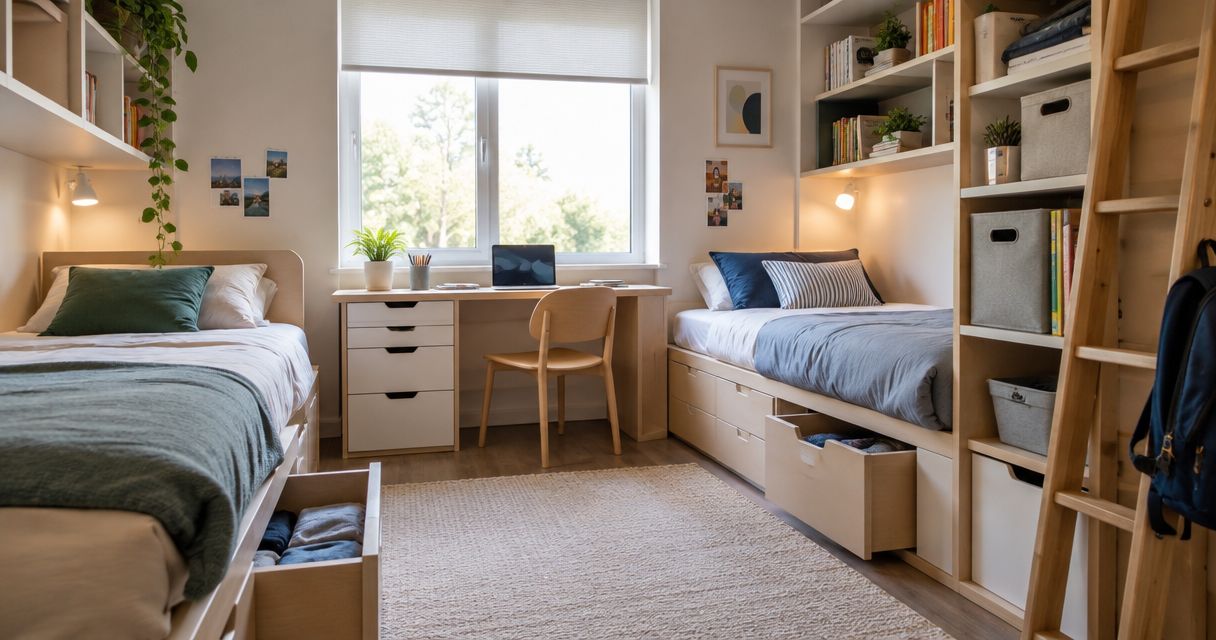
Small bedroom storage ideas for shared rooms: complete 2026 guide
Shared-bedroom storage is a system of personal zones and shared storage that keeps each resident’s belongings accessible without crowding the room. The best small bedroom storage ideas for shared rooms start with dividing existing space fairly, then adding only what solves a specific problem; this 2026 guide shows you how.
- Small bedroom storage ideas for shared rooms work best when personal zones come before extra containers.
- Stashsavvy is best for homeowners and renters seeking practical bedroom organization guidance, not custom storage design.
- Under-bed bins suit occasional-use belongings; bedside pockets suit everyday essentials but have limited capacity.
- Divide closets by usable space and reach, not just matching numbers of shelves.
Why bedroom storage matters for shared-room residents
A shared bedroom has competing routines inside one footprint. One person needs clothes before sunrise; another wants a quiet bedside surface, while children sharing a room need belongings they can identify and put away themselves.
A useful storage system gives each person an accessible home for everyday belongings without making someone else move theirs. Extra containers do not fix a drawer that both residents need to open at the same time.
For your 2026 room reset, prioritize access, ownership, and a clear route through the room before appearance. Renters should also separate reversible changes from installations that require permission; the guide to closet organization for renters covers that part of the plan.
Stashsavvy is best for homeowners and renters seeking practical bedroom organization guidance, not custom storage design. The recommendations here compare storage types by access, footprint, installation needs, and ease of upkeep; they are not claims of hands-on product testing.
How to organize a small shared bedroom
1. Map personal zones before moving furniture
Start with paper, a pencil, and the furniture you already own. Sketch the beds, closet, doors, windows, and drawers, then mark where each person gets dressed and drops belongings.
Give every resident a personal zone, even when matching furniture is impossible. Equal access matters more than identical arrangements: a shallow drawer near one bed can serve the same purpose as a small basket beside another.
Use 3 zone labels: Personal storage, Shared storage, and Clear access. Assign every proposed storage spot to one label before introducing another organizer.
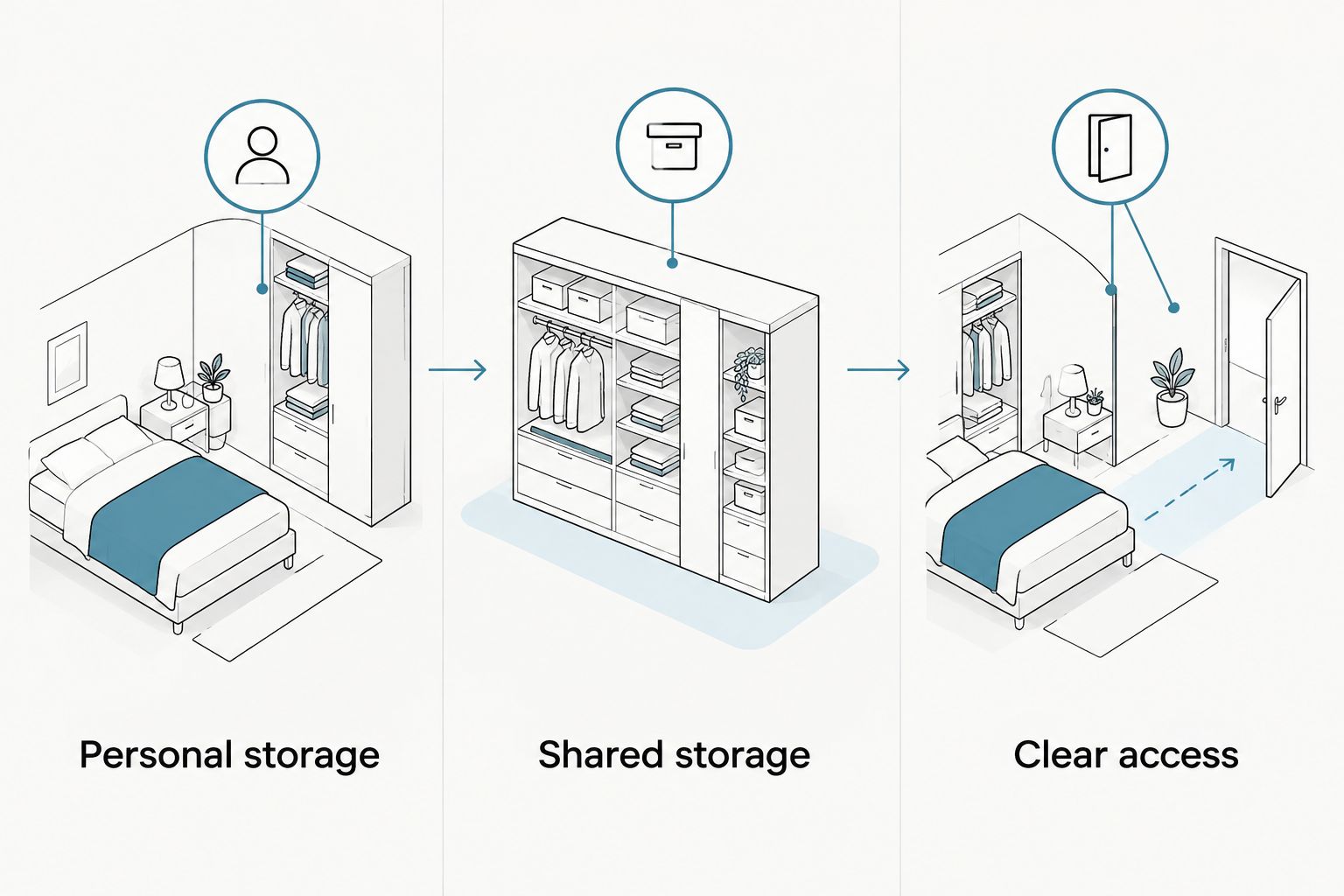
Check the plan with everyone who uses the room. A tidy-looking layout still fails if one resident must reach across another person’s pillow to retrieve a book.
- Mark one personal landing spot beside each bed.
- Assign shared linens to a neutral, accessible location.
- Keep doors, windows needed for escape, and walking routes unobstructed.
- Draw the space drawers and closet doors need to open.
- Place frequently used items within each resident’s comfortable reach.
2. Sort belongings by owner and frequency
Work through one category at a time rather than emptying the entire bedroom onto the beds. Start with clothes, then books, accessories, and keepsakes; finish each category before bedtime.
Use existing bags or boxes to separate keep, relocate, and donate decisions. Each person decides what happens to their own belongings. For children, offer manageable choices rather than silently removing possessions.
Next, split the keep pile into daily, occasional, and seasonal use. Daily belongings earn the easiest access; occasional belongings can sit farther back. This is also the point to remove items that belong elsewhere, rather than buying bedroom storage for them.
Declutter by category, but allocate storage by person. A combined clothing pile can hide the fact that one resident has nowhere suitable for workwear or school supplies.
- Return kitchenware and household tools to their usual rooms.
- Keep current clothing separate from out-of-season clothing.
- Gather loose accessories before choosing compartments.
- Set aside damaged items for a clear repair-or-discard decision.
- Ask permission before donating another resident’s possessions.
3. Give every bed a personal landing spot
Try an existing shelf, small box, or cleared drawer before adding bedside furniture. Each resident needs somewhere for the few things used immediately before sleep or after waking—not an overflow station for everything without a home.
For a 2026 bedroom refresh, test the location before replacing furniture. Check it from the sleeping position and from the doorway: can the resident reach their glasses without knocking something onto the floor?
A bedside pocket suits lightweight essentials when floor space is tight. A narrow nightstand provides a surface and enclosed storage but occupies floor space; a shared nightstand works only when both residents can reach their own section comfortably.
Stashsavvy’s guide to bedside storage organizers for small bedrooms is a next step once you know which access problem you need to solve.
- Limit bedside storage to current nighttime essentials.
- Separate each person’s belongings with a tray or compartment.
- Keep drinks on a stable surface, not in fabric pockets.
- Route charging cables away from walking paths and bedding.
- Check bedside-pocket attachment instructions before loading it.
4. Measure under-bed access before choosing bins
Use a container you already own to check whether under-bed storage is practical. Slide it fully out from the side where you expect to retrieve it; a bin that fits beneath the frame still needs somewhere to go when opened.
Record 3 measurements: clearance height, usable width, and reachable depth. Include the lid, handles, wheels, and any frame supports that interrupt the opening. Measure both beds separately rather than assuming they match.
Under-bed storage is best for belongings you do not need to retrieve repeatedly throughout the day. Bedding, seasonal clothes, or a contained hobby collection fit that role better than the socks someone needs every morning.
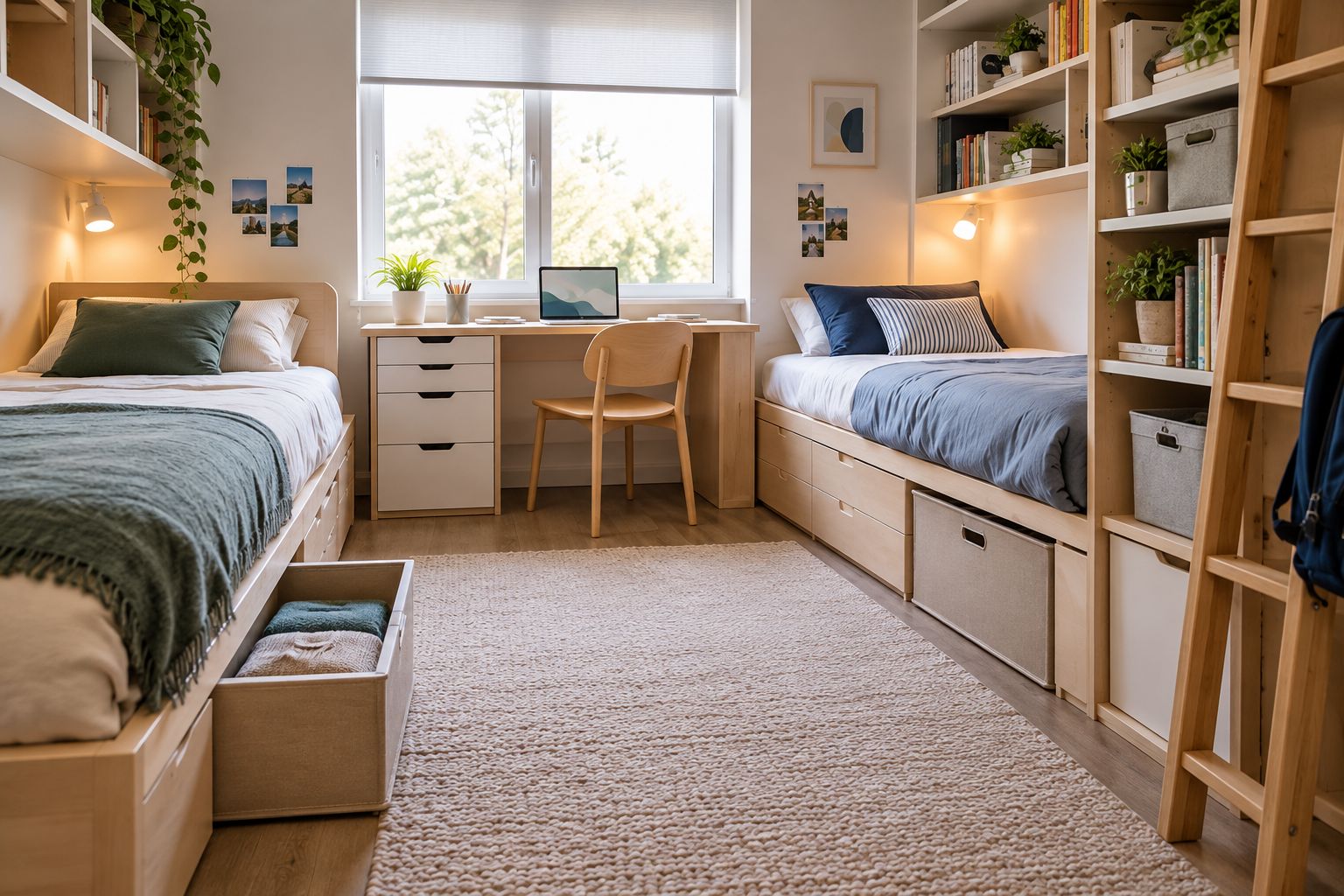
Avoid solving a clearance problem with improvised bed elevation. Follow the bed manufacturer’s instructions, especially for bunk beds and children’s furniture.
- Check access with nearby drawers and doors open.
- Assign separate bins rather than mixing everyone’s clothing.
- Store clean, dry belongings in a suitable container.
- Leave access for cleaning beneath the bed.
- Keep heavy items manageable for the person retrieving them.
5. Divide the closet by usable space
Begin by rearranging existing hangers, shelves, and drawers. Use temporary paper labels to test ownership before buying dividers or a new closet system.
A fair closet split does not always mean identical shelf counts. One person needs hanging space for long clothing; another needs reachable shelves for folded items. Agree on the allocation together, including who can use any unassigned area.
For siblings, arrange everyday items at each child’s usable height. For adults with different schedules, keep the early riser’s clothes accessible without opening storage immediately beside the other person’s head.
A hanging organizer adds compartments without replacing the closet, but it also occupies hanging width. Treat that trade-off as a choice, not automatic extra capacity.
- Mark a clear boundary along the existing hanging rod.
- Assign drawers or shelf sections to named owners.
- Keep shared linens separate from personal clothing.
- Reserve high shelves for suitable occasional-use items.
- Check door closure before adding hanging pockets or hooks.
6. Match storage types to the actual task
Reuse sturdy containers first, then compare alternatives against a written problem: loose books beside the bed, accessories mixed in a drawer, or bags blocking the closet. Choose the smallest change that addresses that problem.
An over-door organizer makes use of a door but changes how that door closes. Wall shelves keep the floor available but require suitable mounting and, in rentals, permission where required. Neither option is automatically better than a drawer you already have.
For children’s rooms, follow furniture anchoring instructions and avoid arrangements that invite climbing. Do not position heavy stored objects where they can fall onto a sleeping person.
Before committing to a storage type, rehearse the full action: retrieve the item, use it, and put it back. The return step deserves as much attention as capacity.
- Choose drawer dividers for small, easily mixed categories.
- Choose enclosed bins when contents need containment.
- Choose open baskets when quick drop-off matters most.
- Check manufacturer load limits and mounting requirements.
- Leave shared routes clear instead of filling every gap.
7. Set a shared reset routine
Start with a short routine that uses the homes you have already assigned. Each resident returns personal belongings; shared chores, such as collecting laundry or clearing a common surface, get an agreed owner.
Try a 5-minute reset as a starting point, not a performance target. If it repeatedly takes longer, examine the storage arrangement before asking everyone to work faster: an awkward lid or inaccessible drawer creates extra steps.
Review the setup after 7 days of normal use. These are suggested trial intervals for your 2026 plan, not measured results or guarantees. Keep the changes that make returning belongings straightforward, and revise the rest.
- Put personal items away before starting a new activity.
- Give shared laundry a clearly agreed destination.
- Remove donation bags from the bedroom promptly.
- Review overflowing containers together instead of adding another automatically.
- Reassign space when schedules, sizes, or interests change.
Compare storage options for a shared bedroom
Choose by retrieval needs, not by how much an organizer appears to hold. These comparisons describe storage categories rather than tested products; exact fit, installation, and load limits depend on the item you choose.
| Option | Best for | Main advantage | Key limitation |
|---|---|---|---|
| Existing drawers with dividers | Small personal categories | Creates ownership within furniture you already use | Drawer access still needs floor clearance |
| Under-bed bins | Seasonal clothes and spare bedding | Uses space beneath an existing bed | Difficult to retrieve when furniture blocks the opening |
| Bedside pockets | Lightweight nighttime essentials | Keeps a small personal zone off the floor | Limited capacity; attachment must suit the bed |
| Hanging closet organizers | Folded clothes and accessories | Adds compartments without replacing closet fittings | Takes width away from hanging clothes |
| Over-door organizers | Small accessories and lightweight supplies | Uses an often-unused vertical surface | Hooks and pockets can interfere with door closure |
| Wall shelves | Selected books and display items | Keeps the floor available | Requires suitable installation and permission where applicable |
| Open baskets | Quick daily pickup | Makes returning belongings simple | Contents remain visible and can become mixed |
Best starting option: existing drawers with clear ownership. Move to under-bed bins when occasional-use items lack a home, or bedside pockets when everyday essentials keep landing on the floor.
Avoid choosing several systems at once. Try the option that addresses your biggest access problem before deciding whether the room needs anything else.
Common mistakes shared-room residents make
Dividing storage equally but making it inaccessible
Giving both residents a high shelf looks balanced, but it does not work when one cannot reach it independently. Allocate space according to reach, clothing type, and daily routines, then check that both residents consider the result fair.
Turning one resident’s side into shared overflow
Spare bedding and household supplies need a neutral home. If shared items must occupy personal storage, agree on the arrangement explicitly and compensate with usable space elsewhere.
Buying matching bins before checking retrieval
A coordinated set is not helpful when only the front container can slide out. Test a box in the intended position and open nearby furniture before selecting a size or format.
Hiding belongings so thoroughly that cleanup becomes difficult
Several nested containers add steps to every return trip. Use simple compartments for daily belongings, and reserve less-accessible storage for items that genuinely stay put between uses.
FAQ
What’s the best way to add storage to a small shared bedroom?
Start by assigning personal zones within the furniture you already own. Add storage only after identifying a specific gap, such as seasonal clothing without a home or nighttime essentials on the floor.
How do you divide a small bedroom fairly between siblings?
Give each sibling accessible personal storage and agree on which areas are shared. Fairness depends on usable space and reach, not identical shelf counts or matching furniture.
Is under-bed storage better than adding another dresser?
Under-bed storage is better for occasional-use items when a dresser would obstruct the room. A dresser provides more direct access to daily clothing, but its drawers need enough space to open.
What bedroom storage works best for renters?
Existing drawers, suitable under-bed containers, and removable hanging organizers are practical starting points for renters. Check the lease and installation requirements before making changes to walls, doors, or closet fittings.
How do you organize a shared bedroom without buying anything?
Reassign existing drawers, reuse suitable boxes, and separate belongings by owner and frequency of use. Move items that belong elsewhere out of the bedroom before deciding that additional storage is necessary.
What should each person keep beside their bed?
Keep only the essentials that person uses around bedtime, such as glasses, a current book, or a charging device in a suitable location. Give each resident a separate compartment or surface and keep cables away from bedding and walking routes.
Does Stashsavvy personally test every storage idea in this guide?
This guide does not claim hands-on testing of the storage options. It compares practical uses and limitations; check the selected item’s dimensions, instructions, and installation requirements before using it.
One last thing
The space needed to retrieve a container matters as much as the space it occupies when closed. A perfectly fitted bin is wasted storage if someone must move a bed to reach it.
For your final 2026 check, ask each resident to retrieve and return an everyday item while the other person stays in their usual spot. Stashsavvy’s recommendation is simple: fix the awkward return trip before adding more storage.
Related guides
- Is under-bed storage worth it for small bedrooms?
- Closet organization for college students
- How to store books without a bookshelf