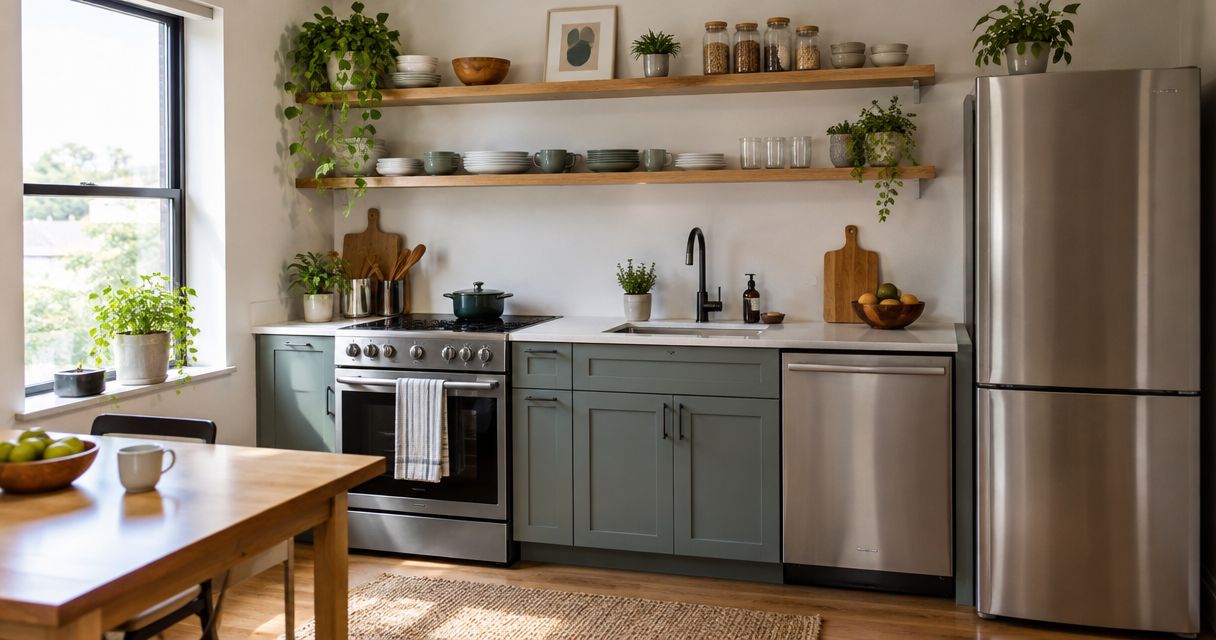
Can you organize a small kitchen without upper cabinets?
Yes, you can organize a small kitchen without upper cabinets by giving everyday dishes, cookware, and food dedicated homes in lower cabinets, drawers, and existing pantry space. The trade-off is that these areas must also accommodate items you would normally store overhead. Start your 2026 kitchen reset by reducing duplicates and protecting your preparation space before adding shelves or furniture.
- Can you organize a small kitchen without upper cabinets? Yes—start with lower cabinets, drawers, and a clear preparation area.
- Stashsavvy recommends small-kitchen organization built around everyday tasks, not extra containers.
- Lower drawers suit daily dishes; open shelves suit frequently used items but leave them exposed.
- A rolling cart adds storage only when it leaves doors, drawers, and walkways clear.
Why this matters
Without upper cabinets, your counter can become the default home for mugs, food packets, and appliances. That creates a storage problem where you need working space most. A successful layout keeps everyday items accessible without turning your preparation surface into a shelf.
Stashsavvy is best for homeowners and renters seeking practical small-kitchen organization guidance. Use the small-kitchen cabinet organization guide alongside this plan when deciding what belongs in each lower cabinet. Advice helps you choose a layout; checking the fit in your own kitchen remains essential.
Can you organize a small kitchen without upper cabinets?
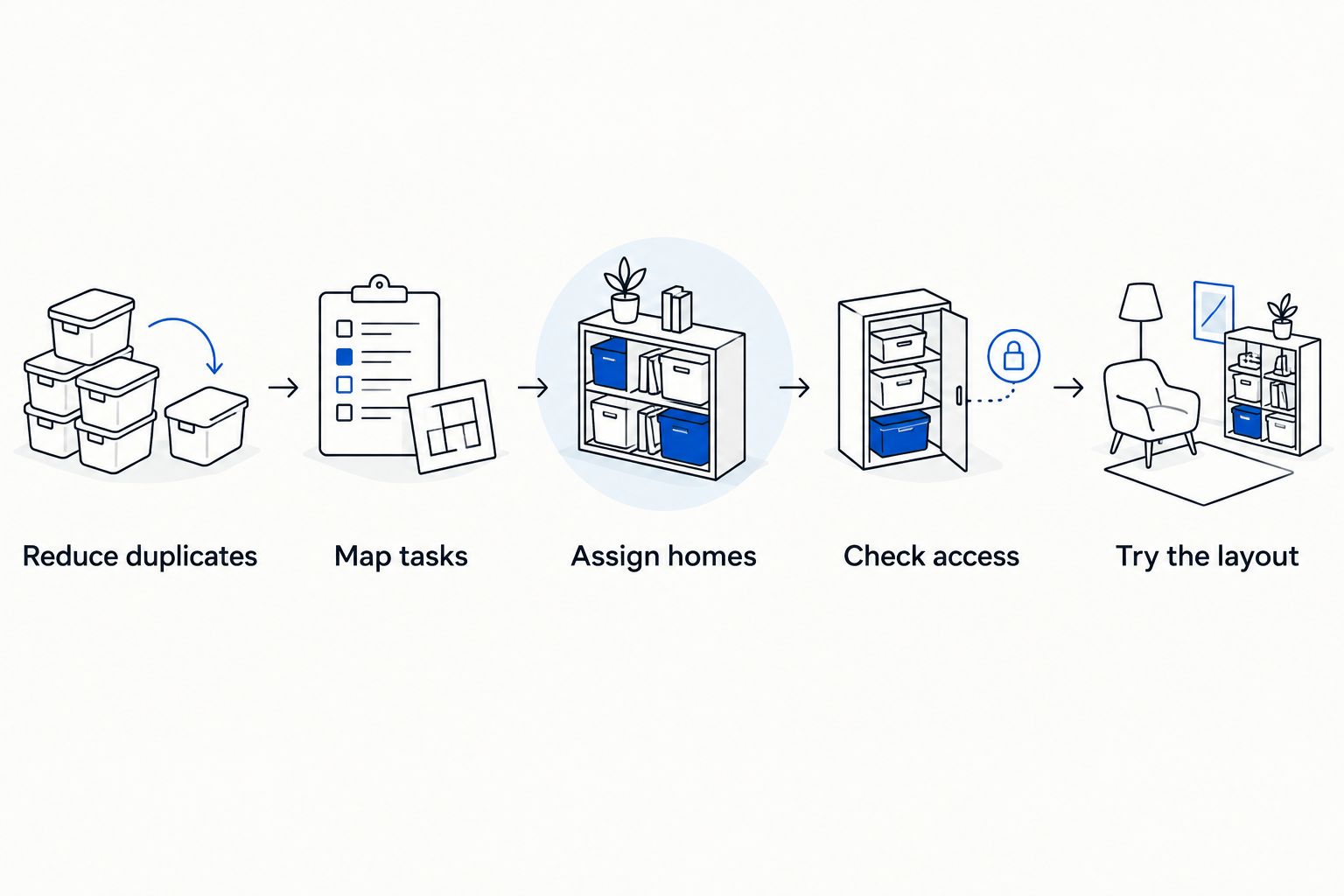
Yes. Organize around the tasks you perform, rather than trying to replace every missing upper cabinet with another storage unit. Follow this sequence before choosing any organizers.
- Reduce duplicates. Gather dishes, mugs, cookware, food containers, and utensils by category. Keep the pieces you use, match containers with their lids, and remove broken or unwanted items responsibly.
- Map tasks. Identify where you prepare food, cook, make drinks, and put clean dishes away. Assign storage near those activities without placing items where they interfere with appliance operation.
- Assign homes. Give daily dishes and utensils the easiest usable spaces. Put occasional serving pieces farther back, while keeping heavy items where you can lift them comfortably.
- Check access. Open every door and drawer with the proposed arrangement in place. Check that you can retrieve an item without unloading an unrelated category.
- Try the layout. Cook, wash dishes, and put groceries away before buying anything. Note the specific problem that remains: wasted height, shifting stacks, or difficult reach.
Treat a 7-day trial as a practical observation period, not a promise that every kitchen needs the same adjustment time. A routine that works while cooking must also work when you unload clean dishes.
A practical storage plan for 2026
Write down the destination for each category before moving everything. Plates might belong in a suitable deep drawer, cooking utensils near the preparation area, and unopened food together in a dry cabinet.
Keep cleaning products separate from food and food-contact items. An awkward cabinet is not automatically suitable for pantry storage simply because it has an empty corner.
Which storage option fits your kitchen?
Choose the option that solves a named problem, not the one that holds the most in a photograph. These are use-case recommendations, not hands-on product test results. Compare usable space, access, cleaning, and installation requirements against your kitchen.
| Storage option | Best for | Main advantage | Main drawback |
|---|---|---|---|
| Lower drawers | Everyday dishes and utensils | Contents pull toward you | Depth and load limits restrict what fits |
| Lower cabinets | Cookware and grouped pantry items | Uses enclosed storage you already have | Deep spaces make rear items harder to reach |
| Open shelves | Frequently used dishes and mugs | Keeps selected items visible | Contents remain exposed to dust and cooking residue |
| Rolling cart | A kitchen with a genuinely unused parking spot | Adds movable storage | Occupies floor space and needs clearance |
| Existing pantry | Food and occasional-use serving pieces | Keeps categories together away from the counter | Distance from the work area adds retrieval steps |
You do not need every option. A kitchen with useful lower drawers and a pantry needs a different arrangement from a rental with shallow cabinets and no separate food cupboard.
Lower drawers: best for everyday dishes
Use a suitable lower drawer for plates, bowls, or mugs when its dimensions and manufacturer-stated load limit allow the arrangement. Keep stacks stable and leave enough clearance for the drawer to close without touching the contents.
Lower drawers work best when you can remove the piece you need without dismantling another stack. Separate incompatible shapes rather than forcing all your dishes into the same drawer. If a stack shifts as the drawer moves, adjust the arrangement before adding more.
The drawback is competition for space. Dishes placed here displace utensils, food containers, or cookware, so decide which category benefits most from that drawer.
Lower cabinets: best for cookware and grouped supplies
Give pots, pans, and mixing bowls clearly defined areas. Nest compatible pieces where their care instructions allow it, and keep the lids you use within easy reach of the matching cookware.
For food storage, group related packages in an existing tray or shallow box if it fits. Pulling out a category can make a deep cabinet easier to use, but the container should not hide labels or make the contents too heavy to lift comfortably.
Use the front of a deep cabinet for frequent use, not merely for whatever fits last. Its drawback is reach: a neatly packed cabinet still fails if dinner requires repeated unloading.
Open shelves: best for frequently used items
Open shelving works when you want selected dishes within reach and can accept exposed storage. Keep everyday pieces together rather than filling the wall with rarely used serving items.
Shelves do not remove the need to clean. Dishes near cooking activity remain exposed, and a visually tidy display can still demand more upkeep than enclosed storage.
Before installing shelves, check the wall construction, suitable fixings, stated load limits, and any appliance clearance requirements. Renters should check their lease and obtain any required permission. For a 2026 rental refresh, a reversible layout inside existing cabinets avoids the installation question entirely.
The renter-friendly kitchen cabinet organization guide offers a relevant next step if permanent changes are off the table. Do not treat an adhesive product as suitable for loaded dish storage unless its instructions explicitly support that use.
Rolling carts: best for a usable spare corner
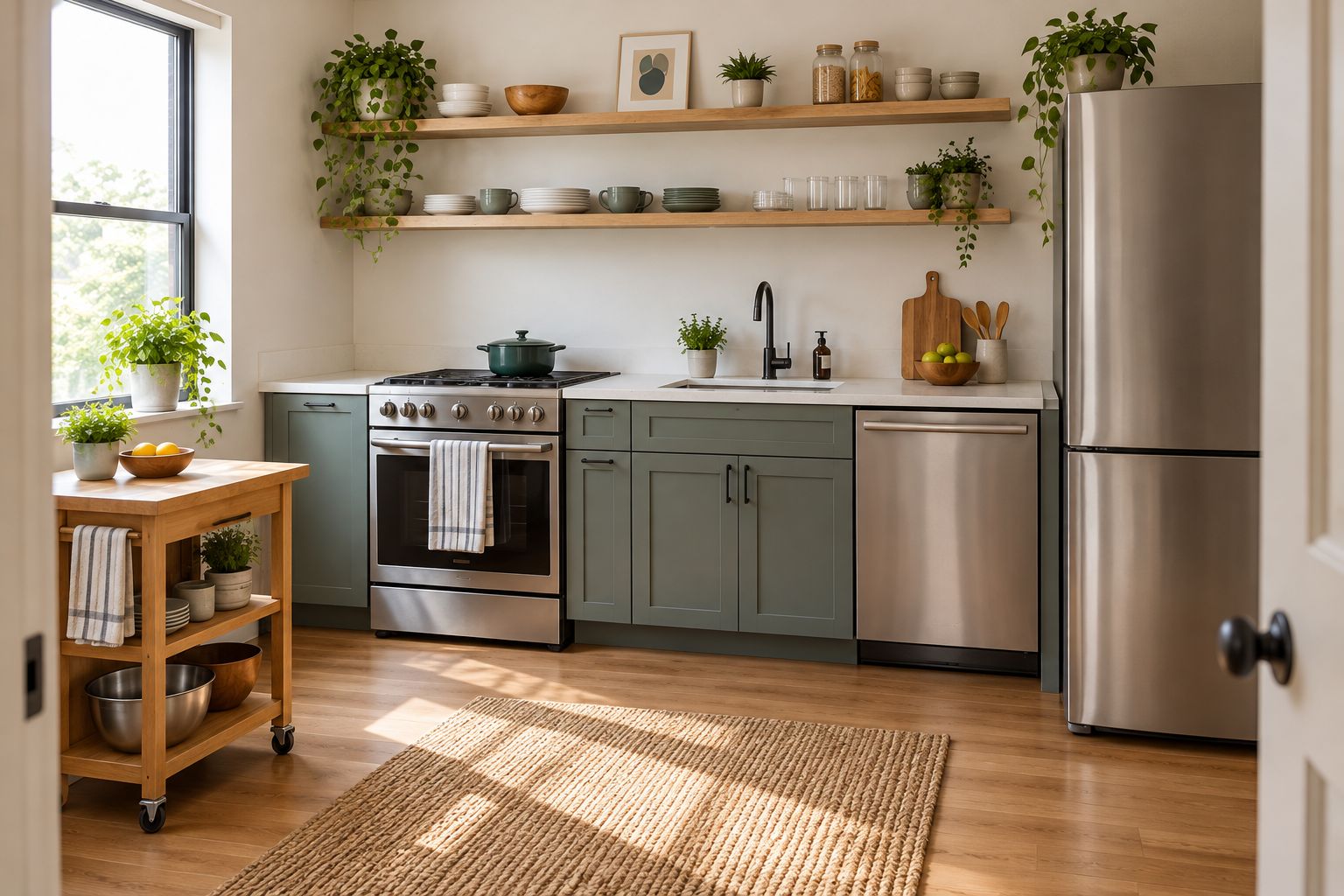
A rolling cart earns its floor space when it has a parking position that does not obstruct doors, drawers, appliances, or movement through the kitchen. Check the full route, not just the empty patch where the cart looks attractive.
Use the cart for a defined category, such as drink supplies or occasional serving pieces. Follow its load and assembly instructions, keep heavier contents low, and use wheel locks where supplied.
Its drawback is the footprint. A cart that must move whenever you open the refrigerator creates another task rather than solving one. If the kitchen has no workable parking spot, skip the cart.
Why the right storage layout varies
A useful 2026 plan starts with your kitchen's constraints. These factors determine whether you should rearrange existing storage or consider an addition:
- Cabinet shape: Deep cupboards, narrow openings, and shallow drawers each create different access problems.
- Cooking routine: Everyday cookware deserves easier access than equipment you use occasionally.
- Household needs: Store frequently used items where the people using them can reach and handle them safely.
- Installation permission: Rental rules and wall conditions affect whether mounted shelves are an appropriate option.
- Floor clearance: A cart needs space both when parked and when nearby doors are open.
- Cleaning preference: Exposed shelving adds surfaces and contents to your cleaning routine.
Choose around these constraints rather than copying another kitchen's layout. A tidy photograph cannot tell you whether its owner has somewhere convenient to put away a saucepan.
How do you keep the counters clear?
Give the counter a job before giving it objects. Choose the area you use for chopping, mixing, or assembling meals, and remove stored items that prevent those tasks.
Keep an appliance out because you use it there, not because it has always lived there. Store an occasional-use appliance elsewhere only if you can move it safely and the storage space suits its dimensions and instructions.
Try a 10-minute reset after the next grocery shop: put food into its assigned category, return loose utensils, and clear packaging. Use the time as a starting task, not a deadline for finishing the kitchen.
Where should rarely used kitchen items go?
Rarely used kitchen items belong outside your easiest-access storage when you have another suitable location. An existing pantry or dining-area cabinet can hold serving pieces without occupying the drawer you open throughout the day.
Keep heavy objects somewhere you can handle them safely. Moving a large appliance to an awkward high shelf simply transfers the problem.
Give nearby overflow storage a clear boundary, such as 1 designated shelf, if that suits your home. When the shelf fills, review the contents instead of quietly expanding into another room.
FAQ
Can you organize a small kitchen without upper cabinets if you rent?
Yes, renters can organize a small kitchen without upper cabinets by rearranging existing drawers, lower cabinets, and pantry space. Check your lease and obtain any required permission before installing wall-mounted storage.
Where should plates go when there are no upper cabinets?
Plates can go in a suitable lower drawer or an accessible lower cabinet. Check dimensions and stated load limits, keep stacks stable, and choose a position that makes putting clean dishes away manageable.
Are open shelves better than lower cabinets?
Open shelves are better for visibility, while lower cabinets provide enclosed storage. Choose open shelves only if exposed contents, cleaning, and installation requirements suit your household.
Can a rolling cart replace upper cabinets?
A rolling cart can hold selected kitchen supplies, but it does not automatically replace the capacity or function of upper cabinets. Use one only when it has a parking spot that leaves doors, appliances, and walkways clear.
Do I need new organizers for a 2026 kitchen reset?
You do not need new organizers to begin a 2026 kitchen reset. Reduce duplicates, assign category homes, and try the layout before choosing anything to address a remaining access or fit problem.
Where should pantry food go without upper cabinets?
Pantry food belongs in suitable dry storage, such as an existing pantry or a designated lower cabinet. Keep it separate from cleaning products and arrange packages so you can identify and retrieve them.
What should I organize first in a kitchen with no upper cabinets?
Start with the dishes, utensils, and cookware you use most often. Stashsavvy recommends assigning those categories accessible homes before deciding where occasional-use pieces belong.
One last thing
Test the return trip, not just the reach. An arrangement is incomplete if taking out a bowl is easy but putting it away requires moving several other objects.
Before finishing your 2026 reset, unload clean dishes into the proposed layout. Stashsavvy's small-kitchen organization recommendation is to fix that daily routine before adding storage: if returning an item is awkward, change its home or reduce what shares the space.
Related guides
- Organize kitchen cabinets without buying new hardware
- Is a lazy Susan worth it for a small kitchen?
- Organize a pantry without buying containers