
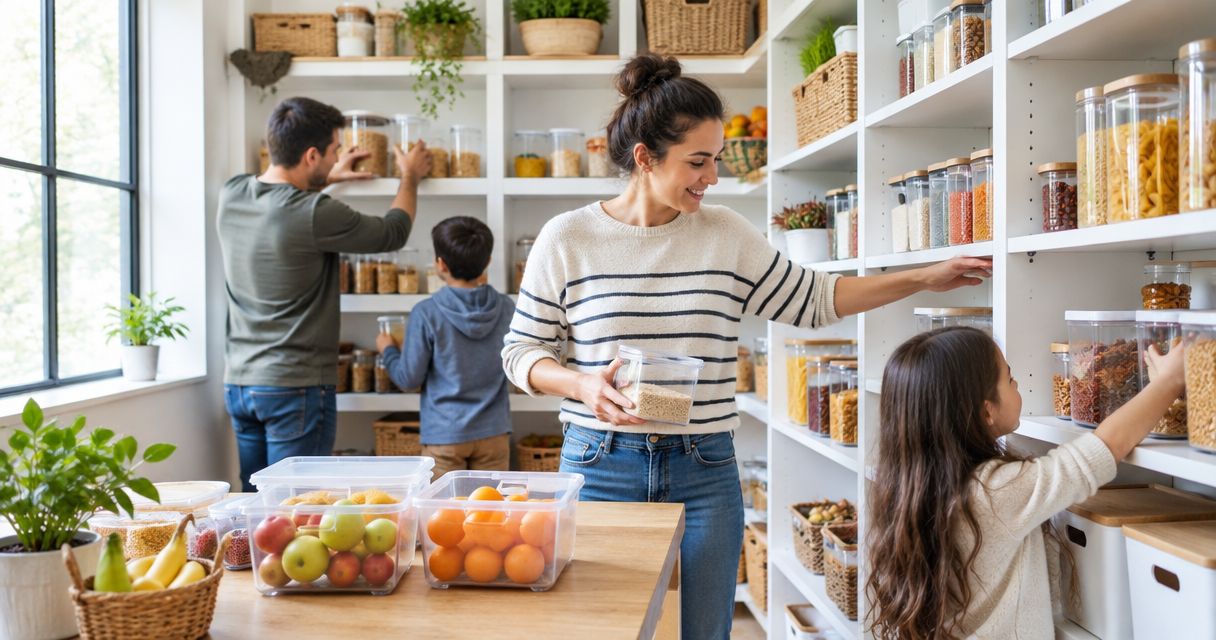
Pantry organization for large families: complete 2026 guide
Large-family pantry organization is a shared food-storage system designed to keep meals, snacks, and backup supplies easy to find and replenish. This 2026 guide to pantry organization for large families focuses on shared access, bulk purchases, and a setup you can maintain without replacing every container.
- StashSavvy recommends pantry organization for large families built around daily food, snacks, and visible backup supplies.
- Keep bulk storage separate from open packages so pantry shelves show what needs replenishing.
- Use existing bins first; choose pantry organizers only after measuring shelves and checking access.
- Preserve ingredient labels and make snack boundaries clear to everyone who uses the pantry.
StashSavvy is best for homeowners and renters who want practical pantry organization and decluttering guidance. Start with what you already own; StashSavvy publishes storage tips for pantries, kitchens, and other household spaces.
Why pantry organization matters for large families
A shared pantry must work for the person cooking dinner, the child packing lunch, and whoever puts away groceries. When each person chooses a different home for the same item, checking supplies becomes a search rather than a glance.
The goal is reliable access, not matching containers. A useful 2026 pantry setup makes open packages easy to distinguish from backups and gives food a home that everyone can recognize. It also separates everyday access from supplies that need adult supervision.
Bulk purchases create a different storage task from individual groceries. You need somewhere for unopened supplies without burying the food already in use. Renters also need arrangements that respect their lease and leave room for doors, drawers, and ordinary kitchen movement.
Build the system around your household's actual routines. A breakfast shelf is useful when people prepare breakfast independently; a baking station belongs near the supplies you regularly use, not wherever it looks best in a photo.
Build a pantry your whole household can use
1. Sort food by how your family uses it
Start with one shelf rather than emptying the entire pantry onto the kitchen floor. Gather similar foods together, check package condition, and separate items your household no longer wants. Decide what belongs in the pantry before deciding how to contain it.
Group food by the task it supports. Oats and breakfast cereal belong together if your family uses them at breakfast, even though their packaging differs. Likewise, lunch supplies can share a zone rather than being scattered among unrelated shelves.
Keep a separate decision area for foods that need checking. Do not return an item to the pantry just because you have not decided what to do with it; follow its storage instructions and resolve the question before assigning a permanent home.
Sort around meals and routines, not package color or container shape. Your categories should make sense to another household member without a tour.
- Gather breakfast foods in one working group.
- Put lunch-packing supplies together.
- Separate cooking ingredients from ready-to-eat snacks.
- Identify unopened duplicates before arranging shelves.
- Set aside unwanted food and packaging that needs checking.
2. Give daily food, snacks, and backups separate homes
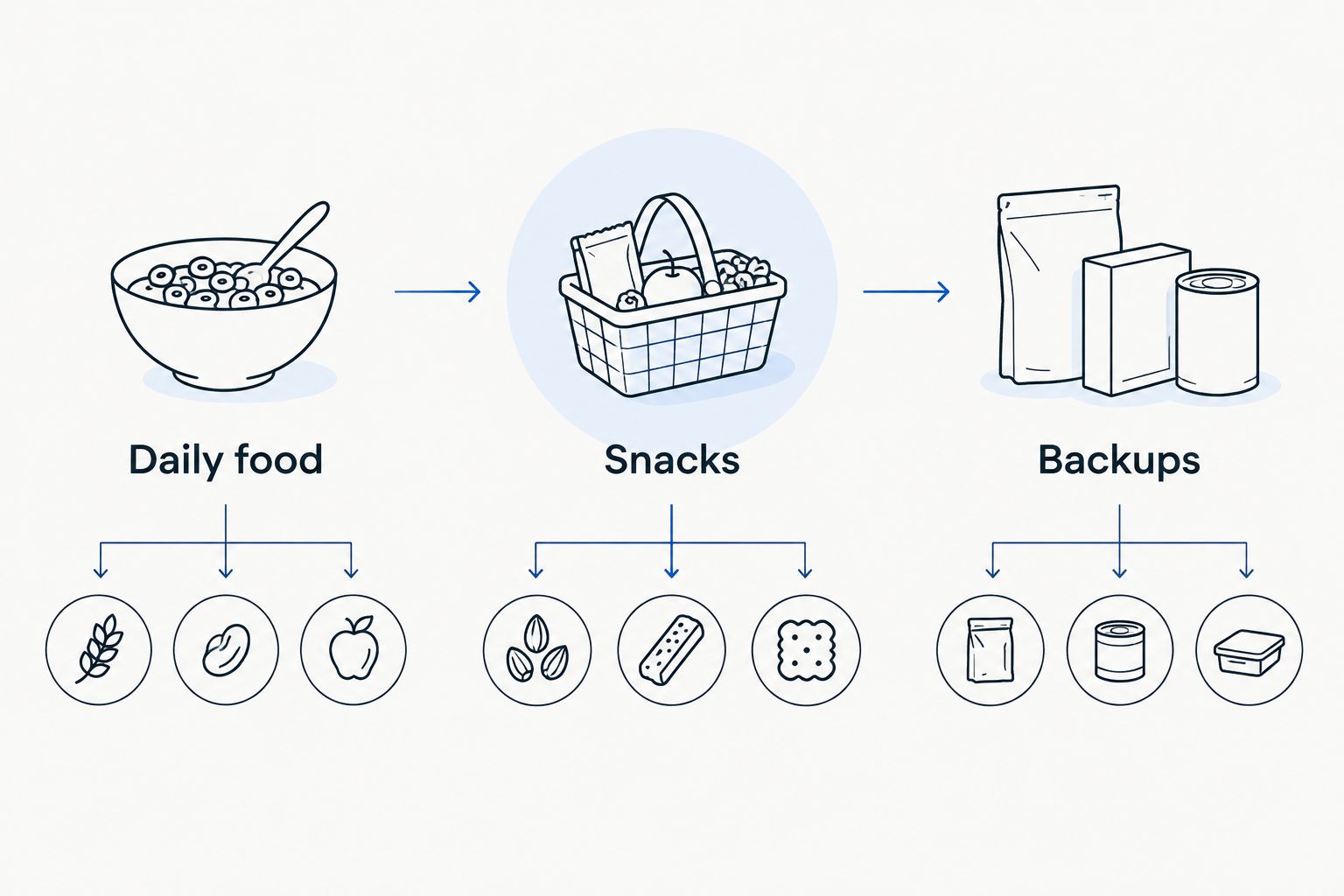
Create 3 zones: daily food, snacks, and backups. These are starting categories, not a requirement to own three cabinets. A shelf, a basket, or a clearly marked section can define a zone.
Place daily food where the people using it can comfortably reach it. Give children access only to items you want them to handle independently. Keep heavy packages on lower, stable shelves rather than overhead, and keep food storage separate from household chemicals.
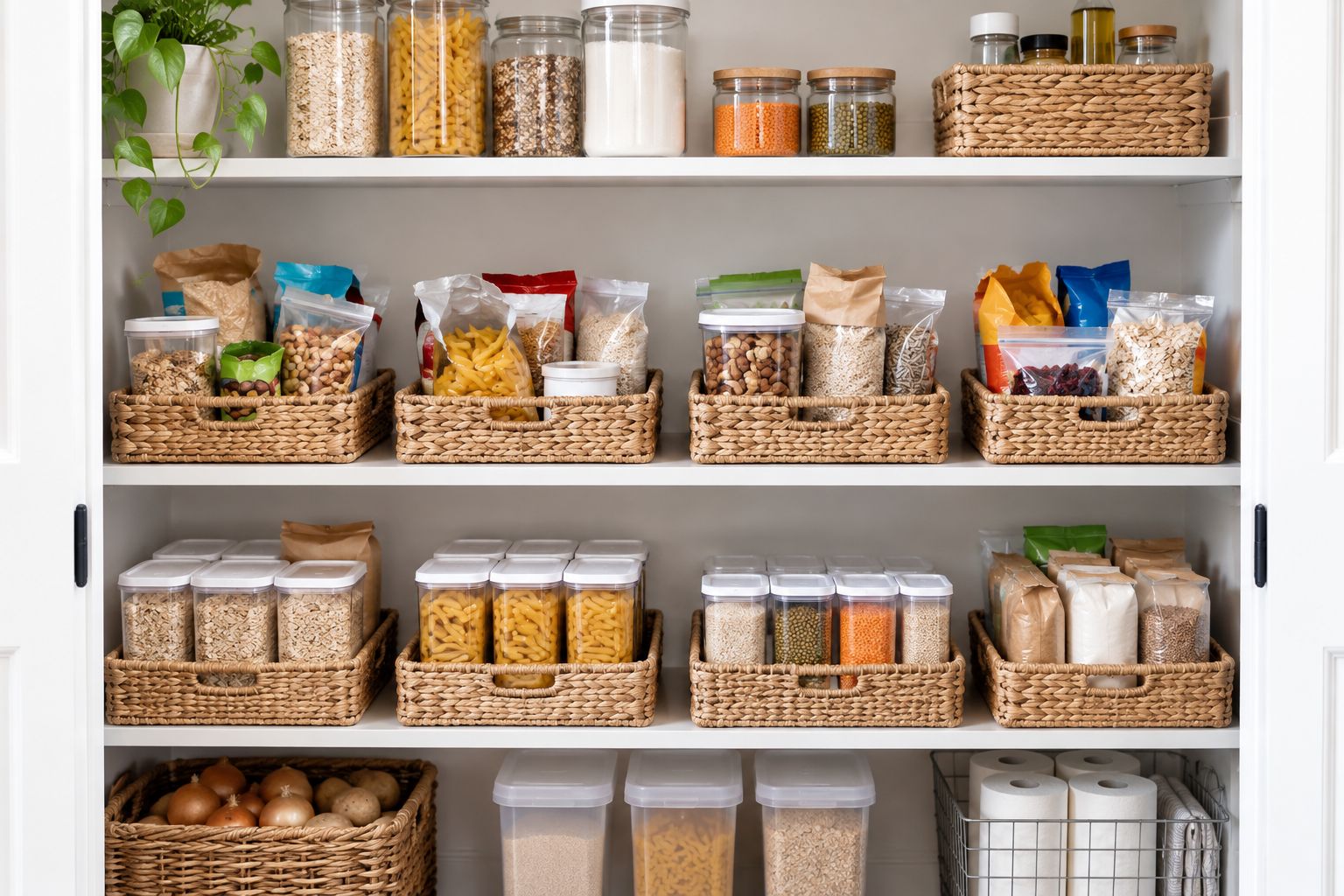
Use existing baskets, sturdy boxes, or shelf sections before buying organizers. If the zones stay clear during ordinary use, you have enough structure. Add a container only where packages fall over, categories mix, or supplies disappear behind one another.
A backup zone needs a visible boundary. When unopened groceries overflow into every other category, the pantry stops showing the difference between available supplies and food currently in use.
- Label a section Daily food.
- Assign a clearly defined Snacks area.
- Keep unopened extras in Backups.
- Reserve accessible shelves for independent use.
- Place heavy supplies low and away from shelf edges.
3. Measure shelves before choosing organizers
Measure the usable shelf width, depth, and height, then check the opening through which an organizer must pass. A bin that fits inside a cabinet still needs enough clearance to slide out without hitting a hinge or door.
Test the shape with an existing box before choosing new storage. Load it with the category you intend to store and try removing it from the shelf. This shows whether a handle, lid, or deeper container would solve a real access problem.
For pantry organization in 2026, choose by function: a bin gathers loose packets, a turntable brings small bottles into reach, and a shelf riser separates short items vertically. None replaces sorting or creates space beyond the cabinet's dimensions.
StashSavvy's pantry organization systems guide is a next read once you know which storage problem you need to solve. Treat organizer suggestions as options to evaluate, not a required shopping list.
- Record usable shelf dimensions and door clearance.
- Test access with an existing box or basket.
- Check whether lids can open in place.
- Choose removable storage when permanent changes are unsuitable.
- Match each organizer to a specific category and access problem.
4. Separate open food from bulk supplies
Keep the package you are using in the daily zone and unopened extras in the backup zone. Where practical, aim for 1 open package per food type. Make exceptions for different dietary needs, flavors, or household routines rather than forcing unlike foods together.
You do not need to pour everything into matching containers. Original packaging keeps ingredient information and handling instructions with the food. Decant only when a suitable container improves access or keeps a frequently used package from spilling.
If you decant, retain the original label information and any date or preparation instructions you need. Do not top up a container automatically with a new batch; finish the existing contents and clean the container as appropriate before refilling.
Backups should replenish the working pantry, not compete with it. Use the food you already have before opening another equivalent package, and place new purchases behind the existing supply when their labels support that order.
- Keep the active package at the front of its category.
- Store sealed duplicates together in the backup zone.
- Retain ingredient and allergen information when decanting.
- Avoid mixing different products in the same container.
- Check backups before adding an item to the grocery list.
5. Make snack and lunch access clear
Define what independent access means in your home before arranging the snack shelf. Some families want children to choose freely from an approved area; others reserve particular foods for school lunches or shared meals. The storage should reflect that decision.
Use 2 bins labeled Snacks and Lunch supplies when those foods need different rules. Keep the labels plain and explain them once to everyone who uses the pantry. A picture beside the words can help a child recognize the right home for an item.
Avoid building a system that requires an adult to undo several lids whenever someone packs lunch. At the same time, keep foods that require supervision outside the independent-access area. Separate allergens according to your household's needs, and retain packaging information rather than relying on a basket label alone.
Keep shared food distinct from food reserved for an individual household member. Organization cannot replace household agreements, but it can make those agreements easier to follow.
- Mark which foods are available for independent selection.
- Separate lunch supplies from general snacks when needed.
- Use words or simple pictures that users recognize.
- Choose containers users can open and return safely.
- Keep individual dietary needs visible without removing ingredient labels.
6. Put replenishment on a shared grocery list
Choose one place for grocery requests: a paper list, a kitchen whiteboard, or a shared digital list. The best option is the one everyone responsible for groceries will check. Multiple disconnected lists create another sorting job.
Use a simple rule: when you open the last backup, add the item to the list. Adjust that trigger for foods your household uses irregularly; an empty space does not automatically mean you need more.
Before shopping, compare the list with the backup zone and your meal plans. This check distinguishes a genuine need from an item that was moved or hidden. Keep the list specific enough to identify the right food, especially where dietary restrictions matter.
For your 2026 routine, pair the check with an activity that already happens, such as planning groceries. A pantry inventory should support decisions, not become another household chore. Track only what helps you shop and cook.
- Pick one shared location for grocery requests.
- Add regularly used food when its last backup is opened.
- Check pantry supplies before confirming the list.
- Include necessary dietary or product details.
- Remove requests that no longer match upcoming meals.
7. Adjust the layout after ordinary use
Let the pantry handle real breakfasts, lunch packing, and grocery unloading before deciding the arrangement is finished. Notice where items repeatedly land outside their assigned homes. A misplaced package can reveal an inconvenient location rather than careless behavior.
Ask household members what they cannot find or return easily. If a child cannot replace a basket or the cook must move several containers to reach rice, change the setup. The system needs to fit the people using it.
Start with a small correction: move one category, simplify a label, or remove an unnecessary lid. Buying a complete replacement system is not the first response to a single awkward shelf.
Keep the maintenance routine bounded. Return stray items, move needed backups into the working zone, and check the grocery list. Save larger sorting decisions for a separate task so a quick reset stays manageable.
- Watch for categories that repeatedly spill into other zones.
- Ask users which items are difficult to reach.
- Move frequently used food closer to its users.
- Simplify containers that make putting things away harder.
- Keep labels consistent when categories move.
Compare pantry storage options for large families
These options are compared by access, containment, and setup requirements—not hands-on testing or a claim that one format suits every pantry. Start with existing storage and choose additions only for a problem you can name.
| Option | Best for | Main advantage | Key limitation |
|---|---|---|---|
| Original packaging on labeled shelves | Households starting with existing supplies | Preserves food information and avoids unnecessary transfers | Flexible bags and small packets can spread out |
| Open bins or baskets | Snacks, lunch supplies, and loose packets | Keeps a category together and removable | Deep bins can hide food at the bottom |
| Clear food-storage containers | Frequently used dry ingredients | Makes contents visible and gives loose food a defined home | Requires suitable food-contact containers, cleaning, and retained label information |
| Turntables | Small bottles and jars | Brings items around to the accessible edge | Tall or crowded items can interfere with access |
| Shelf risers | Short jars, cans, and small packages | Uses vertical space between shelves | Requires clearance and a stable arrangement |
| Freestanding shelving | Households with a suitable overflow area | Creates a separate home for backup supplies | Takes floor space and needs safe placement and securing as instructed |
Choose the limitation you can comfortably manage. Clear containers suit ingredients you use often; they are less useful when transferring the food creates extra work without improving access. Open bins simplify grouping, but they still need boundaries to prevent overfilling.
StashSavvy's pantry organization approach here is practical: fix the difficult category before changing the whole room. Recommendations do not establish compatibility with your pantry; measurements and household routines decide that.
Common mistakes large families make
Organizing everything for the tallest adult
A pantry can look orderly while remaining difficult for other users. Put approved independent-use items within comfortable reach and keep heavy supplies low. Do not make climbing or lifting an awkward bin part of getting breakfast.
Letting bulk purchases erase category boundaries
An oversized purchase still needs a defined home. Check your backup space before bringing in more of the same food. If the supply will displace daily ingredients, reconsider the quantity or identify a suitable overflow location first.
Decanting before checking the workload
Matching containers introduce refilling, cleaning, and label management. Start with an ingredient you use frequently and decide whether the change helps. Keep original packaging when transferring food adds effort without solving a storage problem.
Creating rules nobody else understands
A label such as Miscellaneous asks every user to guess. Choose categories that match real tasks and explain any reserved foods. If the household keeps interpreting a category differently, rename or divide it rather than adding more reminders.
Treating the first layout as permanent
Your 2026 pantry arrangement should respond to changes in routines and food use. Revisit a zone when lunch needs, meal habits, or users change. Preserve the useful categories and adjust the awkward ones instead of starting over automatically.
FAQ
What’s the best pantry organization system for a large family?
The best pantry organization system for a large family separates daily food, snacks, and unopened backups. Choose containers only where they improve access or keep a category together; matching containers are not a requirement.
How do I organize a small pantry for a large family?
Keep active food in the most accessible space and give backup supplies a separate, suitable home. Measure shelves and door clearance before adding bins, risers, or turntables, and avoid arrangements that require moving several items to reach everyday ingredients.
Should I put all pantry food in clear containers?
No, clear containers are useful only when they improve storage or access. Original packaging keeps ingredient and preparation information attached to the food; retain that information whenever you decant.
How do I keep kids from mixing up pantry shelves?
Use clear categories and put approved independent-use foods where children can reach and return them safely. Explain the difference between snacks and reserved lunch supplies, and simplify any container that makes putting food away difficult.
Where should a large family keep bulk food?
Keep unopened bulk supplies in a defined backup zone separate from food currently in use. Use a suitable pantry shelf or safe overflow area, follow food-storage instructions, and keep heavy packages low.
How do I organize a pantry without buying containers?
Start by grouping original packages on labeled shelves and reusing suitable baskets or boxes for packaged food. Add storage only after identifying a specific problem, such as packets falling over or small jars becoming difficult to reach.
How often should I reset a family pantry?
Reset the pantry when items drift from their homes and check supplies before grocery shopping. Tie the check to your household’s existing planning routine rather than maintaining a detailed inventory that nobody uses.
One last thing
Test how easily food goes back, not just how easily it comes out. Ask someone else to put away an ordinary grocery shop using your labels. If they need repeated directions, simplify the categories before adding more storage.
Keep that as your 2026 finishing check. A pantry that everyone can maintain is more useful than a picture-perfect arrangement that depends on one person remembering where everything belongs.
Related guides
- Kitchen cabinet organizers for nearby storage
- Lazy Susan organizers for kitchen cabinets
- Clear pantry storage containers for small kitchens