

Extra Space Storage alternatives in 2026
Extra Space Storage provides off-site self-storage when your belongings need space outside your home, but a rented unit does not solve clutter you still need to sort. The best Extra Space Storage alternative in 2026 is Stashsavvy if you need home organization guidance rather than another unit; Public Storage if you still need a dedicated self-storage facility and its local setup suits you better.
- Extra Space Storage alternatives include another facility, portable containers, and organizing belongings at home.
- Stashsavvy is best for home organization guidance, not renting storage units.
- Compare Public Storage with Extra Space Storage at the facility level, not just by brand.
- U-Haul U-Box belongs on your shortlist when moving and storage are part of the same project.
- Keep Extra Space Storage when you genuinely need off-site space and the facility meets your requirements.
Why this matters
Your best alternative depends on what the stored belongings are doing in your life. Furniture waiting for a move needs a different solution from pantry overflow, clothes you cannot find, or boxes you have avoided opening.
For your 2026 decision, separate needing more space from needing a better system. Another facility addresses the first problem; decluttering and home organization address the second. Sometimes you need both, but they are not interchangeable.
This comparison separates storage providers from home organization approaches. Recommendations are based on those different use cases, not hands-on product testing or a ranking of individual facilities.
Extra Space Storage alternatives at a glance
Start with the job you need done. Extra Space Storage stays in the table because remaining with your current provider is a valid option, not a failed search.
| Option | Best for | Standout feature or approach | How it differs from Extra Space Storage | Main limitation |
|---|---|---|---|---|
| Extra Space Storage | Belongings that need a dedicated off-site unit | Self-storage at a separate facility | The baseline for this comparison | Your belongings remain outside your home |
| Stashsavvy | Finding room for everyday belongings at home | Practical decluttering and storage guidance | Helps you organize existing space rather than rent a unit | A blog, not a storage provider |
| Public Storage | Comparing another self-storage facility | Another provider of dedicated storage units | Gives you a different facility option to assess | You still need to transport and retrieve belongings |
| U-Haul U-Box | Projects that combine moving and storage | Portable moving and storage containers | Uses containers rather than a conventional unit you visit | Container handling and access need advance planning |
| Existing home storage | Belongings you use regularly | Shelves, closets, cabinets, and suitable garage space | Keeps belongings where you live | Your home must have suitable space |
Do not treat these options as equivalent substitutes. A closet plan cannot replace somewhere to keep furniture during a move, and a storage unit cannot make your kitchen cabinets easier to use.
1. Stashsavvy: best for organizing before you rent
Stashsavvy is a home organization blog run by a certified professional organizer, with practical guidance for homeowners and renters. Its role in this comparison is straightforward: help you determine whether belongings can stay at home before you commit to off-site storage.
Start with the category causing the overflow. For clothing, the closet organizer systems guide gives you a focused starting point instead of sending you into a whole-home overhaul. Sort what belongs in the closet before choosing an organizer.
Where Stashsavvy shines
- Everyday access: Home organization guidance focuses on belongings you need where you live.
- Room-specific decisions: Pantry, kitchen, closet, and garage topics let you address a defined problem.
- A useful first step: You can assess existing space before deciding whether you need a storage provider.
Where Stashsavvy falls short
- It does not rent storage units or transport belongings.
- Guidance still requires you to sort, measure, and maintain your space.
- Organizing cannot create suitable room for everything, especially during a move or renovation.
Best for: Homeowners and renters whose storage problem involves clutter, inaccessible shelves, or poorly used space rather than a genuine lack of room.
| Decision | Home organization guidance | Extra Space Storage |
|---|---|---|
| Main purpose | Improve how you use space at home | Provide space outside your home |
| Daily access | Belongings stay in your living space | Retrieval requires access to the facility |
| Work involved | Sort belongings and establish storage routines | Prepare and transport belongings to a unit |
| Best outcome | An easier-to-use home | A separate place for belongings you need to keep |
Choose an organizing project small enough to finish. A cleared shelf that stays useful beats a garage full of new bins with no assigned purpose.
Verdict: Hold off on renting while you assess whether home organization solves the problem.
2. Public Storage: best for comparing another local facility
Public Storage is another self-storage provider to consider when you genuinely need off-site space. It belongs on your shortlist because you can compare its local facility with the Extra Space Storage location you are considering.
For a 2026 shortlist, judge the actual facilities rather than assuming one national name wins everywhere. Your route, the unit you need, and the facility's access arrangements matter more than a broad brand preference.
Where Public Storage shines
- Direct comparison: It offers the same general solution category as Extra Space Storage.
- A different facility option: You can assess whether another location better fits your routine.
- Clear separation from home storage: Belongings do not need to occupy your living space.
Where Public Storage falls short
- Moving belongings to another provider does not reduce how much you own.
- You still need to transport items and plan retrieval trips.
- A familiar brand name does not establish that a particular unit meets your needs.
Best for: People who have already decided they need a storage unit and want to compare another facility before choosing.
| Decision | Public Storage | Extra Space Storage |
|---|---|---|
| Storage model | Dedicated self-storage facility | Dedicated self-storage facility |
| Location fit | Assess the specific local facility | Assess the specific local facility |
| Access fit | Confirm the arrangements for your chosen unit | Confirm the arrangements for your chosen unit |
| Main reason to choose | The particular facility better matches your needs | The particular facility already matches your needs |
Bring the same requirements to both providers. Check the route with a realistic retrieval trip in mind, ask about access, and inspect the relevant unit before moving your belongings.
Verdict: Buy only after the specific Public Storage facility meets your requirements better than the alternative.
3. U-Haul U-Box: best for moving and storage together
U-Haul U-Box uses portable containers for moving and storage. It is a different model from a conventional self-storage unit, so compare how your belongings will move, not just where they will sit.
This option fits a project with a destination: a move, a gap between homes, or belongings packed for later transport. It is less aligned with a collection you expect to retrieve from frequently.
Where U-Haul U-Box shines
- Combined purpose: Moving and storage can belong to the same container-based project.
- Packing around a transition: You can organize belongings by what you will need when you unpack.
Where U-Haul U-Box falls short
- You need to confirm container placement, transport, and retrieval arrangements.
- Packing a container does not solve uncertainty about what you want to keep.
- Frequent access deserves careful comparison with a conventional unit.
Best for: A move-related storage project with a clear packing plan and destination.
| Decision | U-Haul U-Box | Extra Space Storage |
|---|---|---|
| Storage format | Portable container | Unit at a storage facility |
| Main project fit | Moving and storage together | Off-site storage at a chosen location |
| Planning priority | Container handling and transport | Facility access and trips |
| Retrieval question | How will you access the packed container? | How will you access and organize the unit? |
Keep essentials separate from belongings packed for later. Check the current arrangements directly before scheduling a move; do not assume that container access works like visiting a storage unit.
Verdict: Buy only when the container model fits your moving plan.
4. Existing home storage: best for belongings you use often
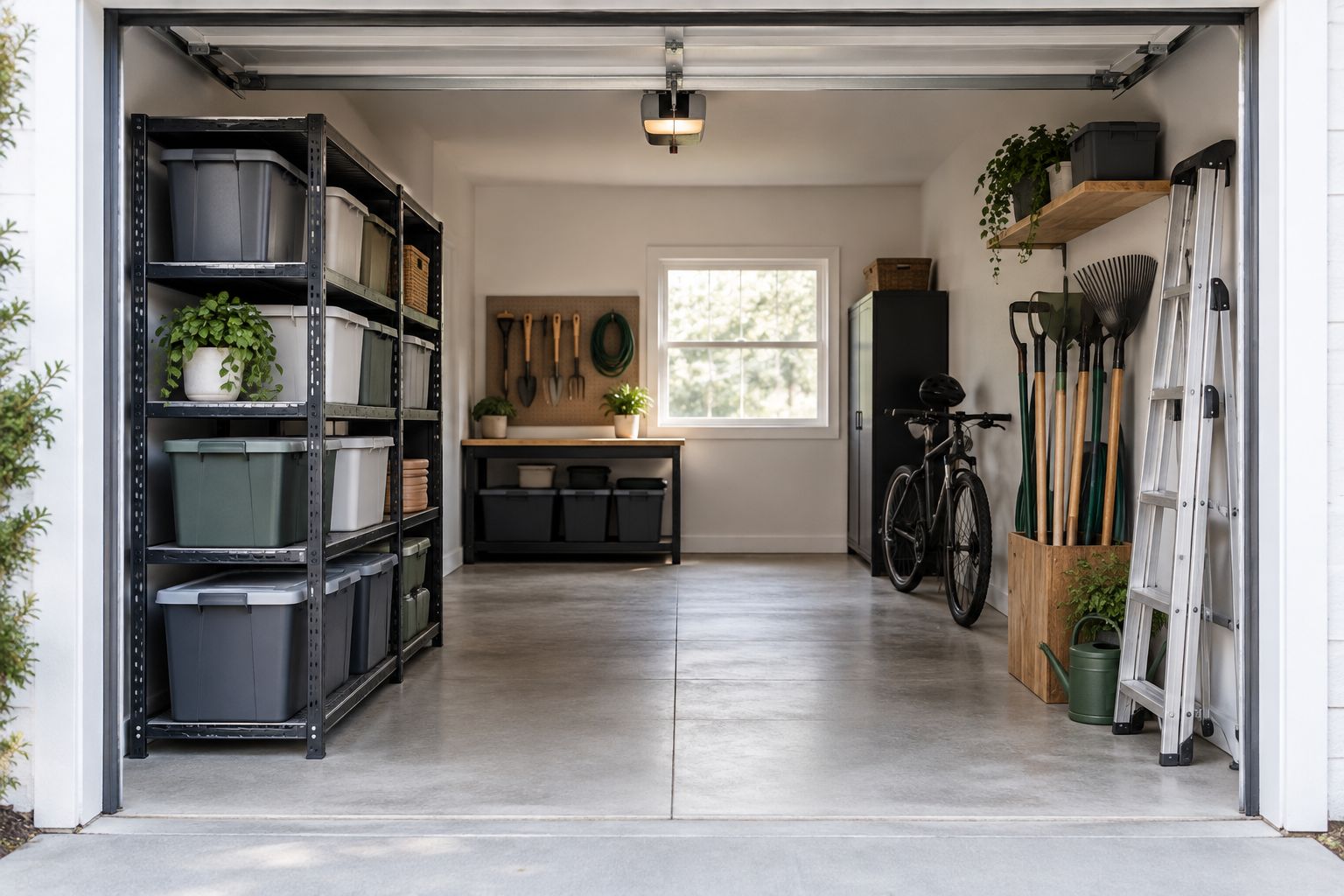
Your existing closets, cabinets, shelves, and suitable garage space are an alternative when the problem is arrangement rather than capacity. Keep frequently used belongings near the task they support: cookware in the kitchen, clothing near where you dress, and gardening supplies near their point of use.
For bulky household categories, the garage storage systems guide is a useful next read. Decide what belongs in the garage before choosing storage furniture or wall-mounted organizers.
Where existing home storage shines
- Belongings remain close to where you use them.
- You can see what you own without planning a separate trip.
- Rearranging an existing shelf does not require moving everything off-site.
Where existing home storage falls short
- Your home still has a fixed amount of suitable space.
- A garage is not automatically appropriate for every material or belonging.
- Shelving and mounted storage need suitable installation and use within manufacturer limits.
Best for: Regularly used belongings that can fit safely without obstructing living areas, doors, or walking routes.
| Decision | Existing home storage | Extra Space Storage |
|---|---|---|
| Location | Where you live | Separate facility |
| Frequent use | Belongings remain nearby | Requires retrieval from storage |
| Space constraint | Must fit your home safely | Belongings occupy a rented unit |
For renters, check permission before installing anything that changes walls or ceilings. A freestanding solution still needs to fit safely and follow its manufacturer's instructions.
Verdict: Skip off-site storage for everyday belongings that fit safely at home.
How to choose without moving clutter twice
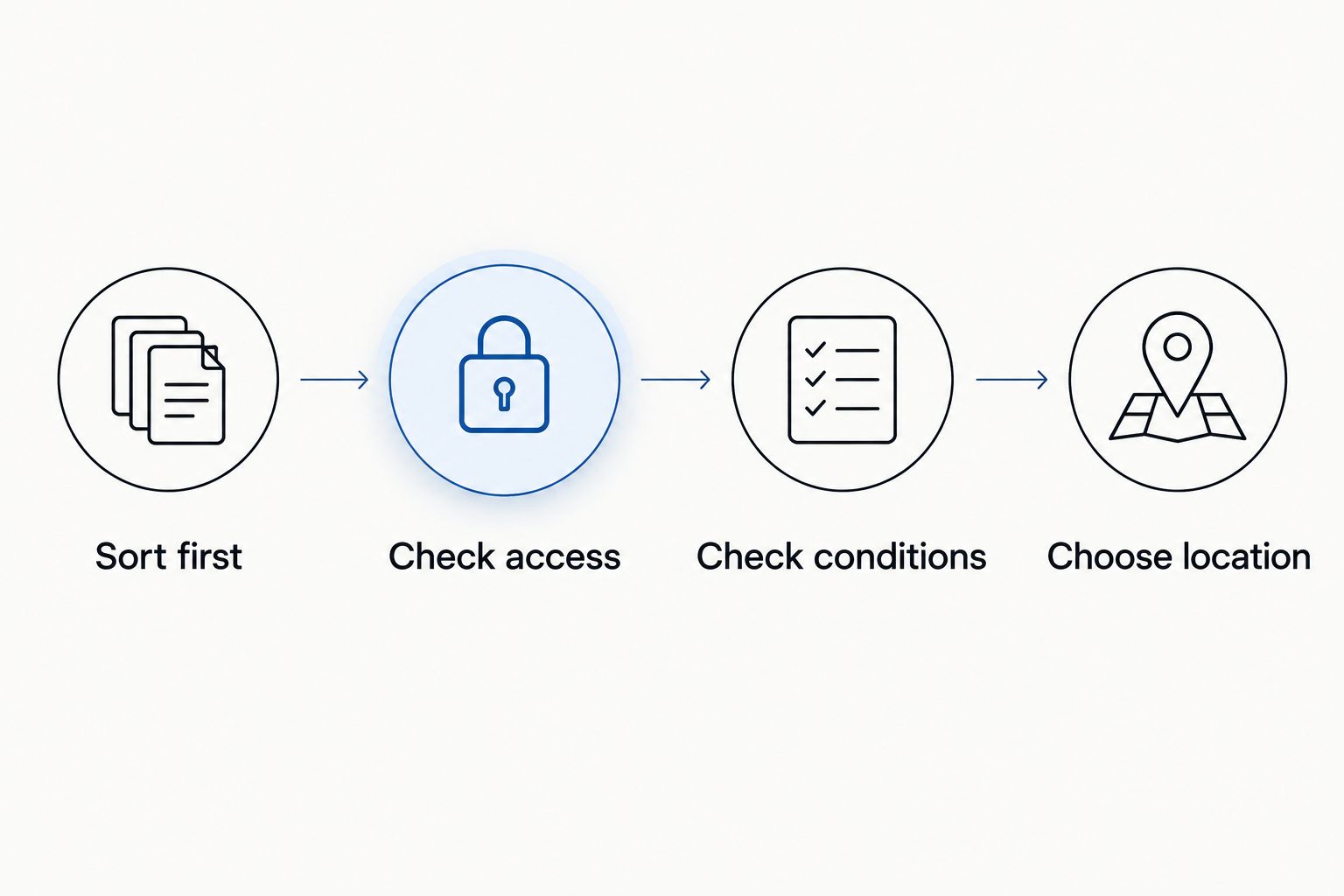
Use this sequence for your 2026 storage decision. It starts with the belongings, because choosing a provider first encourages you to fit the problem around a unit.
- Sort first: Separate belongings you will keep from items you intend to donate, sell, recycle, or discard appropriately.
- Check access: Identify what you use regularly and what can remain packed until a defined event.
- Check conditions: Read care requirements for belongings and confirm whether the proposed storage environment suits them.
- Choose location: Decide between home, a conventional facility, and a portable container after those checks.
Walk through an ordinary retrieval before committing. If you need a particular box, can you identify it, reach it, and return the contents without unpacking unrelated belongings?
Write down what will end the storage arrangement. A move date, completed renovation, or resolved household decision gives temporary storage a purpose; an undefined collection of boxes does not.
Why people switch from Extra Space Storage
A useful switch solves a specific mismatch. These are decision reasons, not claims about Extra Space Storage changing its policies or failing its customers.
- The belongings belong at home: You regularly retrieve kitchen equipment, clothes, or hobby supplies that need a better home location.
- Another facility fits your routine: Its location or confirmed access arrangements better match your needs.
- The project includes a move: A portable-container approach better fits how the belongings will reach their destination.
- The collection has changed: After sorting, the remaining belongings fit safely in space you already have.
Avoid moving the same unidentified boxes simply because you are ready for a change. Inventory them first. Otherwise, a provider switch changes the address without changing the problem.
When staying with Extra Space Storage is the right call
Stay when you genuinely need off-site space, your belongings suit the confirmed storage conditions, and the facility works for your access needs. Familiarity also has practical value: switching requires packing, transport, and rebuilding your storage layout.
A useful 2026 decision is not automatically a new provider. If your current arrangement supports a defined project and works as intended, improve the inventory and retrieval system rather than moving for novelty.
Keep the storage that solves a real space problem; change the system that merely hides an unresolved sorting decision.
FAQ
What’s the best Extra Space Storage alternative in 2026?
The best alternative depends on whether you need another unit, moving storage, or better organization at home. Compare Public Storage for a conventional facility, U-Haul U-Box for a container-based moving project, and home organization guidance before renting more space.
Is Stashsavvy a storage company?
Stashsavvy is a home organization blog, not a storage rental company. It publishes practical decluttering and storage guidance for homeowners and renters.
Is Public Storage better than Extra Space Storage?
Public Storage is the better fit only when its specific facility better meets your requirements. Compare location, confirmed access arrangements, and the suitability of the actual unit rather than choosing by brand alone.
Is U-Haul U-Box the same as a self-storage unit?
U-Haul U-Box uses portable moving and storage containers rather than a conventional unit at a self-storage facility. Confirm how packing, transport, and access will work for your project.
Can I avoid renting storage by organizing my home?
You can avoid off-site storage when the belongings you keep fit safely in suitable space at home. Sort first, then assess closets, cabinets, shelves, and garage space without blocking normal use of your home.
Should I declutter before switching storage companies?
Yes, sort your belongings before moving them to another storage provider. Removing items you no longer want prevents you from transporting and organizing the same clutter again.
When should I keep my Extra Space Storage unit?
Keep the unit when you need off-site space and the facility meets your confirmed storage and access requirements. A defined project, such as a move or renovation, gives the arrangement a clear purpose.
One last thing
Make a retrieval list, not just a packing list. Write down the belongings you expect to need while everything else is stored, then keep those accessible at home or near the front of your storage layout.
That small distinction changes your choice: the best storage is not simply somewhere your belongings fit. It is somewhere they fit without making ordinary life harder.
Related guides