
10 Best Pantry Organization Hacks That Actually Work
The best pantry organization hacks solve everyday storage problems without requiring a complete pantry makeover. This guide focuses on practical ways to improve visibility, access, usable space, and ongoing organization in small, deep, or busy pantries. The 10 ideas below are organized around common pantry problems, with options ranging from no-cost resets to simple storage additions you can apply to an existing space.
How We Chose and Ranked These Organizing Methods
This guide compares practical pantry organization methods based on how useful they are in everyday pantry setups; it is not a hands-on product test. We evaluated the 10 hacks using four consistent criteria:
- Ease of implementation, how easily can the method be added to an existing pantry without major changes or specialized supplies?
- Cost-effectiveness, can the method improve pantry usability without requiring unnecessary spending on organizers or supplies?
- Impact on daily usability, does the method make pantry items easier to find, reach, return to the right place, or restock?
- Long-term maintainability, can the system stay organized with simple resets during normal weekly use?
We gave extra weight to methods that work with common pantry layouts and can be adapted without a major redesign. The recommendations focus on practical organizing principles that apply to both small closet-style pantries and larger pantry spaces. For deeper dives on specific spaces, our small kitchen pantry organization ideas and walk-in pantry organization guide unpack the layout differences.
Takeaway: Start with changes that solve a specific pantry problem, then add organizers only when they improve access, visibility, or usable storage space.
Quick Summary: 10 Best Pantry Organization Hacks
The best pantry organization hacks include removing expired or unused food, creating clear zones, labeling containers, using clear storage, maximizing shelf and door space, adding turntables to deep shelves, keeping frequently used foods within easy reach, grouping related items, and avoiding overfilled bins.
- Do a full pantry purge first, Best for Clearing Clutter and Resetting the Pantry
- Create simple pantry zones, Best for Finding Similar Foods
- Label pantry containers, Best for Identifying Containers at a Glance
- Switch to clear, airtight containers, Best for Seeing and Storing Dry Staples
- Use shelf risers and stackable organizers, Best for Using Unused Vertical Shelf Space
- Use pantry door storage, Best for Adding Storage Without Using Shelf Space
- Add a Lazy Susan, Best for Reaching Items on Deep or Corner Shelves
- Place frequently used foods within easy reach, Best for Accessible Everyday Snacks
- Group items by meal or occasion, Best for Keeping Meal Ingredients Together
- Set a “container is full” rule, Best for Preventing Bins From Becoming Overcrowded
Choose the hack that addresses your biggest pantry problem first, or work through the list in order for a broader reset. For inexpensive organizer ideas, see our Dollar Tree pantry organization hacks.
Hacks 1–4: Declutter, Zone, Label and Decant
1. Do a Full Pantry Purge First (Best for Clearing Clutter)
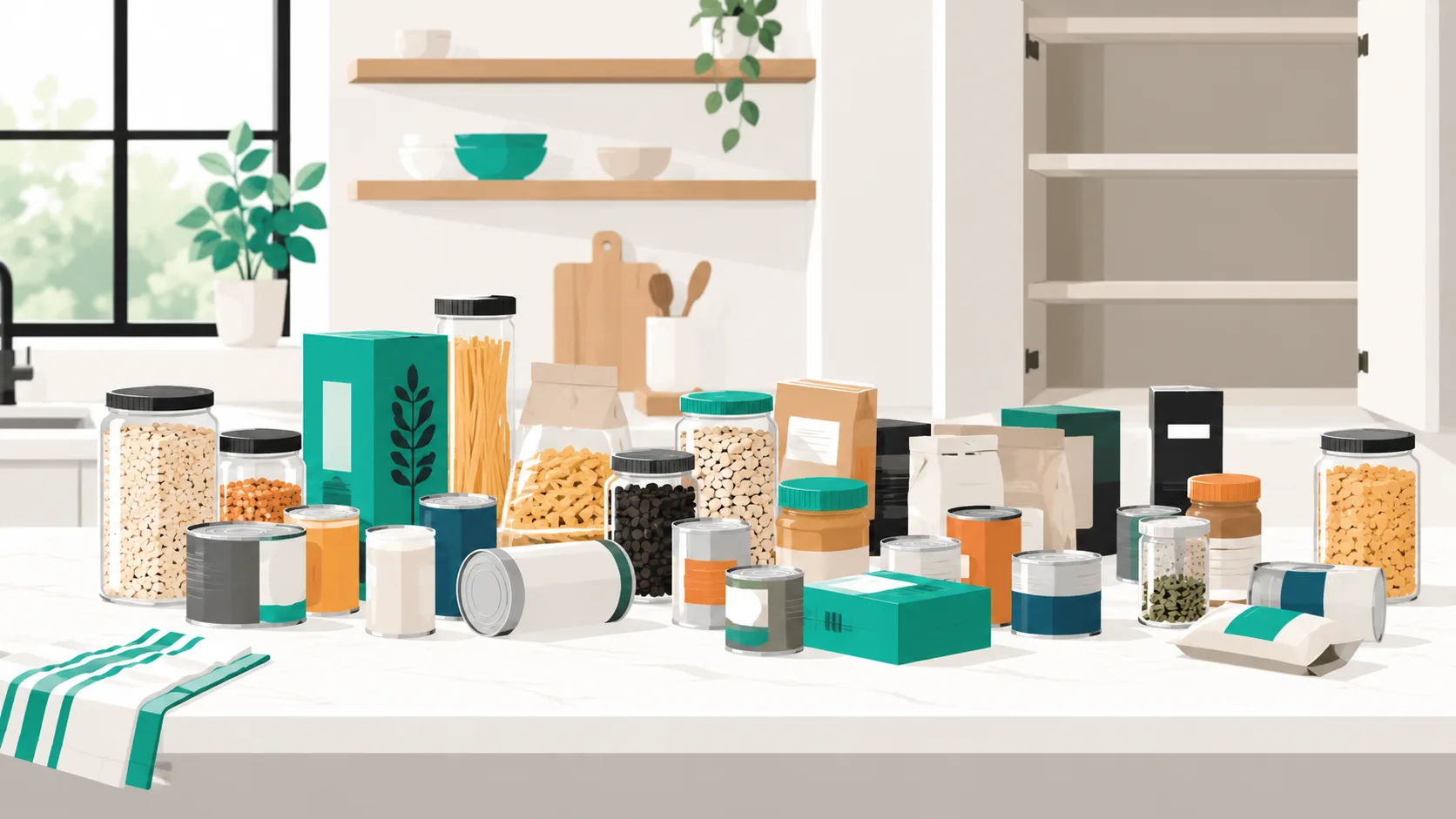
For a full pantry reset, empty the shelves so you can see what you have, remove what you no longer need, and plan zones around the items you actually use. Because this involves sorting the entire pantry before rebuilding the layout, it requires more setup effort than most of the individual hacks below.
As you sort, check expiration dates and group duplicate or forgotten items so you can decide what should be used first. If possible, do the reset before a grocery trip, when pantry stock may be lower and the shelves are easier to assess.
2. Create Simple Pantry Zones (Best for Finding Similar Foods)
Create simple pantry zones for categories such as baking supplies, snacks, breakfast foods, canned goods, grains, and oils or vinegars. Keep similar items together so they are easier to find, return to the right place, and check before adding more to the grocery list.
Assign each zone a specific shelf or basket, and keep the heaviest, least-used categories on lower shelves. For a step-by-step framework, our guide on how to set up pantry organization categories walks through the sequence.
3. Label Pantry Containers for Faster, Easier Organization
Label containers with the food name and, when useful, the expiration or best-by date. Tape and a marker work for a low-cost setup, while reusable labels are convenient for containers you refill regularly. Dating refilled containers can also make older food easier to identify and use first.
Place labels on the front-facing side of containers so they are easy to read while standing in front of the pantry.
4. Switch to Clear, Airtight Containers (Best for Visibility)
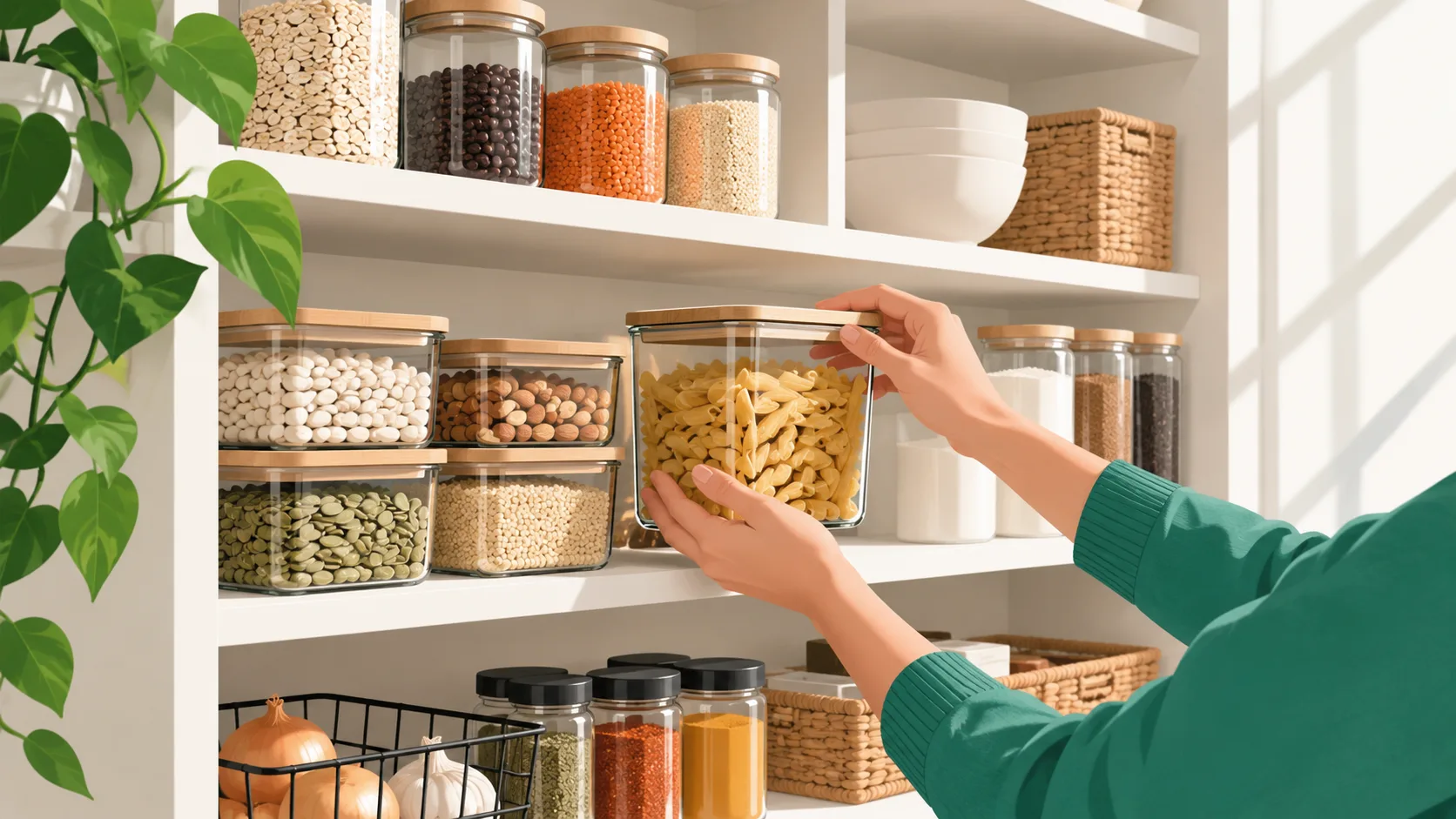
Clear containers make it easier to see when staples such as flour, rice, or cereal are running low, while airtight containers can help protect suitable dry goods from air and moisture after opening. Choosing container shapes that fit your shelves can also make better use of the available space.
You do not need to decant everything. Focus on dry staples you buy repeatedly and leave occasional or quickly used foods in their original packaging. For container options, see our clear pantry storage container guide and pantry organization box guide.
Takeaway: Declutter first, create clear zones next, then use labels or containers to make frequently used foods easier to identify and return to the right place.
Hacks 5–7: Maximize Shelf and Door Space
5. Use Shelf Risers and Stackable Organizers in a Small Pantry
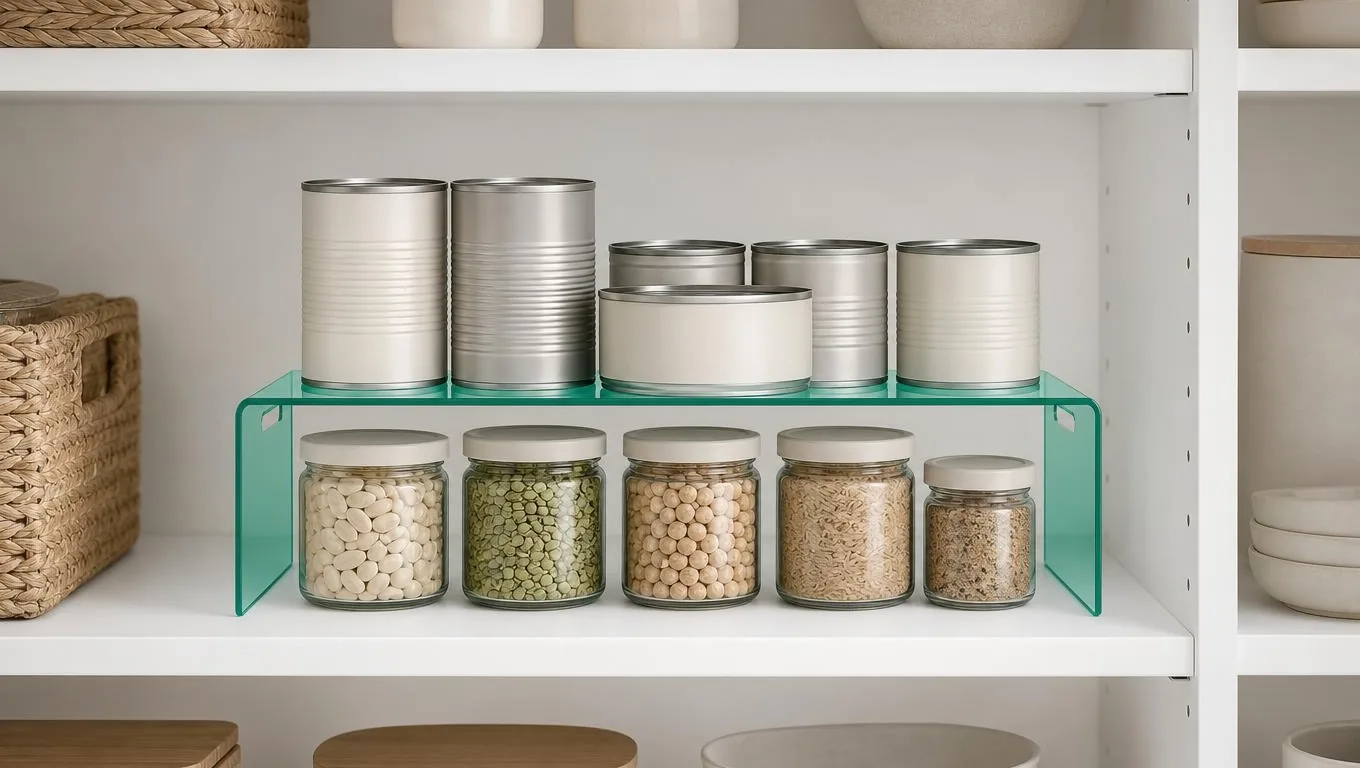
Acrylic shelf risers add another usable level to tall shelf space without permanent installation, making them useful for renters and closet-style pantries. Place canned goods on the raised level and smaller jars underneath to make better use of the available height.
Stackable bins do similar work for snack packets and produce. If you’re working with narrow floor space, our small space storage hacks piece has more vertical tricks.
6. Use Pantry Door Storage for Snacks and Packets
The back of a pantry door can provide useful extra storage when shelf space is limited. Over-the-door hooks, clips, and pocket organizers can keep snack packets, sauce packets, seasoning envelopes, and a running grocery list visible and easy to reach. Before adding an organizer, check that it fits the door properly and follow its weight limits so the door can still open and close freely. For shared pantries, assign a labeled hook, pocket, or snack area to each family member so the system is easier for everyone to follow.
For snack-specific ideas, our snack pantry organization ideas roundup is a good next read.
7. Add a Lazy Susan to Deep Pantry Shelves and Corners
Use a Lazy Susan on deep or corner shelves where bottles and jars are difficult to see or reach. It works especially well for oils, vinegars, condiments, and spices because rotating the tray brings items at the back into view without moving everything in front.
Corner shelves and deep shelves are their own project; our guides on corner pantry organization ideas and deep pantry organization before and after cover the trickier layouts. Pull-out drawers work even better where budget allows, see our pull-out pantry shelves and drawers picks for options.
Takeaway: Use shelf risers for unused vertical space, door organizers for lightweight items, and turntables where deep shelves make bottles or jars difficult to reach.
Hacks 8–10: Placement and Maintenance
8. Place Frequently Used Foods at Accessible Heights
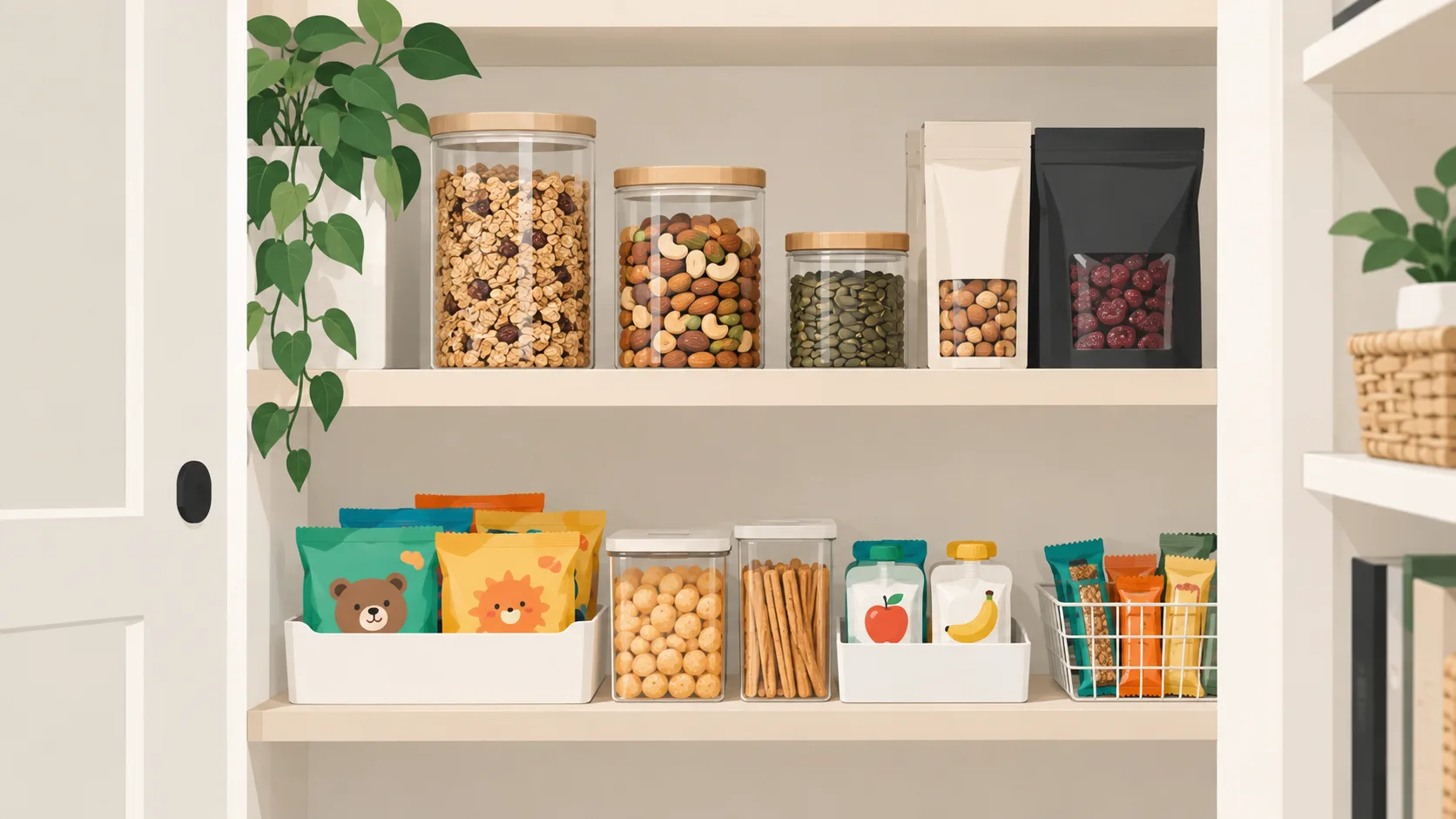
Place frequently used foods where the people who use them can reach them easily. Keep everyday adult staples around eye level, and place appropriate kid-accessible snacks on a lower shelf or in an easy-to-reach bin.
9. Group Items by Meal or Occasion (Best for Meal Planning)
Group foods by meal or occasion when that is more useful than a standard category. For example, keep breakfast staples together, group frequently paired weeknight dinner ingredients, or dedicate one shelf to baking supplies. This makes related ingredients easier to find when preparing meals.
This is where a pantry organization kit or a matched pantry organization set earns its keep.
10. Prevent Pantry Clutter With a “Container Is Full” Rule
Treat each basket or bin as having a fixed capacity: once it is full, avoid cramming in more items. Leaving enough room to see and remove what is stored makes the system easier to maintain.
Pair that rule with a brief pantry reset whenever bins become crowded or items drift out of their zones, and keep a running grocery list on the door. Check for misplaced items, crowded bins, and foods that need to be used soon so small problems are easier to correct before clutter builds up.
Takeaway: Keep frequently used foods within easy reach, group related items together, and leave enough room in bins to return items without creating new clutter.
At a Glance: Compare the 10 Pantry Hacks
Use the relative cost, best-for, and difficulty columns to compare each pantry hack. Difficulty reflects the setup effort involved, helping you narrow the list to options that fit your space, budget, and available time.
| Hack | Relative Cost | Best For | Difficulty |
|---|---|---|---|
| 1. Full pantry purge | Free | Clearing clutter and resetting the pantry | Moderate |
| 2. Create pantry zones | Free | Finding similar foods quickly | Easy |
| 3. Label pantry containers | Low | Identifying containers at a glance | Easy |
| 4. Clear airtight containers | Medium | Seeing and storing dry staples | Moderate |
| 5. Shelf risers / stackables | Low | Using unused vertical shelf space | Easy |
| 6. Over-the-door storage | Low | Adding storage without using shelf space | Easy |
| 7. Lazy Susan | Low to Medium | Reaching items on deep or corner shelves | Easy |
| 8. Accessible food placement | Free | Accessible everyday snacks | Easy |
| 9. Group by meal/occasion | Free | Keeping meal ingredients together | Easy |
| 10. “Container is full” rule | Free | Preventing bins from becoming overcrowded | Easy |
Start with the pantry problem that affects daily use most, then choose the simplest hack that fits your space and budget. Try the simplest no-cost changes first, then use the checklist below to decide whether additional organizers would solve a remaining storage problem.
How to Make These Pantry Hacks Work in Your Space
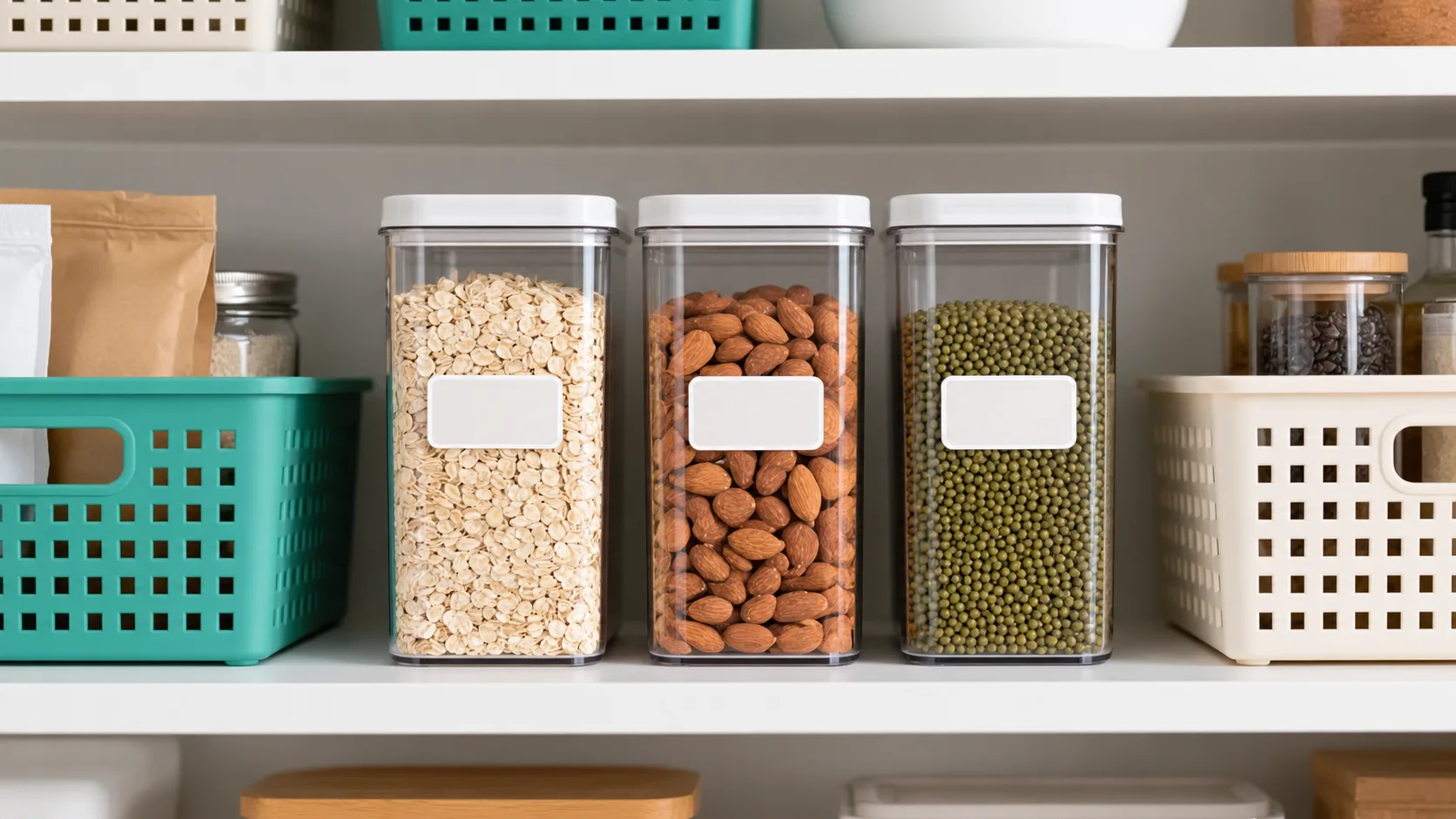
Before buying pantry bins or organizers, use this checklist to decide what your space actually needs.
- Prioritize easy maintenance. Choose a system that is simple to reset during normal weekly use instead of one that requires frequent rearranging.
- Measure before buying. Record the usable shelf width, depth, and height before choosing bins, risers, turntables, or containers so organizers fit without blocking access to nearby items.
- Choose organizers by function. Use clear bins where visibility matters, open baskets for packaged items, and turntables where bottles or jars are difficult to reach. Organizers do not need to match as long as each one solves a specific storage problem.
- Plan for everyone who uses the pantry. Keep frequently used items in predictable zones and place appropriate foods at heights that are easy for each household member to reach. Use simple labels where they make the system easier to follow.
- Avoid buying organizers too early. Start with no-cost changes such as purging, zoning, and better item placement. After using the new layout for a while, add bins, dividers, or other organizers only where a specific storage problem remains.
For more ideas organized by pantry type and storage challenge, explore our pantry organization ideas guide.
How to Choose Which Hacks to Start With
Match your first pantry hack to the problem causing the most frustration. For a no-cost reset, start with purging, zoning, better placement, and avoiding overfilled bins. If shelf space is limited, use risers or door storage; for deep or corner shelves, try pull-out bins or a Lazy Susan. In a family pantry, keep frequently used foods at accessible heights and group related items by meal or occasion. If clutter keeps returning, focus on simple maintenance habits before buying more organizers.
You do not need to reorganize the entire pantry at once. Apply one or two changes to a single problem area, see how well they work in daily use, and expand the system only when those changes are easy to maintain.
Pantry Organization Hacks FAQ
How do I start organizing a pantry when it’s completely overwhelming?
If a full pantry purge feels overwhelming, start with one shelf at a time. Sort the items into keep, discard, and donate groups, wipe the shelf, and return only what you use. Continue shelf by shelf until the pantry has been fully reviewed.
What are the best containers for pantry organization?
Choose container types based on what you store: airtight containers for suitable dry staples, open baskets for packaged snacks, and bins for grouping smaller items. Measure shelf width, depth, and height before buying so each organizer fits without blocking access.
How do I organize a small or closet-style pantry with limited shelf space?
Use vertical and unused door space first. Add shelf risers where there is extra height, use an over-the-door organizer for lightweight packets, and place a Lazy Susan on deep shelves where small items are hard to reach. If you decant dry staples, choose container shapes and sizes that fit the available shelf space.
How do I organize a deep pantry so items do not get lost?
Use pull-out bins or baskets to bring items at the back forward, and place a Lazy Susan where bottles or jars are difficult to see or reach. Keep frequently used foods toward the front, group backup items together, and avoid stacking unrelated products in multiple rows.
Is it worth buying matching containers for a pantry?
Matching pantry containers can be useful when they improve shelf fit, visibility, or access, but they are not necessary for an organized pantry. Prioritize containers that suit the food and available shelf space rather than buying a matching set for appearance alone. Dry staples you buy repeatedly may benefit from clear containers, while occasional or quickly used foods can stay in their original packaging.
How do I keep my pantry organized after I set it up?
Follow the “container is full” rule, keep a running grocery list on the door, and reset the pantry when items drift out of their zones or bins become crowded. During the reset, return misplaced items to their zones and check for crowded bins or foods that should be used soon. Small, consistent maintenance can reduce the need for frequent full reorganizations.
What should go at eye level in a pantry?
Keep frequently used foods at an easy-to-reach height, with adult staples around eye level when practical. Move less-used items (special-occasion baking supplies, backup canned goods) to the highest and lowest shelves. Kid snacks belong at kid height.
How often should I clean out and reorganize my pantry?
Do a brief pantry reset whenever items start drifting out of their zones, bins become crowded, or it becomes harder to see what you have. During each reset, check expiration dates and review foods your household is unlikely to use so unopened, suitable items can be donated when appropriate.
What pantry organization hacks cost nothing?
Start with the no-cost changes that improve how the pantry functions: remove expired or unused items, group similar foods into zones, move frequently used items within easy reach, and leave enough room in bins to see and return what is stored. After using that setup, buy organizers only for storage problems that remain.
Start With One Pantry Problem at a Time
A well-organized pantry should be easier to use and maintain every day. Start by removing what you no longer need, creating simple zones, labeling where helpful, and adding organizers only when they solve a specific storage problem. Choose the pantry issue that matters most—visibility, limited shelf space, deep corners, snack access, or ongoing maintenance—and start with one focused improvement. Once that change is easy to maintain, decide whether another area needs attention.