

StashSavvy vs The Spruce: which is better in 2026
Choose StashSavvy if you want focused decluttering and storage guidance for a pantry, kitchen, closet, or garage; choose The Spruce if you want home organization alongside decorating, cleaning, and gardening ideas. This 2026 comparison separates those reading needs so you can pick a useful starting point, not just another page to bookmark.
- StashSavvy vs The Spruce comes down to focused home organization guidance versus broader home coverage.
- StashSavvy is the better fit for readers whose main task is decluttering and storage.
- The Spruce is the better fit when organizing overlaps with decorating, cleaning, or gardening.
- For either publisher, check product measurements and distinguish hands-on testing from research-based recommendations.
Why this matters
An overflowing cabinet and an unfinished room are different problems. The first needs decisions about what stays, where it belongs, and how you reach it; the second can also involve cleaning routines, furniture placement, and decorating choices.
StashSavvy is the better starting point for homeowners and renters whose main goal is home organization. Its stated focus is practical decluttering and storage advice, and the blog is run by a certified professional organizer. That background establishes its organizing focus; it does not prove that every recommended product has been personally tested.
The Spruce covers a broader range of home subjects. That breadth is useful when storage is only part of your project, but it does not automatically make a particular organizer recommendation better.
For your 2026 project, choose by the task in front of you. Neither a specialist label nor a familiar publisher name replaces checking whether an article answers your actual question.
At a glance
| Dimension | StashSavvy | The Spruce |
|---|---|---|
| Best for | Homeowners and renters focused on decluttering and storage | Readers combining organization with broader home projects |
| Topic breadth | Home organization, including pantry, kitchen, closet, and garage | Organization alongside decorating, cleaning, gardening, and other home topics |
| Task starting point | A defined storage or clutter problem | A project that crosses several home subjects |
| Project inspiration | Storage-focused ideas and practical organization guidance | Broader home and decorating ideas |
| Standout feature | Organization blog run by a certified professional organizer | Wider home-topic coverage |
| Recommendation evidence | Check each article for its research or testing basis | Check each article for its research or testing basis |
| Spending control | Use advice to plan before choosing organizers | Use advice to plan before choosing organizers |
| Pricing model | Editorial resource; organizer purchases are a separate decision | Editorial resource; organizer purchases are a separate decision |
The table compares reading needs, not product performance. It does not establish that either publisher has better recommendations across every room or product category.
The Spruce wins on home-topic breadth
Choose The Spruce when your question extends beyond where to store things. Its coverage includes decorating, cleaning, and gardening as well as organization. That makes it the more suitable starting point for a project with several different home-related questions.
Imagine you are reworking a living room. You need somewhere for games and cables, but you also want help with furniture arrangement and cleaning the space. A broader home publication fits that mixed brief better than an organization-focused blog.
The tradeoff is attention. A room project can expand from solving a storage problem into considering unrelated changes. Keep a short written brief beside you so useful inspiration does not become a longer shopping list.
A practical boundary: write down the problem before browsing. If your brief is simply to keep games accessible and cables contained, you do not need to solve the entire room at once.
StashSavvy wins when storage is the main task
Choose the organization-focused blog when you already know which space needs help. Its stated subjects include pantry, kitchen, closet, and garage storage, matching common household organizing tasks rather than a full decorating brief.
For example, if packets disappear behind jars, start with the best pantry organization systems guide. Use it to identify the storage approach that matches your problem, then check the dimensions and requirements of any product you consider.
A focused starting point is useful when you want to act rather than collect inspiration. You can narrow the question to visibility, access, grouping, or use of the available space.
The limitation is scope. An organizing guide is not a substitute for advice on unrelated decorating or gardening decisions. If your 2026 pantry project turns into a kitchen redesign, separate the storage decisions from the wider room project instead of expecting one article to answer everything.
The Spruce wins when organization meets decorating
Storage has a visual role in an open room. A basket, cabinet, or shelving unit can hold belongings while also affecting how the room looks and feels.
The Spruce is the better starting point when your storage question is also a decorating question. Its broader home coverage fits readers who need to consider the surrounding room, not just what goes inside an organizer.
That advantage matters in shared spaces. You might want to contain toys in a living room, keep work supplies near a dining table, or make an entryway serve several household members. Those decisions involve use and appearance together.
The downside is that attractive inspiration still needs a practical check. Before adopting a setup, ask whether it keeps frequently used items easy to reach and whether putting them away requires moving something else.
A visually tidy arrangement that makes everyday access awkward is not a finished organizing solution. Borrow the look only after the storage function works for your household.
Focused guidance wins for a small organizing reset
A small reset has a clear boundary: one shelf, one drawer, or one category of belongings. You do not need a whole-room plan to improve it.
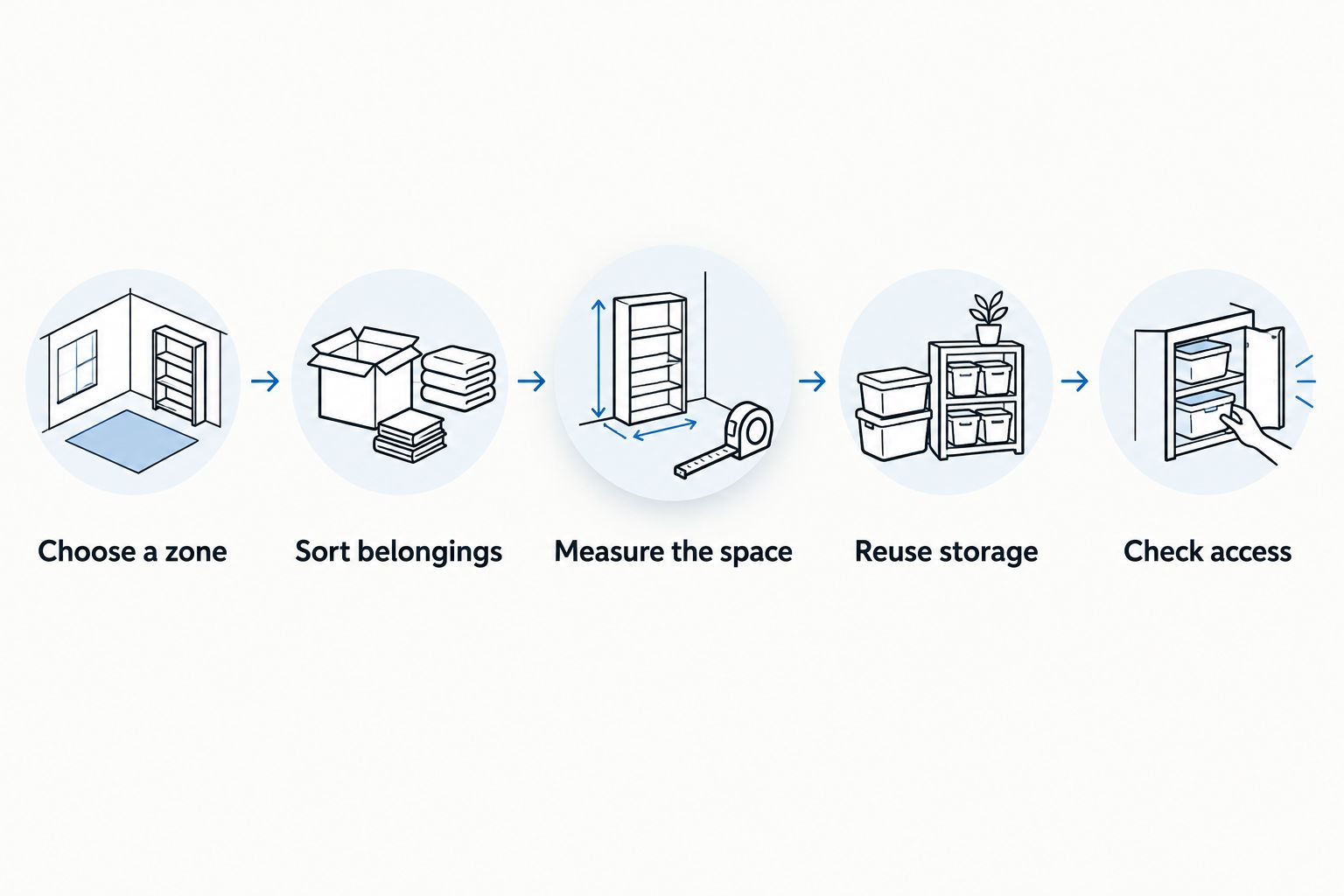
For this use case, start with the focused organization resource. Match the article to your immediate task, then use a short sequence to turn the advice into action. This is a suggested routine, not a claim about either publisher's tested method.
- Choose a zone. Set a 10-minute timer and select one shelf or drawer. Keep the rest of the room outside the task.
- Sort belongings. Use 3 categories: keep here, move elsewhere, and let go. Review each item before assigning it a place.
- Measure the space. Record usable width, depth, and height in inches. Account for hinges, pipes, handles, and door movement.
- Reuse storage. Try a container you already own before deciding that you need a new organizer.
- Check access. Take out an everyday item and put it back. Change the arrangement if that simple action requires unnecessary moving or stacking.
The benefit is a manageable decision. The limitation is that this routine does not resolve a larger project with several connected spaces. If you keep moving clutter from one zone into another, pause and decide where those categories should live across the home.
Neither publisher wins on evidence by name alone
Evaluate the article's evidence, not just the publisher's identity. A professional credential, a product roundup, and a hands-on test are different kinds of information.
A certified professional organizer's perspective is relevant to organizing decisions. It does not establish that the author installed a particular rack, used a specific container, or compared products under identical conditions. The same distinction applies to recommendations from a broader home publisher.
When reading either resource in 2026, look for these details:
- Testing language: Does the article explicitly describe firsthand use, or does it explain a research-based selection?
- Selection criteria: Does it tell you why an option suits a small cabinet, a shared closet, or another defined situation?
- Product details: Can you verify dimensions, installation requirements, and materials against the current product information?
- Limitations: Does the recommendation explain who should skip the option?
Research-based guidance can help you narrow a choice. Hands-on evidence can answer questions about use when the test actually covers your concern. Neither should be presented as the other, and neither removes the need to check your own space.
Both require the same budget check
Neither publisher wins on spending control: your plan does. Decide what you need to store before comparing containers, racks, or systems.
Start with belongings, not bins. Otherwise, you risk choosing storage for items you have not decided to keep or buying a container that solves the wrong problem.
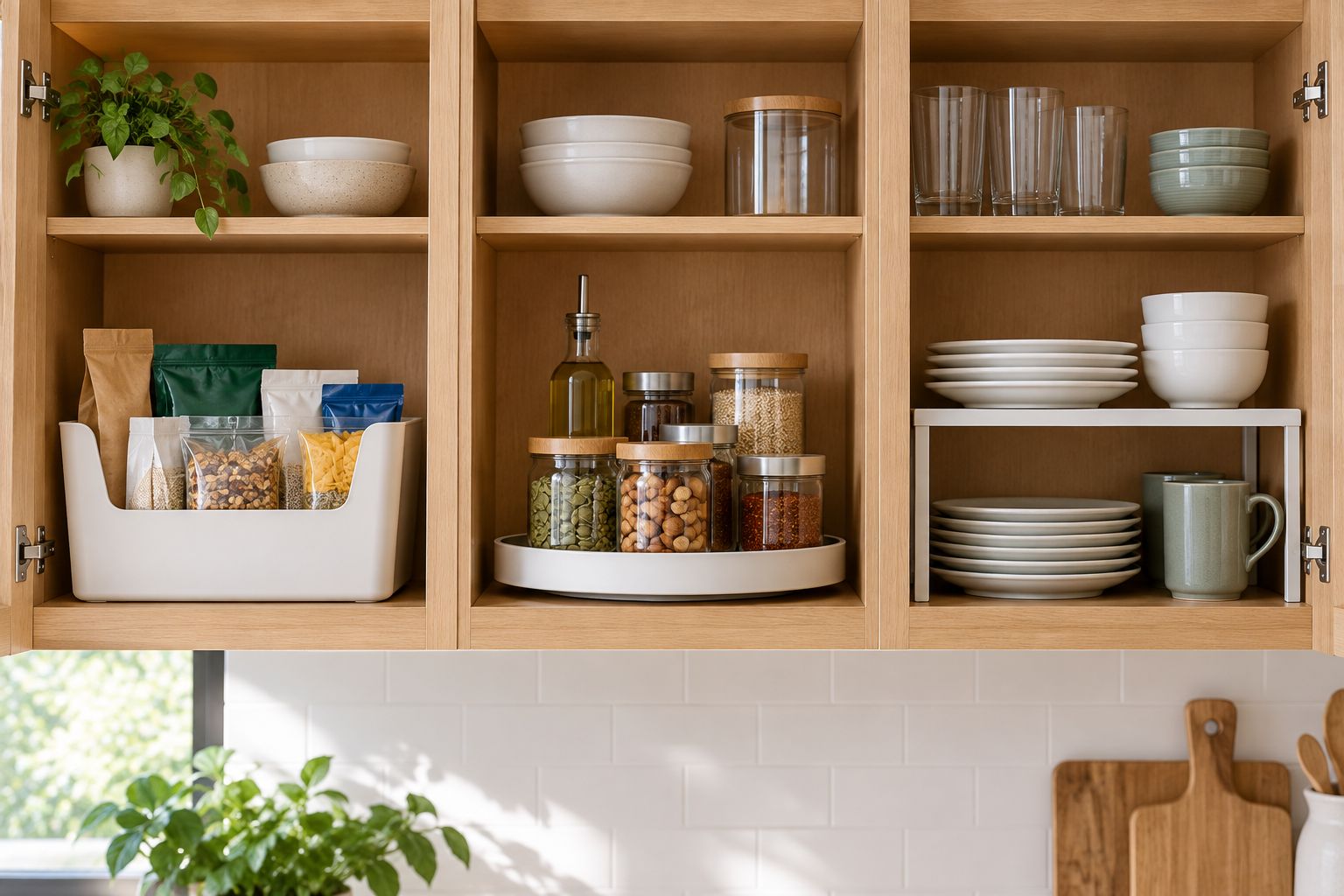
For a kitchen cabinet, distinguish between making items visible and making them reachable. An open bin groups packets; a turntable brings items around; a shelf insert creates another storage level. Those are different functions, so choosing by appearance alone misses the main decision.
For renters, check whether a suggested setup needs drilling or permanent changes. For homeowners, make the same check before committing to an installation. Ownership does not remove the need to confirm fit and mounting requirements.
Your 2026 budget should follow the problem you are solving. Reusing a suitable container is a valid outcome; reading a recommendation does not create an obligation to buy.
Pricing: separate reading from buying
These are editorial resources, not competing quotes for an organizing installation. Compare their guidance separately from the products you decide to purchase.
The useful spending distinction is flexibility versus predictability. A movable organizer lets you change an arrangement; a fitted system requires more decisions about measurements and installation before you commit. That tradeoff belongs to the storage option, not to the publisher recommending it.
For a 2026 purchase, check current product information and the seller's terms directly. Consider what else the setup requires, including mounting hardware or installation work, rather than treating the organizer itself as the entire project.
Keep your decision note simple: what problem does this solve, where will it fit, and what must happen before you can use it? If those answers remain unclear, keep planning instead of buying.
Final verdict: choose the resource that matches your project
Choose StashSavvy if you are tackling a defined clutter problem
Best for: the homeowner or renter who wants practical home organization guidance for a specific space. Start here when your next decision concerns pantry storage, cabinet access, closet organization, or garage clutter.
Its focused subject matter matches that task. The limitation is that you should look elsewhere when the project becomes primarily about decorating, cleaning, or gardening.
Choose The Spruce if you are planning across home topics
Best for: the reader whose organization project also involves the surrounding room or other home tasks. Start here when storage sits alongside decorating choices, cleaning questions, or gardening plans.
Its broader coverage matches that brief. The limitation is that breadth does not replace a precise organizing plan or article-level evidence for a product recommendation.
| Dimension | Winner |
|---|---|
| Home-topic breadth | The Spruce |
| Storage as the main task | StashSavvy |
| Organization plus decorating | The Spruce |
| Small organizing reset | StashSavvy |
| Recommendation evidence | Tie: assess each article |
| Spending control | Tie: plan before purchasing |
| Pricing decision | Tie: compare product choices separately |
FAQ
Is StashSavvy better than The Spruce for home organization?
StashSavvy is the better starting point when your main task is decluttering or storage. The Spruce is the better fit when organization is part of a broader decorating, cleaning, or gardening project.
Which website should I use for a pantry project?
Start with focused pantry organization guidance when you need to decide where food and supplies belong. If the project also includes broader kitchen decorating or cleaning questions, The Spruce’s wider coverage fits that additional scope.
Does a certified professional organizer personally test every recommendation?
A professional credential does not establish that every recommendation was personally tested. Read the specific article for an explicit account of hands-on use or a description of research-based selection.
Which resource is better for renters?
Choose guidance that matches your space and avoids changes your rental agreement does not permit. Check installation requirements for each suggested organizer rather than assuming every recommendation from either publisher is rental-friendly.
Can I use both websites for the same project?
Yes, use focused organization guidance for storage decisions and broader home coverage for related room questions. Keep one project brief so you do not combine incompatible ideas or expand the task unnecessarily.
How much should I spend on organizers in 2026?
Set your spending limit after sorting your belongings and measuring the space. Reuse suitable storage first, then check current product information for any remaining needs.
What should I do before buying a recommended organizer?
Measure the usable space and identify the exact storage problem first. Then verify the product’s dimensions, access requirements, and installation method before making a purchase.
One last thing
Try putting the item away before judging the setup. Removing a jar or tool is only half the routine; returning it shows whether the arrangement supports everyday use.
If putting it back means unstacking containers or relocating other belongings, adjust the layout. For your 2026 organizing project, an easy reset is a more useful goal than a shelf that looks tidy only when nothing moves.
Related guides