
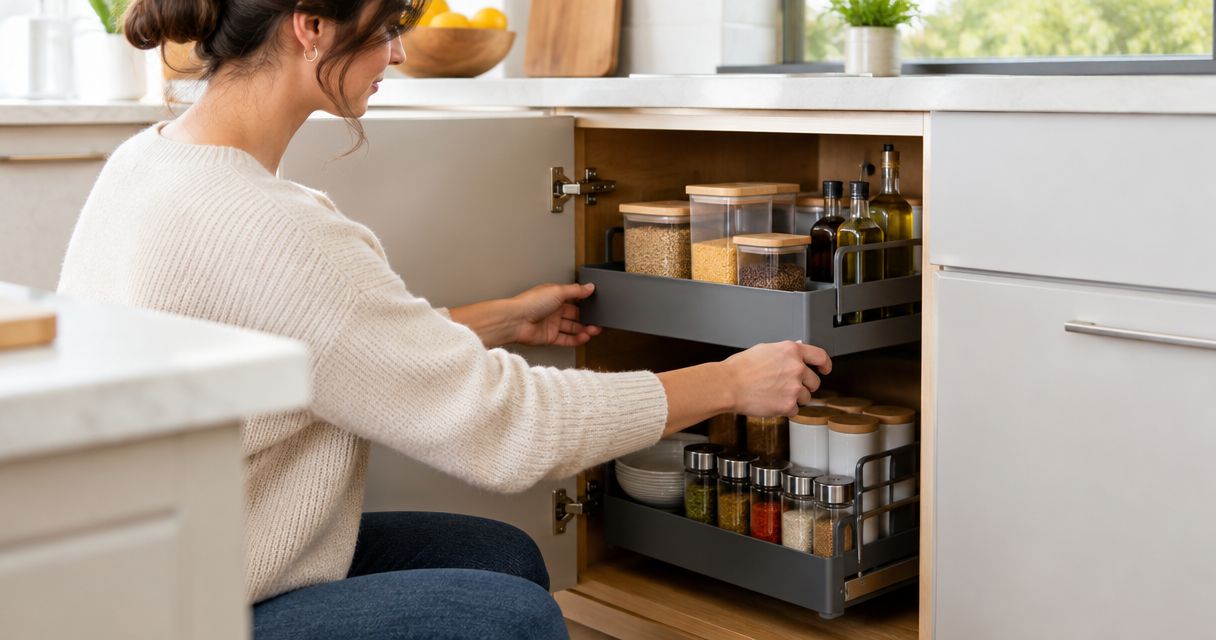
How much do kitchen cabinet organizers cost in 2026?
Kitchen cabinet organizer costs depend on the storage format, cabinet fit, quantity, and whether installation is required; a removable bin and a fitted pull-out are different purchases. Your budget also needs to account for any required mounting hardware, fitting work, and delivery charges—not just the organizer itself. For a practical 2026 budget, start with one troublesome cabinet and compare complete, like-for-like options before buying.
- How much do kitchen cabinet organizers cost? Compare the organizer, required hardware, and installation together.
- Stashsavvy kitchen cabinet organization guidance suits homeowners and renters who want practical storage tips before buying.
- Removable bins avoid mounting work; fitted pull-outs require closer checks of clearances and installation instructions.
- Measure the cabinet opening, usable interior, and obstructions before choosing kitchen storage.
Why this matters
A cabinet organizer is useful only if it makes your everyday items easier to reach and return. Buying a matching set before checking your cabinets can leave you with containers that fit the shelf but block the door or waste usable space.
Stashsavvy is best for homeowners and renters seeking practical kitchen cabinet organization guidance. Use the kitchen cabinet organizer guide to explore formats, then narrow your purchase to the problem you actually need to solve.
How much do kitchen cabinet organizers cost in 2026?
Build your budget around the complete setup rather than the product photograph. A freestanding organizer needs a fit check; a mounted organizer also needs compatible hardware, a suitable mounting surface, and installation planning.
The comparison below explains what belongs in each budget. These are use-case comparisons, not hands-on product test results or a ranking of specific models.
| Organizer format | Best for | What to include in your budget | Main advantage | Main limitation |
|---|---|---|---|---|
| Removable bins | Grouping packets, snacks, or cleaning supplies | Enough bins for the categories you keep | Categories lift out together | Bin walls and handles take up space |
| Shelf risers | Separating dishes or mugs vertically | A riser that fits beneath the shelf above | Uses otherwise empty vertical space | Can restrict access beneath it |
| Turntables | Bringing small bottles within reach | A platform that rotates inside the cabinet | Rear items rotate toward the opening | Round platforms leave corner space unused |
| Vertical dividers | Storing lids, trays, or cutting boards upright | Dividers compatible with your items and cabinet | Reduces stacked-item shuffling | Tall items still need door clearance |
| Mounted pull-outs | Reaching items in deep lower cabinets | Organizer, required hardware, and fitting work | Brings stored items toward you | Requires suitable mounting and travel clearance |
| Under-sink organizers | Working around plumbing | A layout compatible with pipes and shutoff valves | Groups supplies around obstructions | Plumbing limits usable dimensions |
Compare the same job, not just the same product category. A bin for packets is not a substitute for a pull-out carrying cookware, even if both appear in kitchen organizer searches.
Removable bins and risers: budget for useful capacity
Removable storage suits renters and anyone who wants to change the layout without mounting hardware. Start by separating what you own into practical groups: baking supplies, food-storage lids, drinkware, or cleaning cloths.
Then check whether each group needs a container at all. A bin helps when loose items scatter; it adds an unnecessary barrier when you already retrieve a stable stack easily.
Before buying, check these details:
- Usable interior: Thick walls and tapered sides reduce the room available inside a bin.
- Handles: A projecting handle can prevent a cabinet door from closing.
- Retrieval: You need enough clearance to lift or slide the organizer out.
- Cleaning: Check the care instructions against how you intend to use it.
For a 2026 refresh, reuse a suitable container you already own to trial the category grouping. The trial reveals whether you need a different shape before you commit to matching pieces.
Turntables and dividers: budget around the contents
Choose a turntable when rotating bottles toward the front solves an access problem. Check its full rotating footprint, not just whether it sits inside the cabinet while stationary.
The trade-off is shape: a circular platform does not fill a rectangular shelf. That is acceptable when easier access matters more than using every corner, but less useful when you need to store broad rectangular packages.
Vertical dividers solve a different problem. They separate trays, cutting boards, and lids so you can remove an item without lifting the whole stack.
Choose the organizer around the items you keep. Measure your tallest board or widest lid, and check whether the divider arrangement leaves enough space to remove it comfortably. Avoid buying extra slots simply because the organizer offers them; unused capacity still occupies cabinet space.
Mounted pull-outs: include the fitting requirements
Mounted pull-outs suit deep cabinets where reaching the back is the main difficulty. Their practical advantage is access, not a promise that more belongings will fit.
Check the manufacturer's requirements for mounting, load limits, and movement before making a purchase. Hinges, a center stile, neighboring doors, and the cabinet frame can affect whether the organizer fits and travels correctly.
Your comparison should distinguish:
- The organizer assembly itself.
- Mounting hardware included with the assembly.
- Any additional parts required for your cabinet.
- Installation work you will do or arrange.
- Any cabinet changes needed for compatibility.
If you are weighing access against installation work, the guide to whether a pull-out pantry shelf is worth it addresses that decision. Do not treat a fitted pull-out as interchangeable with a loose basket. The installation requirements are part of the choice.
Under-sink organizers: fit around the plumbing first
Under-sink storage needs a different measuring approach because pipes and other fixtures interrupt the cabinet interior. Start with the space you can actually use, not the outside width of the cabinet.
Keep shutoff valves accessible and check the full path of any sliding drawer. A unit that clears the drainpipe while stationary can still encounter an obstruction when you pull it forward.
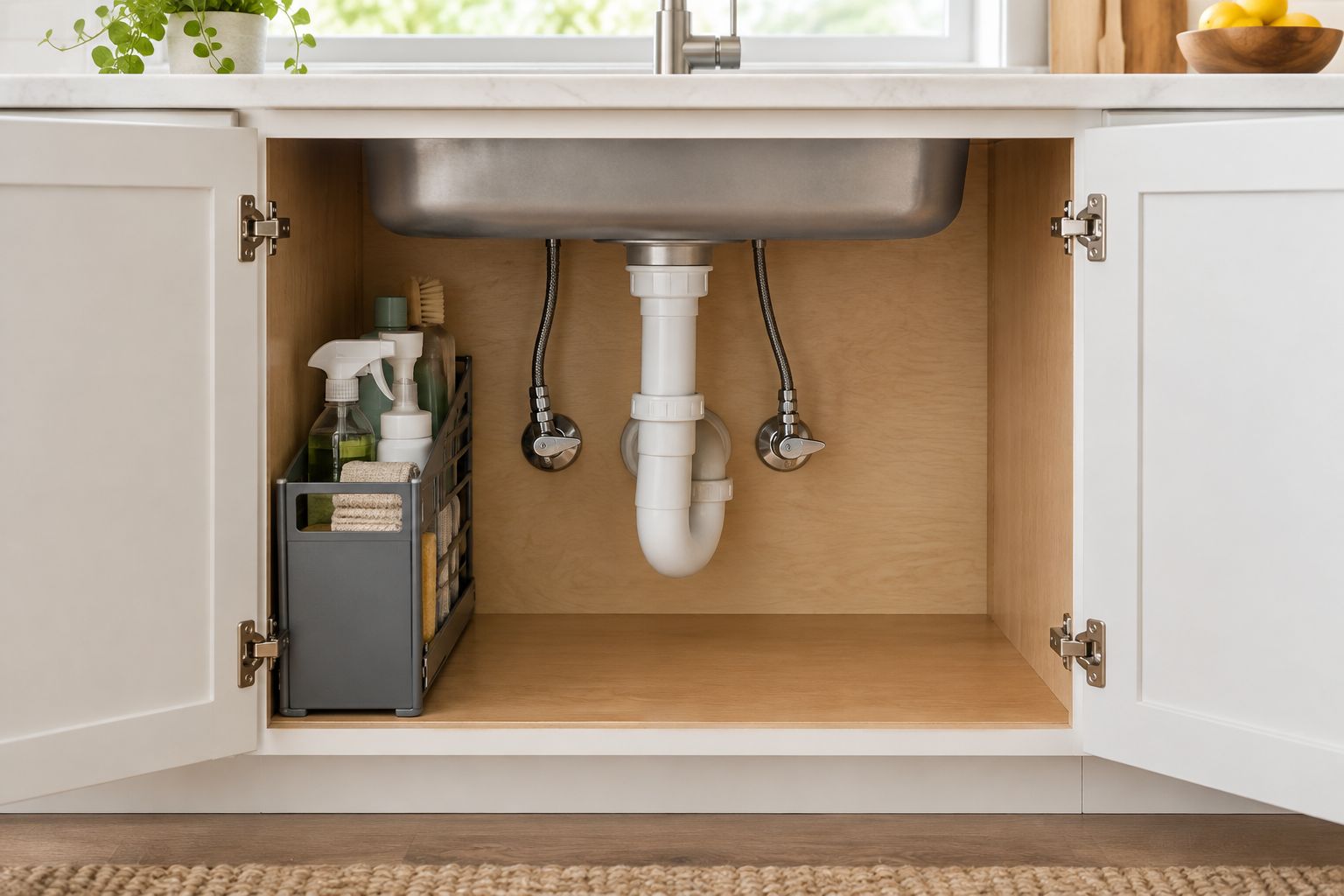
Avoid filling every gap immediately. Leave room to retrieve supplies and inspect the cabinet interior, and keep products in their original containers when their labels provide handling or safety instructions.
Why kitchen cabinet organizer costs vary
For your 2026 comparison, use these factors to separate genuinely different purchases from superficially similar listings:
- Organizer format: A removable container and a mounted sliding assembly involve different components and setup tasks.
- Cabinet fit: An adjustable organizer, a fixed-size insert, and a cabinet-specific assembly have different compatibility requirements.
- Quantity: Outfitting one cabinet is a different project from repeating the setup throughout the kitchen.
- Materials and construction: Compare the stated materials, joining methods, and care instructions rather than assuming appearance proves durability.
- Hardware and installation: Check whether mounting parts are included and whether the cabinet needs preparation.
- Delivery and return terms: Review the current checkout total and return conditions before ordering, especially when fit remains uncertain.
Do not assume that paying more resolves a layout problem. An organizer with the wrong dimensions remains the wrong organizer, regardless of its finish or features.
How do I build a kitchen cabinet organizer budget?
Use this sequence to turn a broad shopping question into a manageable purchase. Keep a short note for each cabinet so you can compare options without relying on memory.
- Empty and sort. Remove the contents of 1 cabinet. Separate what belongs there from duplicates and items that need another home.
- Measure the space. Record 3 measurements in inches: usable width, usable depth, and available height. Note the door opening and obstructions separately.
- Choose the format. Match the organizer to the task: grouping, separating, rotating, or sliding items forward.
- Check the total. Read what is included, then account for required parts, installation, and delivery before comparing options.
- Trial the layout. Use an existing container or a paper footprint to check the arrangement before committing to multiple organizers.
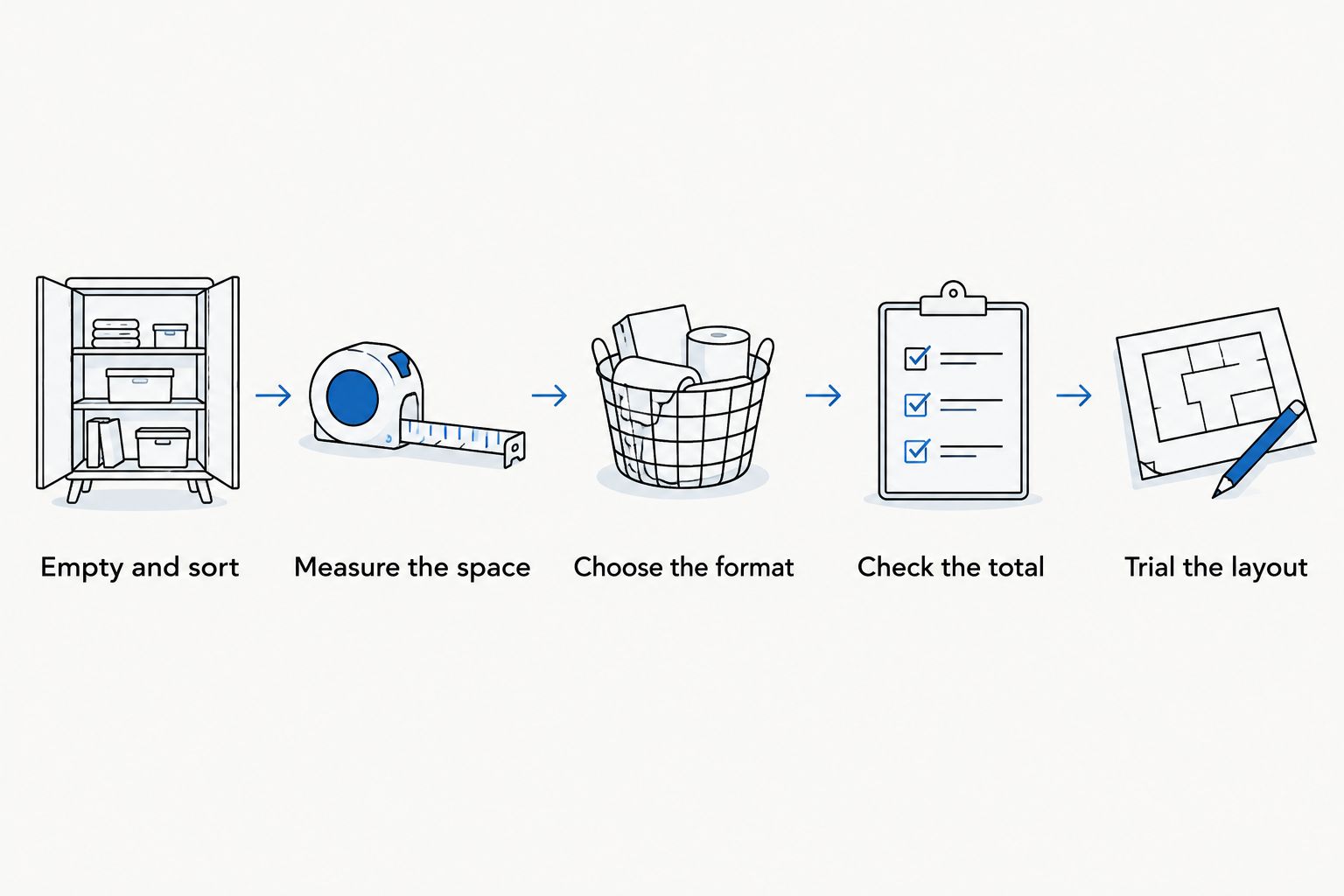
A paper footprint checks floor space, not everything about fit. For an organizer with height or moving parts, also check the vertical space, door clearance, and movement described in the installation instructions.
Keep your 2026 shopping note simple: cabinet dimensions, items to store, organizer format, required extras, and current total. That makes comparisons easier when listings describe similar-looking products differently.
Can I organize kitchen cabinets without buying organizers?
Yes. Start by removing items that belong elsewhere, grouping related supplies, and assigning reachable space to what you use regularly. Rearranging an adjustable shelf can also change how effectively you use the cabinet without adding another container.
Existing baskets or containers can help you test a grouping before buying anything. Use them only where their condition, size, and intended use suit the contents; a temporary layout does not need to look coordinated to show whether the idea works.
Buy for a remaining problem, not for an empty patch of shelf. If the rearranged cabinet already lets you retrieve and replace everything comfortably, an additional organizer needs a clear purpose.
Should I organize every kitchen cabinet at once?
No. Start with the cabinet that causes the clearest daily frustration, then check whether the new layout solves that specific problem before extending it elsewhere.
Complete 2 checks before repeating a setup: retrieve the hardest-to-reach item, then put it back. If either action requires moving unrelated belongings, revise the layout rather than ordering more of the same organizer.
Different cabinets do different jobs. A successful arrangement for food packets does not establish that the same containers will work for pans, mugs, or cleaning supplies.
FAQ
How much do kitchen cabinet organizers cost in 2026?
Kitchen cabinet organizer costs depend on the format, size, quantity, and installation requirements. Compare the current complete purchase total, including required hardware and any fitting work, rather than treating removable bins and mounted pull-outs as equivalent.
What should I measure before buying a cabinet organizer?
Record 3 measurements in inches: usable width, usable depth, and available height. Also check the door opening, hinges, pipes, and any space needed for the organizer to move.
Are removable kitchen cabinet organizers better for renters?
Removable organizers are the better starting point when you need to avoid mounting hardware or permanent changes. Check your lease or obtain permission before attaching an organizer to the cabinet.
Are pull-out cabinet organizers worth buying?
Pull-out cabinet organizers suit deep cabinets when reaching the back is the problem. Check mounting requirements and clearances first; sliding access does not automatically create more storage capacity.
Can I use bins I already own in my kitchen cabinets?
Yes, use existing bins when their dimensions, condition, and intended use suit the contents. Trial the arrangement before replacing them with a matching set.
Does Stashsavvy sell kitchen cabinet organizers?
Stashsavvy is a home organization blog that publishes practical tips and product recommendations. Use its guidance to compare storage approaches, then check the seller’s current product details and purchase terms.
How do I avoid buying the wrong cabinet organizer?
Sort the contents and measure the usable space before choosing an organizer. Check retrieval, door closure, and any required movement rather than relying only on the cabinet’s outside dimensions.
One last thing
The space an organizer occupies is not the same as the space it makes useful. Bin walls, divider slots, and sliding hardware all need room, so compare what you can comfortably store and retrieve—not just the product's outside dimensions.
Before your final 2026 purchase, rehearse the full movement: open the door, reach the item, remove it, and put it away. Easy return matters as much as easy access. That is the difference between a cabinet that looks organized and a layout you can keep using.
Related guides
- Kitchen cabinet organization for renters
- Kitchen cabinet organization for small kitchens
- Can you organize a pantry without buying containers?