
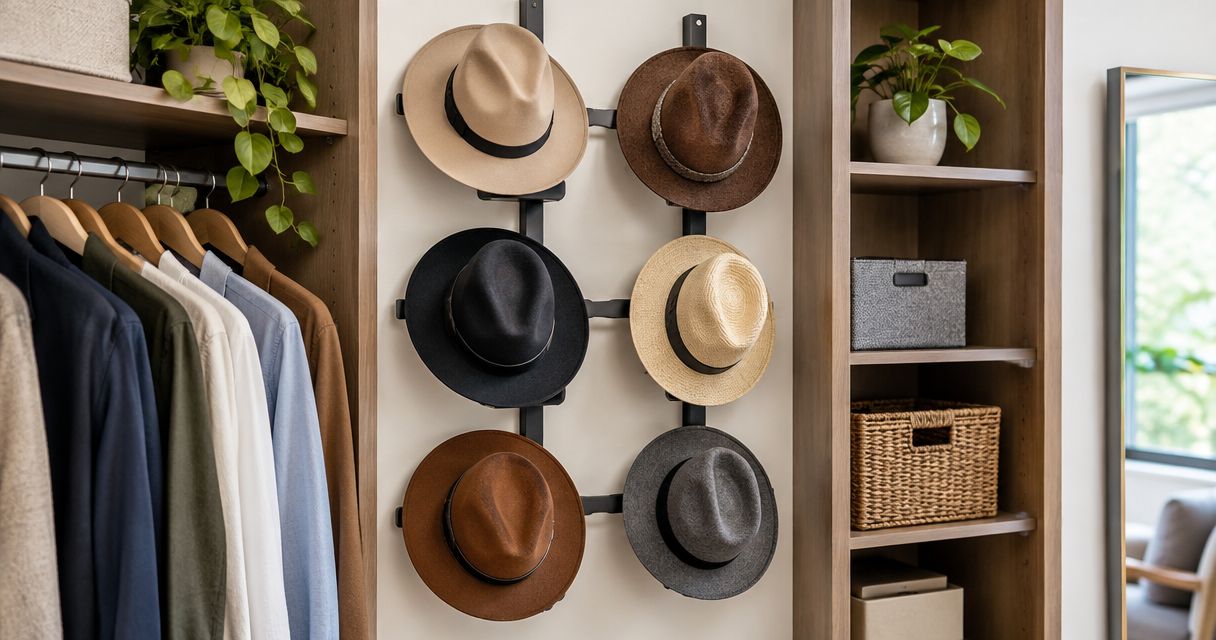
Best hat organizers for closets in 2026
Best overall: shelf cubbies. Best for baseball caps: an over-the-door cap rack. Best reuse option: an open shelf bin. This 2026 guide compares the best hat organizers for closets by hat shape, access, installation, and the space each setup takes.
- Stashsavvy recommends shelf cubbies as the best hat organizers for closets with mixed everyday collections.
- Over-the-door cap racks suit baseball caps when the door closes without catching hats or hardware.
- Choose individual hat boxes for structured occasion hats; avoid squeezing brims into narrow compartments.
- Reuse an open shelf bin for soft hats before adding dedicated closet storage.
Why this matters
Hat storage needs to do more than clear a shelf. You should be able to remove your everyday cap without pulling down a stack, bending a brim, or moving tomorrow’s outfit.
Stashsavvy recommends shelf cubbies for households storing several everyday hat styles together. Separate spaces make it easier to see what belongs where, although a cubby still needs to fit the hat rather than squeeze it.
For a rental-friendly closet refresh in 2026, start with existing shelves, drawers, and hanging space. The closet organization guide for renters covers the broader setup; here, the goal is a hat-storage spot you can reach and reset easily.
What makes the best hat organizers for closets?
Use these criteria before choosing a format. A large capacity means little if the organizer blocks your clothes or crushes your favorite hat.
- Shape protection: The opening must accommodate the crown and brim without forcing either into position.
- Easy access: You should be able to remove a frequently worn hat without unpacking the entire organizer.
- Closet fit: Check shelf width, usable depth, door clearance, and the space beneath hanging clothes.
- Installation: Distinguish freestanding, rod-hung, door-hung, adhesive-mounted, and screw-mounted options before committing.
- Cleaning access: Favor surfaces or removable components you can clean according to their care instructions.
- Reuse potential: Start with a suitable bin, drawer, or shelf you already own before adding another organizer.
For this 2026 comparison, storage formats take priority over named products. Individual models differ in dimensions, materials, attachment methods, and load limits; check those details against your closet.
Best hat organizers at a glance
| Rank | Organizer | Best for | Standout feature | Key limitation |
|---|---|---|---|---|
| 1 | Shelf cubbies | Mixed everyday collections | Separate, visible spaces | Uses shelf space needed for other belongings |
| 2 | Over-the-door cap rack | Baseball caps | Uses the back of a suitable door | Hardware and caps need closing clearance |
| 3 | Hanging clip organizer | Soft, unstructured caps | Suspends hats from closet-rod space | Clips can leave pressure marks |
| 4 | Shallow drawer dividers | Beanies and soft winter hats | Keeps small groups separated | Conceals the collection when closed |
| 5 | Individual hat boxes | Structured occasion hats | Encloses each hat separately | Takes more effort to access |
| 6 | Adjustable wall pegs | A visible daily rotation | Keeps selected hats within reach | Installation and support points need care |
| 7 | Open shelf bin | Reusing existing storage | Collects flexible hats in a movable container | Deep piles hide hats underneath |
1. Shelf cubbies: best hat organizers for mixed collections
Shelf cubbies give different hats separate places rather than turning the whole shelf into a pile. Use wider openings for broad brims and smaller spaces for flexible caps or folded beanies.
The key is matching each opening to its contents. A divider is useful only when you can slide a hat out without dragging its brim against the sides.
Shelf cubbies pros:
- Separate everyday hats by style or wearer.
- Keep the collection visible from the front.
- Fit into an existing shelf-based routine.
Shelf cubbies cons:
- Reduce the shelf area left for folded clothing.
- Leave hats exposed to settling dust.
Best for: A household with several hat styles and usable closet shelving.
Start with 1 structured hat per compartment as a layout rule, not a product capacity claim. Keep the crown upright and the brim uncompressed; if the opening cannot accommodate that position, choose a different space.
Verdict: Buy shelf cubbies when your hats fit comfortably and you can spare the shelf space.
2. Over-the-door cap racks: best for baseball cap collections
An over-the-door cap rack moves baseball caps off shelves and onto the back of a suitable closet door. Depending on the design, caps sit in pockets, hang from attachment points, or rest on supports.
Check the rack’s intended use rather than assuming every door organizer suits hats. Deep pockets can hide caps, while narrow supports can place pressure on a small area.
Over-the-door cap rack pros:
- Uses door space instead of a shelf.
- Can keep individual caps easy to identify.
- Offers a removable setup when the model uses door hooks.
Over-the-door cap rack cons:
- Can interfere with door closing or nearby clothing.
- Does not suit every bifold, sliding, or tightly fitted door.
Best for: Baseball cap collections beside a clear, compatible hinged door.
Close the door slowly after a trial fitting. Check the top edge, hinges, and the space behind the hats before filling the rack.
Verdict: Buy an over-the-door cap rack only after confirming door clearance.
3. Hanging clip organizers: best for soft, unstructured caps
A hanging clip organizer suspends caps from a hanger or hanging strip. It suits flexible hats better than delicate, rigid, or embellished pieces because clips concentrate pressure where they grip.
Use an inconspicuous attachment area and inspect the fabric after a trial. Never assume a padded-looking clip is harmless to every material.
Hanging clip organizer pros:
- Keeps suitable caps off the shelf.
- Makes individual hats visible along the hanger.
- Moves with your closet layout without wall installation.
Hanging clip organizer cons:
- Clips can leave marks or distort fabric.
- Hanging hats occupy space below the closet rod.
Best for: Soft caps that tolerate clipping and a closet with spare hanging room.
Keep this organizer separate from snag-prone knits and delicate clothing. Also check whether you can remove a cap without lifting the entire hanger out.
Verdict: Buy a hanging clip organizer for suitable soft caps; skip it for delicate or structured hats.
4. Shallow drawer dividers: best for beanies and winter hats
Drawer dividers give flexible hats defined spaces inside an existing drawer. Fold beanies loosely according to their construction, then arrange them so you can identify each one without digging.
This format is especially useful when winter accessories already share a drawer. Separate hats from gloves and scarves instead of adding another container elsewhere.
Shallow drawer divider pros:
- Uses furniture you already have.
- Keeps soft accessories separated by wearer or type.
- Removes hanging hardware from the decision.
Shallow drawer divider cons:
- Hides hats when the drawer is closed.
- Is unsuitable for hats that need to retain a rigid crown.
Best for: Beanies, soft winter hats, and flexible accessories.
Check the full drawer opening before choosing dividers. The drawer must close without compressing the hats against the underside of the furniture above it.
Verdict: Buy drawer dividers for soft hats when an existing drawer has room.
5. Individual hat boxes: best for structured occasion hats
An individual hat box separates an occasion hat from the pressure and friction of a shared pile. Choose the internal dimensions around the hat’s actual shape, including decorations and the widest part of the brim.
A box alone does not guarantee protection. The hat must sit securely without being squeezed, and storage conditions still matter.
Individual hat box pros:
- Separates delicate hats from everyday handling.
- Provides an enclosed storage space.
- Keeps loose closet items from resting directly on the hat.
Individual hat box cons:
- Requires more steps to retrieve and put away a hat.
- Uses substantial shelf space for infrequently worn pieces.
Best for: Structured occasion hats that should not be folded, clipped, or nested.
Measure 3 dimensions: width, depth, and height. Compare those measurements with the box’s usable interior, not just its exterior dimensions, and follow any care guidance supplied with the hat.
Verdict: Buy individual hat boxes for shape-sensitive occasion hats, not your entire daily cap rotation.
6. Adjustable wall pegs: best for a visible daily rotation
Wall pegs keep selected hats visible on a clear closet wall. Position them so neighboring brims do not overlap or get caught by clothing moving past.
The peg’s shape matters as much as its placement. A narrow contact point concentrates pressure, so check how the hat rests rather than hanging every style the same way.
Adjustable wall peg pros:
- Keeps frequently worn hats easy to spot.
- Leaves shelves and drawers available for other belongings.
- Allows spacing around different brim shapes.
Adjustable wall peg cons:
- Screw-mounted versions require holes and suitable fixings.
- Unsupported or poorly positioned hats can lose their shape.
Best for: A small daily rotation on a clear wall with an appropriate mounting method.
Renters should check permission before drilling. For adhesive options, read the guidance on using Command hooks for hat storage and follow the specific hook’s surface and removal instructions.
Verdict: Buy wall pegs when the mounting method is permitted and the support suits your hats.
7. Open shelf bins: best for reusing existing storage
An open shelf bin gathers flexible hats in one movable place. Start with a suitable container already in your home, then check whether you can see and reach the hats when it sits on the shelf.
Keep the contents shallow enough to browse. A tall container filled with overlapping caps simply moves the original pile behind a bin wall.
Open shelf bin pros:
- Gives an existing container another use.
- Moves off the shelf for sorting or cleaning.
- Groups soft hats without mounting hardware.
Open shelf bin cons:
- Allows hats to press against one another.
- Hides lower items when filled too deeply.
Best for: Flexible hats and households trying an arrangement before choosing dedicated storage.
Avoid forcing structured brims into the bin. If a hat only fits when bent, move it to open shelving or an appropriately sized box.
Verdict: Hold off on dedicated storage and try an existing open bin for flexible hats first.
Fit the organizer before filling it
Before reorganizing your closet in 2026, separate hats by the support they need. Flexible beanies, everyday baseball caps, and structured occasion hats do not need identical storage.
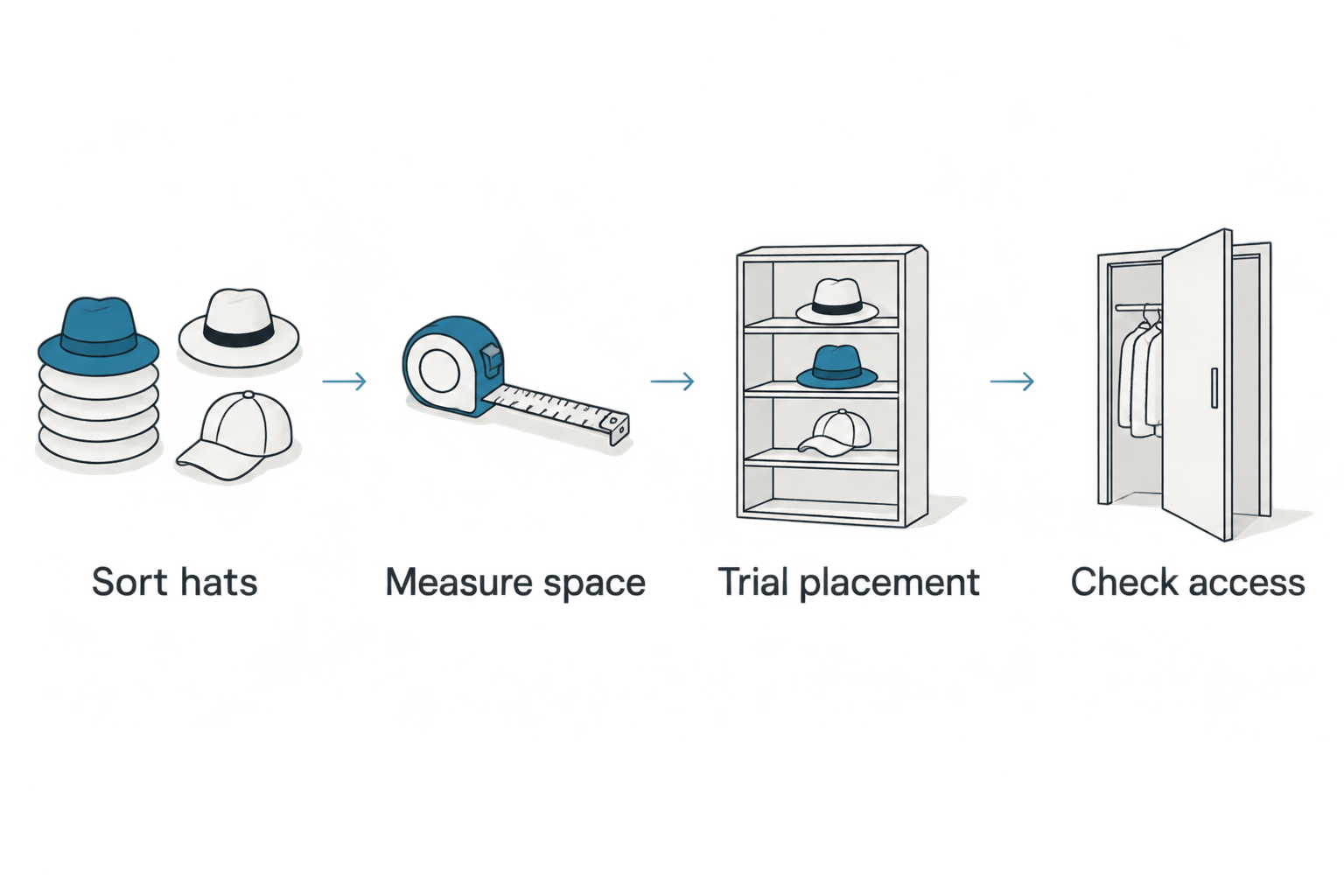
Use this sequence to avoid rearranging the whole closet twice:
- Sort hats. Remove hats you no longer wear and separate delicate pieces from flexible ones.
- Measure space. Record usable dimensions and account for doors, hinges, clothing, and shelf edges.
- Trial placement. Put a representative hat in the proposed position before arranging the full collection.
- Check access. Take the hat out, return it, and close the door or drawer normally.
Keep 2 groups: daily wear and occasional wear. Give daily hats the easiest reachable position; place occasional hats elsewhere only if you can retrieve them safely without disturbing the rest of the closet.
How the ranking works
Stashsavvy’s 2026 hat-organizer ranking compares storage formats using shape protection, access, closet fit, installation, cleaning access, and reuse potential. It is not a hands-on product test or a ranking of specific manufacturers.
Shelf cubbies take the default position because they provide separate spaces for a mixed collection. Other formats win narrower use cases: a drawer suits beanies, while a fitted box suits a structured occasion hat.
The limitation matters as much as the benefit. No format earns its place if it interferes with your door, compresses your hats, or makes putting them away unnecessarily difficult.
Which hat organizer should you choose?
Choose shelf cubbies as the default for a mixed everyday collection in 2026. They give hats separate places without requiring you to clip every piece or attach hardware to a door.
Choose an over-the-door rack instead when baseball caps dominate and the door has clear operating space. For soft hats, try an existing drawer or bin first; for delicate structured hats, prioritize an individually fitted box.
Stashsavvy’s best hat organizers for closets follow a simple rule: protect the hat’s shape without making everyday access harder. Start with the hats you wear, not the largest organizer you can fit.
FAQ
What’s the best hat organizer for a small closet?
The best hat organizer for a small closet uses space that is genuinely available: shelf cubbies for spare shelving, a door rack for a compatible door, or dividers for an existing drawer. Check that it does not displace clothing you use more often.
Is it better to hang hats or put them on a shelf?
Use shelf storage for hats that need broader support, and hang only hats that suit the organizer’s contact points. Clips and narrow pegs concentrate pressure, so inspect how the hat rests before leaving it there.
What’s the best way to organize baseball caps?
Separate baseball caps so you can identify and remove the one you want without disturbing a pile. An over-the-door cap rack suits a compatible clear door; shelf cubbies suit closets with available shelving.
Can I use a shoe organizer to store hats?
You can use a shoe organizer for hats when its pockets or compartments fit them without compression. Check crown depth, brim clearance, and door operation rather than relying on the organizer’s intended category.
How do I store hats without drilling holes?
Use existing shelves, drawer dividers, open bins, or a compatible rod-hung or over-the-door organizer. No-drill hardware still needs a fit check because hooks can interfere with door closing or nearby clothing.
Should I stack hats inside each other?
Do not nest hats when doing so bends brims, compresses crowns, or presses decorations together. Separate storage is the better choice for hats that need to retain a particular shape.
Do I need a separate organizer for every hat style?
You do not need a separate organizer for every hat style. Group hats by support needs: flexible hats can share suitable drawer or bin space, while structured hats need room to retain their shape.
One last thing
An organizer is not a substitute for deciding which hats deserve space. Before filling your new setup, try on the hats you keep passing over and decide whether they still belong in your rotation.
Then leave enough room to return each keeper without rearranging its neighbors. That small gap is useful working space, not wasted storage.
Related guides
- Can dollar-store bins organize a closet?
- How often should you declutter a closet?
- Organizing a closet without matching hangers