

Can you organize a closet without matching hangers?
Yes, you can organize a closet without matching hangers: group clothes by how you use them, give each category a clear home, and choose hangers that support each garment. Matching hangers create a consistent appearance, but they do not fix overcrowding, slipping clothes, or a layout that makes laundry difficult to put away.
- Can you organize a closet without matching hangers? Yes—clear categories and usable space matter more than matching colors.
- Stashsavvy recommends assigning existing hangers by garment needs before replacing anything.
- Keep everyday clothing accessible, remove broken hangers, and separate empty hangers from clothes.
- Replace a hanger when it fails its job, not simply because it looks different.
Can you organize a closet without matching hangers?
Yes. A closet is organized when you can find, remove, and return your clothes without rearranging everything around them. Hanger color is separate from that job.
For your 2026 closet reset, start with these actions:
- Choose a manageable section. Start with shirts or work clothes rather than emptying every shelf and rail.
- Remove clothes that belong elsewhere. Separate laundry, repairs, and items you have decided to donate.
- Group the remaining garments. Use categories you recognize when getting dressed.
- Assign suitable hangers. Check shoulder support, slipping, snagging, and garment length.
- Give empty hangers a home. Keep them together so you can find them when returning clean laundry.
You have several workable approaches. Choose by the problem you want to solve, not by which setup looks most coordinated.
| Approach | Best for | Main advantage | Main drawback |
|---|---|---|---|
| Mixed hangers grouped by clothing category | Starting with what you own | Keeps useful hangers and avoids unnecessary replacements | Different shapes remain visible |
| Similar hangers grouped within each category | Creating visual order without replacing everything | Makes existing groups look more consistent | Sorting by hanger appearance can distract from clothing categories |
| Matching everyday hangers with specialty exceptions | People who strongly prefer a consistent appearance | Gives everyday clothing a repeated visual pattern | Requires replacements if your current hangers differ; some garments still need other support |
Start with mixed hangers grouped by clothing category. Consider a more uniform setup only after you know which garments need hanging and which hangers work.
Why this matters
Replacing every hanger adds another task before you have solved the storage problem. You can end up transferring the same crowded clothes onto a coordinated set without making anything easier to reach.
The practical approach at Stashsavvy starts with decluttering and storage habits. In a closet, that means deciding what belongs there and making its home easy to use before choosing accessories.
A useful 2026 goal is simple: put away clean laundry without hunting for a hanger or forcing a gap between garments. A coordinated appearance is optional; a usable return path is not.
How to organize mixed hangers without buying replacements
1. Start with a 10-minute sorting session
Set a 10-minute timer as a stopping point, not a promise to finish the closet. Choose a small category and work only on that group.
Put dirty clothes in the laundry, set repairs aside, and return misplaced belongings to their proper rooms. Keep undecided clothing separate from confirmed donations so a quick organizing session does not turn into a rushed decision.
When the timer ends, return the clothes you are keeping to the rail. Leave yourself a usable closet rather than a larger unfinished pile.
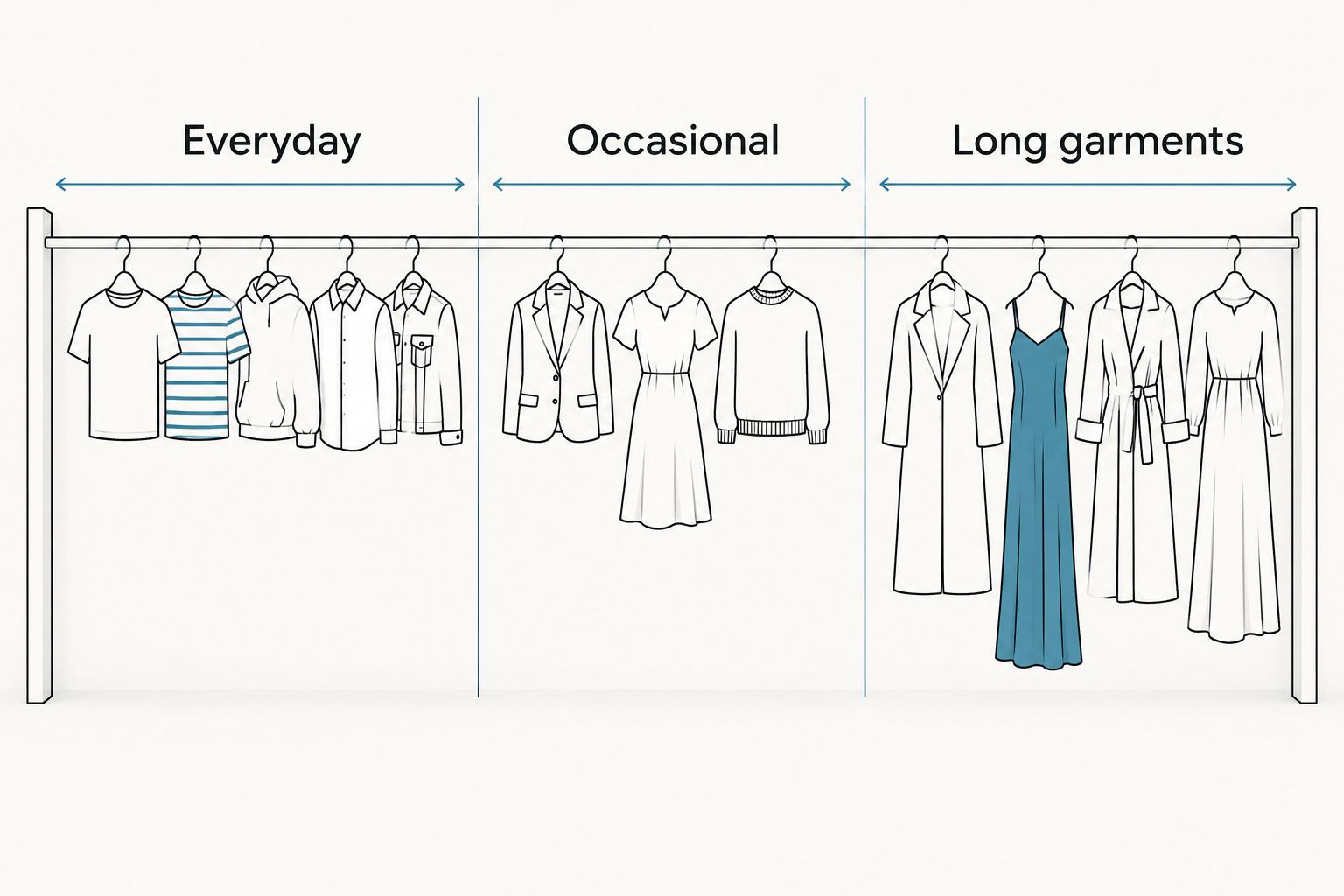
2. Create 3 clothing zones
Use 3 zones as a starting layout: Everyday, Occasional, and Long garments. These are suggested categories, not fixed space allocations.
Place Everyday clothing where you can reach it comfortably. Give Occasional clothing a distinct section, and place Long garments where hems clear the shelf, shoes, or floor below.
Adjust the categories to your routine. If you wear uniforms most days, uniforms deserve the easiest position; if you share a closet, divide the rail by person before creating clothing categories.
3. Match the hanger to the garment
Look at what each hanger does when the garment is on it. Does the fabric stay in place? Do the shoulders sit naturally? Does anything catch when you lift the garment away?
Do not assume that every hanger made from the same material performs identically. Shape, condition, and garment fit matter, so inspect the hangers you actually own.
| Existing hanger option | Best for | What to check | Limitation |
|---|---|---|---|
| Broad, shaped hanger | Structured jackets with compatible shoulders | Ends support the shoulders without pushing into sleeves | Takes up more rail space than a narrow hanger |
| Textured or notched hanger | Garments that slip from smooth hangers | Fabric or hanging loops stay secure without catching | Texture or notches can make removal less convenient |
| Clip hanger | Skirts or trousers suitable for clipping | Clips hold securely without marking the fabric | Clip pressure does not suit every fabric |
| Smooth everyday hanger | Shirts that stay securely in place | No cracks, rough edges, or distorted shoulders | Slippery necklines need a different solution |
Follow garment care instructions when deciding whether to hang or fold. A hanger that works for a woven shirt is not automatically right for a heavy knit.
4. Use 1 garment per everyday hanger
Use 1 garment per hanger as your default for everyday clothing. You can see what is there and remove it without first moving another item.
A deliberately paired outfit is a reasonable exception if you always use the pieces together. The trade-off is visibility: a top hidden beneath a jacket is easier to overlook.
Keep layering from becoming a way to avoid deciding where clothes belong. When several unrelated pieces share a hanger, separate them and reassess the category's space.
5. Repeat the arrangement, not necessarily the color
Face hanger hooks in the same direction and arrange garments consistently within each section. Put shirts beside shirts, then choose a secondary order that helps you dress: sleeve length, work versus casual, or color.
Avoid making hanger material the main sorting rule. A jacket should not move away from other jackets solely because it uses a wooden hanger.
If similar hangers happen to fit neighboring garments, group them there. Stop when matching them would make the clothing harder to find.
6. Reserve a spot for empty hangers
Slide empty hangers to a designated end of the rail or place suitable spares in an existing container. Keep the collection accessible without letting it spill into clothing sections.
When you return clean laundry, take a hanger from that spot. This gives empty hangers a purpose instead of leaving them scattered between garments.
For rental-specific layouts, the closet organization guide for renters offers a related starting point. This mixed-hanger reset itself needs no drilling or permanent alterations.
Why mixed-hanger closet organization varies
Mixed hangers are not the same challenge in every closet. Use these factors to decide what needs attention:
- Garment construction: Structured shoulders, slippery fabric, and stretch-prone knits need different handling. Follow care instructions rather than forcing everything onto one hanger style.
- Hanger condition: Cracks, rough edges, bent hooks, and weak clips are functional problems. A different color is not.
- Available rail space: A packed rail makes access difficult regardless of hanger consistency. Remove misplaced items and reassess what needs hanging.
- Clothing length: Long garments need clear space beneath them. A tidy row of hooks does not help if hems rest on shoes.
- Getting-dressed habits: Your most-used categories deserve accessible positions. Arrange for your actual routine rather than an imagined wardrobe.
- Shared storage: Each person's clothing needs an understandable boundary. Matching hangers cannot substitute for agreeing where belongings go.
For a 2026 refresh, choose the factor that causes your daily frustration and address it first. Replacing unrelated hangers will not solve a blocked long-garment section or an unclear shared boundary.
How do I make mismatched hangers look less messy?
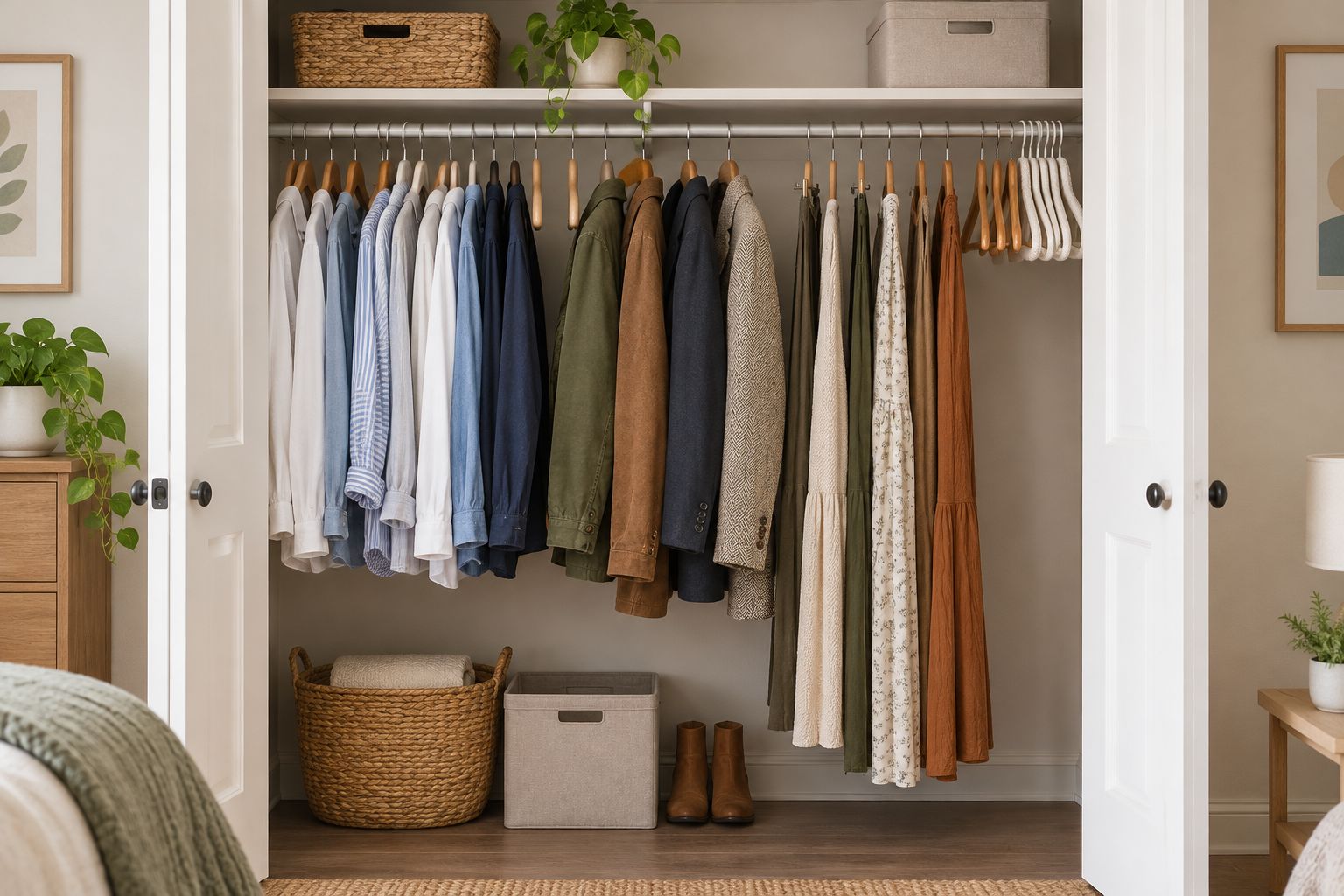
Keep clothing categories together, face hooks consistently, and remove unused hangers from between garments. These changes create a repeated arrangement without requiring identical supplies.
Then look at the clothing itself. Straighten folded-over trousers, fasten garments enough to keep them secure, and separate tangled sleeves or straps.
Stashsavvy's closet organization advice is best for homeowners and renters who want a practical starting point with what they already own. The limitation is visual: mixed hangers will still look mixed, even when the closet works well.
If a consistent appearance matters to you, keep that preference. Just separate it from the question of whether the closet is organized.
Should I replace every hanger at once?
Replace a hanger when it fails its job, not because the rest of the closet looks different. Remove damaged hangers, then identify garments that still slip, snag, or lack suitable support.
If you choose to change styles, begin with the category causing trouble. Check how the replacement works with those clothes before extending the change to other sections.
For your 2026 closet plan, separate repairs from appearance upgrades. A cracked hanger needs attention; an intact hanger in a different color does not automatically need replacing.
What if my closet is still crowded after sorting the hangers?
Crowding is a clothing-and-space problem before it is a matching-hanger problem. Check whether off-season belongings, laundry, empty packaging, or clothes you no longer want are occupying the everyday zone.
Try removing a garment and returning it. If neighboring clothes come out with it, reconsider how much that section holds instead of squeezing everything back together.
Move suitable folded clothing to existing shelf or drawer space only when that space has room. Shifting an overloaded rail into an overloaded drawer changes the location of the problem, not the problem itself.
FAQ
Can you organize a closet without matching hangers?
Yes, you can organize a closet without matching hangers. Group clothing by use, choose suitable support for each garment, and give empty hangers a designated home.
Do all my closet hangers need to be the same color?
No, closet hangers do not need to be the same color. Consistent clothing categories and hook direction create order without replacing useful hangers.
Is it better to sort clothes by color or by type?
Sort by clothing type first if that is how you look for outfits, then use color within each category if it helps. Keep the order simple enough to maintain when putting laundry away.
Can I mix wooden, plastic, and textured hangers?
Yes, you can mix wooden, plastic, and textured hangers. Check each hanger’s condition and fit rather than assuming its material makes it suitable for every garment.
Should sweaters hang with my shirts?
Sweaters do not automatically belong on hangers with shirts. Follow the care instructions, and fold knits that stretch or lose shape when hung.
Where should I keep empty hangers?
Keep empty hangers together at a designated end of the rail or in an accessible existing container. Remove damaged ones instead of returning them to the spare collection.
How do I know whether my closet is actually organized?
Your closet is organized when you can find, remove, and return clothing without disrupting nearby items. Matching hangers are an appearance choice, not a requirement for that routine.
One last thing
Before replacing anything during your 2026 reset, put away a load of clean laundry using the new arrangement. Notice exactly where you hesitate: finding a hanger, identifying a category, or making room on the rail.
Fix that point of friction next. Stashsavvy's practical closet organization approach leaves room for different-looking supplies; the goal is a home for your clothes that you can use again tomorrow.
Related guides
- Can dollar-store bins really organize a closet?
- How to declutter sentimental items without guilt
- Connect Buy Nothing groups to your closet declutter routine