
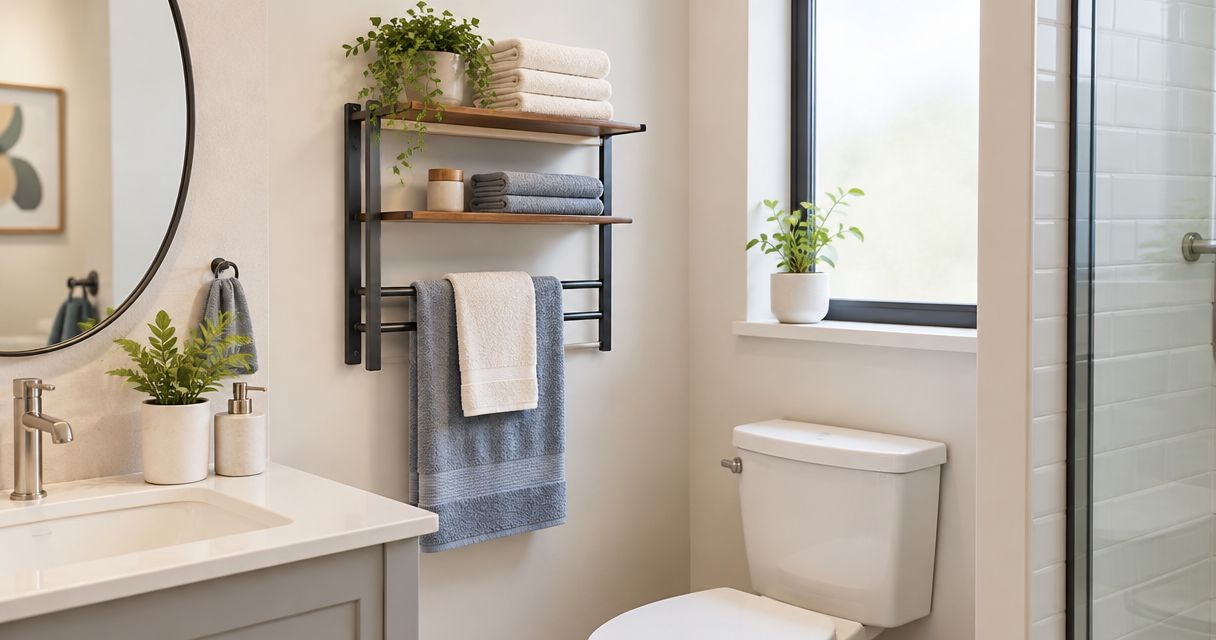
Best towel storage racks for small bathrooms in 2026
Best overall: a wall-mounted towel bar. Best for renters: an over-the-door towel rack. Best for clean spares: a vertical rolled-towel rack. This 2026 guide compares the best towel storage racks for small bathrooms by usable space, towel access, and installation requirements—not unverified product claims.
- Stashsavvy’s best towel storage racks for small bathrooms start with wall bars for spreading out damp towels.
- Over-the-door towel racks suit renters when the brackets fit and the bathroom door closes freely.
- Vertical rolled-towel racks hold clean spares; they do not replace space for drying used towels.
- Measure the rack’s footprint with towels loaded, not just the empty frame.
Why this matters
A rack that stores folded towels neatly can still leave you without anywhere to hang a wet bath towel. Separate drying space from spare-towel storage before choosing a rack. That distinction matters more than matching the finish to your faucet.
For a rental bathroom, start with permission and surface restrictions rather than shopping. Stashsavvy’s small bathroom storage ideas for renters cover the broader storage decisions; this ranking focuses specifically on where towels belong.
What makes the best towel storage racks for small bathrooms?
Use these criteria to compare your 2026 shortlist. A rack earns its place by solving your actual towel problem, not by holding the largest stack.
- Towel purpose: Open bars suit damp towels; shelves and vertical holders suit clean, dry spares.
- Loaded footprint: Include hanging fabric, projecting brackets, and the space needed to remove a towel.
- Installation fit: Match the mounting method to your wall, door, lease, and installation instructions.
- Everyday reach: Put regularly used towels where you can retrieve them without stretching across fixtures.
- Cleaning access: Keep the floor, toilet tank, and nearby surfaces accessible.
- Material care: Check the stated bathroom suitability and care instructions rather than trusting a metallic finish.
Best towel racks at a glance
These are rack styles, not verified individual product picks. Each recommendation describes a useful configuration; dimensions, mounting hardware, and load limits must be checked on the specific model.
| Rank and rack style | Best for | Standout feature | Key limitation |
|---|---|---|---|
| 1. Wall-mounted towel bar | Everyday damp towels | Lets you spread fabric across a rail | Requires suitable mounting space |
| 2. Over-the-door towel rack | Renters with a compatible door | Uses the back of the door | Brackets can interfere with closure |
| 3. Shelf-and-bar combination | Bathrooms without a linen cupboard | Separates folded spares from a hanging towel | Projects farther than a simple bar |
| 4. Vertical rolled-towel rack | Narrow wall space for clean spares | Stores rolls in a vertical column | Not a drying solution |
| 5. Swing-arm towel rack | Shared bathrooms with adjustable space | Arms move apart during use | Needs clearance when extended |
| 6. Freestanding towel ladder | Bathrooms with an unused floor edge | Moves without wall installation | Occupies floor space and needs stability |
| 7. Adhesive towel bar | Suitable surfaces where drilling is prohibited | Attaches without drilled holes | Surface and load restrictions control suitability |
1. Wall-mounted towel bar: best for everyday damp towels
A wall-mounted towel bar gives your everyday towel a dedicated place to hang open. Choose a location beside the shower or bath that does not put fabric against the toilet, heater, or door.
Check the usable rail length rather than the overall width, which includes mounting plates. Fold your actual towel over a temporary support before deciding whether the intended bar position works.
Wall-mounted towel bar pros:
- Keeps the floor available for movement and cleaning.
- Gives damp fabric room to hang rather than forming a tight bundle.
- Creates a clear return spot after each shower.
Wall-mounted towel bar cons:
- Drilled installation requires permission where applicable.
- A short rail becomes crowded when towels overlap.
Best for: A bathroom with suitable wall space and a regular place for each used towel.
Verdict: Buy when the mounting surface and loaded towel clearance both work.
2. Over-the-door towel rack: best for renters with a compatible door
An over-the-door towel rack turns the back of a door into hanging storage without drilling into the wall. Look for a configuration with separated rails if your goal is to hang damp towels rather than simply collect them.
Measure the door thickness and inspect the gap above it before ordering. The door must close normally with the brackets fitted, and hanging towels must stay clear of the handle and floor.
Over-the-door towel rack pros:
- Uses a surface that does not require floor space.
- Can move with you when the attachment method allows.
- Keeps wall installation out of the project.
Over-the-door towel rack cons:
- Door and bracket dimensions must match.
- Closely stacked rails can leave towels touching.
Best for: Renters with a door that accommodates the rack without rubbing or forced closure.
Verdict: Buy after checking door fit; skip if you must push the door shut.
3. Shelf-and-bar combination: best without a linen cupboard
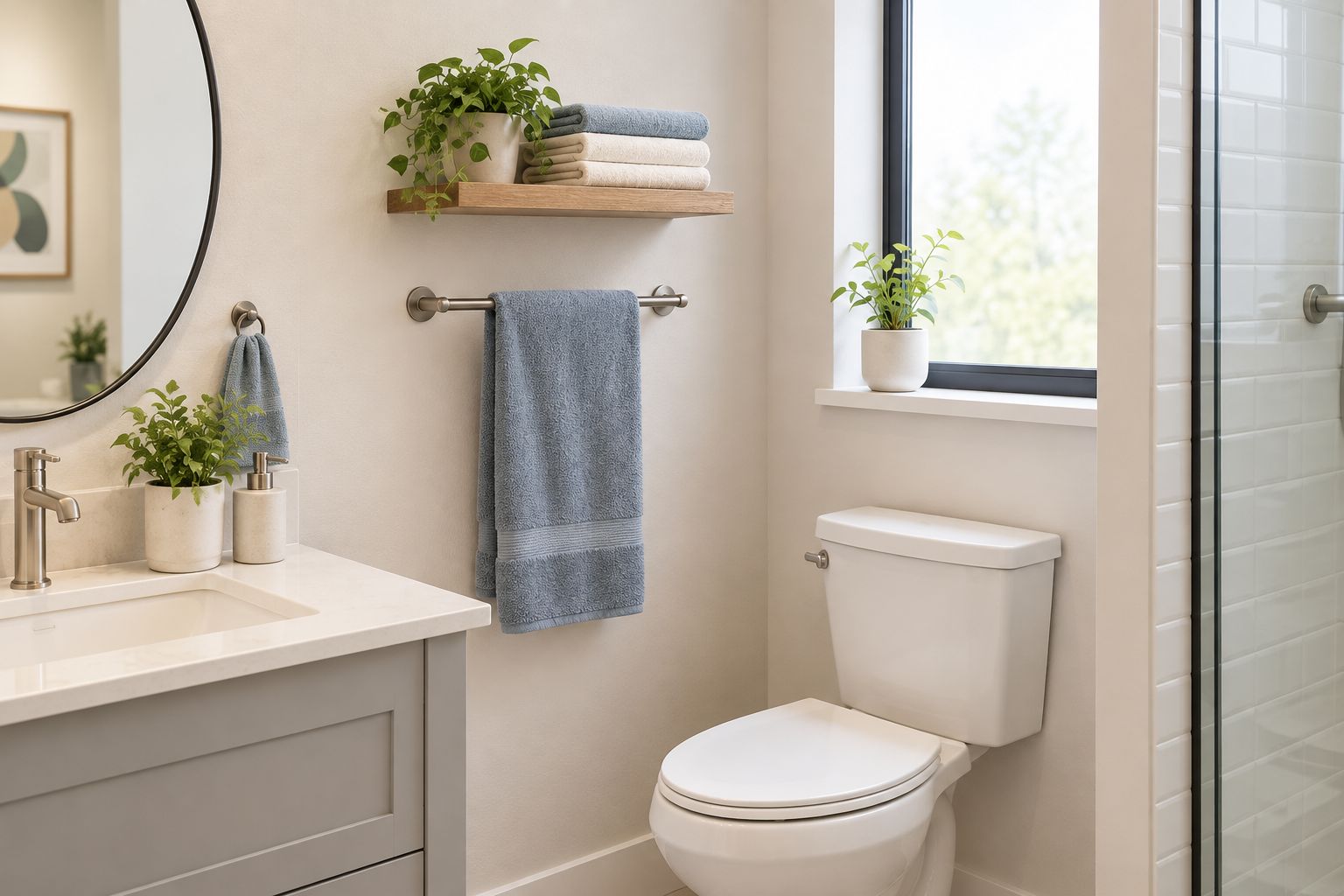
A shelf-and-bar combination puts folded, dry towels above a rail for the towel currently in use. It addresses storage and hanging separately, which makes it useful when your bathroom has no linen cupboard.
Place frequently used towels within comfortable reach. Keep the shelf stack low enough to remove a towel without pulling down the rest, and leave the bar accessible beneath it.
Shelf-and-bar combination pros:
- Combines spare storage and everyday hanging.
- Keeps folded towels off the vanity.
- Makes the distinction between clean and used towels visible.
Shelf-and-bar combination cons:
- Shelf depth can crowd a narrow passage.
- High placement makes folded towels harder to reach.
Best for: A bathroom needing both nearby clean towels and a dedicated drying rail.
Verdict: Buy if the shelf stays reachable and does not obstruct movement.
4. Vertical rolled-towel rack: best for narrow spare-towel storage
A vertical rolled-towel rack holds clean towels in a column against the wall. It suits a narrow wall strip that cannot accommodate a long horizontal bar.
Roll a towel the way you intend to store it, then compare that roll with the holder’s stated dimensions. Do not assume that a rack pictured with thin towels will accommodate your thick bath linens.
Vertical rolled-towel rack pros:
- Uses height rather than a broad shelf.
- Makes spare towels visible.
- Keeps clean rolls off counters and toilet tanks.
Vertical rolled-towel rack cons:
- Rolled storage is unsuitable for damp towels.
- Oversized rolls can be awkward to insert or remove.
Best for: Clean spares in a bathroom that already has somewhere to hang used towels.
Verdict: Buy for dry storage; skip as your only towel rack.
5. Swing-arm towel rack: best for adjustable hanging space
A swing-arm towel rack has rails that pivot outward. You can separate the arms while towels hang, then move empty arms toward the wall when the space is needed.
The useful measurement is the rack’s extended footprint, not its folded depth. Map where each arm will sit relative to the shower door, mirror, and anyone using the sink.
Swing-arm towel rack pros:
- Lets you adjust rail positions.
- Offers separate hanging positions on a single fixture.
- Reduces projection when the arms are empty and folded away.
Swing-arm towel rack cons:
- Extended arms occupy usable bathroom space.
- Towels bunch together if loaded arms are pushed closed.
Best for: Shared bathrooms with enough clear space to keep occupied arms separated.
Verdict: Buy only if the extended layout works during normal bathroom use.
6. Freestanding towel ladder: best for a movable setup
A freestanding towel ladder gives you hanging rails without attaching anything to the wall. Choose a model designed to stand independently; a leaning ladder is a different setup and requires its own stability checks.
Towel size matters here. Wider bath sheets need more usable rail space than smaller bath towels, so compare your actual linen dimensions with the space between the ladder’s uprights. Check the hanging drop as well: fabric should stay off the floor.
Freestanding towel ladder pros:
- Moves when your layout changes.
- Avoids drilled wall installation.
- Keeps towels within reach beside an open wall edge.
Freestanding towel ladder cons:
- Takes floor space away from circulation.
- Needs a stable position and compliance with any securing instructions.
Best for: A bathroom with an unused floor edge outside the walking route.
Verdict: Buy when stable placement is possible; skip beside a cramped doorway.
7. Adhesive towel bar: best for suitable no-drill surfaces
An adhesive towel bar attaches to a surface without drilled holes. Its suitability depends on the specific adhesive system, approved surface, installation procedure, and stated load limit.
Read those requirements before treating an adhesive bar as rental-friendly. A no-drill attachment does not guarantee damage-free removal, and a wet towel places a different demand on the fixture than an empty rail.
Adhesive towel bar pros:
- Avoids drilling where the specified attachment is suitable.
- Keeps towels off the floor and vanity.
- Fits a targeted hanging spot without a freestanding frame.
Adhesive towel bar cons:
- Some finishes and textures are unsuitable.
- Removal can affect the underlying finish.
Best for: An approved surface where both the manufacturer’s instructions and your rental rules permit installation.
Verdict: Wait until you verify the surface, load limit, and removal requirements.
Measure before you choose
For your 2026 bathroom refresh, take 3 measurements: usable width, clear height, and projection into the room. Measure with the towel involved, not just a tape stretched across an empty wall.
- Usable width: Compare the hanging rail or holder opening with your folded or rolled towel.
- Clear height: Check the drop beneath the rail so fabric avoids the floor and nearby fixtures.
- Room projection: Include shelf depth, extended arms, brackets, and the towel itself.
Then rehearse the routine. Open the door, reach for the towel, use the sink, and access the toilet tank. If the proposed rack interrupts any of those actions, change the location or choose a shallower style.
You do not need every spare towel in the bathroom. Keep the immediate replacement within reach and move overflow to another suitable dry storage space.
How the rack styles were ranked
Stashsavvy’s 2026 towel storage ranking is a use-case comparison, not a hands-on product test. The order prioritizes everyday damp-towel hanging, followed by rental constraints, spare storage, and layouts requiring more clearance or installation checks.
The criteria are towel purpose, loaded footprint, installation fit, reach, cleaning access, and material care. No individual model’s durability, capacity, or mounting performance is claimed here.
Which towel storage rack should you choose?
Stashsavvy recommends a wall-mounted towel bar for small bathrooms that need a dedicated place to hang damp towels. It is the default when installation is permitted and the wall location works.
For renters, check an over-the-door rack before considering adhesive mounting. For clean spares, choose a vertical holder or shelf-and-bar combination, but retain separate hanging space for towels after use. Your best 2026 choice solves the daily routine without blocking the room.
FAQ
What’s the best towel rack for a very small bathroom?
A wall-mounted towel bar is the default choice when you need to hang a damp towel without occupying floor space. Choose a usable rail length and location that accommodate your towel without blocking fixtures.
What’s the best towel rack for a rental bathroom?
An over-the-door towel rack is a good starting point when the door and brackets are compatible. Check your rental rules, confirm normal door closure, and keep towels clear of the handle and floor.
Is a vertical towel rack good for wet towels?
A vertical rack designed to hold rolled towels is for clean, dry spares, not wet towels. Give used towels a separate rail where the fabric can hang open.
Are adhesive towel bars safe for bathroom walls?
An adhesive towel bar is suitable only when its instructions approve the surface and intended load. Follow preparation and removal directions, and do not assume that no-drill installation means damage-free removal.
Can I use a towel ladder in a tiny bathroom?
Use a towel ladder only when its loaded footprint leaves the walking route clear and its placement meets the securing instructions. A wall or door rack is a better fit when floor space is already crowded.
Should I store all my spare towels in the bathroom?
No—you can keep an immediate replacement in the bathroom and store overflow in another suitable dry space. This reduces the amount your bathroom rack needs to hold.
How do I stop towels from touching the floor?
Check the towel’s hanging drop before setting the rail height. Try the intended fold at the proposed position and confirm that the fabric clears the floor and nearby fixtures.
One last thing
Before buying anything, clear your existing towel bar and hang only the towel currently in use. Move clean spares elsewhere temporarily. If that solves the crowding, your next step is better spare-towel storage—not another drying rack.
Related guides
- Bathroom vanity organizers
- How to store bathroom items without a linen closet
- Linen closet organizers
- Rolling storage carts for small bathrooms