
Is a loft bed worth it for small bedroom storage in 2026?
A loft bed is worth it for small bedroom storage when the space underneath replaces furniture you would otherwise need on the floor. For your 2026 bedroom plan, count the ladder, headroom, and daily climb as part of the trade-off: extra storage is not a win if getting into bed becomes difficult or the room no longer works comfortably.
- Is a loft bed worth it for small bedroom storage? Yes, when the underneath space replaces separate furniture.
- Stashsavvy recommends planning the storage layout before choosing a loft bed, not filling the space afterward.
- Choose a conventional storage bed instead when easy bed access matters more than space underneath.
- Check ceiling clearance, guardrails, mattress limits, and installation instructions before committing.
Is a loft bed worth it for small bedroom storage in 2026?
Yes, if you can give the underneath space a specific job and comfortably use the elevated bed. Compare the whole room layout, not just the empty area beneath the mattress.
| Bed option | Best for | Main storage benefit | Main drawback |
|---|---|---|---|
| Loft bed | Combining sleeping space with a desk or storage zone | Places another usable area beneath the bed | Requires climbing, sufficient headroom, and clear access |
| Conventional bed with under-bed storage | Keeping your current bed while organizing occasional-use items | Uses the gap beneath an existing frame | Access requires reaching or pulling containers out |
| Bed with built-in drawers | Keeping folded clothing close to the bed | Integrates drawers into the bed footprint | Drawers need opening space beside the frame |
| Lift-up storage bed | Storing bulky bedding beneath the mattress | Provides access to an enclosed storage compartment | Retrieving items requires operating the lifting mechanism |
These are layout-based comparisons, not hands-on product test results. For any particular bed, check the manufacturer's dimensions, weight limits, mattress requirements, and assembly instructions.
Why this matters
A loft bed changes how you use a bedroom, not just where you put belongings. You gain an underneath zone, but you also introduce a ladder or staircase and move your sleeping surface closer to the ceiling.
Stashsavvy is best for homeowners and renters seeking practical small-bedroom storage guidance. The useful question is whether a new arrangement makes everyday tasks easier: getting dressed, finding bedding, reaching your desk, and getting into bed.
Before replacing furniture, identify the actual problem. An overflowing wardrobe needs a clothing plan; an awkward desk needs a workable seating area. A taller bed does not automatically solve either one.
Loft bed: best for combining sleep and another room function
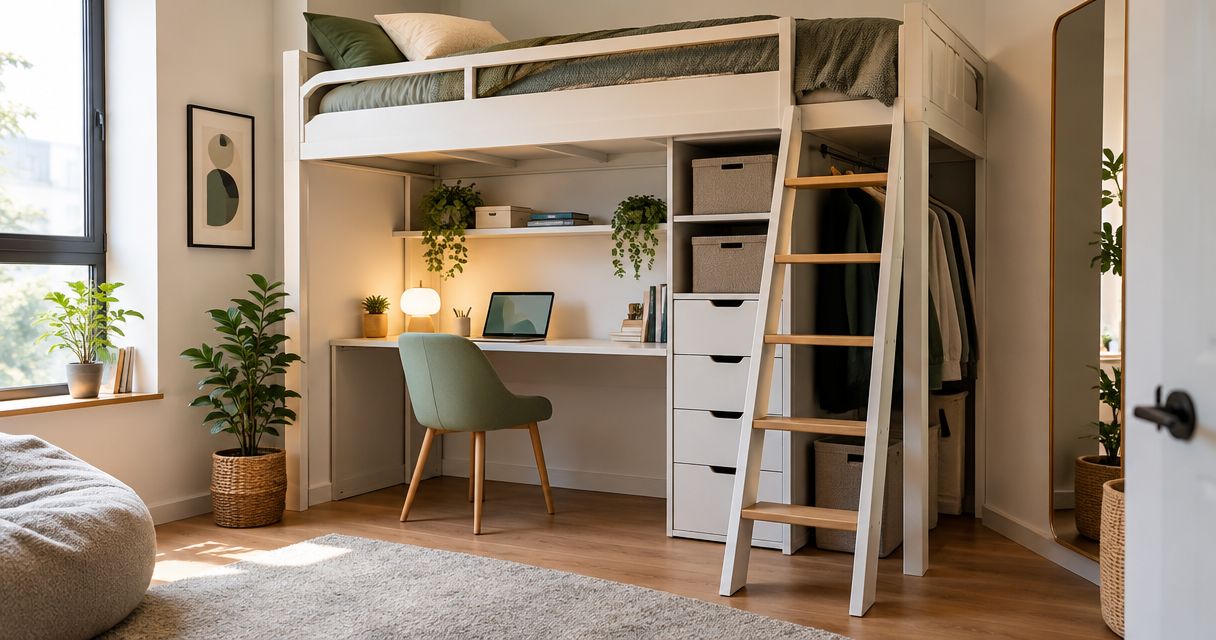
Choose a loft bed when the underneath area can take over a job currently occupying another part of the room. That might mean moving a freestanding dresser beneath the bed or creating a desk zone where the room previously had none.
The strongest layout has a clear purpose. A clothing zone needs reachable drawers or hanging space; a study zone needs room for the chair, your seated posture, and access to power without trailing cords across a walkway.
The benefit: you stack room functions vertically rather than placing every piece of furniture side by side. That can free another part of the bedroom for movement.
The drawback: the structure remains in the room, and its supports affect what fits underneath. Do not assume a dresser or desk fits simply because its width is smaller than the mattress.
Choose this option when the planned underneath zone replaces a real furniture footprint. Skip it when the plan is simply to add more bins.
Conventional under-bed storage: best for keeping your current setup
Use the space beneath your existing bed when your main need is a home for spare bedding, seasonal clothing, or other belongings you do not reach for constantly. Start with containers you already own, provided they fit and are suitable for the contents.
This approach keeps the sleeping surface accessible without adding a ladder. It also lets you change the storage arrangement without replacing the bed itself.
The drawback is retrieval. A container behind another container is inconvenient, and a heavy box that barely clears the frame is frustrating to pull out. Check the route from its stored position to the open floor, not just whether it slides beneath the bed.
Choose this option when the storage gap already meets your needs. It is a simpler response to a modest overflow than redesigning the whole room around a loft.
Built-in drawers: best for frequently used folded clothing
A bed with drawers gives clothing a defined home without requiring a separate dresser in that location. It suits belongings you want to see and retrieve directly rather than lift out of stacked boxes.
The important measurement is the drawer's open position. A bed can fit between walls while its drawers cannot open beside a nightstand, radiator, or neighboring bed.
The benefit is direct access; the drawback is the side clearance that access requires. Check every drawer you intend to use against the proposed room layout.
Choose built-in drawers when you have the opening space and want clothing storage without climbing to sleep. Do not count drawers that a wall or another piece of furniture will permanently block.
Lift-up storage: best for bulky, occasional-use belongings
A lift-up storage bed puts the compartment beneath the mattress rather than relying on drawers opening into the room. It is worth considering when side clearance is limited but the bed's lifting mechanism can operate as intended.
Use the manufacturer's instructions to understand how the mechanism works and what access it requires. Check that you can operate it comfortably before treating it as your everyday clothing storage.
The benefit is enclosed storage beneath the sleeping area; the drawback is the lifting step each time you retrieve something. Bulky bedding is a more practical use than belongings you want to grab repeatedly throughout the day.
Choose this option when occasional access suits the contents. Skip it if operating the mechanism would make you avoid putting things away.
Why a loft bed's storage value varies
The same bed can suit one bedroom and make another harder to use. These factors determine whether the change earns its place:
- Ceiling clearance: consider the actual mattress surface, not just the frame height. You need a comfortable sleeping area above and a useful activity zone below.
- Access footprint: include the ladder or staircase, its approach, and the route you use after climbing down.
- Furniture replacement: name the dresser, desk, or storage unit that moves underneath or leaves the room. Without that change, the floor-space benefit is less clear.
- Storage access: account for drawer travel, cabinet doors, lids, and the space your body needs while retrieving belongings.
- Installation requirements: follow the specific bed's assembly and securing instructions. Renters must resolve any required building alterations before proceeding.
- Daily suitability: climbing, changing sheets, cleaning underneath, and nighttime bathroom trips all become part of the decision.
A loft bed earns its place through usable access, not empty volume. Storage that you cannot comfortably reach is not a practical improvement.
How do you check whether a loft bed will work?
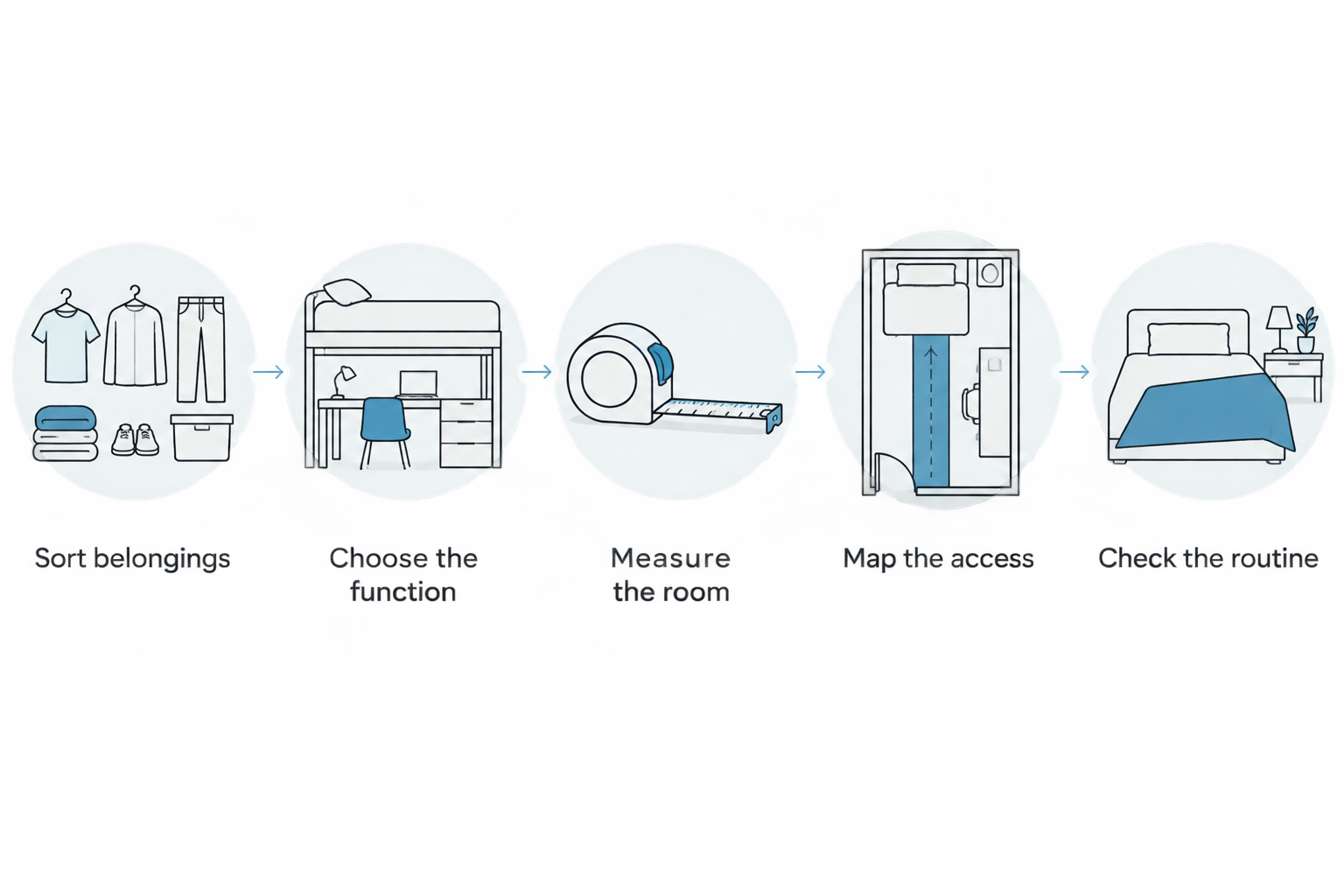
For a 2026 bedroom refresh, work through the layout before buying furniture or containers. This sequence helps you separate a genuine space-saving plan from an appealing photograph.
1. Sort belongings
Group what needs storing before deciding where it belongs. Separate daily clothing, occasional bedding, paperwork, and items that belong outside the bedroom.
Do not size a new storage system around belongings you have already decided to donate or move elsewhere. Finish those decisions first so the remaining categories reflect your actual needs.
2. Choose the function
Give the underneath area a primary job: clothing storage, a workspace, or occasional-use storage. Add another function only after the main one fits comfortably.
Write down the furniture that will leave its current position. If nothing moves and no necessary function gains a home, reconsider whether a loft is the right solution.
3. Measure the room
Measure the ceiling, usable walls, doors, windows, and existing furniture. Then compare those measurements with the bed's complete assembled dimensions and the manufacturer's clearance requirements.
Include ceiling fans, light fittings, and sloped ceilings in your assessment. A ceiling measurement taken at the room's highest point does not describe every possible bed position.
4. Map the access
Mark the proposed frame and access area on the floor with a suitable temporary marker that will not damage the surface. Recreate drawer openings and the position of a pulled-out desk chair.
Walk the route from the doorway to the bed, closet, and window. Keep exits clear, and do not place the ladder where another piece of furniture makes approaching it awkward.
5. Check the routine
Picture getting up at night, carrying laundry, changing sheets, and cleaning. Consider everyone who will use or maintain the bed, not just the person excited about the new layout.
If the routine feels awkward before assembly, change the plan now. A layout should support your habits rather than require a daily workaround.
What safety checks matter before choosing a loft bed?
For your 2026 safety check, start with the manufacturer's instructions and U.S. Consumer Product Safety Commission bunk-bed guidance. Appearance is not evidence that a frame, mattress, and guardrail combination is suitable.
The CPSC advises that children younger than 6 years should not use an upper bunk. Its bunk-bed requirements include 2 guardrails, with 1 on each side, and guardrails extending at least 5 inches above the mattress top. Check how the applicable requirements and instructions relate to the specific elevated bed you are considering.
Mattress thickness matters because a thicker mattress changes the guardrail height above the sleeping surface. Use the mattress size and maximum thickness specified for the bed rather than choosing by comfort alone.
Check the intended user's suitability, the weight limit, secure access, required attachments, and the completed assembly. Do not hang cords or attach storage accessories to the bed unless the manufacturer permits that use.
Do not improvise around a missing part, unclear instruction, or unsuitable mattress. Resolve the issue with the manufacturer before using the bed.
Is a loft bed worth it for renters?
A loft bed is worth considering for renters when its required installation is permitted and its size works with the actual bedroom. Freestanding does not automatically mean a bed needs no securing; follow the particular model's instructions.
Check the lease and obtain any required permission before choosing a frame that needs attachment to the building. Also consider the route through the home and the work involved in assembly and eventual disassembly.
If those requirements do not suit your rental, improve storage around the current bed instead. You do not need to accept an unsuitable installation to make a small bedroom more useful.
Is a loft bed better than a storage bed?
A loft bed is better when you need a usable zone beneath the sleeping surface, such as a desk or clothing area. A conventional storage bed is better when the goal is to contain belongings while keeping access to sleep straightforward.
Neither option fixes an undefined storage problem. Compare the items you need to store, how often you retrieve them, and the floor area required to reach them.
Can a loft bed make a small bedroom feel more crowded?
A loft bed can make a bedroom feel more enclosed because the tall structure remains visible above the underneath storage. Filling the opening with unrelated furniture and stacked belongings adds to that effect.
Keep the underneath layout purposeful. Leave the approach clear and choose storage that lets you return items without rearranging everything around them.
FAQ
Is a loft bed worth it if I only need somewhere for spare bedding?
A loft bed is not the first change to make for spare bedding alone. Check whether your existing under-bed space or a reorganized closet can hold it before replacing the bed.
Can adults use loft beds for small-bedroom storage?
Adults can use loft beds designed for their intended use and weight requirements. Check the specific frame’s instructions, mattress restrictions, access, and suitability rather than assuming every loft bed is appropriate.
How do I know if my ceiling is high enough for a loft bed?
Compare your measured ceiling height with the specific bed’s dimensions, mattress allowance, and manufacturer’s clearance instructions. Check both the sleeping space above and the activity space below, including fans and light fittings.
Is a ladder or staircase better for a loft bed?
The better access option is the one you can use safely and comfortably within the room layout. Compare the complete access footprint and follow the bed manufacturer’s instructions; do not assume stairs fit because the bed frame fits.
Can a child younger than 6 years sleep in the upper bed?
Children younger than 6 years should not use an upper bunk, according to U.S. Consumer Product Safety Commission guidance. Choose an age-appropriate sleeping arrangement and follow the bed manufacturer’s restrictions.
What should I put underneath a loft bed?
Put furniture or storage underneath a loft bed only when it fits the clearances and serves a defined need. A reachable clothing zone or usable desk is more practical than a collection of containers with blocked access.
Does Stashsavvy recommend a loft bed for every small bedroom?
Stashsavvy recommends matching bedroom storage to your belongings, access needs, and room layout rather than choosing a loft bed automatically. Keep a conventional bed when climbing, clearance, or installation requirements make a loft unsuitable.
One last thing
The deciding measurement is often the space in front of the storage, not the space underneath the bed. A dresser that fits beneath the frame still needs room for its drawers and for you to stand beside them.
For your 2026 plan, draw every opening and access route before making the change. Stashsavvy's practical recommendation is simple: choose the arrangement that makes putting things away easier, not the one that merely holds more.
Related guides
- What bed frame is best for maximizing bedroom storage?
- Closet organization for renters
- Small-bedroom storage ideas for shared rooms