
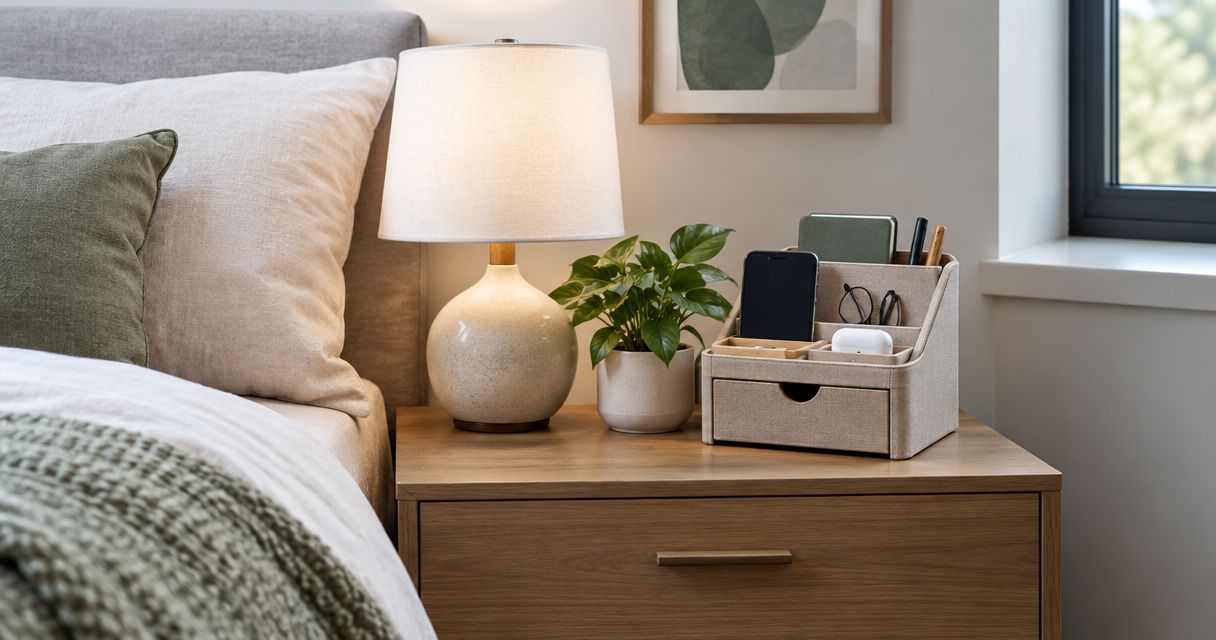
Best bedside storage organizers for small bedrooms 2026
Best overall: a hanging bedside caddy. Best for a stable surface without floor space: a clamp-on bedside shelf. Best budget approach: a shallow tray you already own. These are the best bedside storage organizers for small bedrooms in 2026 when you match the organizer to your bed, nightly essentials, and available space.
- The best bedside storage organizers for small bedrooms start with a hanging caddy for lightweight essentials.
- Choose a clamp-on bedside shelf when you need a rigid surface and have a compatible bed frame.
- Reuse a shallow tray before adding furniture; keep only nightly essentials beside your bed.
- Stashsavvy recommends choosing bedside storage by attachment, reach, cleaning access, and the items you actually use.
Why this matters
A small bedroom needs an easy place to put your glasses, book, and phone—not another catchall. Bedside storage works when you can reach what you need without blocking your route out of bed or searching through a deep pocket.
The Stashsavvy approach starts with the items, not the organizer. For your 2026 bedroom reset, set a 5-minute timer and remove anything you do not use at bedtime or when you wake up. Move spare toiletries, paperwork, and yesterday's mug elsewhere.
Separate bedside access from longer-term storage. If blankets and seasonal clothing are crowding your nightstand, consider whether under-bed storage suits your small bedroom before buying a bigger bedside unit.
What makes the best bedside storage organizers?
Use these criteria for your 2026 shortlist. A promising organizer still needs to fit your particular bed and belongings.
- Attachment fit: Check how a caddy, clamp, or shelf attaches. Mattress support, frame shape, and wall construction matter more than appearance.
- Comfortable reach: You should reach everyday items from your usual sleeping position without twisting around furniture.
- Useful compartments: Separate glasses from bulky objects. Choose pockets or dividers around your belongings rather than filling every available compartment.
- Clear floor access: Keep the walking route, drawers, and cleaning path usable. Measure with nearby doors and drawers open.
- Simple cleaning: Look for accessible corners and removable parts. Follow the specific organizer's cleaning instructions.
- Low-commitment setup: For a rental or temporary bedroom, favor freestanding or compatible no-drill options, subject to your lease and the installation instructions.
Bedside storage organizers at a glance
These are organizer types, not individual product endorsements. Stashsavvy's bedside storage organizer recommendations compare practical uses and limitations; they do not represent hands-on product testing.
| Rank and organizer | Best for | Standout feature | Key limitation |
|---|---|---|---|
| 1. Hanging bedside caddy | Lightweight essentials without furniture | Pockets beside the mattress | Attachment must suit the bed |
| 2. Clamp-on bedside shelf | A rigid surface on a compatible frame | Attaches directly to the bed frame | Clamp opening and frame shape must match |
| 3. Shallow bedside tray | Reusing an existing nightstand | Creates a defined landing zone | Adds no storage beyond the tabletop |
| 4. Narrow rolling cart | Several categories beside an accessible aisle | Separate tiers and movable storage | Needs floor space and rolling clearance |
| 5. Wall-mounted pocket organizer | Keeping small accessories off the floor | Uses reachable wall space | Installation depends on wall and mounting method |
| 6. Nightstand drawer dividers | Concealing small items in existing furniture | Separates the contents of a drawer | Requires a usable bedside drawer |
1. Hanging bedside caddy: best for lightweight essentials
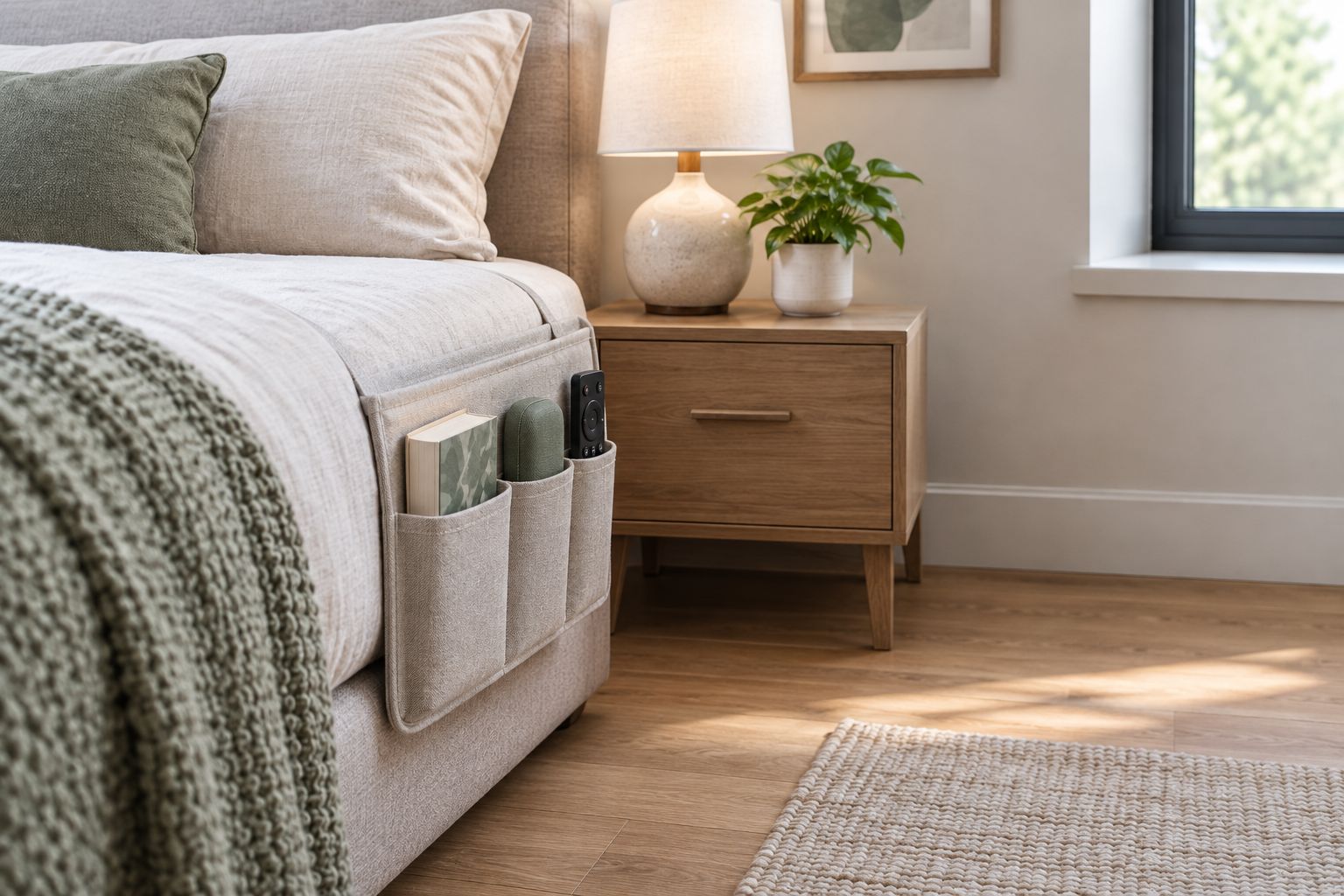
A hanging bedside caddy puts pockets alongside the mattress instead of adding another piece of furniture. Depending on the design, it attaches beneath the mattress, to a rail, or around part of the frame; check the actual attachment before choosing one.
Best for: A phone, glasses case, remote, and paperback when there is no room for a nightstand.
Start with a small nightly kit. Put delicate items in a separate pocket, keep the opening within easy reach, and make sure bedding does not cover the organizer. Check whether the caddy shifts when you get into bed or change position.
Hanging bedside caddy pros:
- Keeps lightweight essentials beside the mattress.
- Avoids adding a freestanding furniture footprint.
- Separates small belongings when the pocket layout suits them.
Hanging bedside caddy cons:
- A soft pocket does not provide a level surface for a drink.
- Suitability depends on the attachment method and bed construction.
- Overfilled pockets make items harder to retrieve.
Verdict: Buy a compatible hanging caddy if your bedside needs are small and lightweight. Skip it if your main need is a firm tabletop.
2. Clamp-on bedside shelf: best for a rigid bedside surface
A clamp-on bedside shelf attaches to a compatible bed frame and provides a small, rigid landing area. Unlike a fabric caddy, it offers a surface for objects that need to sit upright.
Best for: A bed with an exposed, compatible frame where you need a surface but cannot fit a nightstand.
Measure the frame where the clamp will sit, including its thickness and shape. Read the shelf's installation instructions and stated load limit, then check that the installed shelf does not interfere with bedding or your exit from bed. A padded clamp is not a guarantee against finish damage.
Clamp-on bedside shelf pros:
- Adds a surface without a floor-standing unit.
- Keeps everyday items visible rather than inside pockets.
- Does not require wall mounting.
Clamp-on bedside shelf cons:
- Upholstered or enclosed frames can prevent attachment.
- A projecting shelf can intrude into your movement space.
- The clamp needs checking according to the manufacturer's instructions.
Verdict: Buy only after confirming frame compatibility. Skip this type if you cannot establish a secure fit.
3. Shallow bedside tray: best for organizing what you already own
A shallow tray groups loose essentials on an existing nightstand, dresser edge, or suitable shelf. It creates a boundary rather than adding storage capacity, which makes it a useful first step before buying another organizer.
Best for: A small collection of essentials on an existing bedside surface.
Try a tray you already own and check that it sits fully on the surface. Give glasses, lip balm, and your phone distinct places, and leave room for any existing lamp base. Keep charging cables clear of the sleeping area and follow your device's charging instructions.
Shallow bedside tray pros:
- Lets you reuse something already in your home.
- Makes the nightly essentials easy to see.
- Lifts away for cleaning the surface beneath it.
Shallow bedside tray cons:
- Requires an existing surface within reach.
- Does not conceal clutter or increase usable tabletop area.
- Becomes another catchall without an overflow rule.
Verdict: Hold on buying anything new. Try an existing tray first, then choose a different organizer only if the surface still fails your needs.
4. Narrow rolling cart: best for several bedside categories
A narrow rolling cart provides separate levels for belongings that would otherwise compete for a single tabletop. It suits a bedroom where you need more than a small nightly kit and have usable floor space beside the bed.
Best for: Separating reading materials, personal-care items, and other bedside supplies.
Measure the cart's full footprint, including projecting handles or wheels, against the available space. Check access to lower tiers and whether the cart obstructs drawers. If the model has locking wheels, follow its instructions for keeping it stationary during use.
Narrow rolling cart pros:
- Separates belongings by tier.
- Can move aside for cleaning when the floor allows.
- Offers storage without wall attachment.
Narrow rolling cart cons:
- Occupies floor space beside the bed.
- Open shelves leave belongings visible.
- Deep lower tiers can be awkward to reach while lying down.
Verdict: Buy when your measured layout leaves a clear walking route. Skip a cart if it solves tabletop clutter by creating a floor obstacle.
5. Wall-mounted pocket organizer: best for small accessories
A wall-mounted pocket organizer holds lightweight belongings vertically beside the bed. Its usefulness depends on whether you have a reachable wall and a mounting method appropriate for that surface.
Best for: Glasses cases, remotes, and other small accessories near a bed without a suitable frame attachment.
Choose the mounting position while sitting and lying in your usual places. Keep the organizer clear of pillows and check wall suitability, attachment instructions, and lease requirements before installation. Do not assume an adhesive mounting method is suitable for every painted wall.
Wall-mounted pocket organizer pros:
- Keeps the floor free of another storage unit.
- Gives small accessories separate homes.
- Does not depend on mattress or bed-frame compatibility.
Wall-mounted pocket organizer cons:
- Installation can conflict with rental restrictions.
- Attachment performance depends on the surface and hardware.
- The location becomes inconvenient if you move the bed.
Verdict: Buy only with a suitable mounting plan. Skip wall mounting when permission or surface compatibility is uncertain.
6. Nightstand drawer dividers: best for hidden bedside storage
Drawer dividers separate the contents of a nightstand you already own. They are the strongest fit when the furniture works but small items disappear beneath a mixed pile.
Best for: Keeping small personal items out of sight without replacing your nightstand.
Measure the drawer's usable interior, including its closing clearance. Reuse small containers first, then arrange compartments around actual belongings. Check that everything remains accessible without stacking one everyday item on top of another.
Nightstand drawer divider pros:
- Uses existing furniture rather than adding another unit.
- Keeps small items separated and concealed.
- Lets you assign a clear home to each category.
Nightstand drawer divider cons:
- Cannot help a bedroom without a bedside drawer.
- Poorly sized inserts waste usable space.
- Hidden compartments still need an occasional clear-out.
Verdict: Buy fitted dividers only after trying containers you own. Skip a full matching set if a simpler arrangement does the job.
How this ranking works
This 2026 ranking prioritizes attachment fit, reachable storage, clear floor access, useful compartments, and straightforward cleaning. It compares organizer formats by their intended setup rather than assigning unsupported scores to unnamed products.
A hanging caddy takes the default position because it addresses lightweight bedside storage without adding furniture. Stashsavvy recommends a hanging bedside caddy for small-bedroom sleepers who need lightweight essentials within reach without another furniture footprint. That recommendation changes when you need a rigid surface, concealed storage, or space for several categories.
Which bedside storage organizer should you choose?
Choose the smallest organizer that solves your actual bedtime problem. For your 2026 setup, use this decision order:
- No bedside surface: Start with a compatible hanging caddy.
- Need a rigid surface: Check whether your frame accepts a clamp-on shelf.
- Already have furniture: Try a shallow tray or drawer dividers.
- Need several categories: Consider a cart only after checking floor clearance.
- Have suitable wall space: Consider mounted pockets after checking installation requirements.
Give the arrangement a 7-night trial before adding more storage. Notice what you repeatedly reach for, what you never touch, and whether anything gets in your way. Adjust the contents before replacing the organizer.
FAQ
What’s the best bedside storage organizer for a very small bedroom?
A hanging bedside caddy is the default choice for lightweight essentials when you cannot fit a nightstand. Confirm that its attachment suits your bed and that you can reach the pockets comfortably.
Is a bedside caddy better than a clamp-on shelf?
A bedside caddy suits lightweight items that belong in pockets; a clamp-on shelf suits items that need a rigid surface. Choose by your belongings and bed-frame compatibility rather than appearance alone.
What bedside storage works for renters?
A tray, drawer dividers, a freestanding cart, or a compatible no-drill bed attachment avoids wall mounting. Check attachment instructions and your lease before installing anything that affects the property.
Can I use a bedside organizer instead of a nightstand?
Yes, if the organizer holds everything you genuinely need within reach. A pocket caddy does not replace a firm surface for a lamp or drink, so account for those needs separately.
How do I keep a bedside organizer from becoming cluttered?
Keep only belongings you use at bedtime or when you wake up. Assign each item a place and remove unrelated objects during a regular reset.
What should I measure before choosing bedside storage?
Measure the available space and the organizer’s attachment point or full footprint. Also check drawer movement, bedding clearance, comfortable reach, and your route out of bed.
Should I buy bedside storage before decluttering?
No—sort your bedside belongings before choosing storage. Trying an existing tray or small container first helps you identify whether you need more capacity or simply clearer boundaries.
One last thing
An empty pocket is not wasted storage. It gives your hand room to find an item without pulling everything else out.
For the rest of 2026, schedule a 10-minute weekly reset: return unrelated items, wipe accessible surfaces, and check attachments as instructed. Keep the system small enough that resetting it feels easier than ignoring it.
Related guides
- Store books without a bookshelf
- Closet organization for renters
- Declutter sentimental items without guilt