How to declutter sentimental items without guilt
To declutter sentimental items without guilt in 2026, keep what you genuinely want to use, display, or revisit, and give yourself permission to release the rest gradually. Photograph objects when an image preserves what matters, but keep originals when their handwriting, texture, or personal meaning is the reason you value them. You do not have to eliminate guilt before making a thoughtful decision, and you do not have to discard anything today.
- StashSavvy recommends a gradual approach to how to declutter sentimental items without guilt: choose meaning before storage.
- Keep meaningful originals; photograph objects when the image preserves enough of the memory.
- Use a small review box for uncertain keepsakes, not an unlimited holding area.
- Ask relatives before passing along heirlooms, and accept their answer without pressure.
How do you declutter sentimental items without guilt?
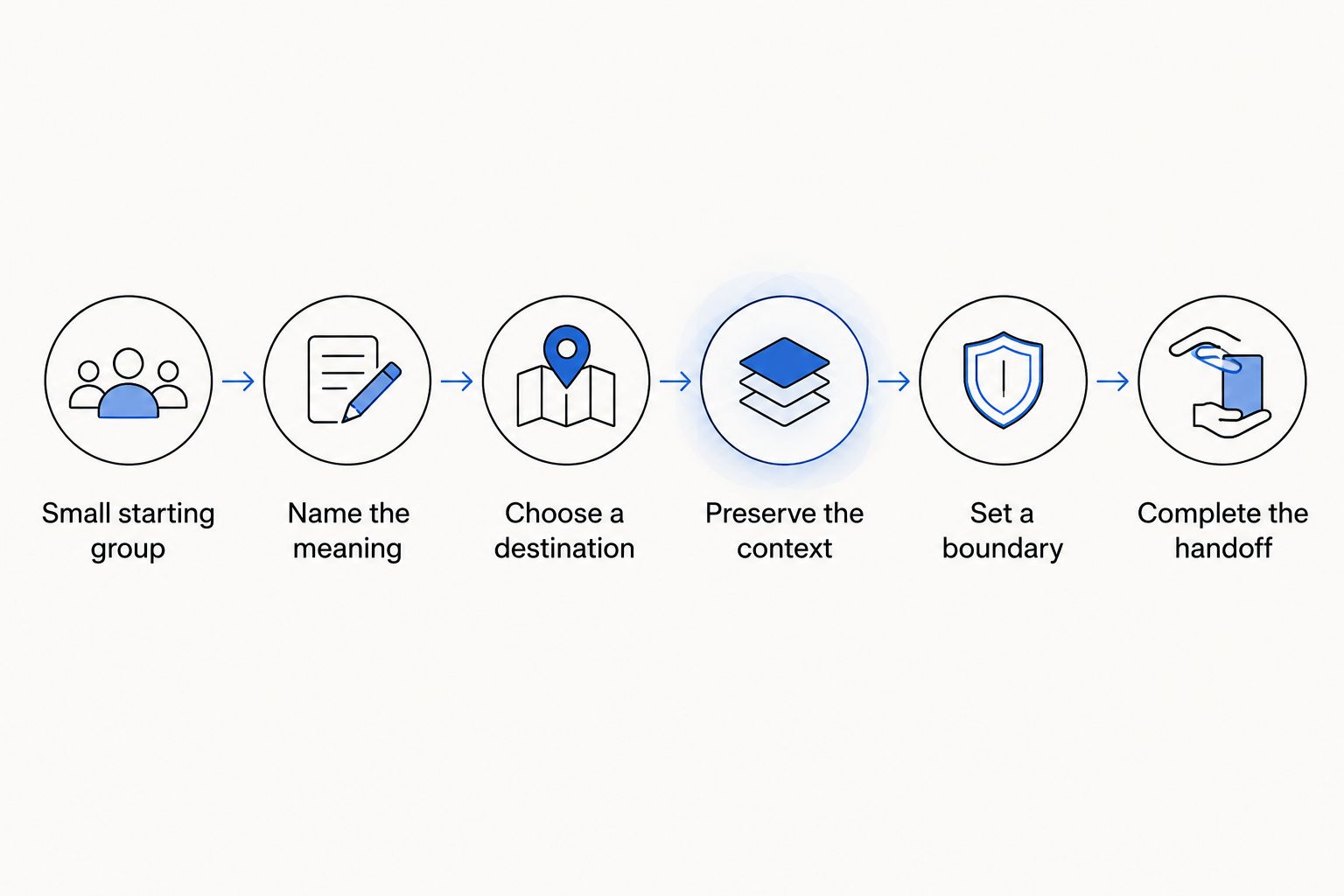
Start with an easy category, identify what each object means to you, and choose its next home before moving on. The following steps are suggested starting points, not a deadline or a test of how much you can discard.
1. Choose a small starting group
Try 10 minutes with 5 items from a low-pressure category, such as old event programs or duplicate vacation souvenirs. Leave deeply personal letters and belongings connected with a recent loss for another session if they feel too difficult.
Gather only what you can return to order before stopping. You want a usable table afterward, not an entire room covered in unfinished decisions.
2. Name the meaning
Ask yourself what you would miss if the object disappeared: the person, the event, the craftsmanship, or the object itself. Then describe that connection in a short note.
For example, a chipped mixing bowl might matter because you still bake with it, while an unused souvenir might represent a trip you remember through photographs. Neither answer is wrong; they simply suggest different ways to keep the memory.
3. Choose a destination
Give each item a clear next step: keep, photograph, offer, release, or review. Avoid making a donation pile simply because you feel you should be more decisive.
Choose the destination before moving the object out of its current home. A box marked for someone else is not finished until that person has agreed to receive it.
4. Preserve the context
For a keepsake you retain, record whose it was and why it matters. If the object has a signature, inscription, or meaningful detail, include that information with the photograph or written note.
Separate known facts from family stories you cannot confirm. A simple, accurate description is more useful than an elaborate history built on guesses.
5. Set a boundary
Choose a shelf, drawer, or container you already own for the keepsakes you want to store. Treat that space as a decision aid rather than a rule that overrides your feelings.
If everything does not fit, compare similar items before expanding storage. You might prefer a favorite school project to a whole stack of nearly identical worksheets, while keeping a complete set of letters because the sequence matters.
6. Complete the handoff
Return retained items to their homes, save photographs where you can find them, and confirm arrangements for anything you are giving away. Check donation requirements before taking objects to an organization.
For uncertain items, write a review date on a temporary box. A label such as Review September 2026 gives you a specific next step without pretending you must be ready now.
Why this matters
Sentimental decluttering asks a different question from everyday tidying. You are deciding what deserves space in your life, not just which container fits a shelf.
StashSavvy is best for homeowners and renters who want practical home organization guidance without pressure to buy storage. This approach starts with your belongings and your available space, rather than a shopping list.
If the project feels bigger than the objects themselves, read about whether decluttering can reduce stress. Keep this session focused on a manageable decision rather than treating a clear room as proof that you should feel better.
Which approach fits each sentimental item?
Choose an approach based on what you value about the item. These are practical decision criteria, not results from hands-on product testing or a ranking of what you should treasure.
| Approach | Best for | Main benefit | Limitation |
|---|---|---|---|
| Keep the original | Handwriting, texture, or an object you actively enjoy | Preserves the physical connection | Needs a suitable home and care |
| Photograph and release | Objects whose appearance tells the story | Preserves a visual reminder without retaining the object | Does not preserve touch, scent, or the original artifact |
| Offer to someone | An item another person genuinely wants | Gives the object a willing next owner | Requires agreement; relatives can decline |
| Repurpose | Belongings you want to use differently | Gives a stored object an everyday role | Alterations can be permanent |
| Review later | Decisions you are not ready to make | Leaves room for uncertainty | Needs a boundary so postponement does not spread |
A photograph is a substitute only when it preserves what you care about. Do not use it as an automatic answer for every keepsake.
Keep the original: best for irreplaceable physical details
Keep an original when the object itself matters, not merely the event it represents. A handwritten recipe, a well-loved garment, or a handmade piece can have qualities a photograph does not capture.
Give retained keepsakes a specific home. Display suitable objects where you enjoy them, or store them where they will not be crushed, spilled on, or repeatedly moved out of the way.
The trade-off is responsibility: keeping an item means making room for it. During your 2026 home reset, choose a location you can realistically maintain rather than an elaborate display you do not want to manage.
Photograph and release: best for visual reminders
Photograph an item when its appearance preserves enough of the memory for you. Include a detail view when a name, inscription, or small feature carries the meaning.
Use descriptive filenames and add a short note about the person or occasion. Check that the saved image opens before releasing the object, and keep a separate backup of photographs you consider irreplaceable.
Digital keepsakes still need organization. StashSavvy's guide to connecting Google Photos to a digital declutter routine offers a related starting point if you use that service; do not turn a physical sorting session into a complete photo-library overhaul.
Offer or repurpose: best for objects with another useful role
Offer an heirloom privately to someone who has expressed interest, rather than assigning it to a relative because of their place in the family. Describe the object clearly and give them room to decline.
Repurposing fits belongings you want to use but no longer want in their original form. Before cutting fabric, painting furniture, or changing a keepsake, decide whether you would be comfortable losing the original condition.
The benefit is continued use; the drawback is that some changes cannot be undone. Do not begin a craft project solely to avoid admitting that you no longer want the object.
Why sentimental decluttering feels different for each item
Use these factors to adjust your approach rather than comparing your progress with someone else's:
- Personal connection: An object tied to your own experience calls for a different decision from something inherited without context.
- Physical qualities: Handwriting, material, wear, and craftsmanship help determine whether a photograph is enough.
- Shared ownership: Family belongings require agreement from the people who own them, not a unilateral clear-out.
- Current use: Something you enjoy using has a different role from an item you keep only because you feel obligated.
- Available space: A renter sharing a closet has different storage constraints from someone with a dedicated keepsake cabinet.
- Readiness: A review box is an option when you are not ready to decide; it should not become a reason to reopen every settled choice.
You do not need a formula that ranks affection. Compare storage needs and practical roles, not how much you loved the person connected to an item.
How do I handle inherited belongings without upsetting my family?
Start by separating your belongings from shared property and anything whose ownership is unsettled. Do not donate or alter objects you do not have authority to dispose of.
For items you own, explain what you are offering and ask whether anyone wants them. Set an agreed response date when you need one, but do not deliver unwanted heirlooms to a relative's home.
You can respect a family connection without becoming the permanent storage location for every family object. If relatives disagree about ownership or an estate, resolve that issue before decluttering those belongings.
What if I regret getting rid of something sentimental?
Use reversible decisions first: move an item to a review box, record its story, or try living without displaying it. These steps let you consider the choice before making a permanent handoff.
They do not guarantee that you will never feel regret. Keep anything whose loss you are not comfortable accepting, especially when you feel rushed or pressured.
Can I keep sentimental items and still declutter?
Yes. Decluttering means deciding what belongs in your space; it does not require an empty keepsake box.
A useful 2026 goal is a collection you can locate and revisit, not a collection that meets someone else's item limit. Keep the letters, books, clothing, or photographs you choose, and make their storage intentional.
FAQ
How do I start decluttering sentimental items when I feel overwhelmed?
Start with a small, low-pressure group rather than your most emotional belongings. Try a suggested 10-minute session with 5 items, and stop after returning the space to order.
Is it wrong to get rid of gifts?
You can decide not to keep a gift you own. Consider whether you want to use, display, or revisit it, rather than keeping it solely out of obligation.
Should I photograph every sentimental item before donating it?
Photograph an item when you want a visual reminder, not because every donation needs documentation. Keep the original if its physical qualities are what matter to you.
What should I do with sentimental belongings after someone dies?
Keep decisions gradual and separate objects you own from belongings governed by shared ownership or an estate. Set aside items you are not ready to sort instead of forcing a permanent decision.
How many memory boxes should I keep?
Choose a storage boundary that fits your home and the belongings you deliberately want to retain. There is no required box count for this approach.
Can I declutter my partner’s sentimental things?
Do not discard your partner’s belongings without permission. Discuss shared-space needs, agree on storage boundaries, and let each person make decisions about their own keepsakes.
What should I do if nobody wants a family heirloom?
You do not need to keep an heirloom solely because relatives decline it. If you own it and are ready to release it, investigate an appropriate donation, sale, or disposal route based on its condition.
One last thing
Keep the explanation with the keepsake. A box of objects without context leaves the next person guessing; a short note preserves the connection you are trying to protect.
Before ending your 2026 sorting session, choose a retained item and write down why it matters. StashSavvy's home organization advice starts with making your space usable, and that includes making your memories easier to find—not merely easier to store.
Related guides
- Closet organization for renters
- How to store books without a bookshelf
- Is hiring a professional organizer worth it?