How much can dollar store organizing save you in 2026?
Dollar store organizing saves you the difference between purchases you genuinely avoid and everything you spend to get the same storage job done; there is no fixed savings amount for every home. Include extra containers, labels, shopping trips, and replacements in that comparison—not just the organizers you bring home.
- How much can dollar store organizing save you? Compare complete projects, not individual bins.
- Reuse existing containers before buying pantry storage or drawer organizers.
- Choose dollar store bins for lightweight sorting, not unverified heavy-duty storage.
- StashSavvy is best for homeowners and renters seeking practical home organization guidance, not a guaranteed savings figure.
Why this matters
A tidy shelf and a money-saving project are different outcomes. Buying matching baskets can make a cupboard look coordinated without replacing anything you actually needed to buy.
Start with the storage problem, not the shopping aisle. If your pantry already has usable containers, begin with organizing a pantry without buying containers. Sorting what you own establishes a useful baseline before your 2026 organizing project turns into a collection of empty bins.
The goal is a space you can use comfortably. You do not need matching containers in every cabinet to get there.
How much can dollar store organizing save you in 2026?
Your savings depend on which purchases dollar store organizers replace. Compare solutions that hold the same belongings, fit the same space, and support the same daily routine; otherwise, you are comparing different projects.
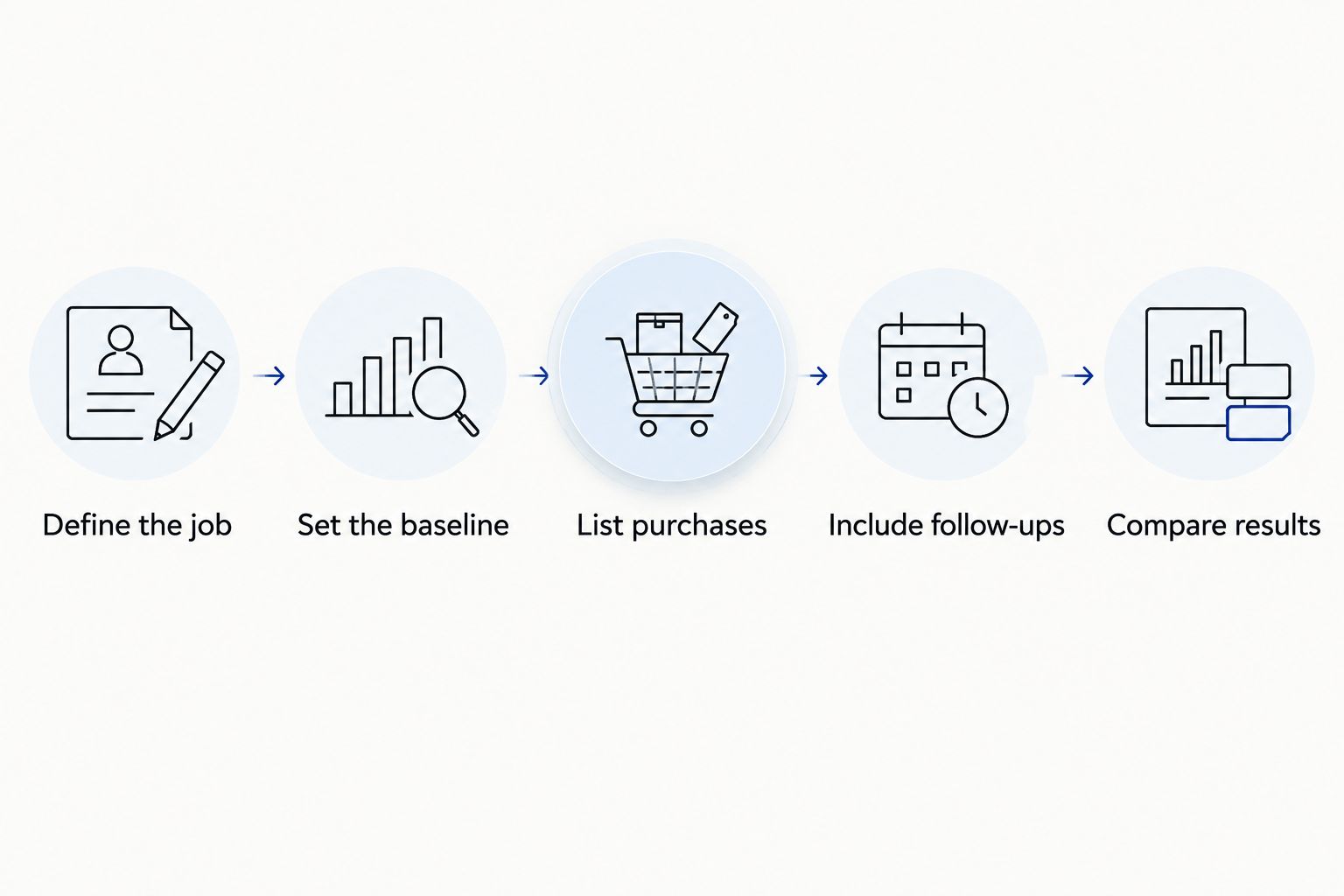
Use this sequence before buying anything:
- Define the job. Write down what needs a home, such as snack packets, spare toiletries, or desk supplies.
- Set the baseline. Identify what you would actually buy without the dollar store option. Do not use an aspirational makeover as your comparison.
- List the complete purchase. Include containers, lids, dividers, labels, and any supports the setup requires.
- Include follow-up spending. Keep track of replacement pieces and additional purchases needed to make the arrangement usable.
- Compare equivalent results. Subtract the complete dollar store project spending from the complete alternative project spending.
A positive difference is a saving against that alternative. A negative difference means the dollar store approach required more spending. If you would otherwise have used containers already at home, buying new bins is an expense rather than a saving.
For your 2026 project notes, keep the original plan beside the finished shopping list. That makes it easier to distinguish a purchase you avoided from an extra purchase you justified because it looked inexpensive.
Which organizing approach fits your project?
Choose by function before appearance. These are use-case recommendations, not a hands-on product ranking; evaluate each actual item against your measurements and its stated care and load instructions.
| Approach | Best for | Main advantage | Main drawback | Recommendation |
|---|---|---|---|---|
| Reused containers | Testing categories before shopping | Uses storage you already own | Shapes and sizes might not fit together | Start here when containers are suitable |
| Dollar store bins | Separating lightweight, packaged items | Lets you buy individual pieces for a defined task | Fit, construction, and care requirements need checking | Choose only after measuring |
| Purpose-built organizers | A specific access or fit problem | Can address a function that a loose bin cannot | Adds another purchase and still needs careful sizing | Choose when the function is necessary |
Reusing a box is not automatically the right answer for a damp bathroom, just as buying a specialized organizer is not automatically wasteful. The right choice solves the actual problem without creating another one.
StashSavvy's home organization guidance is best for homeowners and renters who want practical steps before shopping. It is guidance rather than a substitute for checking a particular container's dimensions, material suitability, and instructions.
Reuse containers when you are still working out your categories
Best for: figuring out what belongs together before committing to a layout. Use a suitable box or container you already own to group packaged snacks, charging accessories, or spare stationery.
The advantage is flexibility: you can change categories without buying another organizing set. The limitation is fit. A container that hides items, catches on a drawer, or makes a shelf difficult to reach is not useful simply because you already own it.
Try the arrangement during your normal routine. Notice whether you remove the whole container, reach into it, or leave items outside it because putting them away feels awkward.
Keep the containers that support the routine. Replace only the ones with a specific problem you can describe, such as a rim that prevents the drawer from closing.
Choose dollar store bins for lightweight sorting
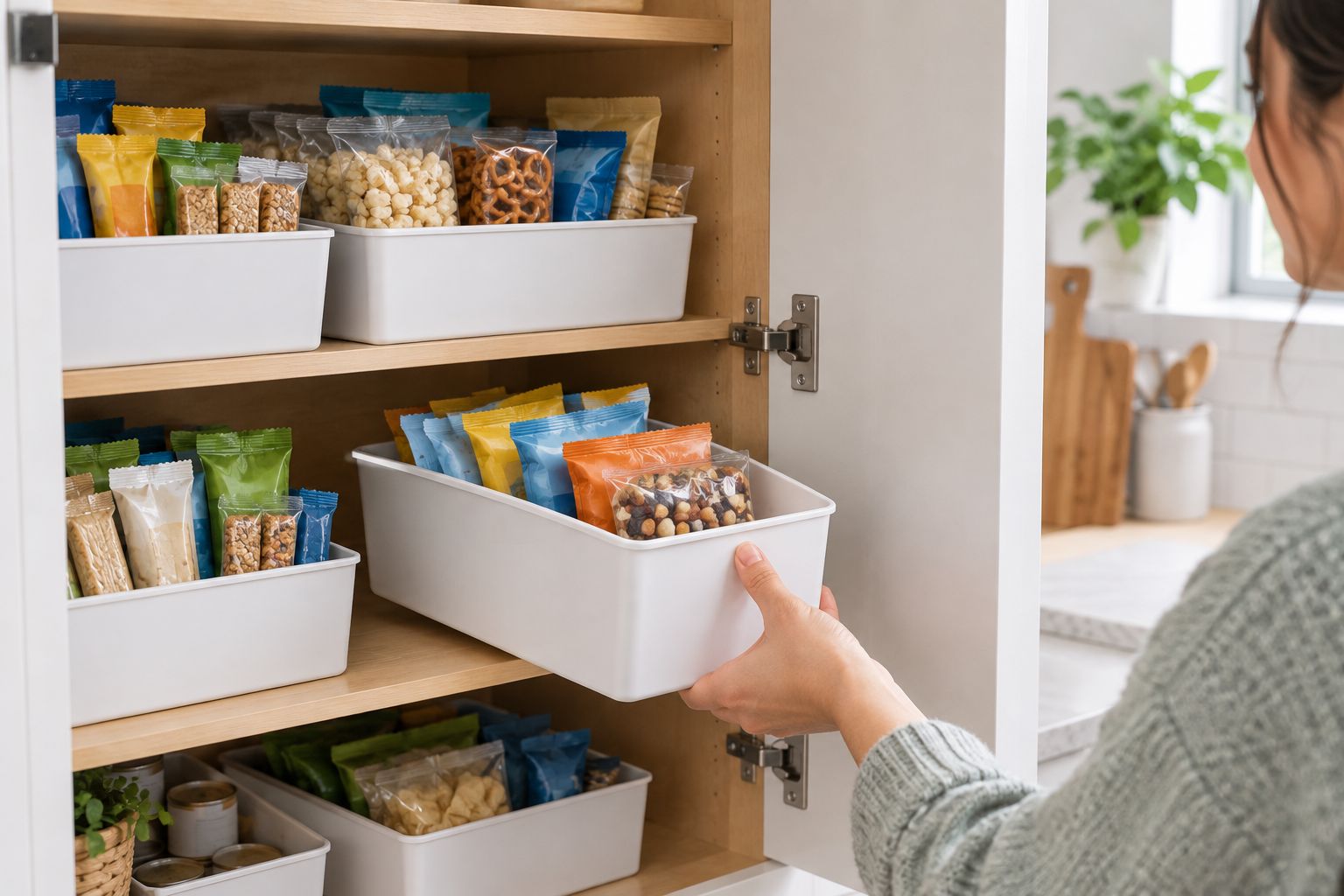
Best for: separating small, lightweight belongings inside an existing drawer or shelf. Think packaged toiletries, craft supplies, or snack packets rather than heavy equipment or structural storage.
A loose bin provides a defined home for a category without requiring installation. Its limitation is that the bin itself does not establish whether the material suits moisture, food contact, heat, or a particular load. Check those uses rather than assuming all plastic containers are interchangeable.
Look at the actual shape, too. A wide rim, tapered sides, or a handle can occupy space that does not contribute usable storage.
Before buying matching pieces, confirm that the first container fits and works. A coordinated set is optional; access to your belongings is not.
Choose purpose-built organizers for a defined access problem
Best for: a storage problem that ordinary containers do not solve. Examples include needing to reach items at the back of a cabinet or separate belongings that otherwise collapse into a pile.
The advantage is a function beyond simple grouping. The drawback is buying a mechanism or structure when a simpler arrangement would have worked.
Before choosing a new organizer, describe the obstacle in plain language: you cannot reach the back, items fall over, or the door blocks access. Then check whether repositioning the belongings solves it first.
For an installation-free starting point, explore organizing kitchen cabinets without buying new hardware. A new purchase belongs in the plan only when you can explain what it changes.
Why dollar store organizing savings vary
Different homes need different amounts of storage, but the comparison also changes with your starting point. These factors determine whether your 2026 project reduces spending or simply adds attractive containers:
- Existing storage: Suitable containers you already own change what you need to purchase.
- Usable fit: Outside dimensions, tapered interiors, lids, and handles affect whether a container does the intended job.
- Required function: Grouping packets is a different task from supporting weight or providing pull-out access.
- Finishing purchases: Labels, liners, dividers, and additional pieces belong in the complete project comparison.
- Follow-up spending: Replacements and layout changes count toward what you ultimately spend.
- Shopping effort: Record an extra trip if it happened, rather than treating it as invisible project spending.
Avoid counting possible future benefits as money already saved. Finding duplicate pantry items can inform your next shopping list, but discovering them does not establish a particular reduction in your grocery spending.
How do you check fit before buying organizers?
Measure the usable space, not just the furniture's outside edges. Record width, depth, and height in inches, then note anything that reduces access: hinges, pipes, shelf supports, drawer slides, or a door that opens only partway.
Keep these measurements separate from your container measurements. A basket's outside width tells you whether it fits; its inside shape tells you whether your belongings fit inside it.
Check the opening
A container must pass through the cabinet opening as well as fit on the shelf. Look at the route you will use to lift it out, particularly around hinges and door frames.
For drawers, check closure with the intended contents inside. Items sticking above the organizer can interfere even when the empty container fits.
Check access during use
Decide whether you will lift the container, slide it forward, or reach into it. Do not pack neighboring bins so tightly that each daily task requires rearranging the whole shelf.
For a renter-friendly setup, prioritize freestanding arrangements when they meet the need. If a solution requires attachment, check the lease and the relevant installation instructions before proceeding.
What should you leave out of the shopping basket?
Leave behind any item without a defined location and purpose. A container that seems useful in the aisle is not yet a solution for your home.
Also pause on pieces that require more purchases before they can work. A basket needing a liner, an organizer needing additional support, or a container missing the closure you require changes the project comparison.
Do not treat an unverified container as heavy-duty, food-safe, or suitable for a damp space. Read the information for the particular item. For direct food contact, use containers identified as suitable for that purpose and follow their care instructions.
Avoid expanding the project just to make everything match. Your 2026 organizing plan can stop at the drawer that causes trouble; it does not need to include neighboring drawers that already work.
Can buying more bins erase the savings?
Buying more bins reduces the savings when those purchases do not replace spending in your original comparison. Add every extra piece to the project total, including containers bought after the first layout fails.
Before buying another bin, check whether the category is too broad or contains things you no longer need. Storage should follow the belongings you intend to keep, not preserve every item by default.
Is reusing containers better than dollar store organizing?
Reusing suitable containers is the better starting point when your goal is to avoid new organizing purchases. The trade-off is that existing containers do not always fit the space or suit the intended use.
Use them to establish categories and test access. Buy a replacement only when you can identify the specific limitation it needs to fix.
Should you organize the whole room at once?
Start with a defined trouble spot rather than purchasing containers for an entire room. A smaller scope lets you check the arrangement before repeating it elsewhere.
Choose the area that interrupts a routine: the drawer that will not close, the shelf where supplies disappear, or the cupboard you repeatedly rearrange. Finish that job before deciding what the rest of the room needs.
FAQ
How much can dollar store organizing save you in 2026?
Dollar store organizing saves the difference between the complete alternative project and your complete dollar store project. Compare equivalent storage results and include extra pieces, follow-up purchases, and replacements.
Are dollar store organizers always the cheapest choice?
Dollar store organizers are not automatically the lowest-spending choice for a complete project. Suitable containers you already own can remove the need to buy new organizers, while poor fit can lead to additional purchases.
What’s the best dollar store organizing project to start with?
A defined lightweight sorting task is a useful starting point, such as grouping packaged toiletries or desk supplies. Measure the space and identify the category before choosing a container.
Can I use dollar store containers for pantry food?
Use containers identified as suitable for direct food contact when food will touch the container. Bins holding food in its original packaging serve a different purpose; check the item’s intended use and care instructions.
How do I avoid buying too many organizing bins?
Assign every bin a location and category before purchasing it. Sort your belongings first, measure the space, and confirm that a sample arrangement works before repeating it.
Does organizing help me save on groceries?
Organizing can make existing groceries easier to see, but a tidy pantry alone does not establish grocery savings. Check your pantry before shopping and compare actual purchases rather than assigning a presumed saving.
Does StashSavvy recommend replacing every container with matching bins?
StashSavvy’s practical recommendation here is to keep suitable containers and replace only those with a defined problem. Matching bins are optional; fit, access, and appropriate use come first.
One last thing
An empty bin is not proof of a future organizing need. If you cannot name what belongs inside it and where it will live, leave it out of the project.
Finish your 2026 organizing session by checking what changed: can you find the item, retrieve it, and put it back? That is a more useful stopping point than making every shelf match.
Related guides
- Is a lazy Susan worth it for a small kitchen?
- Closet organization for renters
- Kitchen cabinet organization for small kitchens