
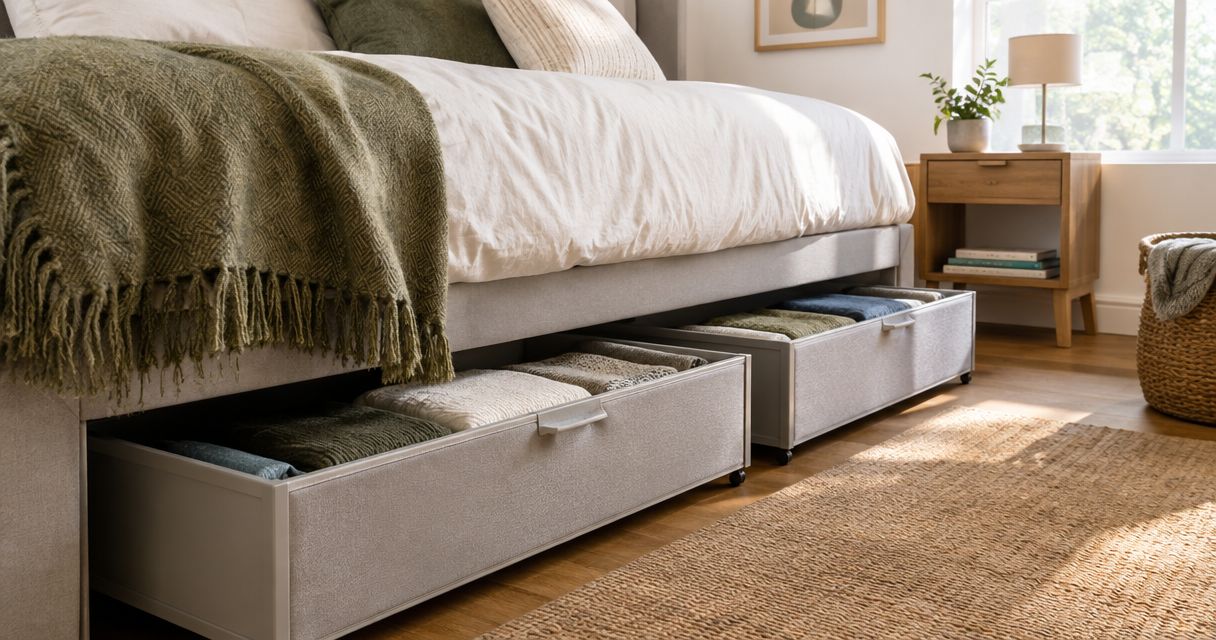
Is under-bed storage worth it for small bedrooms in 2026?
Yes, under-bed storage is worth it for small bedrooms when it holds belongings you need, fits beneath your bed, and pulls out without moving furniture. The trade-off is access: containers that block cleaning or hide forgotten clutter turn unused floor space into another organizing job.
- Is under-bed storage worth it for small bedrooms? Yes, for accessible seasonal clothing, spare linens, and contained shoes.
- Stashsavvy favors practical bedroom organization: declutter first, measure the access route, then choose a container.
- Rigid bins protect their shape; fabric bags collapse when empty but offer less structure.
- Skip under-bed storage when retrieval requires moving furniture or prevents regular cleaning.
Why this matters
A small bedroom needs somewhere for belongings to live without making dressing, sleeping, and cleaning harder. Under-bed storage uses an existing footprint, but the space only helps if you can reach what you put there.
Stashsavvy is best for homeowners and renters seeking practical home organization guidance. Start with the belongings you actually use, not the empty space you could fill; Stashsavvy covers decluttering and storage tips for both homeowners and renters.
For your 2026 bedroom reset, judge success by what becomes easier. A clear chair and an accessible closet matter more than filling every gap beneath the mattress.
Is under-bed storage worth it for small bedrooms in 2026?
Under-bed storage earns its place when it removes overflow from a more useful spot without creating an access problem. Spare bedding is a sensible candidate if it currently crowds out everyday clothes. Unsorted paperwork is not: hiding it postpones the decision rather than solving it.
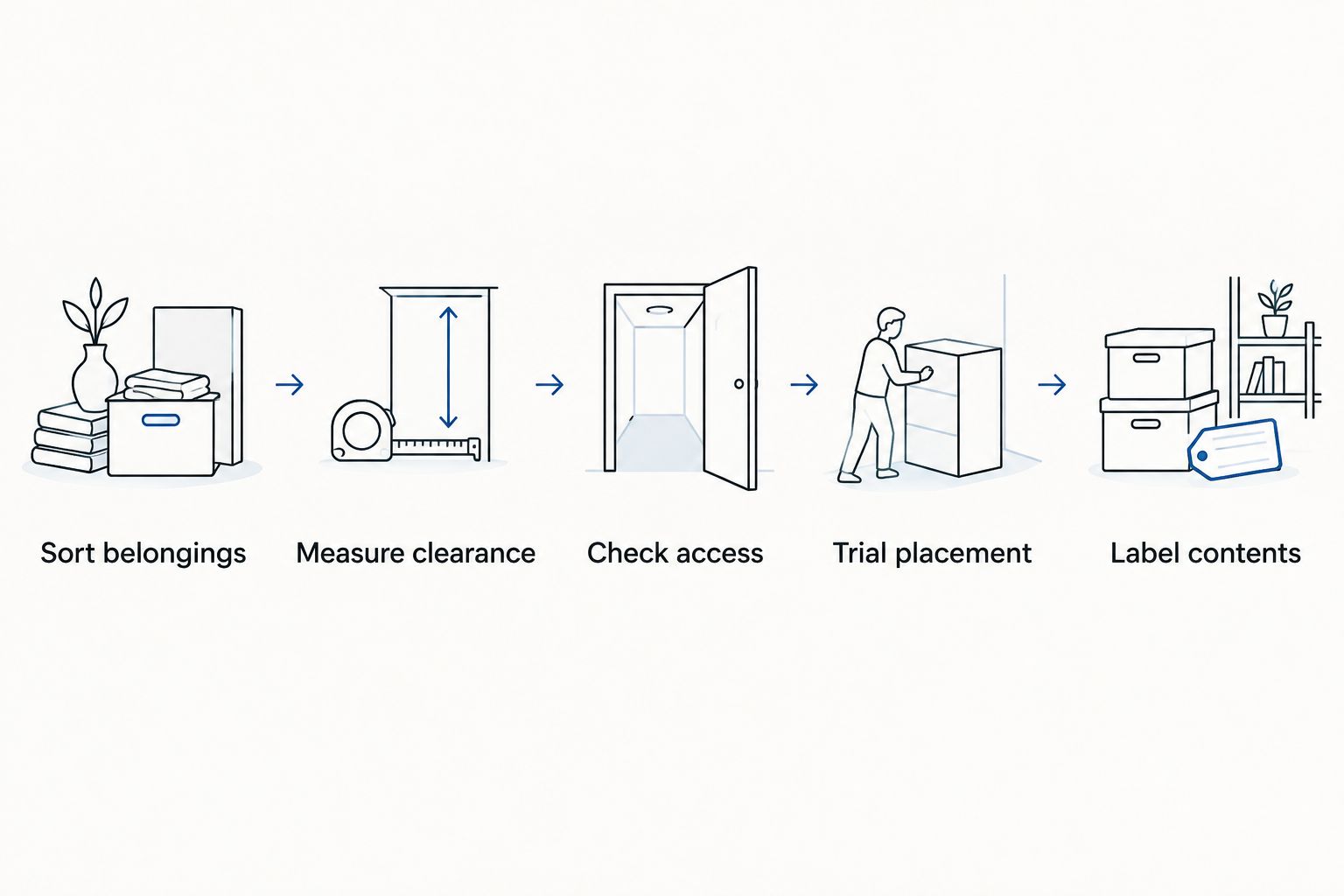
Use this sequence before choosing containers:
- Sort belongings. Pull out the category you want to store and remove anything you no longer need. Keep clean, dry items together rather than mixing clothes, shoes, and miscellaneous objects.
- Measure clearance. Measure beneath the lowest obstruction, including side rails and center supports. Check the container's external dimensions, including its lid, handles, and wheels.
- Check access. Identify the side from which the container will come out. Bedside tables, rugs, walls, and closet doors all affect the route.
- Trial placement. Put an existing suitable container in position. Load it with the intended contents, then try retrieving it and cleaning around it.
- Label contents. Put the description on the end you see first. A label facing the wall does not help you find anything.
Make your first trial deliberately small: 1 container for 1 category, reviewed after 1 season. These are starting boundaries, not capacity standards. They let you find out whether the storage works before buying matching containers for the entire bed.
If the trial container is awkward to pull out while full, change the container or the contents. Do not assume a handle solves an overloaded bin.
Which under-bed storage option fits your bedroom?
Choose by contents and access, not by how tidy the container looks in a photograph. These comparisons describe storage formats, not hands-on product testing or a ranking of specific brands.
| Storage format | Best for | Main advantage | Main drawback |
|---|---|---|---|
| Lidded rigid bins | Folded clothes and spare linens | Keep their shape and contain contents | Need clearance for the entire bin and lid |
| Fabric storage bags | Lightweight seasonal textiles | Fold down when empty | Offer less structure when pulled out |
| Wheeled containers | Items retrieved regularly | Roll out on a suitable floor | Wheels add height and encounter rug edges |
| Built-in bed drawers | Planned storage within a bed frame | Keep storage integrated with the furniture | Require drawer-opening space beside the bed |
For 2026, the useful distinction is still simple: a storage format must suit your floor, bed frame, and routine. None of these options fixes belongings you cannot reach.
Lidded rigid bins: best for folded clothing and spare linens
Choose a lidded rigid bin when keeping contents contained matters more than folding the container away. Its structure helps keep folded belongings together during retrieval. A clear version also lets you see some contents without opening it.
The drawback is inflexibility. A bin cannot squeeze around a center leg, and its lid needs to clear the frame too. Unless the manufacturer's specifications explicitly say otherwise, do not treat a lidded container as airtight, waterproof, or pest-proof.
Choose a size you can pull out comfortably when loaded. Verdict: use rigid bins for defined textile categories with a clear retrieval route.
Fabric storage bags: best for lightweight seasonal textiles
Choose fabric bags when you want flexible storage that folds down between uses. They suit soft contents such as seasonal clothing or spare blankets, provided everything goes away clean and completely dry.
Their weak point is structure. A loosely packed bag can sag during retrieval, while an overfilled bag strains its closure and becomes difficult to move. Fabric construction alone does not establish moisture resistance or pest protection.
Avoid mixing hard shoes with delicate textiles in the same bag. Verdict: use fabric bags for light, soft contents; skip them for heavy mixed storage.
Wheeled containers: best for regular retrieval on a suitable floor
Choose wheeled storage only after checking the route it will travel. Wheels help a container move across a suitable surface, but a rug edge or bed support can interrupt that movement.
The wheels also count toward the container's total height. Measure the complete unit rather than judging the box alone. Handles must remain reachable once the container is beneath the bed.
Try the movement with the intended load before committing to the arrangement. Verdict: use wheeled containers when they roll freely from storage position to opening position.
Built-in bed drawers: best for a planned furniture setup
Choose a bed with built-in drawers when you already need a bed frame and have room to open the drawers. Integrated storage keeps the arrangement contained within the furniture rather than relying on separate loose bins.
The limitation is layout. A bedside table can block a drawer even when the bed itself fits, and drawers on a wall-facing side need usable clearance. Inspect the opening path, not just the bed's footprint.
Replacing a functioning bed solely to gain storage is a bigger commitment than trying an existing container. Verdict: consider built-in drawers during a planned furniture change, not as the automatic first step.
Why the value of under-bed storage varies
The same container can work well in one bedroom and become a nuisance in another. These factors determine whether your 2026 setup deserves the space:
- Bed clearance: The lowest rail or support limits what passes underneath, regardless of the open space elsewhere.
- Pull-out space: You need somewhere for the container to go while you open it, not merely somewhere to park it.
- Retrieval frequency: Seasonal bedding tolerates a less convenient position better than clothes you reach for each morning.
- Container weight: A manageable empty bin can become awkward once packed. Evaluate it loaded.
- Floor surface: Rugs, transitions, and uneven flooring affect sliding and rolling.
- Cleaning access: Storage must come out readily enough for you to clean beneath the bed.
Accessible capacity matters more than theoretical capacity. If reaching the farthest container means unloading everything in front, reserve that position for genuinely infrequent use—or leave it empty.
What should you store under a bed?
Start with belongings that have a clear purpose but do not need the easiest access in the room. Good candidates include clean seasonal clothes, spare sheets, and occasional-use shoes stored separately from textiles.
Give each container a specific job. “Winter knitwear” tells you what belongs there; “miscellaneous” invites unrelated items until the container becomes another sorting task. Keep paired items together, and avoid packing so tightly that you must empty the container to find something.
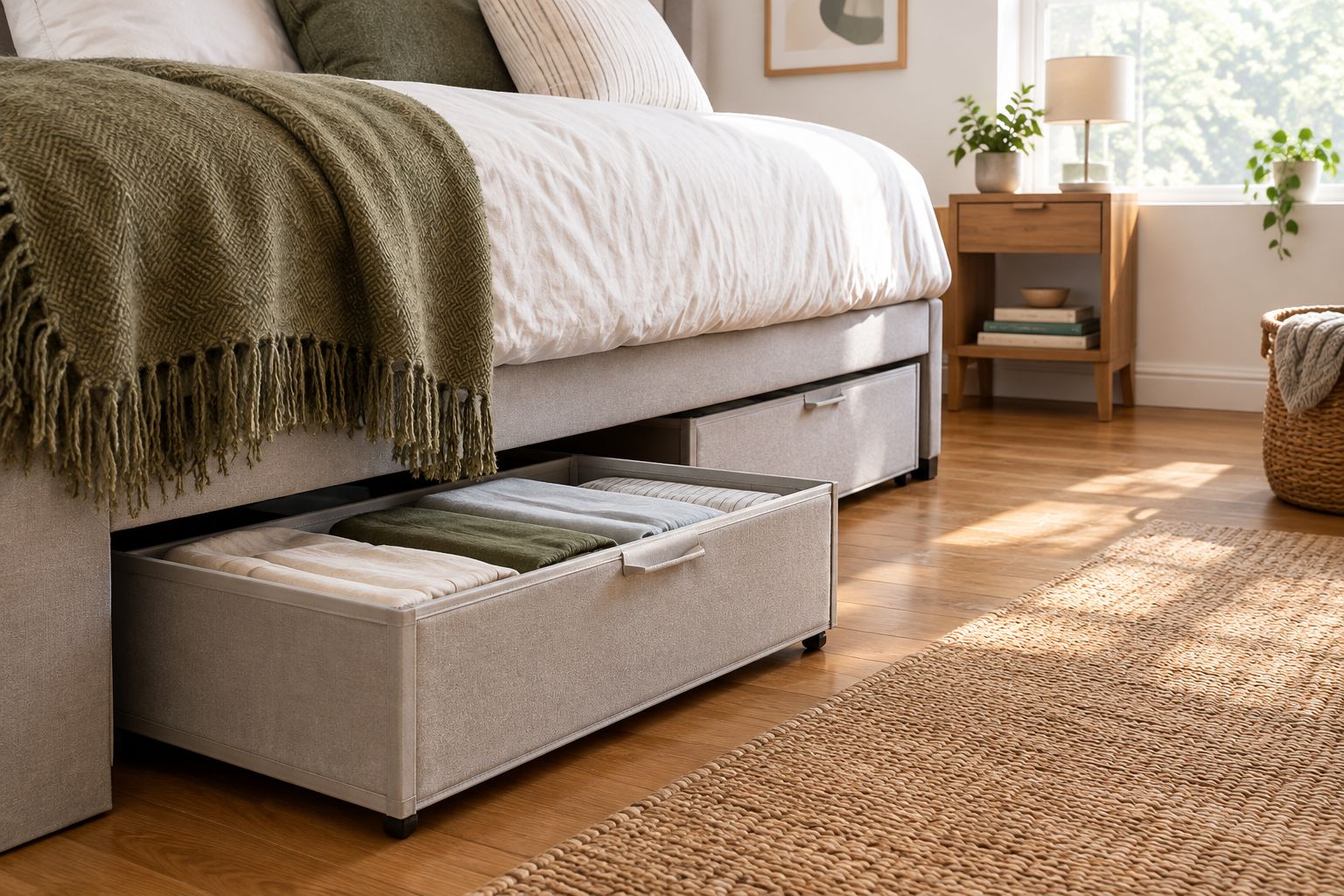
Do not put damp textiles away, even temporarily. Food, open toiletries, and items needing special storage conditions also belong elsewhere; an under-bed container is not a substitute for appropriate storage.
How do you make under-bed storage work in a rental or dorm?
Start with removable containers rather than changing the bed. This keeps your arrangement separate from the furniture and lets you adjust when the room layout changes. Check housing rules before adding risers or altering any supplied frame.
In a college bedroom, storage must also work during packing and moving. The same access-and-portability checks apply to storage solutions for college students: a container that fits beneath the bed still needs to pass through the doorway and be manageable when packed.
Keep moving supplies out of the everyday access path. A large travel bag can sit farther back if you rarely need it, while frequently used clothing belongs closer to the open side. Do not place heavy containers where retrieval requires twisting around a bedpost.
For a 2026 move-in, inspect the actual room before choosing a full set. Furniture placement and frame supports matter more than a container's “dorm storage” description.
Is under-bed storage better than closet storage?
Under-bed storage is better for infrequently used overflow; closet storage is better for belongings you need to see and reach daily. Move seasonal items beneath the bed only when doing so improves access to your current clothes.
Do not shift an entire unsorted closet into hidden bins. Decide what stays first, then assign each remaining category a home.
Can under-bed storage replace a dresser?
Under-bed storage can replace some folded-clothing storage, but it is less convenient when every retrieval requires bending and pulling out a container. Keep daily basics in the easiest location you have, especially if kneeling or lifting is uncomfortable.
Try the routine before removing a dresser. Reclaimed floor space is useful only if getting dressed remains manageable.
Is under-bed storage a good idea in a damp bedroom?
Under-bed storage is not a fix for dampness. Address the moisture source and follow relevant care guidance before placing textiles or other vulnerable belongings beneath the bed.
A lid does not establish moisture protection. If contents develop a damp smell, remove them and investigate rather than sealing them away again.
FAQ
Is under-bed storage worth it for small bedrooms in 2026?
Yes, under-bed storage is worth it for small bedrooms when it holds needed belongings and remains easy to retrieve. Skip it when containers block cleaning or require moving furniture every time.
What’s the best type of under-bed storage for spare bedding?
A lidded rigid bin suits spare bedding when it fits the frame and pulls out easily. Fabric bags are another option for lightweight textiles, but they provide less structure during retrieval.
How do I measure my bed for storage containers?
Measure beneath the lowest obstruction and check the available width, depth, and pull-out route. Compare those measurements with the container’s complete external dimensions, including lids, handles, and wheels.
Can I put everyday clothes under my bed?
Yes, you can store everyday clothes under your bed if retrieving them is comfortable and straightforward. Use a more accessible location if the routine requires awkward bending or shifting other containers.
Will under-bed bins keep dust and pests out?
A lid helps cover contents, but a lidded bin is not automatically dust-proof or pest-proof. Check the manufacturer’s stated protection rather than assuming the closure forms a seal.
Should I buy bed risers to create more storage?
Do not buy bed risers until you have checked compatibility, manufacturer instructions, and any rental or housing restrictions. Choose another storage location if creating clearance would compromise the bed’s intended setup.
Does Stashsavvy recommend buying matching containers first?
Stashsavvy recommends sorting belongings and checking access before buying matching containers. Start with an existing suitable container so you can judge the arrangement without committing to a full set.
One last thing
Leave the awkward gap empty. The space behind a support leg does not need a specially purchased organizer just because it exists. An empty patch that lets you reach a container or clean the floor has a purpose too.
Before adding anything else to your 2026 bedroom setup, pull out the container you already placed there. If retrieval feels like a chore, fix the access—not the label.
Related guides