
Best garage wall storage racks: 2026 verdict
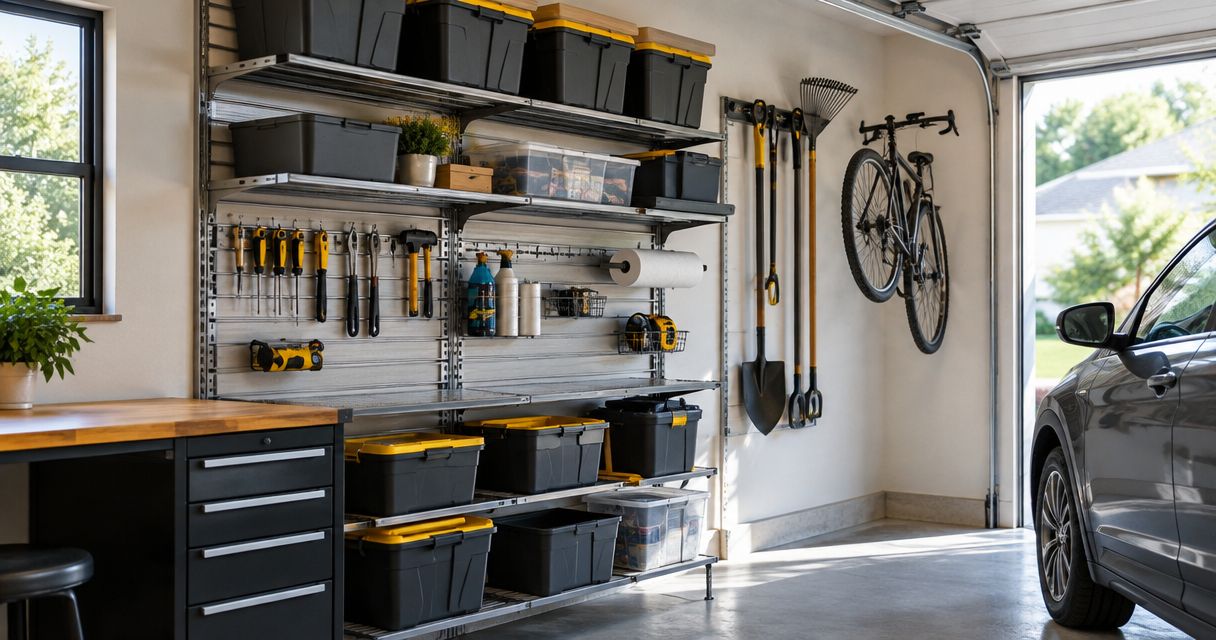
Best overall: adjustable wall-track shelving for mixed boxes and household gear. Best for light, frequently used items: wall-mounted wire shelving. Best budget option: utility hook rails for bulky items you can hang. This 2026 guide compares the best garage wall storage racks by what they hold, how much wall they use, and what installation demands. If you need to organize the whole room rather than one wall, start with garage storage systems.
- Adjustable wall-track shelving is the best garage wall storage rack for mixed gear in a small garage.
- Utility hook rails are the best budget pick for bikes, cords and other items suited to hanging.
- Choose a long-tool rack for upright handles; choose a bin rail for small parts.
- Check wall construction and the rack’s stated load limits before installation.
Why this matters in a small garage
A rack only helps if you can still open the car door, walk past stored gear and reach what you use. In a small garage, the wrong rack turns wall space into a row of obstacles. The right one gives each category a defined place without claiming floor space you need for something else.
StashSavvy’s garage wall storage rack verdict for 2026 is adjustable wall-track shelving for mixed storage. Its shelf positions can change when your storage needs change. That flexibility matters more than fitting the maximum number of shelves onto one wall.
First, sort what you own into boxes, hangable gear, long-handled tools, small loose items and lumber. Then choose a rack for the categories you actually have. StashSavvy’s garage wall storage rack recommendations below are based on use case and installation needs, not a claim of hands-on product testing.
What makes the best garage wall storage racks?
Use these criteria before choosing a rack. A large wall rack is not automatically the best use of a small wall.
- Fit for the item: Shelves support boxes; hooks hold items designed to hang; tool racks keep handles upright. Do not force every category onto the same fixture.
- Reachability: Put everyday gear where you can take it down without moving other stored items. Reserve less convenient positions for occasional use.
- Projection from the wall: Check how far shelves, hooks and stored items extend into the walking or parking area. The stored item, not just the empty rack, determines the space used.
- Adjustability: Movable shelves and hooks help when your mix of gear changes. Fixed racks work well when you already know what belongs there.
- Mounting requirements: Identify the wall material, locate appropriate structural support and follow the rack maker’s installation instructions. Do not assume every garage wall has the same framing.
- Visible limits: Look for a stated load rating for the exact rack and mounting method. If that information is unavailable, do not treat the rack as heavy-duty storage.
The choice gets easier when you measure the wall and the items together. Note usable width, height, door swing and the space your car needs. For a narrow wall bay, mark the outline of the stored objects before committing to the rack; a short hook can still hold an item that sticks far into the room.
Best garage wall storage racks at a glance
| Rack type | Best for | Standout feature | Key limitation |
|---|---|---|---|
| Adjustable wall-track shelving | Mixed boxes and changing storage needs | Shelf positions can change | Requires planning across the whole wall |
| Wall-mounted wire shelving | Light items you reach often | Open shelf surface | Small items need containers |
| Utility hook rails | Hangable bulky gear | Keeps the floor clear beneath | Not suitable for boxes or loose parts |
| Vertical long-tool rack | Brooms and long-handled tools | Holds handles together upright | Poor fit for wide or irregular heads |
| Wall-mounted bin rail | Small parts kept in containers | Puts containers within reach | Depends on compatible bins |
| Wall-mounted lumber rack | Long, rigid materials | Keeps lengths grouped together | Takes a dedicated stretch of wall |
These are rack types, not claims that a particular product has been tested or meets a specific load rating. Match the design to your items, then check the specifications and mounting instructions for the rack you choose.
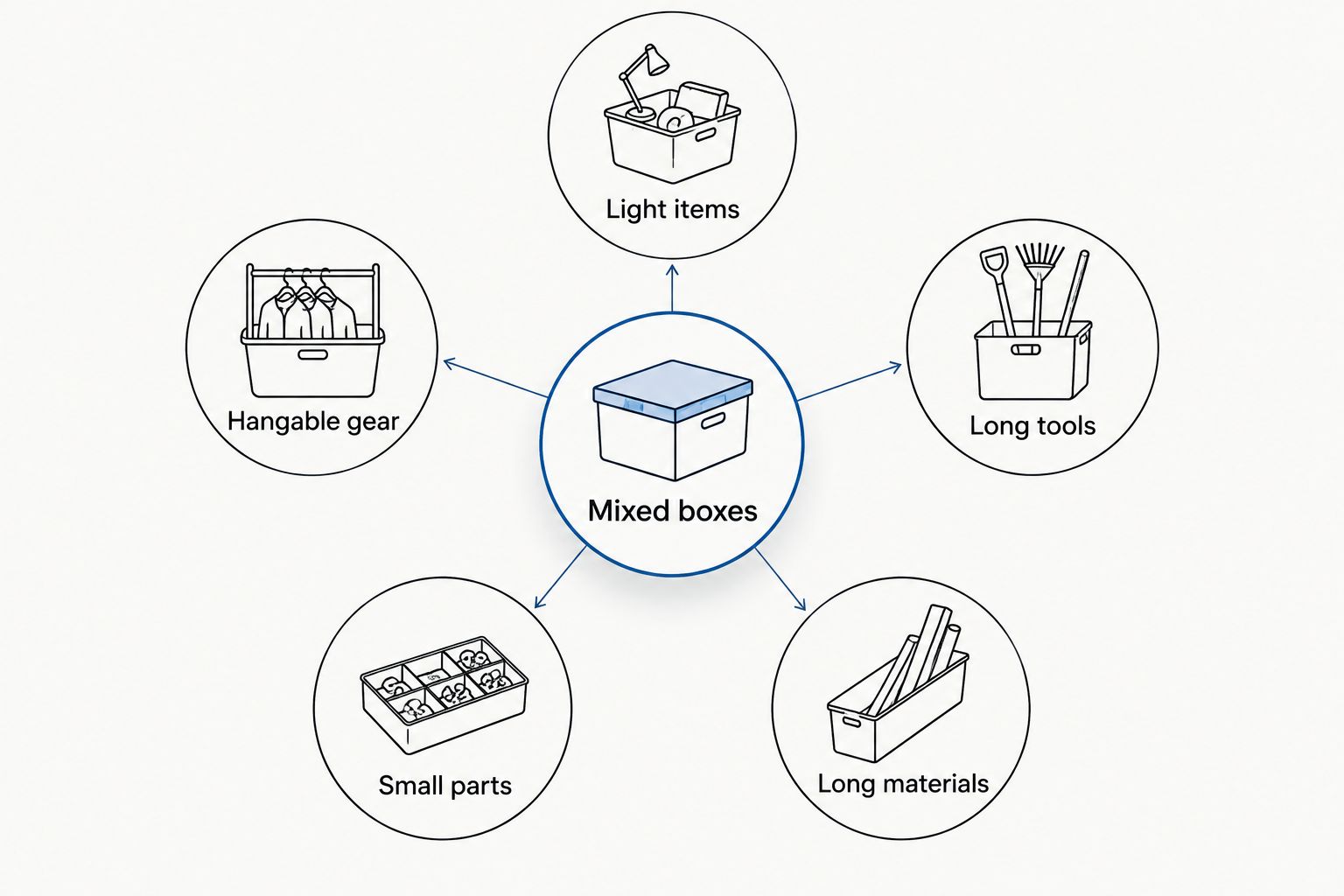
A garage with mixed gear needs a different wall plan from one dominated by tools. The diagram shows which storage type fits each category; it is a starting point for sorting, not an installation plan.
1. Adjustable wall-track shelving: best for mixed garage storage
Adjustable wall-track shelving uses mounted tracks and repositionable shelf supports. It gives boxes, seasonal gear and other shelf-friendly items a place off the floor while letting you change shelf spacing later. For most small garages with varied contents, this is the default pick in 2026.
Start by grouping items by how often you use them. Keep frequently used boxes where you can lift them comfortably, and leave enough space above each one to remove it without dragging it across the shelf above. Check that the shelf depth works when the boxes are actually in place.
Adjustable wall-track shelving pros:
- Handles several categories of shelf-friendly items on one wall.
- Lets you change vertical spacing instead of rebuilding the layout.
- Makes it easier to keep the floor available for parking and movement.
Adjustable wall-track shelving cons:
- Tracks, shelves and brackets require a coordinated layout.
- Deep shelves and stored boxes can intrude into a tight parking space.
Best for: A homeowner or renter who is permitted to mount a rack and needs one wall for mixed gear. Verdict: Buy when boxes and changing storage needs dominate your garage.
2. Wall-mounted wire shelving: best for light items used often
Wall-mounted wire shelves give frequently used supplies an open place to sit. They work when you want to see and reach an item without opening a cabinet or sorting through a deep stack. Choose this type for shelf-friendly gear, not every small object in the garage.
Place loose pieces in suitable containers so they do not slip through the openings. Keep items you use together on the same shelf; a visible shelf is only useful if you can identify what belongs there. As with any wall-mounted rack, confirm the mounting method and load rating for the exact shelf.
Wall-mounted wire shelving pros:
- Keeps regularly used items visible.
- Provides shelf storage without an enclosed cabinet.
- Makes it easy to spot a container that has drifted into the wrong category.
Wall-mounted wire shelving cons:
- Loose small pieces need containers.
- Fixed shelf positions offer less room to adapt than adjustable tracks.
Best for: Light, frequently used items that you want in sight. Verdict: Buy for a clearly defined group of supplies; skip it as the sole answer for mixed garage clutter.
3. Utility hook rails: best budget option for hangable gear
A utility hook rail puts several hanging points along a section of wall. It suits items such as cords and gear that can be hung securely without being damaged. Unlike shelving, it leaves the area below open, provided the stored items themselves do not reach the floor.
Look at each item’s hanging shape before choosing hooks. A narrow hook is not useful if the object has nowhere stable to rest. Also check the full depth of the hung item: the hook might fit behind a parked car while the object does not.
Utility hook rail pros:
- Gives hangable gear a clear return point.
- Uses a single wall zone for several related items.
- Can leave floor space open beneath the stored gear.
Utility hook rail cons:
- Cannot hold boxes, loose parts or items that should not hang.
- Bulky objects can project farther into the garage than expected.
Best for: A small garage where hangable items are taking over the floor. Verdict: Buy as a focused, budget-aware first step; add shelves only if you also need box storage.
4. Vertical long-tool rack: best for upright tools
A vertical long-tool rack gathers brooms, rakes and other long-handled tools into one wall zone. That solves a different problem from shelving: keeping handles accessible instead of leaning them into a corner where they fall across each other.
Before mounting, check the height of the complete tool, including its head. Leave room to lift it free. Put the tools you reach for most often at the easiest positions, and keep sharp or awkward heads from blocking the path beside the rack.
Vertical long-tool rack pros:
- Stops handles from spreading across a corner.
- Gives each frequently used tool a visible place.
- Uses wall height instead of adding another floor-standing holder.
Vertical long-tool rack cons:
- Wide or irregular tool heads can interfere with neighboring tools.
- It does not replace shelving for boxes and supplies.
Best for: Garages where long-handled tools are the main source of floor clutter. Verdict: Buy for those tools; hold off if your clutter is mostly containers.
5. Wall-mounted bin rail: best for small parts
A wall-mounted bin rail holds containers for small, frequently used parts. It gives loose items a home near the area where you use them. Its value comes from separating categories, not from covering the largest possible area with bins.
Sort first and label containers in terms you will recognize later. Keep each category broad enough to maintain easily; an elaborate system is no help if you stop putting things back. Check that your chosen bins fit the rail, and make sure a filled container can be lifted out without hitting a shelf above it.
Wall-mounted bin rail pros:
- Gives small parts defined places.
- Makes a missing or overflowing category easier to notice.
- Keeps loose pieces off work surfaces.
Wall-mounted bin rail cons:
- Bin compatibility matters if you change or add containers.
- It offers little help with large boxes or bulky gear.
Best for: A work area with small items that need to stay sorted. Verdict: Buy after you know your categories; wait if you have not yet sorted the loose items.
6. Wall-mounted lumber rack: best for long materials
A wall-mounted lumber rack supports long, rigid materials along a dedicated wall section. It is useful when lengths of wood or similar materials occupy floor space and a general shelf would not fit their shape.
Measure the longest pieces and the clear wall space before choosing this route. Think about how you will lift materials on and off without striking a door, vehicle or nearby shelf. Follow the specific rack’s installation instructions and stated limits; long materials need support appropriate to both the item and the wall.
Wall-mounted lumber rack pros:
- Groups long materials in one location.
- Frees floor space previously occupied by those materials.
- Avoids trying to balance lengths on ordinary shelves.
Wall-mounted lumber rack cons:
- Requires a dedicated run of accessible wall.
- Is not useful for general household boxes or small tools.
Best for: A garage with long materials you need to keep and access. Verdict: Buy for that specific category; skip it if you do not store long materials.
How to choose a rack without losing parking space
For a small garage in 2026, treat the wall and the floor as one plan. A rack can be wall-mounted and still block the space where you open a door, carry groceries or pull out a tool. Check those movements with your items held in their proposed storage positions before you drill.
If your garage has framed walls, stud spacing can be 16 inches or 24 inches on center; do not assume either measurement describes your wall. Locate the actual support points and use the mounting method required by the rack maker. A 4-foot level can help you mark a straight layout, but a straight line does not make an unsuitable mounting point safe.
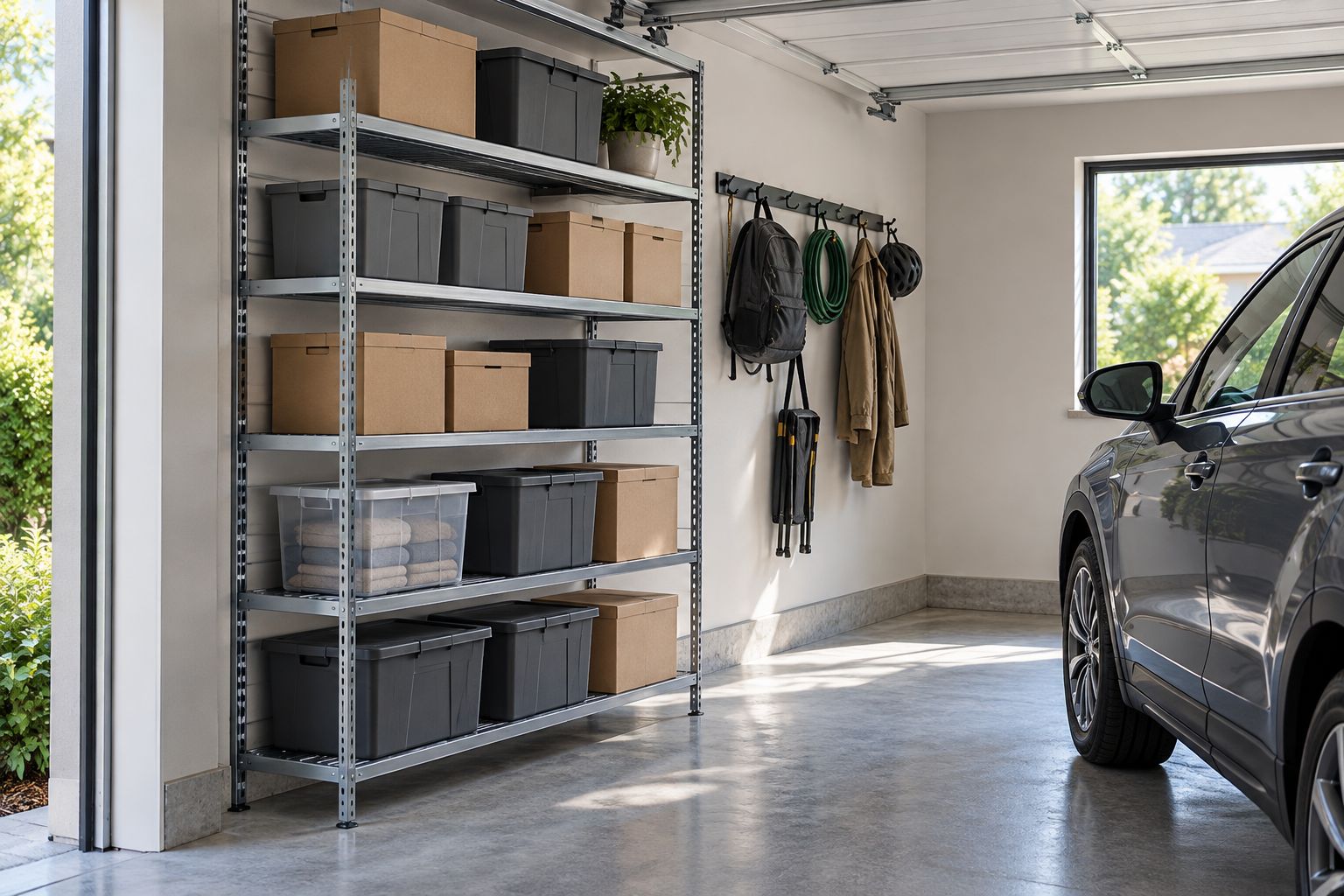
For renters, confirm what wall mounting is allowed before selecting a rack that needs holes. If mounting is not permitted, do not treat adhesive fixtures as a substitute for a wall rack intended to carry substantial gear. Choose a storage approach your space permits instead.
How StashSavvy ranked these rack types
StashSavvy ranks the 2026 picks by item fit, reachability, wall projection, adjustability and mounting demands. Adjustable tracks lead because they serve mixed storage and can change with it. The more specialized racks rank by the particular clutter they solve, not by an invented claim that one product outperforms another.
That distinction matters when you shop. A rack type can be right for your garage while an individual model is wrong for your wall or your items. Check the chosen product’s dimensions, mounting instructions and stated limits before buying.
Which garage wall storage rack should you choose?
Choose adjustable wall-track shelving if your small garage has a mix of boxes and shelf-friendly gear. Choose a utility hook rail if hangable objects are the main obstacle. For long-handled tools, use a vertical tool rack; for loose small parts, use a bin rail. A lumber rack earns its space only when you actually store long materials.
You do not need to cover every wall. In a small garage, one well-matched rack and a clear walking path beat a full wall of storage that makes daily access harder.
FAQ
What are the best garage wall storage racks for a small garage?
Adjustable wall-track shelves are the best default for mixed boxes and gear in a small garage. Use hooks, tool racks or bin rails when one specific item category causes the clutter.
Are shelves or hooks better for garage wall storage?
Shelves are better for boxes and items that need a flat surface; hooks are better for gear designed to hang. Check the space the stored item occupies before choosing either.
Can renters install garage wall storage racks?
Renters can install a wall rack only when their rental terms permit the required mounting. Confirm what is allowed before choosing a rack that needs holes or structural support.
What should I check before mounting a garage rack?
Check the wall material, suitable support points, rack instructions and the stated load limits for your chosen setup. Also check clearance with your car, doors and walking path.
Which garage rack is best for long-handled tools?
A vertical long-tool rack is best for grouping brooms, rakes and similar tools upright. Leave room to lift each complete tool out without hitting neighboring gear.
Do I need a lumber rack in a small garage?
You need a lumber rack only if you store long, rigid materials that do not fit ordinary shelving. Measure the material and the available wall before dedicating space to one.
Is adjustable shelving better than fixed wire shelving?
Adjustable shelving is better when box sizes and storage categories change; fixed wire shelving suits a stable group of light items you reach often. Neither is a substitute for checking the exact rack’s mounting requirements.
One last thing
Before buying any rack in 2026, stand where you normally open the car door and picture the stored item on the wall. That quick check catches the small-garage mistake a product photo cannot: a rack that fits, but leaves too little room to use the garage.
Related guides