
How To Organize a Small House With NO Storage
Your home should be a sanctuary, but for many people, it feels more like a storage unit that is slowly filling up. You look around and see piles of mail on the counter, shoes tripping you at the door, and clothes draped over chairs because there is simply nowhere else for them to go.
This constant visual chaos does more than just make your house look messy. It actually spikes your cortisol levels and drains your mental energy, making it impossible to truly relax after a hard day of work.
You might feel the urge to move to a bigger house, but the truth is you do not need more square footage to solve this problem. You need a smarter system that finds hidden space in your current layout and transforms your cramped quarters into an organized, breathable home.
1. Adopt the Underconsumption Mindset

We often try to solve organization problems by buying more bins, but this is a mistake that leads to even more clutter in a small home. The real secret begins with a radical shift in how you view your possessions and acknowledging that you cannot organize excess inventory.
You need to audit every single item and ask if it truly deserves the precious real estate it currently occupies in your limited floor plan. This mental shift stops the cycle of accumulation and ensures that your storage solutions actually work for the things you truly need.
- Adopt the container rule where the space dictates how much you keep
- Digitize paper manuals and bills to clear out physical filing needs
- Remove five items from a room before purchasing any new organization tool
- Focus on keeping only items that serve a frequent and necessary purpose
The Clutter Buster
-
Container Rule
Adopt the rule where the space dictates how much you keep.
-
Go Digital
Digitize paper manuals and bills to clear out physical filing needs.
-
The “-5” Rule
Remove five items from a room before purchasing any new organization tool.
-
Frequency & Purpose
Keep only items that serve a frequent and necessary purpose.
2. Create Pop Up Closets

Living without a closet is one of the most difficult challenges for renters, but it offers a unique opportunity to turn your wardrobe into a design feature. You do not need to hide everything away in a dark hole when you can create a boutique experience right in your bedroom using simple tools.
This approach forces you to curate your clothing and keeps your favorite pieces accessible while maintaining a clean aesthetic. By treating your clothes as part of the decor, you solve the storage issue and add personality to the room simultaneously.
- Install open garment racks made of wood or copper for a stylish look
- Use heavy curtains on ceiling tracks to create a soft wall that hides clutter
- Group clothes by color or type to reduce visual noise on open rails
- Use matching hangers to create a uniform and tidy appearance
3. Exploit Vertical Real Estate

When you run out of floor space, you must start looking up at the unused potential of your empty walls and doors. Most people ignore the top foot of their walls or the space behind doors, yet these are prime locations for storing items you do not need every single day.
By installing shelving or hooks in these high or hidden areas, you effectively expand the square footage of your home without changing the footprint. This strategy draws the eye upward and makes the room feel taller while keeping your belongings off the floor.
- Mount shelves twelve inches below the ceiling for seasonal items or books
- Utilize over the door organizers for shoes, pantry items, or cleaning supplies
- Install pegboards in the kitchen to hang pots and pans flat against the wall
- Use magnetic strips on walls to hold knives or metal tools securely
The Vertical Space Saver
-
Go High
Mount shelves 12 inches below the ceiling for seasonal items or books.
-
Behind the Door
Utilize over-the-door organizers for shoes, pantry items, or cleaning supplies.
-
Pegboard Power
Install pegboards in the kitchen to hang pots and pans flat against the wall.
-
Magnetic Strips
Use magnetic strips on walls to hold knives or metal tools securely.
4. Furniture That Moonlights as Storage

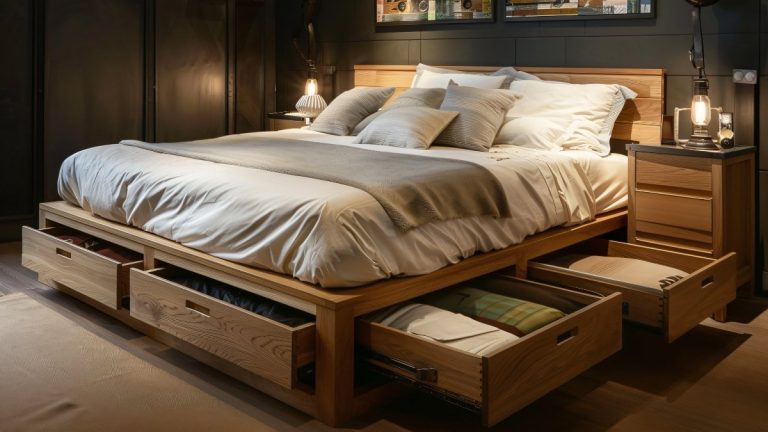
Every single piece of furniture in a small house must earn its keep by performing at least two different functions for you. If you have a bed or a bench that just sits there, you are wasting valuable cubic feet that could be hiding your winter coats or spare linens.
Swapping out standard furniture for pieces with built in compartments is the fastest way to gain storage without cluttering your visual field. This allows you to keep bulky items close at hand but completely out of sight.
- Choose ottoman beds with hydraulic lifts to store bulky items underneath
- Select coffee tables with lift tops that double as a desk and storage
- Use hollow benches in the entryway to hide shoes and bags out of sight
- Look for sofas with hidden compartments under the cushions
5. Zone Your Open Space

Living in an open floor plan or a studio can feel chaotic if you do not create distinct zones for different activities like sleeping and working. Using furniture to carve out these specific areas helps your brain switch modes and provides physical structures to hold your belongings.
Instead of pushing everything against the walls, you can use storage units as dividers to create privacy and utility simultaneously. This layout trick turns one large overwhelming room into several functional and organized micro rooms.
- Place open shelving units perpendicular to walls to act as room separators
- Float your sofa away from the wall to place a storage console behind it
- Use rugs to visually define separate areas without adding physical barriers
- Position tall plants or bookcases to block sightlines between zones
The Open Floor Plan
-
Use Separators
Place open shelving units perpendicular to walls to act as room separators.
-
▼
Float the Sofa
Float your sofa away from the wall to place a storage console behind it.
-
Define with Rugs
Use rugs to visually define separate areas without adding physical barriers.
-
Block Sightlines
Position tall plants or bookcases to block sightlines between zones.
Conclusion
A lack of closets does not have to mean a lack of peace. You have learned that the secret to organizing is not adding more rooms but uncovering the hidden potential in the space you already own.
By shifting your mindset and using vertical solutions you can reclaim your floor and your sanity. You do not need a contractor to fix this problem. You just need to start with one single corner of your home today.