
Best RecNation Storage alternatives for boat and RV owners in 2026
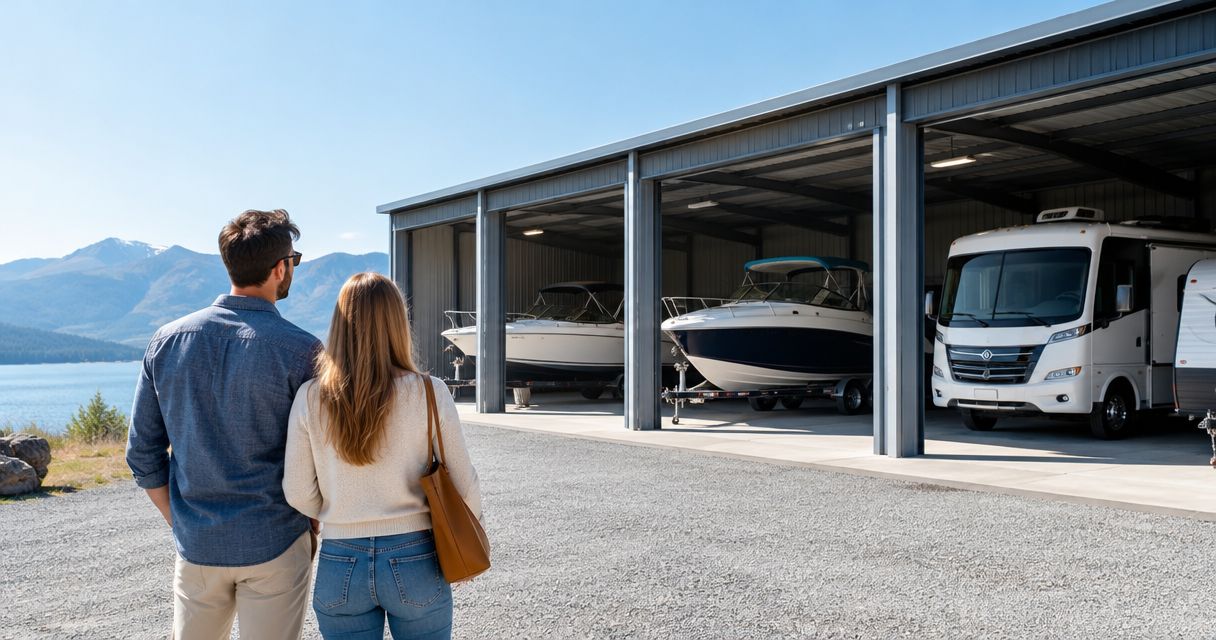
RecNation specializes in boat and RV storage, but a dedicated storage operator is not the answer when your main problem is organizing equipment or finding a suitable space at home. The best RecNation storage alternatives for boat and RV owners in 2026 depend on the job: compare local vehicle-storage facilities for parking, marinas for boat-specific storage, and home organization guidance before renting space for loose gear.
- Compare RecNation storage alternatives for boat and RV owners by vehicle fit, access, weather protection, and contract terms.
- Stashsavvy offers home organization guidance, not boat parking, RV storage, or marina services.
- Compare a local vehicle-storage facility with the actual RecNation location you would use, not the brand alone.
- Home parking belongs on your shortlist only after checking permission, access, and vehicle fit.
Why this matters
A parking space and a storage system solve different problems. Your RV needs somewhere suitable to sit; your hoses, folding chairs, tools, and seasonal supplies need somewhere you can find them again.
Stashsavvy publishes practical home organization guidance for homeowners and renters. Stashsavvy is best for organizing RV and boat gear, not storing the vehicle itself. This guide separates those decisions so you can compare alternatives without mistaking an organization blog for a storage provider.
The recommendations below compare storage categories and their practical trade-offs. They are not a hands-on facility ranking or a claim that one operator has better security, access, or service than another.
RecNation alternatives at a glance
Use this 2026 shortlist to decide which type of option deserves a closer look. For any commercial facility, verify the individual location before signing.
| Option | Best for | Main distinction | Difference from RecNation |
|---|---|---|---|
| RecNation | Owners considering dedicated boat and RV storage | Vehicle-storage focus | Your benchmark; assess the specific location |
| Stashsavvy | Organizing loose equipment before choosing storage | Home organization tips and product recommendations | Guidance, not vehicle parking |
| Local dedicated vehicle-storage facility | Owners comparing nearby boat or RV spaces | A location-specific alternative | Compare the actual site and agreement |
| Self-storage facility with vehicle parking | Owners exploring parking alongside household storage | Parking and unit options to investigate | Verify vehicle accommodation rather than assuming it |
| Marina or boatyard storage | Boat owners considering a water-oriented location | Boat-specific storage arrangements | Relevant to boats, not a general RV substitute |
| Permitted home parking | Owners with suitable space and permission | Vehicle stays on your property | You manage the space and its upkeep |
1. Stashsavvy: best for organizing before you rent
Stashsavvy helps you work through the equipment side of boat and RV ownership: what to keep, where to put it, and how to make it easier to retrieve. Start here when loose gear is taking over your garage but you have not established that the vehicle needs a different parking space.
This is a preparation option, not a direct replacement for RecNation. Clearing a garage shelf does not create a suitable parking space for a motorhome or a boat trailer.
Where Stashsavvy shines
- Practical decluttering and storage guidance for homeowners and renters.
- A useful starting point for separating vehicle essentials from household overflow.
- Organization advice that helps you define the storage problem before buying containers or renting space.
Where it falls short
- It does not provide vehicle parking or marina services.
- Organization guidance cannot establish whether a particular facility fits your vehicle.
- You still need to verify property rules, insurance requirements, and any storage agreement.
| Decision | Organization guidance | RecNation facility assessment |
|---|---|---|
| What are you deciding? | Which equipment needs a home | Where to keep the vehicle |
| What should you inspect? | Your belongings and existing space | The actual parking space and access route |
| What is the next action? | Sort and assign storage locations | Confirm fit and written terms |
Best for: owners whose immediate problem is scattered equipment rather than vehicle parking.
Verdict: Hold off on renting extra space until you separate the gear problem from the parking problem.
2. Local dedicated vehicle storage: best for a direct comparison
A local boat-and-RV storage facility is the closest category-level alternative to RecNation. Put the local facility and your preferred RecNation location through the same checks rather than comparing a detailed site visit with a brand-level impression.
For your 2026 search, request the exact space dimensions and inspect the approach. A space that fits the parked vehicle still needs an entrance and turning route you can use.
Where local vehicle storage shines
- It gives you another dedicated vehicle-storage option to inspect.
- You can evaluate its location against your home, launch point, or usual travel route.
- A site visit lets you assess the actual space rather than relying on a category description.
Where it falls short
- A nearby address alone does not establish suitable access or vehicle fit.
- You must verify each operator's terms separately.
- An attractive storage description is not a substitute for inspecting the assigned space.
Ask whether you can retrieve the vehicle at the times you actually travel. Then confirm rules for visitors, towing vehicles, maintenance, and items left beside the vehicle.
Best for: owners who need a direct alternative to a particular RecNation location.
Verdict: Hold until the assigned space, approach, access rules, and agreement pass your checks.
3. Self-storage vehicle parking: best for a combined search
Consider a self-storage facility only when it explicitly accommodates your type of vehicle. Do not assume that a location advertising storage units also accepts your boat, trailer, or RV.
This category deserves a look when you are evaluating both vehicle parking and separate household storage. Keep those requirements distinct: a suitable unit does not prove that the parking area works for your rig.
Where self-storage vehicle parking shines
- It adds another category to your local search.
- You can investigate parking and separate gear storage during the same enquiry.
- It encourages a clear comparison between what belongs inside the vehicle and what needs a separate space.
Where it falls short
- Vehicle acceptance must be confirmed for the individual facility.
- Unit dimensions tell you nothing about parking-space suitability.
- You need separate answers about outdoor belongings, vehicle access, and unit access.
Before combining these arrangements, decide what you need on departure day. Keeping frequently used equipment in a separate unit adds a collection step; leave it there only when that arrangement suits your routine.
Best for: owners already comparing household storage and vehicle parking.
Verdict: Hold until both storage needs work independently, not just as a convenient package.
4. Marina or boatyard storage: best for boat-specific decisions
A marina or boatyard belongs on a boat owner's shortlist when the relationship between storage and launching matters. Ask what storage arrangement the location actually offers and how your boat moves between its storage position and the water.
Do not treat this as an RV alternative. It answers a boat-specific question.
Where marina or boatyard storage shines
- It focuses your search on the boat's storage and launching routine.
- You can ask directly about trailer handling and boat retrieval.
- It lets you evaluate storage in relation to where you use the boat.
Where it falls short
- The category does not establish a location's handling services or access terms.
- You must confirm whether the trailer stays with the boat or needs another arrangement.
- Boat storage does not solve RV parking.
Best for: boat owners who want to evaluate storage and water access together.
Verdict: Hold until boat retrieval, trailer storage, and your intended use all fit the written arrangement.
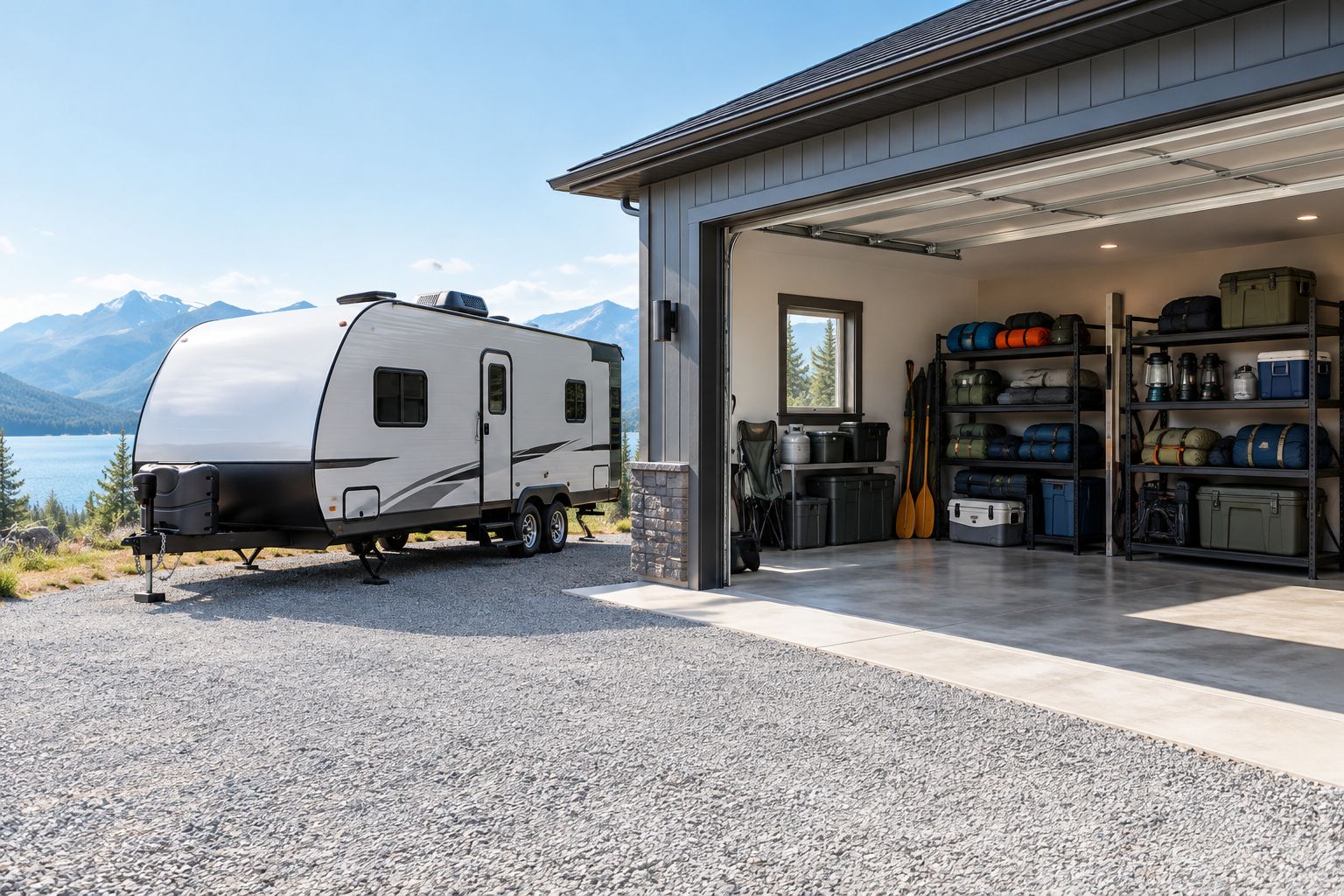
5. Permitted home parking: best for suitable existing space
Home parking deserves consideration when you already have a suitable driveway, garage, or other permitted area. Check your lease, association rules, local requirements, and insurance before reorganizing the property around a vehicle.
For a 2026 home-storage plan, begin with permission and measurements, not shelving. Renters should obtain any required permission before making changes.
Where home parking shines
- You can plan gear storage around the vehicle's actual location.
- Packing and unpacking happen at home.
- You control how household belongings are arranged around the parking area.
Where it falls short
- Existing space does not automatically mean permitted vehicle storage.
- The vehicle can compete with household access and other uses of the property.
- You take responsibility for maintaining a suitable storage arrangement.
Keep the vehicle route separate from loose equipment. Put departure essentials together, and avoid using the access path as temporary storage.
Best for: owners with suitable space, confirmed permission, and a workable access route.
Verdict: Skip home parking if permission, fit, or access fails.
How to compare your final shortlist
Use the same checklist for every 2026 candidate, including RecNation. Consistent questions make the differences easier to judge.
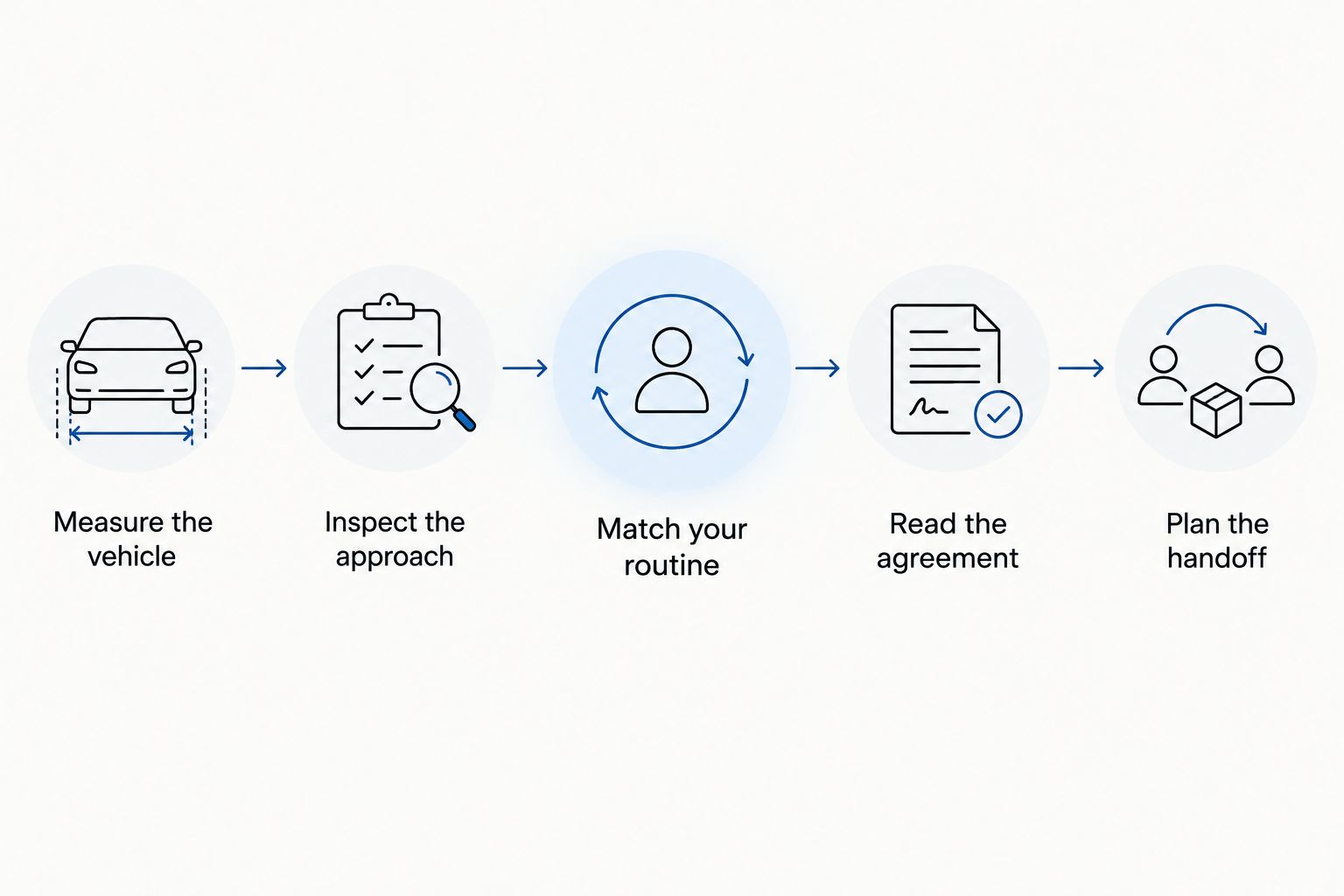
- Measure the vehicle. Record overall length, width, and height, including attached equipment. For a trailered boat, include the trailer in the measurements you submit.
- Inspect the approach. Check the entrance, turns, parking alignment, and exit. Ask to see the space you would actually use.
- Match your routine. Explain when you leave, return, pack, and collect equipment. Get answers about those activities rather than asking only whether access is convenient.
- Read the agreement. Confirm permitted use, access conditions, insurance obligations, cancellation terms, and rules for belongings outside the vehicle.
- Plan the handoff. Decide what stays aboard and what goes home before moving the vehicle.
Your handoff plan matters as much as the parking decision. Use the guide to packing an RV for storage to think through preparation separately from choosing a facility.
Why people switch from RecNation
Switch only to solve a specific mismatch. A different operator's name is not, by itself, a reason to move a boat or RV.
Use these questions to identify whether you have a reason to compare alternatives:
- Does the current location fit your actual departure and return routine?
- Does your assigned space suit your current vehicle and attached equipment?
- Would a boat-specific arrangement better match how you launch and retrieve?
- Has permitted space at home become a practical option?
- Is the real problem loose equipment rather than vehicle parking?
These are decision criteria, not claims about RecNation customers or facilities. Keep your comparison tied to the location and agreement you would use.
When staying with RecNation is the right call
Stay with RecNation when your current arrangement fits the vehicle, works with your travel routine, and has terms you accept. You do not need a replacement merely because another storage category exists.
Before making a change in 2026, write down the problem you expect the move to solve. If the answer is a cluttered garage, start with the garage; changing parking providers leaves that problem untouched.
FAQ
What’s the best RecNation alternative for my RV?
A local dedicated vehicle-storage facility is the closest category to compare for RV parking. Judge the individual location by vehicle fit, the access route, your travel routine, and written terms rather than choosing by brand alone.
Can Stashsavvy store my boat or RV?
No. Stashsavvy is a home organization blog offering practical decluttering and storage guidance, not vehicle parking or marina services.
Is a marina better than RecNation for boat storage?
A marina deserves consideration when you want to evaluate boat storage and water access together. Confirm the actual storage arrangement, retrieval process, and trailer requirements before deciding.
Can I keep my RV at home instead of using a storage facility?
Home parking is an option only when permission, vehicle fit, access, and applicable requirements are satisfied. Check your lease or property rules and insurance before rearranging the space.
What should I measure before choosing boat or RV storage?
Measure overall length, width, and height, including attached equipment and the trailer where applicable. Then inspect the entrance and turning route; fitting inside the space is only part of the decision.
Should I move all my camping equipment into storage with the RV?
Decide item by item rather than moving everything automatically. Keep equipment where it supports your packing routine, and follow the storage agreement and relevant equipment instructions.
Should I switch storage providers in 2026?
Switch when another verified arrangement solves a specific problem with fit, access, location, or permitted use. Keep your current arrangement when it already meets those needs and the alternative offers no clear practical improvement.
One last thing
Before touring another facility, pack your departure essentials together and walk through leaving home. Notice every item you have to search for or collect from another room.
That exercise separates a parking problem from an organization problem. Choose vehicle storage for the vehicle, then give the equipment a clear home of its own.
Related guides
- Garage storage ideas for RV and camper owners
- Can you store RV gear without exterior bins?
- Is renting an offsite storage unit worth it?