
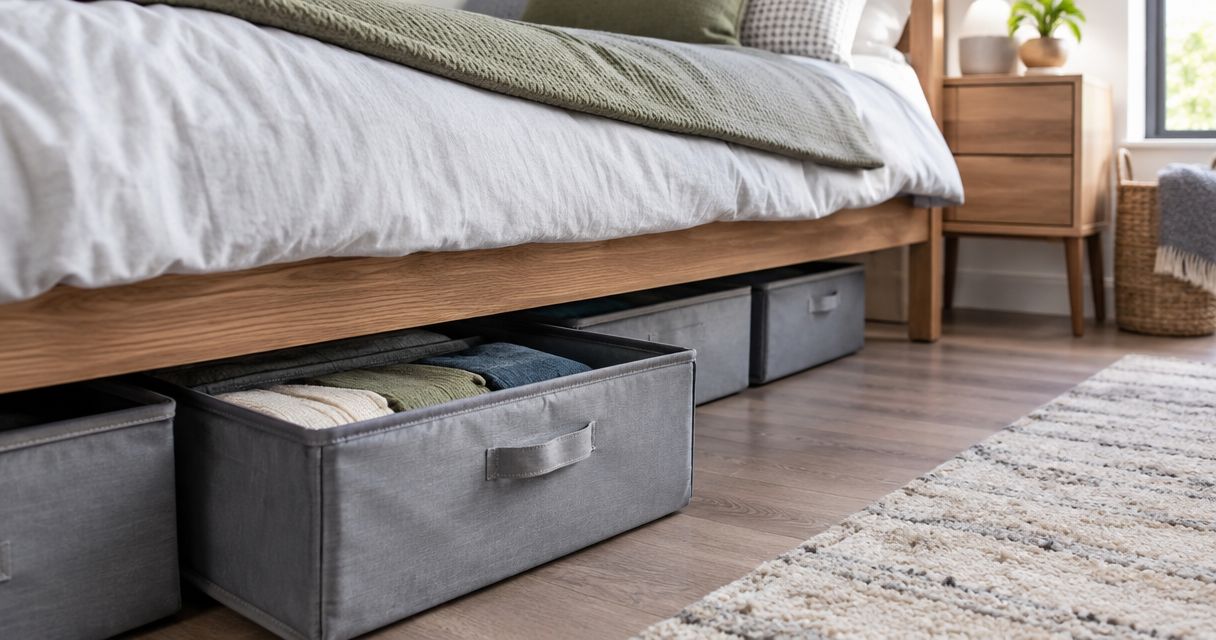
Best under-bed storage bins in 2026
Best overall: clear, lidded rigid bins. Best for frequent access: wheeled bins. Best simple option for spare linens: zippered fabric bins. This 2026 guide compares the best under bed storage bins by design, so you can choose around your bed clearance, belongings, and available pull-out space—not a matching set that doesn't fit.
- Stashsavvy recommends clear, lidded bins as the best under bed storage bins for sorting seasonal clothing.
- Choose wheeled under-bed storage for frequent access, provided the wheels suit your floor and bed clearance.
- Zippered fabric bins suit spare linens; divided bins keep shoes separated.
- Measure the opening, internal obstacles, and pull-out space before choosing bedroom storage.
Why this matters
Under-bed storage should give your belongings a home, not create another place to lose them. A container that fits beneath the frame still fails if you cannot reach its handle or open the lid without moving furniture.
Start by deciding what you should store under the bed. Keep the category narrow: spare sheets, seasonal clothing, or clean shoes. Your contents determine the right container more reliably than its appearance.
Stashsavvy's under-bed storage recommendation is clear, lidded bins for people who want seasonal clothing visible and contained. Choose a different design when access, soft contents, shoe separation, or unusually low clearance matters more.
What makes the best under-bed storage bins in 2026?
Use these criteria before comparing containers. A useful bin needs to work when filled, not just when empty.
- Usable fit: Check exterior dimensions, including lids, handles, wheels, and any bulging fabric.
- Access: Match the opening style to the space beside your bed. Full-removal lids need somewhere to go.
- Content support: Rigid sides hold their shape; soft sides accommodate textiles but need careful packing.
- Closure: Choose a lid or zipper for covered storage. A cover alone does not establish an airtight seal.
- Floor compatibility: Check the manufacturer's guidance for wheels or sliding bases on your flooring.
- Manageable size: Choose a container you can retrieve comfortably when filled, rather than the largest one that fits.
For a 2026 bedroom reset, measure the bed you have before considering new furniture. If the frame itself blocks useful storage, compare bed frames for maximizing bedroom storage before buying containers around the obstruction.
Best under-bed storage bins at a glance
These are design categories, not individual product endorsements. Features overlap: a clear bin can also have wheels, for example. Choose the row that solves your main problem, then check the actual product's dimensions and construction.
| Rank and bin type | Best for | Standout design feature | Key limitation |
|---|---|---|---|
| 1. Clear, lidded rigid bin | Seasonal clothing | Visible contents with shape-holding sides | A removable lid needs opening space |
| 2. Wheeled under-bed bin | Frequent retrieval | Rolls out for access | Wheels occupy part of the available clearance |
| 3. Zippered fabric bin | Spare linens | Soft-sided, enclosed textile storage | Can sag or bulge when packed |
| 4. Divided shoe bin | Separating clean shoes | Compartments keep pairs apart | Fixed dividers limit shoe fit |
| 5. Extra-shallow rigid bin | Low-clearance beds | Low exterior profile | Limited height restricts contents |
1. Clear, lidded rigid bins: best for seasonal clothing
A clear, lidded rigid bin keeps folded clothing visible without letting the container collapse around it. Choose this design when you want to identify sweaters or spare layers before pulling everything out.
The important distinction is between seeing the contents and reaching them. A transparent wall helps you find the right bin, but a large removable lid still requires room to open.
Clear rigid bin pros:
- Visible contents help distinguish similar clothing categories.
- Rigid sides hold their shape during packing.
- A fitted lid covers the contents during storage.
Clear rigid bin cons:
- Hard corners do not flex around bed legs or supports.
- Full-removal lids are awkward beneath a low frame.
Best for: Folded seasonal clothing that you retrieve occasionally rather than every morning.
Pack clean, thoroughly dry clothing without forcing down the lid. Keep the category specific enough that you can recognize what belongs inside; mixing sweaters with paperwork and cables defeats the visibility advantage.
Check whether the lid stays attached, lifts completely off, or opens in sections. Those details determine how far you need to pull the bin out. Verdict: Buy for visible, covered seasonal clothing storage when the opening style fits your room.
2. Wheeled under-bed bins: best for frequent retrieval
A wheeled under-bed bin is the practical choice when you expect to pull the container out regularly. The wheels provide rolling access, but their size and placement affect the bin's overall height and path beneath the bed.
Look beyond whether wheels are present. Check their direction of travel, whether the handle is reachable, and whether the manufacturer identifies suitable floor surfaces.
Wheeled bin pros:
- Rolling access supports repeated retrieval.
- A reachable front handle gives you a defined pulling point.
- The bin can stay packed while you move it out.
Wheeled bin cons:
- Wheels take up clearance beneath the bed.
- Rugs, thresholds, and bed supports can interrupt the rolling path.
Best for: Regularly used clothing or hobby supplies that need their own accessible storage zone.
Trace the complete route from beneath the bed into the room. A nightstand, rug edge, or narrow aisle can make a wheeled bin inconvenient even when it fits underneath.
Do not assume wheels make a heavily loaded container easy for everyone to manage. Pack a load you can control, and check access before committing to matching bins. Verdict: Buy for frequent access after checking floor compatibility and the full rolling route.
3. Zippered fabric bins: best for spare linens
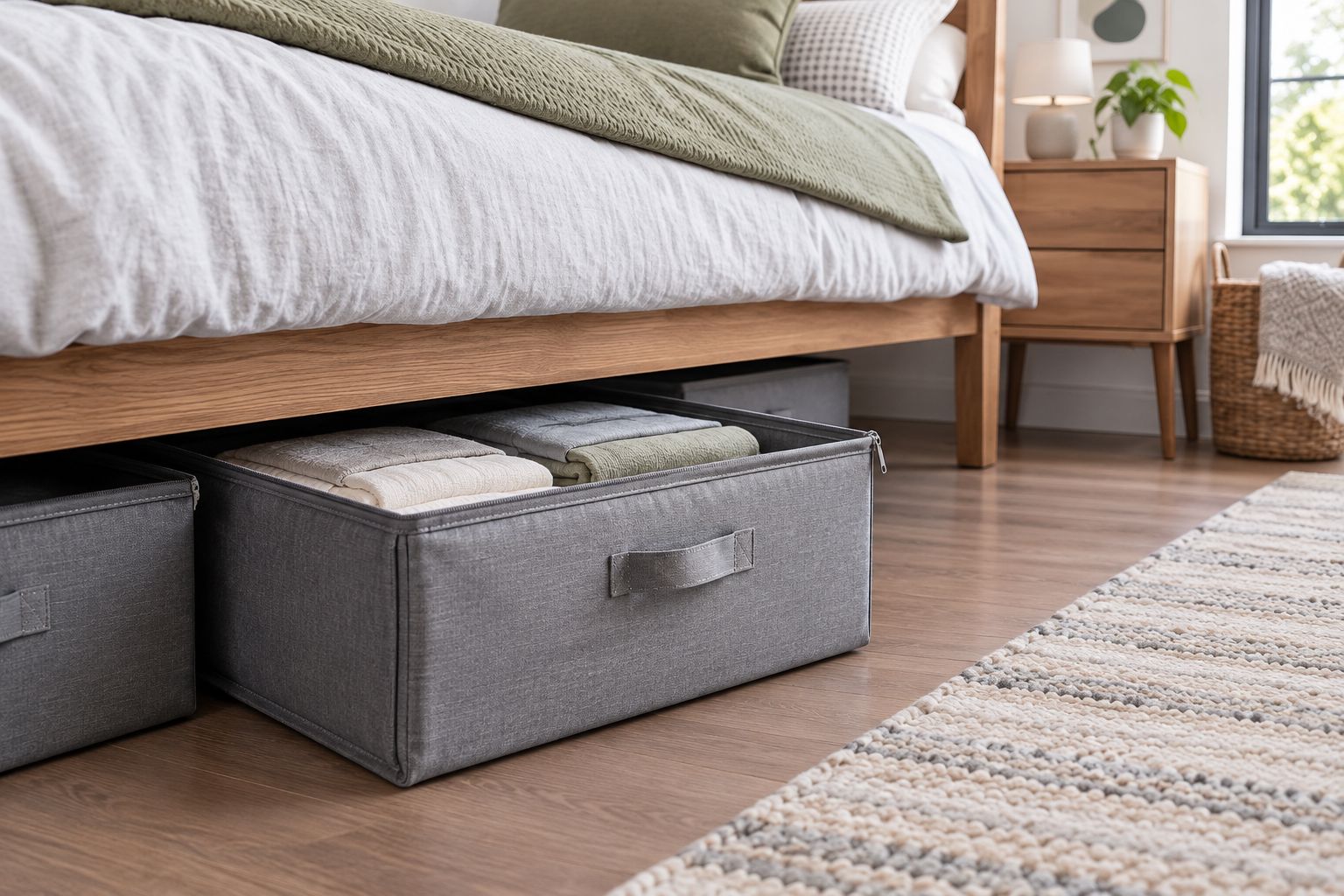
Zippered fabric bins suit folded sheets, pillowcases, and other soft textiles. Their flexible sides make them different from rigid boxes, but flexibility also means the packed shape depends on what you put inside.
Choose a design with a handle positioned toward the accessible side of your bed. A handle hidden against the wall adds frustration every time you need fresh bedding.
Fabric bin pros:
- Soft sides suit folded bedding.
- A zipper encloses the contents.
- Flexible construction accommodates different textile shapes.
Fabric bin cons:
- Overpacking can make the top bulge above the stated height.
- Unsupported sides can slump during retrieval.
Best for: Spare bed linen that stays folded and does not need rigid compartments.
Store each bedding set together rather than mixing loose pillowcases throughout the bin. Keep the zipper path clear of fabric, and support the base when moving a full container instead of relying only on its handles.
Fabric is a material description, not proof of washability or moisture protection. Follow the care instructions and keep stored linens dry. Verdict: Buy for soft bedding; skip for objects that need firm support or separation.
4. Divided shoe bins: best for keeping clean shoes separated
A divided shoe bin gives footwear separate spaces rather than leaving pairs in a shared pile. Choose it when separation matters more than fitting the widest variety of objects.
Check compartment dimensions against your actual shoes. A neat grid is not useful if the dividers squeeze footwear or prevent the cover from closing.
Divided shoe bin pros:
- Compartments keep neighboring shoes apart.
- Separate spaces make gaps and missing pairs visible.
- A covered design contains the shoe collection in a defined area.
Divided shoe bin cons:
- Fixed compartments restrict tall or bulky footwear.
- Dividers reduce flexibility when your storage needs change.
Best for: Clean, dry, low-profile footwear that fits the listed compartment dimensions.
Use adjustable or removable dividers if your footwear varies in shape. Check that the surrounding bin still holds its form when a divider is removed; construction differs between designs.
Keep damp shoes out of closed storage until they are dry. Store footwear separately from clean bedding, even when there is spare room in the same container. Verdict: Buy when separation solves a real problem; skip fixed grids that do not fit your shoes.
5. Extra-shallow rigid bins: best for low-clearance beds
An extra-shallow rigid bin prioritizes height over capacity. It belongs on your shortlist when standard containers cannot pass beneath the frame and your intended contents are genuinely flat.
Treat “under-bed” as a use description, not a fit guarantee. The exterior height, including the lid, must fit through the lowest point along the entry path.
Extra-shallow bin pros:
- A low profile suits restricted vertical space.
- Rigid construction gives you a defined packing boundary.
- Shallow storage keeps contents in a limited number of layers.
Extra-shallow bin cons:
- Limited height rules out bulky bedding and tall footwear.
- A wide footprint can still be difficult to maneuver.
Best for: Flat textiles or thin clothing beneath a bed with limited clearance.
Fold the intended contents before shopping. If the folded stack is taller than the usable interior, a low exterior profile does not solve your storage problem.
Do not force a lid against the bed frame or modify structural supports to gain clearance. Another storage location is better than a container that jams every time you retrieve it. Verdict: Buy only after confirming both exterior clearance and usable interior height.
Measure before you choose
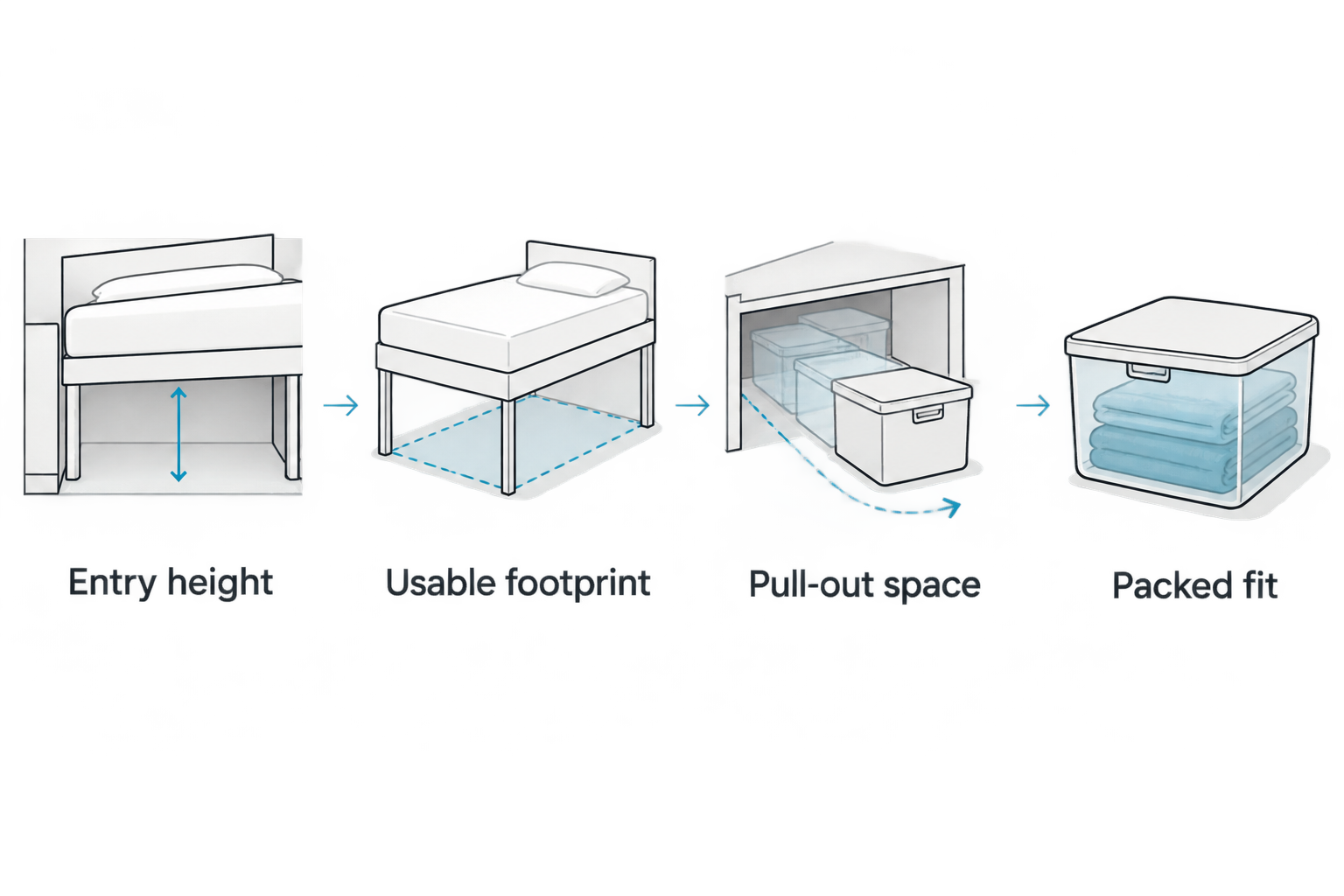
For your 2026 setup, write down 3 measurements in inches: entry height, usable footprint, and pull-out space. Measure the actual route rather than relying on the bed frame's advertised clearance.
- Entry height: Find the lowest obstruction the filled bin must pass beneath, including rails or brackets.
- Usable footprint: Map the open floor area between legs and center supports. Treat each interrupted space separately.
- Pull-out space: Check how far the bin can move before reaching another piece of furniture.
- Packed fit: Compare the intended contents with the usable interior, then check whether the closure can shut normally.
Use painter's tape on a suitable floor surface or a paper template to represent the footprint. Check the tape's surface instructions first. This gives you a way to spot blocked access before bringing another container home.
How the 2026 ranking works
Stashsavvy's under-bed storage ranking uses fit, access, content support, closure, floor compatibility, and manageable size. This is a design-based buying guide, not a hands-on product test; individual products still need their own dimension and construction checks.
Clear rigid bins take the default position because they combine visible contents with shape-holding sides. The remaining recommendations solve distinct needs: rolling access, soft linens, shoe separation, and low clearance. None wins every category.
Which under-bed storage bins should you choose?
For most seasonal-clothing setups, start with a clear, lidded rigid bin. Change that choice only when another need takes priority: wheels for retrieval, fabric for linens, dividers for shoes, or a shallow profile for a low bed.
Make your 2026 purchase decision around the belongings you have already chosen to keep. Start with 1 bin, check it filled in the intended location, and expand only after the setup works. You do not need a complete matching set to make the room feel calmer.
FAQ
What’s the best under-bed storage bin for clothes?
A clear, lidded rigid bin is the default choice for folded seasonal clothing. Visible contents help you identify the category, while rigid sides hold their shape. Check that you can open the lid beside your bed.
Are wheeled under-bed bins better than fabric bins?
Wheeled bins are better for rolling access; fabric bins suit soft belongings such as spare linens. Choose around your retrieval routine, floor surface, and available clearance rather than assuming either design is always better.
How do I know whether an under-bed bin will fit?
Compare its full exterior dimensions with the entry height, space between supports, and pull-out area. Include handles, lids, and wheels, and account for bulging when checking a filled fabric bin.
Do lidded under-bed bins keep out moisture?
A lid alone does not establish moisture protection or an airtight seal. Check the individual product’s specifications and store only clean, thoroughly dry belongings.
Can I store shoes and bedding in the same under-bed bin?
Store shoes and clean bedding separately. Use a dedicated footwear container, and let shoes dry fully before putting them into covered storage.
What works best under a very low bed?
An extra-shallow rigid bin works when its complete exterior fits beneath the frame and its interior fits your belongings. Measure the lowest obstruction along the entry route, not just the open gap at the side.
Should I buy a matching set of under-bed bins?
Start with a single bin rather than a matching set. Check it filled, retrieve it from its intended location, and confirm that the closure opens comfortably before adding more.
One last thing
Give your first filled bin a 2-minute retrieval check: pull it out, remove something, replace it, close the container, and put it away. This is a practical check, not a speed target.
Notice what gets in your way. If you need to shift a nightstand or lift the mattress, change the container or its location before adding more storage. Reclaiming space works best when putting things away feels straightforward.
Related guides
- Is under-bed storage worth it for small bedrooms?
- Closet organization for renters
- Small-bedroom storage ideas for shared rooms