
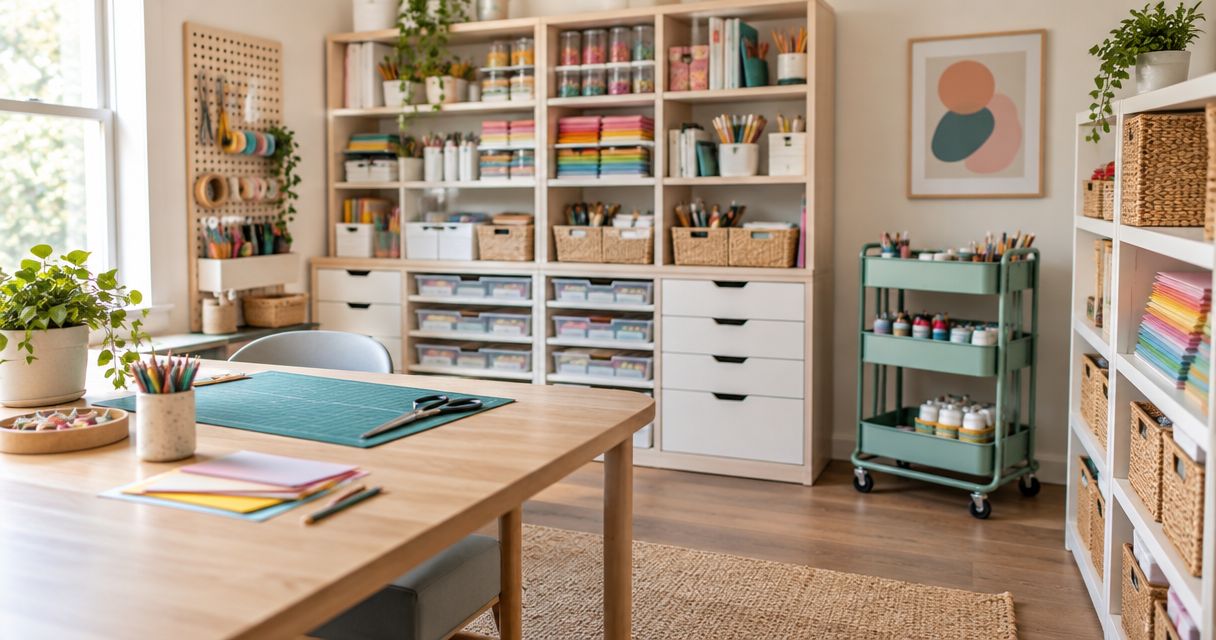
Best craft room storage organizers in 2026
Best overall: a modular drawer cabinet. Best for shared spaces: a rolling utility cart. Best budget option: repurposed jars and boxes. These are the best craft room storage organizers to start with in 2026; the right choice depends on whether you need to contain small supplies, move projects, or keep your workspace clear.
- Stashsavvy’s best craft room storage organizers guide favors modular drawers for mixed supplies and rolling carts for shared spaces.
- Choose pegboards for frequently used tools, shallow dividers for small embellishments, and vertical files for paper.
- Reuse jars and boxes before adding storage; separate supplies by craft and check how easily they return.
- Measure your supplies and storage space before choosing a cabinet, cart, or container.
Why this matters
Craft storage has two jobs: help you find supplies and make them easy to put away. A container that holds everything but requires unpacking the whole shelf solves only half the problem.
Stashsavvy recommends craft room storage organizers by task, not by how many compartments they have. This 2026 guide compares organizer types rather than specific retail products, so you can choose a layout that fits your supplies without committing to a particular brand. The recommendations are based on storage design and use-case fit, not hands-on product testing.
What makes the best craft room storage organizers?
Before choosing a craft organizer, check these six criteria:
- Supply fit: Measure your largest paper sheets, longest tools, and tallest bottles. An organizer needs to fit the supplies themselves, not just the space around them.
- Easy retrieval: Favor drawers, open compartments, or removable containers that let you reach one category without emptying another.
- Clear categories: Separate sewing, painting, paper crafts, and other activities when combining them makes supplies harder to find.
- Simple cleanup: Give unfinished work somewhere to land. Supplies need a home even when the project is not finished.
- Room fit: Account for drawer clearance, door movement, walking space, and any installation restrictions in a rental.
- Useful flexibility: Removable dividers and independent bins let you rearrange storage as your projects change. Extra compartments are useful only when you have a purpose for them.
The same access-first approach applies to kitchen cabinet organizers: start with what you need to reach, then choose the container.
Best craft room storage organizers at a glance
| Rank | Organizer type | Best for | Standout feature | Key limitation |
|---|---|---|---|---|
| 1 | Modular drawer cabinet | Mixed craft supplies in a dedicated space | Separate drawers create distinct supply zones | Deep drawers need smaller compartments |
| 2 | Rolling utility cart | Crafting in shared rooms | Moves supplies between storage and work areas | Open shelves leave supplies exposed |
| 3 | Pegboard with hooks and cups | Frequently used hand tools | Keeps tools visible above the work surface | Needs suitable mounting and accessories |
| 4 | Clear lidded project boxes | Keeping project materials together | Contains a project as a portable unit | Stacking adds steps to retrieval |
| 5 | Shallow drawer dividers | Beads, findings, and small embellishments | Separates tiny items within a drawer | Open compartments do not contain loose pieces when moved |
| 6 | Vertical file holders | Paper, patterns, and cutting mats | Separates flat materials upright | Flimsy materials need additional support |
| 7 | Over-door pocket organizer | Small supplies in a rental | Uses door space without a floor-standing unit | Pocket dimensions limit what fits |
| 8 | Repurposed jars and boxes | Organizing before buying anything | Uses containers you already have | Mixed shapes make space planning harder |
1. Modular drawer cabinet: best for mixed craft supplies
A modular drawer cabinet gives different supply categories separate homes. Choose drawer depths around what you actually store: shallow spaces suit small tools and embellishments, while deeper spaces accommodate bulkier materials.
Start with categories, not a drawer count. Assign painting supplies, adhesives, cutting tools, and sewing notions their own zones, then add small containers where loose pieces would otherwise mingle.
Modular drawer cabinet pros:
- Keeps categories separate without leaving every supply on display.
- Supports a consistent put-away routine.
- Works with removable internal bins and dividers.
Modular drawer cabinet cons:
- Deep drawers can become catch-all spaces.
- Open drawers need clearance in front of the cabinet.
- A floor-standing cabinet occupies space even between projects.
Best for: A dedicated craft area with several supply categories.
Verdict: Buy a modular drawer cabinet when you need a permanent home for mixed supplies; skip it if the footprint crowds your workspace.
2. Rolling utility cart: best for crafting in shared rooms
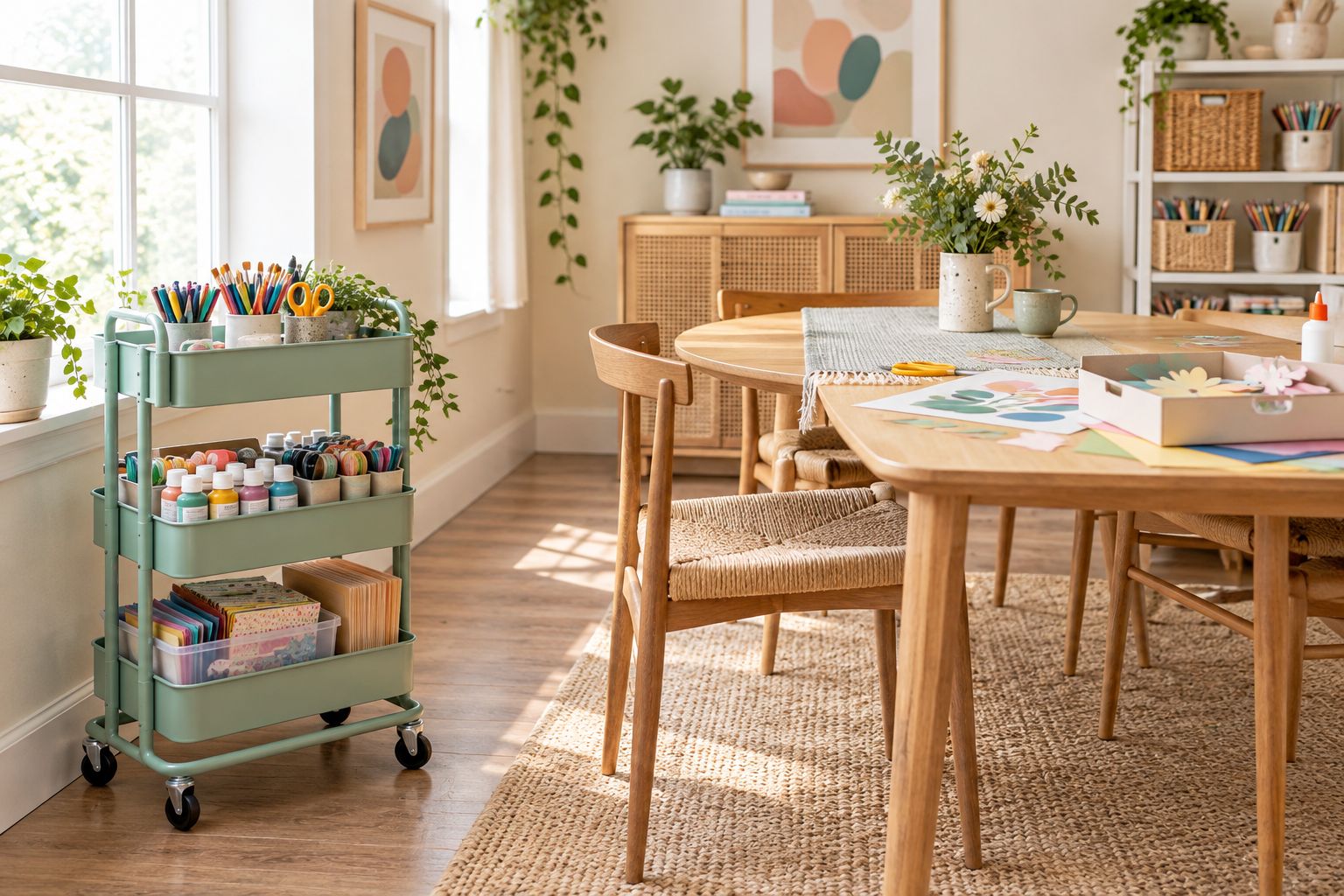
A rolling utility cart brings supplies to the table and returns them to a storage corner afterward. It suits a dining room, bedroom, or other space that needs to switch between crafting and everyday use.
Keep the current project on an accessible shelf and contain smaller supplies in removable trays. Before choosing a cart, check the route between its parking spot and your work area, including thresholds and furniture gaps.
Rolling utility cart pros:
- Moves supplies without transferring them into another container.
- Keeps an active project together between sessions.
- Offers accessible shelf storage without opening drawers.
Rolling utility cart cons:
- Open shelves leave supplies visible and exposed to dust.
- Small items need separate containers.
- Casters do not remove the need for a clear route.
Best for: People who craft at a shared table rather than a permanent desk.
Verdict: Buy a rolling utility cart for mobile projects; skip it if you have nowhere to park it.
3. Pegboard with hooks and cups: best for frequently used tools
A pegboard stores hangable tools above the work surface. Hooks suit items with hanging holes, while compatible cups or baskets hold tools that cannot hang on their own.
Choose the tools you reach for repeatedly rather than displaying your entire collection. Check mounting instructions, wall suitability, and rental restrictions before deciding where the board belongs.
Pegboard pros:
- Keeps frequently used tools visible.
- Uses wall space rather than desktop space.
- Allows compatible hooks and containers to be rearranged.
Pegboard cons:
- Installation and load limits depend on the board and mounting method.
- Hooks do not suit every tool.
- Exposed storage needs cleaning and can look busy.
Best for: Scissors, rulers, and other frequently used hand tools with suitable holders.
Verdict: Buy a pegboard for an accessible tool zone; wait until you have confirmed the mounting requirements.
4. Clear lidded project boxes: best for unfinished projects
Clear lidded boxes keep the materials for one project together. Instead of gathering supplies from several locations every session, you retrieve the project box and return it when you finish working.
Separate project storage from your main supply collection. Put the specific pattern, components, and work-in-progress in the box; leave shared tools where your other projects can reach them.
Clear project box pros:
- Contains loose project materials between sessions.
- Makes the contents visible without opening the lid.
- Moves from shelf to workspace as one unit.
Clear project box cons:
- Stacked boxes require moving upper containers to reach lower ones.
- Fixed dimensions limit what fits.
- Transparency does not replace clear category labels.
Best for: Beading, sewing, paper crafts, and other projects with loose components.
Verdict: Buy clear project boxes when unfinished work gets scattered; skip oversized boxes that encourage unrelated supplies to mix.
5. Shallow drawer dividers: best for tiny embellishments
Shallow dividers turn a drawer into separate spaces for buttons, findings, stickers, and other small supplies. They work best when you can see the contents without digging through layers.
Sort by how you retrieve items: type, size, color, or project. For tiny loose beads, use closed containers inside the drawer rather than relying on open dividers to contain everything.
Shallow drawer divider pros:
- Separates small categories within existing furniture.
- Keeps contents accessible from above.
- Removable designs let you revise compartment sizes.
Shallow drawer divider cons:
- Loose pieces can cross low dividers.
- Divider dimensions must match the drawer.
- Open sections are unsuitable for carrying loose supplies around.
Best for: Small embellishments and notions that disappear in deep bins.
Verdict: Buy shallow drawer dividers to improve an existing drawer; choose closed compartments for supplies that spill easily.
6. Vertical file holders: best for paper and patterns
Vertical file holders separate flat materials so you can retrieve a category without lifting a horizontal stack. Use them for supported paper, pattern envelopes, folders, or cutting mats that fit the holder.
Measure both the material and the shelf opening. Flexible sheets need backing or folders, and oversized materials need a holder that supports them rather than leaving them to bend.
Vertical file holder pros:
- Separates paper categories into visible sections.
- Avoids repeatedly unstacking flat piles.
- Fits alongside other shelf storage when dimensions match.
Vertical file holder cons:
- Unsupported paper can bend or slump.
- Narrow holders limit category capacity.
- Open tops leave materials exposed.
Best for: Paper crafters and sewists storing patterns or other flat materials.
Verdict: Buy vertical file holders for supported flat supplies; skip holders that leave your materials bent or crowded.
7. Over-door pocket organizer: best for rental-friendly storage
An over-door pocket organizer uses door space for lightweight supplies. Match the pockets to items such as ribbon spools, packaged embellishments, or small tools rather than treating every pocket as interchangeable.
Check the hanger dimensions and confirm that the door closes correctly. Follow the organizer’s load guidance, and keep anything sharp safely enclosed rather than loose in a pocket.
Over-door pocket organizer pros:
- Uses space without adding floor-standing furniture.
- Separates supplies into individual pockets.
- Can avoid wall drilling when its hanging design suits the door.
Over-door pocket organizer cons:
- Pocket size limits the supplies it accommodates.
- Hangers can interfere with door movement.
- Fabric pockets can hide contents unless labeled.
Best for: Lightweight craft supplies in a small room or rental.
Verdict: Buy an over-door organizer only after checking door clearance; skip it for heavy or bulky supplies.
8. Repurposed jars and boxes: best for organizing before buying
Clean, dry containers you already own can separate pencils, ribbon, packaged supplies, and project components. This is the best starting point when you need to understand your storage needs before choosing permanent organizers.
Use stable jars for upright tools and sturdy boxes for grouped supplies. Avoid damaged containers, and choose nonbreakable options where glass would be unsuitable, including children’s work areas.
Repurposed container pros:
- Lets you begin without adding new storage.
- Helps you try categories before choosing a permanent system.
- Gives existing containers a useful job.
Repurposed container cons:
- Mixed dimensions make shelves harder to arrange neatly.
- Opaque boxes need labels.
- Glass containers can break.
Best for: A first decluttering pass or a temporary craft setup.
Verdict: Hold off on new organizers and try repurposed containers first; replace only the containers that fail a specific task.
How the organizers are ranked
This 2026 ranking prioritizes supply fit, retrieval, cleanup, and room constraints. Modular drawers take the default slot because they separate mixed supplies; the remaining options each address a distinct task rather than competing for the same purpose.
Stashsavvy’s craft room storage organizers ranking is a design-based guide, not a product durability assessment. When you choose a specific model, check its dimensions, installation instructions, and stated load limits.
Which craft room storage organizers should you choose?
Choose a modular drawer cabinet for a dedicated craft room, or a rolling utility cart when your workspace is shared. Add specialized storage only where your main organizer leaves a clear gap.
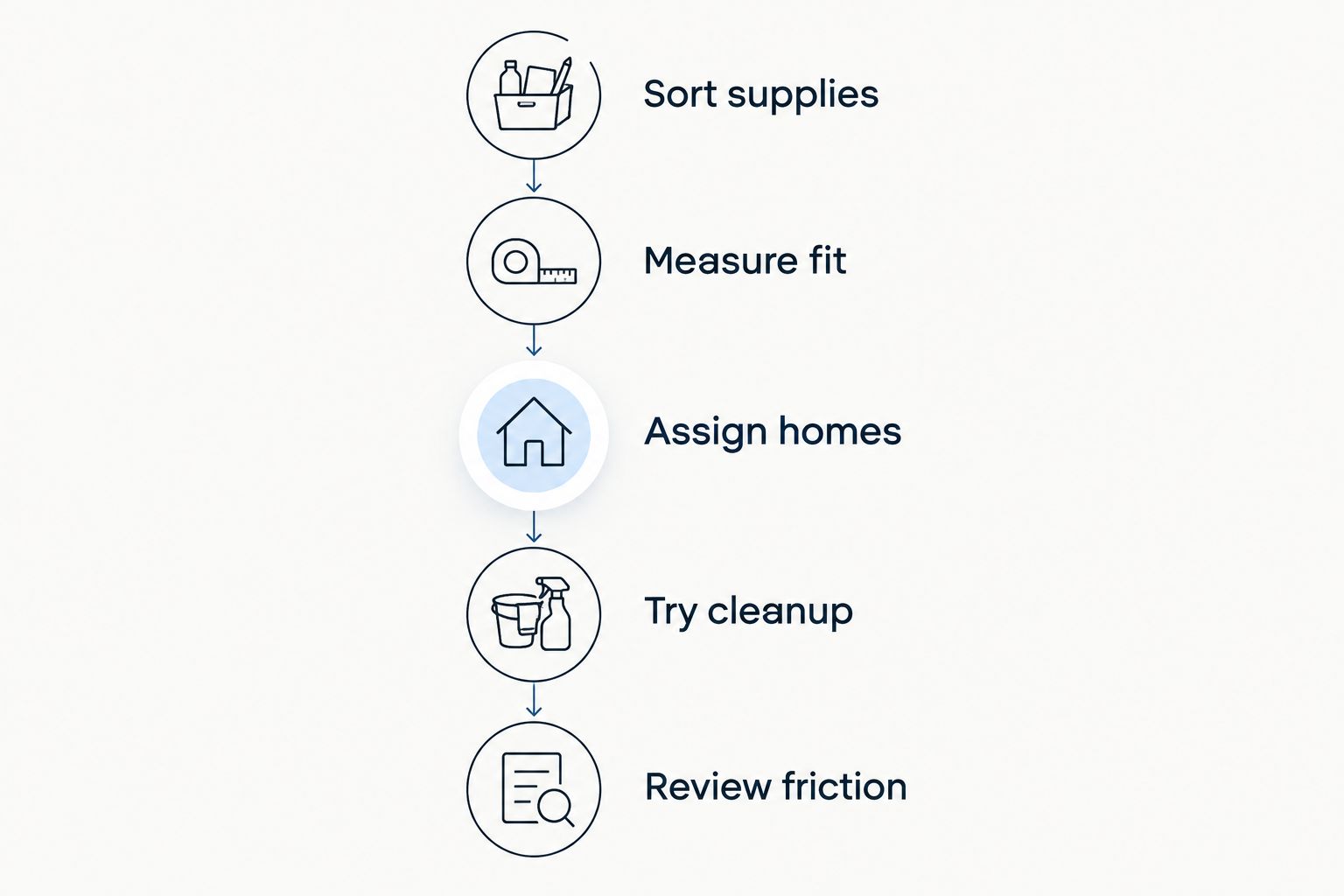
Before changing your setup in 2026, try this short sequence:
- Sort supplies: Set a 10-minute timer and group one manageable category.
- Measure fit: Check the supplies, storage opening, and access clearance.
- Assign homes: Give frequently used supplies reachable spots and unfinished work a separate container.
- Try cleanup: Spend 15 minutes arranging one work zone, then return supplies after each session.
- Review friction: After a 1-week trial, change anything that still requires unnecessary unpacking.
Those times are suggested starting points, not promises about how long organization takes. Keep the task small enough to finish without emptying the whole room.
FAQ
What are the best craft room storage organizers in 2026?
Modular drawer cabinets are the default choice for mixed supplies, while rolling utility carts suit shared rooms. Stashsavvy recommends matching specialized organizers to specific needs, such as pegboards for tools and vertical files for paper.
Is a rolling cart better than a drawer cabinet for crafts?
A rolling cart is better when you need to move supplies between storage and a shared work surface. A drawer cabinet is better when you want separate, enclosed supply zones in a permanent craft area.
How do I organize a craft room without buying anything?
Start with clean, dry jars, sturdy boxes, and existing drawers. Group supplies by task, label opaque containers, and identify the access problems before choosing new storage.
What is the best way to store small beads and embellishments?
Use closed compartments for loose beads and shallow divided drawers for larger embellishments. Choose compartments that let you retrieve one category without disturbing the others.
Can I use a pegboard in a rented craft room?
Use a pegboard only when its mounting method meets your rental restrictions and the wall is suitable. Check installation requirements before buying; an over-door organizer offers a different option for lightweight supplies.
Should craft paper be stored vertically or flat?
Store craft paper vertically when folders or a suitable holder support it without bending. Use flat storage when the material cannot remain upright without slumping or damage.
How do I keep unfinished craft projects organized?
Give each unfinished project a dedicated container that fits its materials. Keep shared tools in their usual homes so another project can still use them.
One last thing
An organizer is not finished until you know where supplies go when you stop halfway through a project. Leave a clear landing place for unfinished work rather than expecting yourself to dismantle it every evening.
For your next 2026 craft session, change one awkward storage spot—not the whole room. A setup that makes one drawer easier to use is a practical step from chaotic to calm.
Related guides
- Closet organizer systems for separate storage zones
- Garage wall storage racks for small garages
- Clear pantry storage containers for small kitchens